More from the episode
The story in 5 beats
- No footprints
The TARDIS has jumped a time track. On Xeros the travellers walk through a vast museum where nobody can see or hear them.
- On display
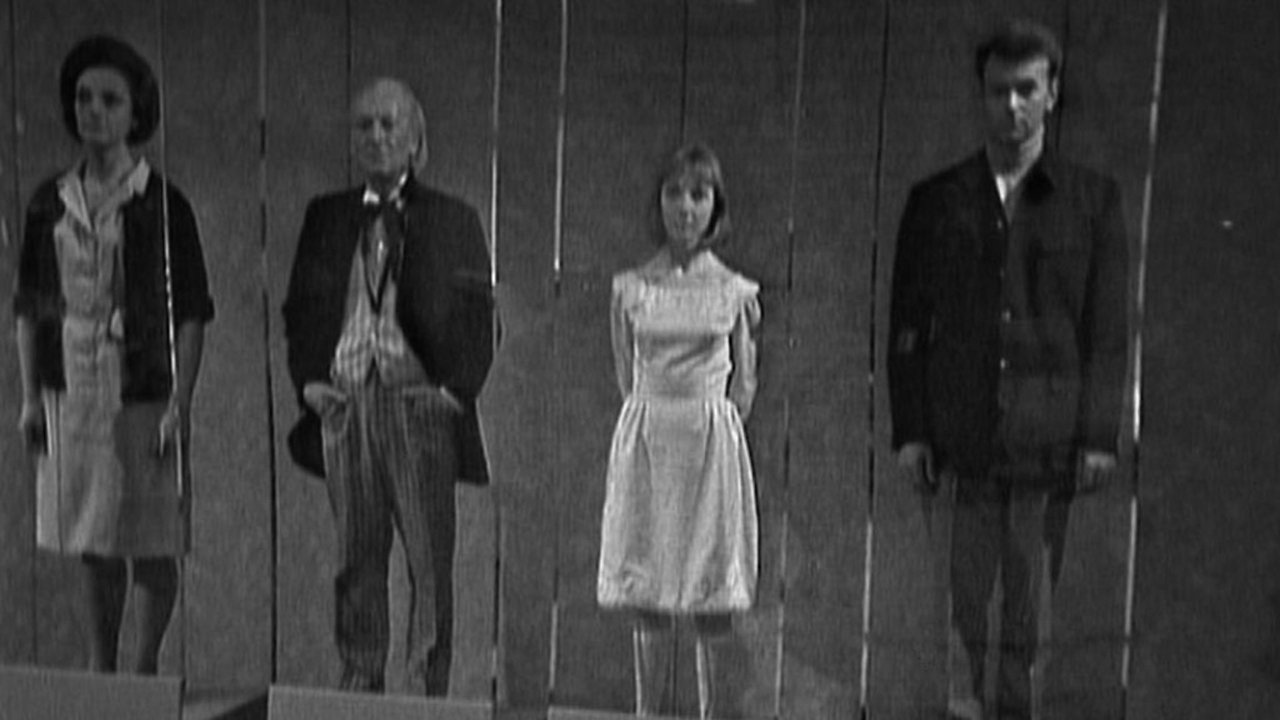
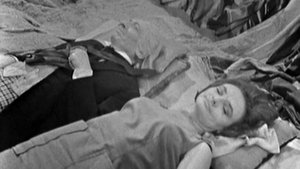
Among the exhibits stand the TARDIS and the four of them, frozen in glass cases. Then time snaps back into place, and they are just visitors again.
- Changing the future
The Moroks who run the museum start hunting them. The Doctor hides in a Dalek casing, and Vicki throws in with the Xerons, who want their planet back.
Into the freezerSpoiler · tap to reveal
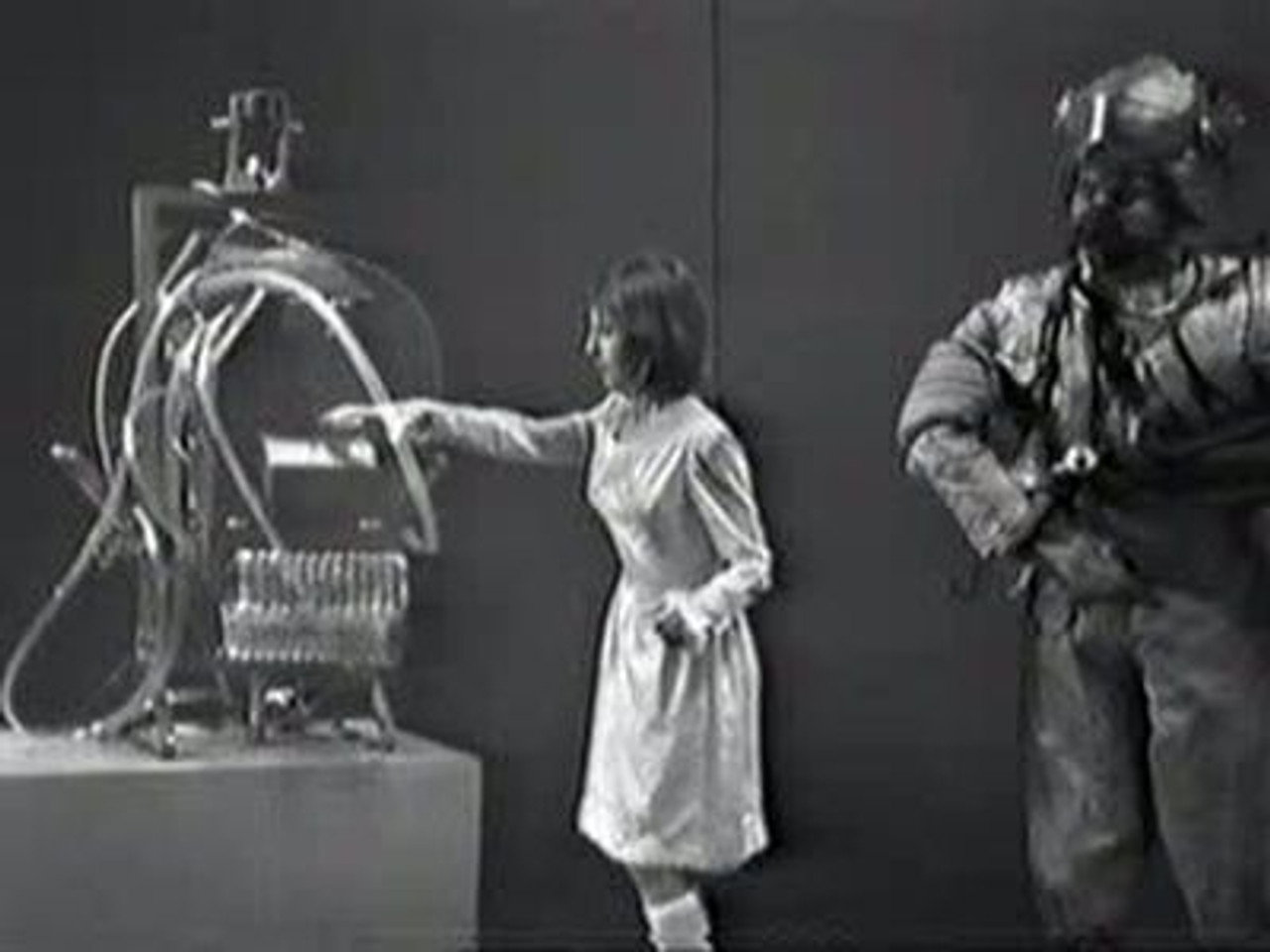
Lobos catches the Doctor and starts turning him into an exhibit, while Vicki helps the Xerons raid the Morok armoury.
Watched from SkaroSpoiler · tap to reveal
The Xerons rise and the museum is wrecked. The travellers leave with a souvenir, and on Skaro the Daleks note their departure.
Why it still matters
The first episode of The Space Museum has an idea reviewers still admire. The TARDIS jumps a time track, the travellers wander the museum unseen by anyone, and then they come face to face with their own future: the four of them frozen in glass cases as exhibits. The rest of the story is about whether you can dodge a future you've already seen. John Kenneth Muir, in A Critical History of Doctor Who on Television, praised it for taking on two big science-fiction ideas at once, changing the future and trying to escape your own death, and compared it favourably to The Twilight Zone.
It was also built to be cheap. The production team wanted a story with a small cast and few sets to make up for expensive serials like The Web Planet, so director Mervyn Pinfield used stock music instead of a new score and leaned on his own technical know-how for the effects. The writer, the South African playwright Glyn Jones, had never seen the programme and knew little science fiction when David Whitaker asked him for a story.
Reviewers have mostly agreed that the first episode is the best of the four. Charlie Jane Anders at io9 put its cliffhanger among the show's greatest, while David J. Howe and Stephen James Walker said the story then "falls as flat as a pancake." Still, people remember the jokes: the Doctor hiding inside an empty Dalek casing is, for Radio Times reviewer Mark Braxton, one of the few things that make it memorable, and SFX's Nick Setchfield found the Moroks a refreshing touch, reminiscent of Douglas Adams.
The future is a choice
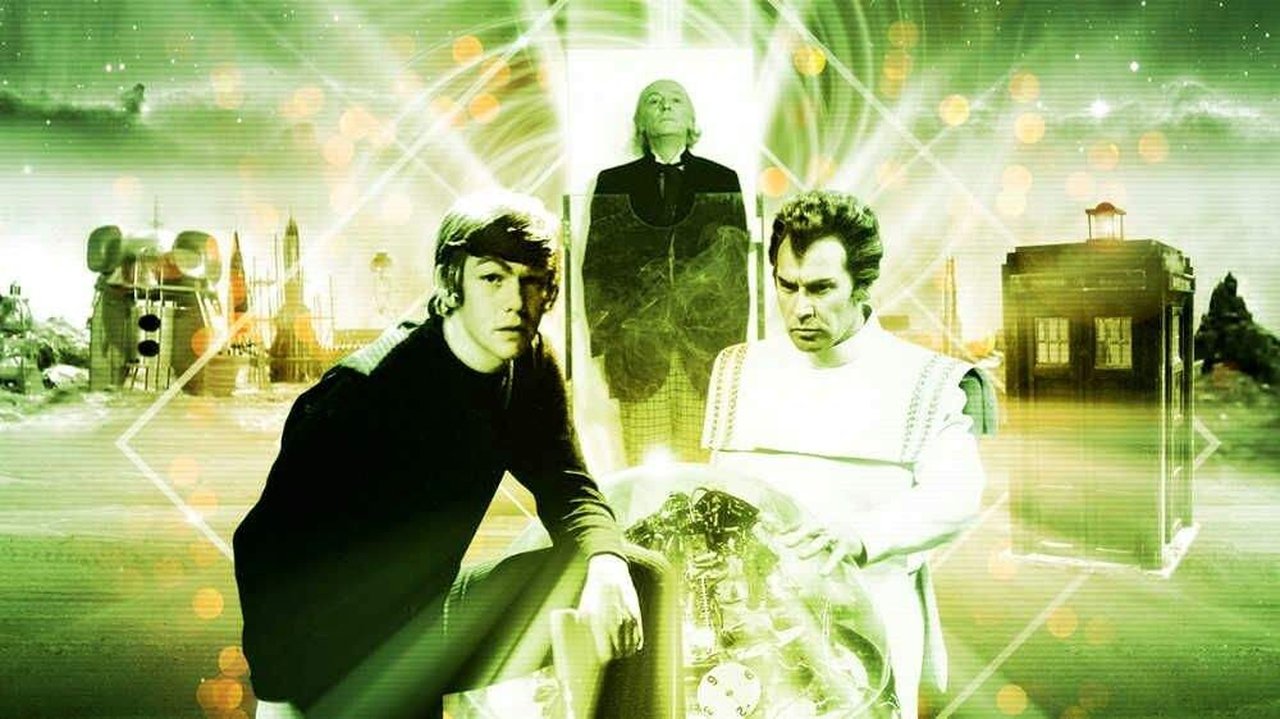
Ian frees the Doctor from Lobos, who has begun freezing him for display, but the travellers are all recaptured. Help comes from the Xeron rebels, armed with the weapons Vicki got for them by outwitting the armoury's computer. They kill Lobos and his guards and destroy the museum, so the future in the glass cases never comes to pass. The Doctor and his friends take a Time-Space Visualiser as a souvenir and leave in the TARDIS.
The last scene moves to Skaro, where the Daleks have noted their departure. It's a hook for the next story, The Chase, and the souvenir matters too: script editor Dennis Spooner wrote the Visualiser into The Chase to keep the two stories joined up. Muir felt the ending leaned on a well-worn trope, a planetary revolution like those in The Daleks and The Web Planet, and most critics since have agreed that the big idea of the first episode never quite pays off.
Challenge the DNA
Did the travellers change the future, or was it never fixed?
Or skip ahead to our reading
We think the story wants it both ways, and that's fine. What matters is that the four of them refuse to sit and wait to become exhibits. It's a cheerful idea for a show about time travel: the future is something you can argue with.
Behind the scenes
- Outgoing story editor David Whitaker asked Glyn Jones for a story around early October 1964, having seen his play Early One Morning. Jones had never watched Doctor Who. The first episode was once called "The Four Dimensions of Time".
- Whitaker's successor, Dennis Spooner, edited out much of the humour, feeling the story was more intellectual; Jones was unhappy about it. Jones restored the humour in his own novelisation, published by Target in 1987.
- To keep costs down, Mervyn Pinfield used stock music by composers including Trevor Duncan, Erik Nordgren and Eric Siday. The Dalek in the museum was one of the props built for The Daleks, the dummies in the third episode wore stock spacesuits from Quatermass II, and the ray guns were a photographic flash.
- The third episode was written without the Doctor because William Hartnell was due a week's holiday.
- The Xeron actors wore fake eyebrows over their own, which kept falling off.
- Viewing figures fell from 10.5 million for the first episode to 8.5 million for the last. The second episode went out ten minutes late because of the 1965 FA Cup Final.
- The BBC cleared the original tapes for wiping in 1967 and 1969. The whole serial turned up at BBC Enterprises in 1977, so all four episodes survive.
The thread
Seeing your own future, and a museum that has run out of empire to show off.
Came before
Shares DNA with
Left its mark on
DNA strand
Time Loops & Timelines
The travellers get a look at where their road ends, and everything after that is an argument about whether the future is fixed. Every step they take to stay out of the glass cases might be the step that puts them there.
Every great sci-fi story is built from a handful of strands like this one. Each strand page explains how it works and traces it across shows, books and films.
If this one stayed with you
Where to go next, and why.
Watch · Doctor Who
"The Chase"
The very next story, which follows straight on from the last scene here. Watch them as a pair.
Watch · TNG S2
"Time Squared"
The same puzzle on a starship: Picard gets a look at a future he wants no part of and has to work out how not to walk into it.
Watch · The Twilight Zone
"Back There"
Muir compared this story to The Twilight Zone, and this is the series taking on the same question of whether history can be steered.
Read · Novelisation
Doctor Who: The Space Museum, Glyn Jones
Jones's own 1987 retelling, with a changed structure and the jokes Dennis Spooner cut from his scripts put back.
Your next episode
Three directions to go from here, all on Sci-Fi DNA.

More of this feeling
Yesterday's Enterprise
Star Trek: The Next Generation
Another crew who see a future they very much want to avoid.
Same question, different answer
The City on the Edge of Forever
Star Trek
Can you change a future you've already glimpsed? Kirk has to decide.
Something completely different
The Chase
Doctor Who
The Daleks chasing the TARDIS through time, with the jokes switched on.
Sources
- “The Space Museum,” Wikipedia
- “Doctor Who (1963–1996), Season 2, The Space Museum: The Space Museum,” BBC
- “Doctor Who (1963–1996), Season 2, The Space Museum: The Dimensions of Time,” BBC
- “Doctor Who (1963–1996), Season 2, The Space Museum: The Search,” BBC
- “Doctor Who (1963–1996), Season 2, The Space Museum: The Final Phase,” BBC
- “The Chase (Doctor Who),” Wikipedia