More from the episode
The story in 5 beats
- A petrified jungle
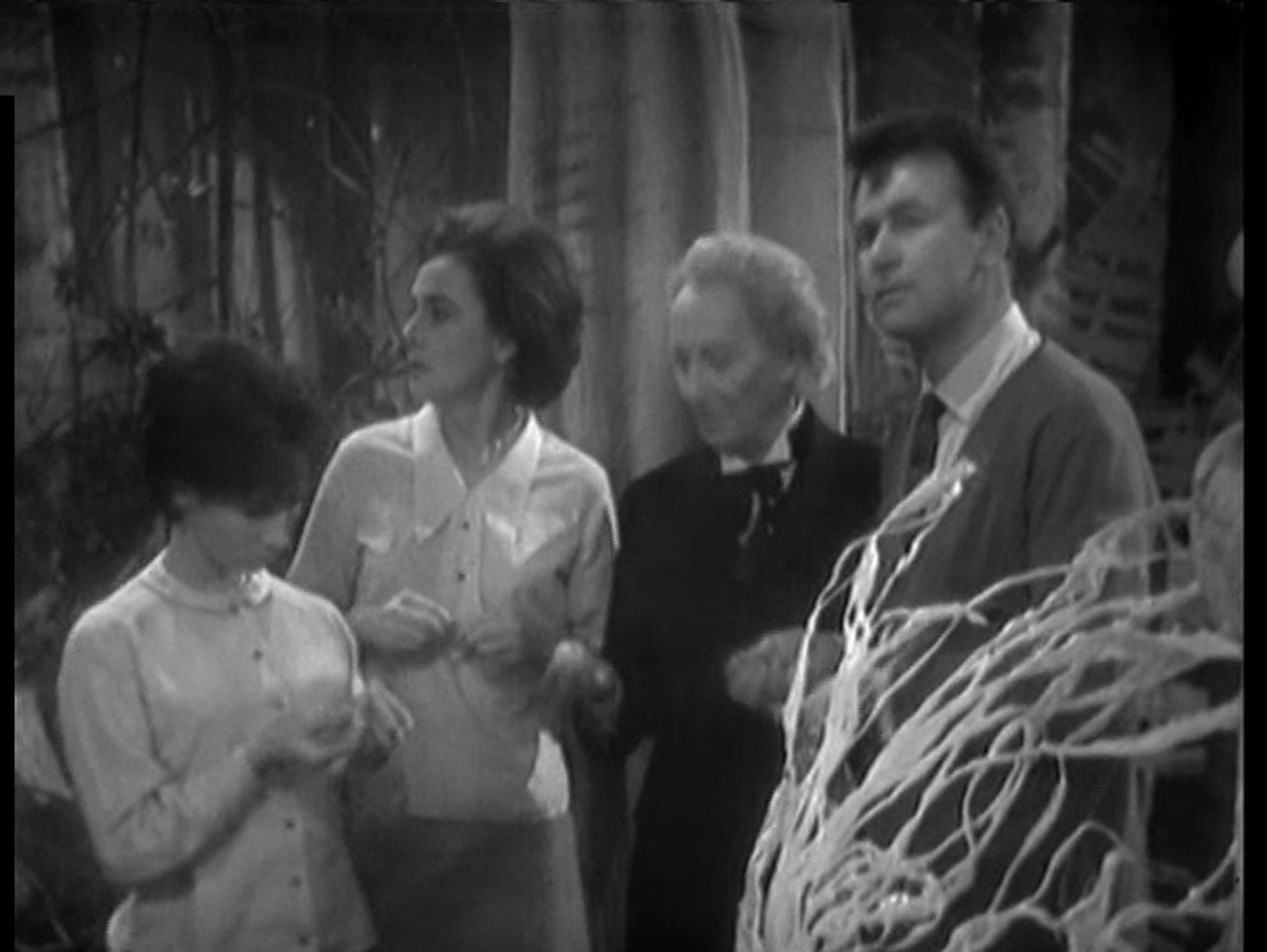
The TARDIS lands in a forest where every tree has turned to stone. In the distance, a gleaming city stands on a dead world.
- Low on mercury
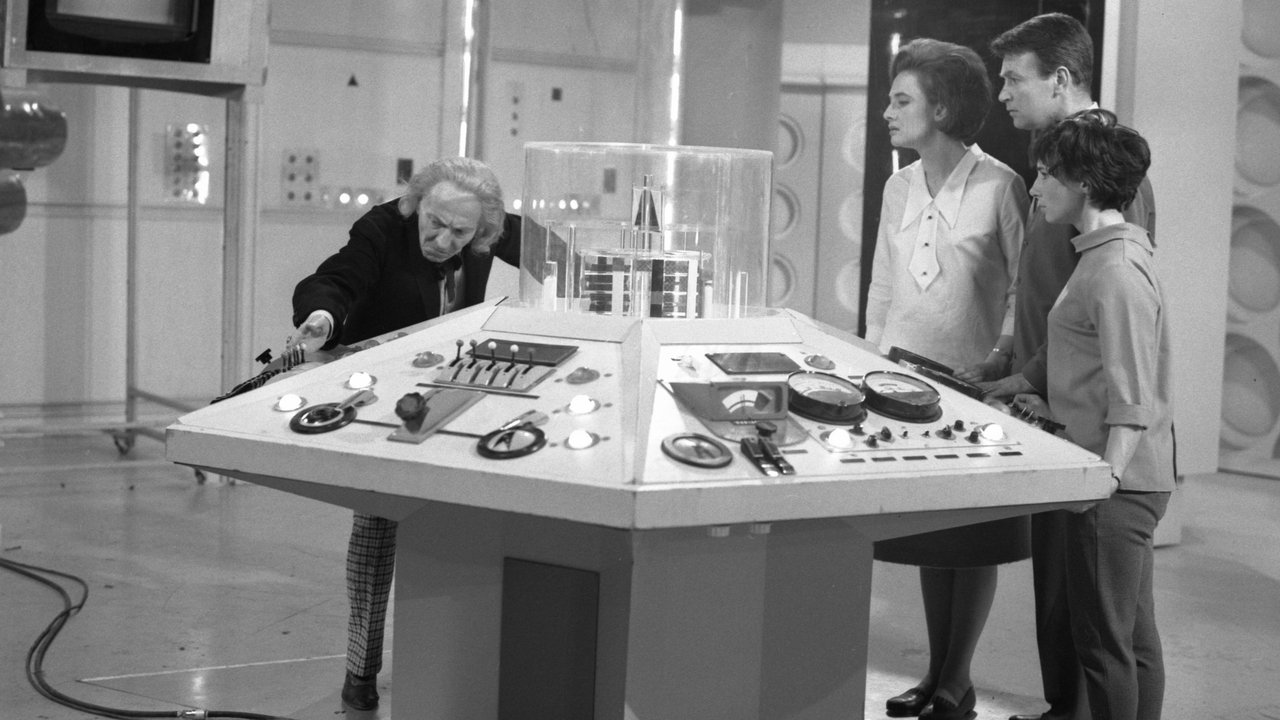
The Doctor announces the ship's fluid link needs mercury, so off they go to the city. Everyone is feeling a little unwell.
- The city's inhabitants
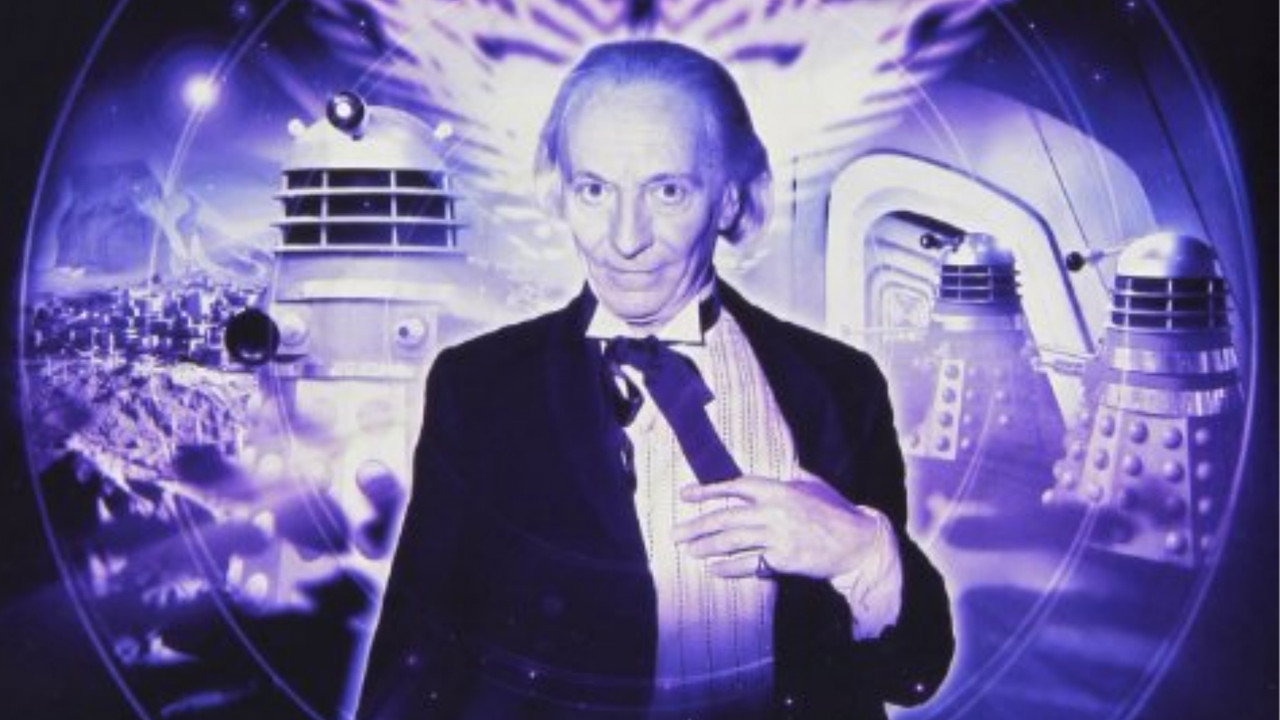
The travellers meet the Daleks, learn they have radiation sickness, and send Susan back to the ship for drugs. Outside, she meets the Thals.
Peace, at a priceSpoiler · tap to reveal
The Thals have sworn off war, the Daleks hold the TARDIS fluid link, and Ian has to find a way to make peaceful people fight.
Into the citySpoiler · tap to reveal
Two groups attack from front and rear and meet in the Daleks' control room, where the Daleks are about to set off a new bomb.
Why it still matters
This is the story that turned Doctor Who from a curiosity into a habit. Part one drew 6.9 million viewers; the last two parts drew 10.4 million each, and by the end the show's audience had grown by half. What followed got its own name: Dalekmania.
It nearly didn't happen. Sydney Newman, who started the show, wanted no "bug-eyed monsters," and he and the head of serials, Donald Wilson, were unhappy with Terry Nation's story. Nothing else was ready, though, so they had to accept it. Raymond Cusick then designed the creatures themselves: no legs, no face, a single eyestalk, and nothing that moves like a person.
Under the shiny casings, Nation was writing about the bomb. Skaro is a world ruined by a neutron war centuries earlier, and its two surviving peoples have gone in opposite directions: the Thals outside, the Daleks sealed in their city. Nation drew on Britain's memory of the Nazis for the Daleks, and you can hear it in the way they talk about anyone who isn't one of them.
The Thals learn to fight, and the city goes dark
The Daleks' plan is to explode another neutron bomb and flood the atmosphere with radiation, finishing the Thals off for good. The Thals refuse to fight; Alydon insists his people are peaceful now. So the travellers stage a test: a threat to hand a Thal woman over to the Daleks, and Alydon hits Ian before he realises what he has done. There are things the Thals will fight for after all. Ian, Barbara and a few Thals slip in through the back of the city while the Doctor and Susan lead the frontal attack, and in the struggle in the control room the city's power is cut and the Daleks die before the bomb goes off.
The Doctor also owns up that the fluid link was never short of mercury; he faked the fault because he wanted to see the city. It's a telling first move for the character: his curiosity is what dragged everyone into danger. The Daleks' end is almost an accident, and Nation's idea, that a peace nobody will defend doesn't last, lands harder than the fight does.
Challenge the DNA
Were the travellers right to push the Thals into fighting?
Or skip ahead to our reading
We lean yes, with a wince. Staging a threat to make Alydon throw a punch is manipulative, and the story knows it. Nation's point stands anyway: the Thals were going to die believing in peace, and nobody would have been left to remember it.
Behind the scenes
- Terry Nation was a comedy writer working for Tony Hancock. He first turned down script editor David Whitaker's offer because he was busy with Hancock, who also advised him not to write for kids. After the two fell out and Hancock sacked him, Nation got back in touch with Whitaker and said yes.
- Ridley Scott, then a BBC designer, was meant to design the serial, but a scheduling problem handed the job to Raymond Cusick. Cusick showed Shawcraft's Bill Roberts how a Dalek should move by sliding a pepper pot across a table, and later dismissed the rumour that a pepper pot was the inspiration.
- Shawcraft built four Dalek props for the serial. The operators inside, among them Robert Jewell and Kevin Manser, were chosen for being small and strong.
- Cusick was a salaried BBC designer, so he got no royalties; when he left the show in 1966, the BBC gave him a one-off payment of about £100. Given how much Dalek merchandise sold, he felt he should have had a royalty.
- Part one was recorded twice. The first recording, made on November 15, 1963, had an audio fault that let the studio talkback be heard, so the episode was taped again on December 6.
- Nation's story was planned at six parts; Lambert had it extended to seven.
- The directing was split: Christopher Barry did parts one, two, four and five, and Richard Martin took the others.
The thread
Bombs, mutants and the first of the Doctor's greatest enemies.
Came before
Shares DNA with
Left its mark on
DNA strand
Atomic-Age Anxiety
Skaro is what the early 1960s feared the world might become: a petrified forest, a sick sky, and survivors centuries after a neutron war. Nation's monsters are survivors of that war too, sealed in their city and afraid of everything outside it.
Every great sci-fi story is built from a handful of strands like this one. Each strand page explains how it works and traces it across shows, books and films.
If this one stayed with you
Where to go next, and why.
Watch · Doctor Who · Season 12
"Genesis of the Daleks"
Nation back on Skaro, eleven years on, asking how the Daleks got this way. Watching the two together shows how far the idea travelled.
Watch · Film
Dr. Who and the Daleks (1965)
The same story in Technicolor and widescreen, with Peter Cushing as an avuncular, eccentric inventor. A fun side-by-side.
Watch · The Twilight Zone
"Time Enough at Last"
Half an hour in a world after the bombs, made a few years before Skaro, with a single man where Nation has two peoples.
Read · Novel
The Time Machine — H. G. Wells
Wells's far future is split between two peoples, one gentle and one living with machines. If the Thals and the Daleks felt familiar, this is a good guess why.
Watch · TV series
Survivors (1975)
Terry Nation's own end-of-the-world drama, without monsters. The Thals' problem, how to start again, gets a whole series.
Your next episode
Three directions to go from here, all on Sci-Fi DNA.

More of this feeling
Genesis of the Daleks
Doctor Who
Terry Nation goes back to Skaro eleven years later to show where the Daleks came from.
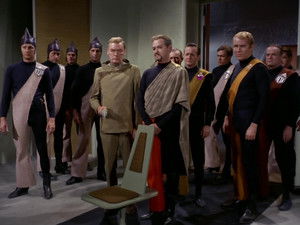
Same question, different answer
A Taste of Armageddon
Star Trek
Another planet shaped by a war that never ended, and visitors who have to decide whether to step in.
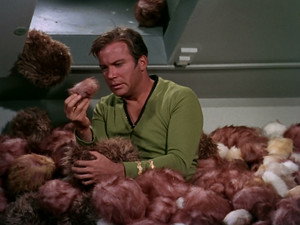
Something completely different
The Trouble with Tribbles
Star Trek
From creatures nobody can stop to creatures nobody can stop from breeding. A comedy, for a change.
Sources
- “The Daleks,” Wikipedia
- “Doctor Who Guide: The Daleks,” Doctor Who News
- “Doctor Who: The Daleks,” Television Heaven
- “Dalek,” Wikipedia
- “Terry Nation,” Wikipedia
- “Christopher Barry 1925 – 2014,” Doctor Who News, 2014
- “Dr. Who and the Daleks,” Wikipedia
- “Raymond Cusick,” Wikipedia
- “Christopher Barry,” Wikipedia