
More from the episode
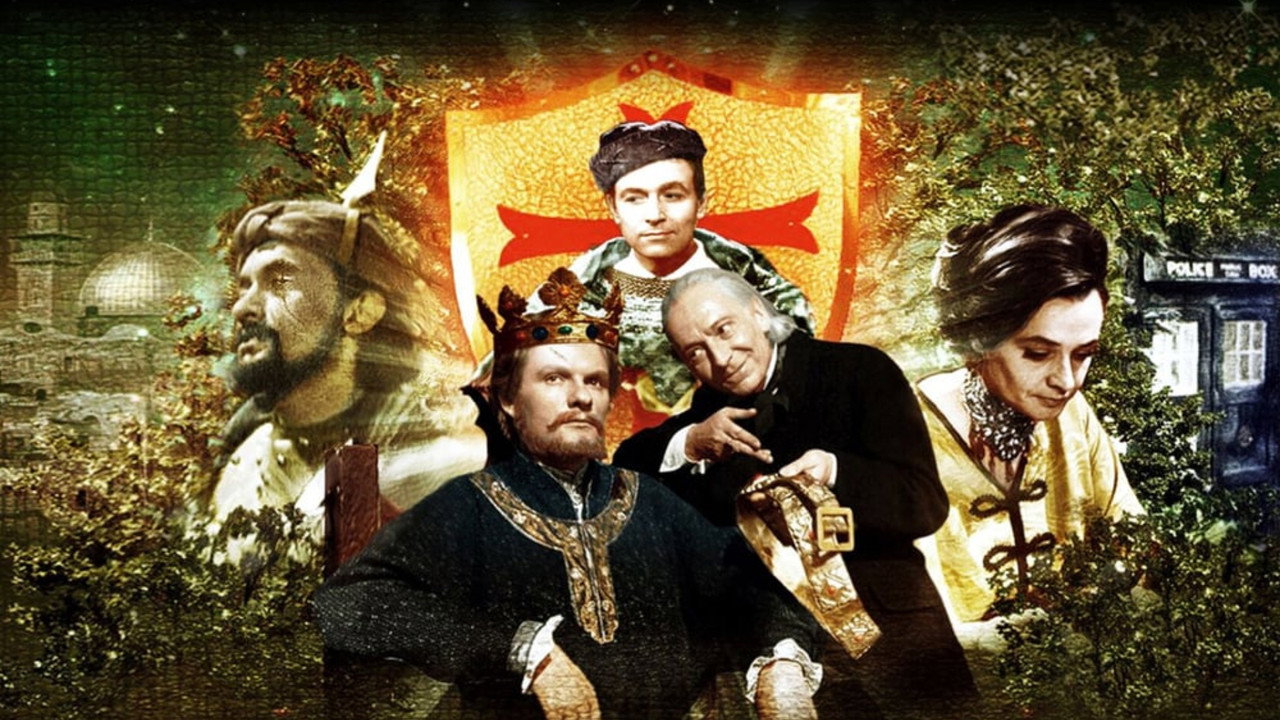
The story in 5 beats
- Ambush near Jaffa
The TARDIS lands in 12th-century Palestine in the middle of a Saracen ambush. The travellers save one of King Richard's knights, but Barbara is seized.
- The wrong royals
The emir El Akir brings Barbara and a knight to Saladin's brother Saphadin, believing them to be Richard and his sister. Saladin is intrigued by Barbara and asks her to tell him stories.
- A knight with a message
Richard knights Ian and sends him to Saladin to win Barbara's release and offer Joanna's hand to Saphadin. Joanna has not been asked, and won't consent.
- Honey and ants
Barbara escapes El Akir twice, the second time into his harem. Searching for her, Ian is staked out in the sun by a bandit and smeared with honey.
Sir Ian of JaffaSpoiler · tap to reveal
The Doctor tries to slip away from court politics and is arrested as a spy. Ian has an idea.
Why it still matters
The Crusade is the early show's history play, and the people who made it knew it. David Whitaker, who had just stepped down as script editor, had been fascinated by the Third Crusade and saw Richard the Lionheart and his sister Joan as material for a character drama. His successor, Dennis Spooner, thought the scripts mature and close to Shakespeare. Director Douglas Camfield called it "the best Doctor Who script I've ever worked on". Splitting the travellers between the two camps lets the story look at Richard's court and Saladin's with the same interest, which is what Radio Times' Patrick Mulkern singled out in 2008.
It is also a showcase for actors. Julian Glover plays Richard, Jean Marsh plays Joanna, and Bernard Kay plays Saladin. Howe and Walker's Television Companion says William Hartnell gives "one of his best and most intense performances as the Doctor" in part three. Not everyone agrees on the whole: John Kenneth Muir found it lacked the suspense of The Aztecs and the humour of The Romans, though he liked Glover and Marsh.
Only half of it can be watched today. The BBC wiped the original tapes, and parts two and four survive only as off-air sound recordings and tele-snaps, photographs taken from the screen during the 1965 broadcast. Part three was kept as a 16mm film print. Part one came back in 1999, from a film collector in New Zealand.
One last look at Jaffa
Ian talks the bandit Ibrahim into untying him and takes him along to Lydda. Before El Akir can harm Barbara, Haroun, a man who had sheltered her, stabs him to death and is reunited with Maimuna, his long-lost daughter. Meanwhile the Earl of Leicester catches the Doctor heading for the TARDIS, takes him for Saladin's spy and sentences him to death. Ian arrives as "Sir Ian of Jaffa" and says he will carry out the execution himself; the Doctor asks for one last look at Jaffa, and the four of them slip away in the TARDIS.
Whitaker took two real events from late 1191, Richard's offer of his sister to Saphadin in October and the ambush near Jaffa in November, and rearranged their timing for drama. A moment of part four survives even though the episode doesn't: The Space Museum opens with the travellers frozen in place in their period costumes, and an off-camera cough heard on both soundtracks shows the clip was a filmed insert from part four of The Crusade.
Challenge the DNA
Was the Doctor right to slip away instead of staying to help?
Or skip ahead to our reading
He was right, and the story knows it. The travellers can't fix the Crusade. What they can do is help the people in front of them, like Barbara and Haroun, and then leave before history catches them.
Behind the scenes
- Whitaker left the script editor's job in October 1964, and on November 1 producer Verity Lambert commissioned a four-part historical from him to balance the science-fiction stories. He delivered Dr Who and the Crusades by January 15, 1965; working titles included Dr Who and the Saracen Hordes and The Lion-heart.
- Whitaker found Richard and Joan's affection "almost incestuous in its intensity". Scenes suggesting a sexual relationship were cut, partly because Hartnell felt they were wrong for a family show, which disappointed Glover.
- Camfield cast Glover after seeing him in An Age of Kings in 1960. When it looked as if Glover might not be free, Camfield interviewed Nicholas Courtney, whom he had known at school in Egypt, but decided he wasn't right. Jean Marsh had worked with Hartnell in Will Any Gentleman...? (1953), where she met her husband-to-be, Jon Pertwee.
- The European actors playing Saracens were blacked up by the make-up department.
- Barry Newbery based the sets on photographs in Jørgen Bitsch's 1962 book Behind the Veil of Arabia. Dudley Simpson's score, nine minutes recorded by five musicians on March 1, 1965, was his last for Camfield: the two fell out soon after.
- For the ant shots, assistant floor manager Michael E. Briant got 75 black ants from London Zoo, and production assistant Viktors Ritelis stood in when Russell wouldn't let them crawl on him. Camfield also brought a cow carcass into the studio to shoot through its ribs; it drew flies and smelled under the lights.
- The New Zealand Broadcasting Corporation bought the serial but never screened it, after censors gave it a prohibitive rating. Its prints were junked in 1974. Collector Bruce Grenville bought a 16mm copy of part one at a New Zealand film fair, and it reached the BBC in January 1999. The 2022 Blu-ray rebuilds parts two and four from photographs and the original soundtrack.
The thread
Real history seen from both sides, and time travellers who can't change it.
Came before
Shares DNA with
Left its mark on
DNA strand
Us vs. Them
The Crusades are about as clear a case of two sides as history offers, and the story refuses to pick one. Ian and the Doctor see Richard's court, Barbara sees Saladin's, and each camp has its schemers and its decent men.
Every great sci-fi story is built from a handful of strands like this one. Each strand page explains how it works and traces it across shows, books and films.
If this one stayed with you
Where to go next, and why.
Watch · Doctor Who
"The Aztecs"
The other great early historical, where Barbara learns what happens when you try to change history from the inside.
Watch · The Twilight Zone S2
"Back There"
Rod Serling's show sends a man into a real night in 1865, with the same weight of knowing how history goes.
Watch · Doctor Who
"City of Death"
Julian Glover's second Doctor Who role, in a very different story, fourteen years later.
Read · Novelisation
Doctor Who and the Crusaders — David Whitaker
Whitaker's own 1966 novel of his story, with a long added prologue and more action. A way into the parts you can no longer watch.
Your next episode
Three directions to go from here, all on Sci-Fi DNA.

More of this feeling
The Aztecs
Doctor Who
Another history story with a script that treats both sides as people.
Same question, different answer
A Quality of Mercy
The Twilight Zone
War, enemies and whether mercy has any place in either.
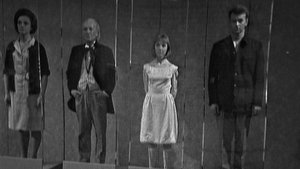
Something completely different
The Space Museum
Doctor Who
From the Holy Land to a museum on an alien planet, and a puzzle about time.