
More from the episode

The story in 5 beats
- The argument
At the Potomac Club in 1961, Peter Corrigan and his friends debate whether a man could go back in time and change history.
- April 14, 1865
Peter steps outside, feels dizzy, and finds the club is a boarding house. The residents tell him the date.
- Nobody listens
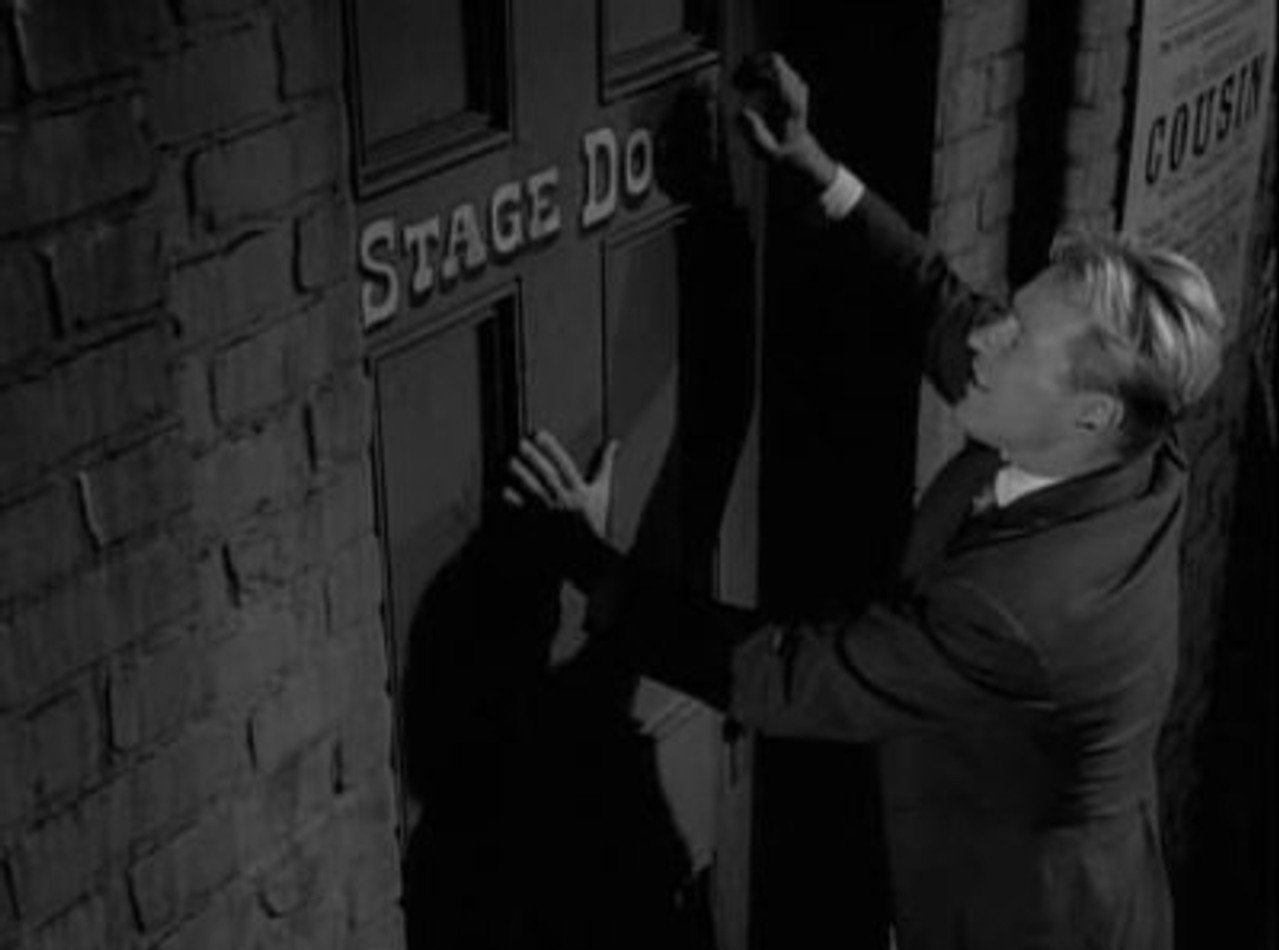
He rushes to Ford's Theatre to warn people and is arrested for disturbing the peace. One patrolman half believes him.
The kind strangerSpoiler · tap to reveal
A well-dressed man, Jonathan Wellington, gets him released, listens, then drugs his drink. The landlady knows that face.
Back at the clubSpoiler · tap to reveal
Peter returns to 1961. History stands, but the club attendant is now a rich man, and there's a handkerchief in Peter's pocket.
Why it still matters
Four men at the Potomac Club in Washington are arguing a parlor-game question: if you could go back, could you change what happened? Peter Corrigan, an engineer played by Russell Johnson, thinks you might. On his way out he feels faint, and the street outside belongs to 1865. It's the day Abraham Lincoln will be shot, and Peter is the only person in the city who knows it.
Everyone watching knows how that night ends, and the episode is built around that. Marc Scott Zicree called it a dramatic failure because the outcome is never in doubt; Del Reisman argued the suspense lies in how Peter tries. What keeps you watching is the maddening business of being right and sounding insane, with police who laugh at him, a sympathetic patrolman who gets overruled, and a polished stranger who seems to believe him.
The period dressing is careful. The Lincoln Conspirators site, which went through it frame by frame, credits the 35-star flag in the police station and a broadside for a play whose next night never happened. Lincoln himself never appears on screen, and Jerry Goldsmith's score does a lot of the work. Save some attention for the last scene.
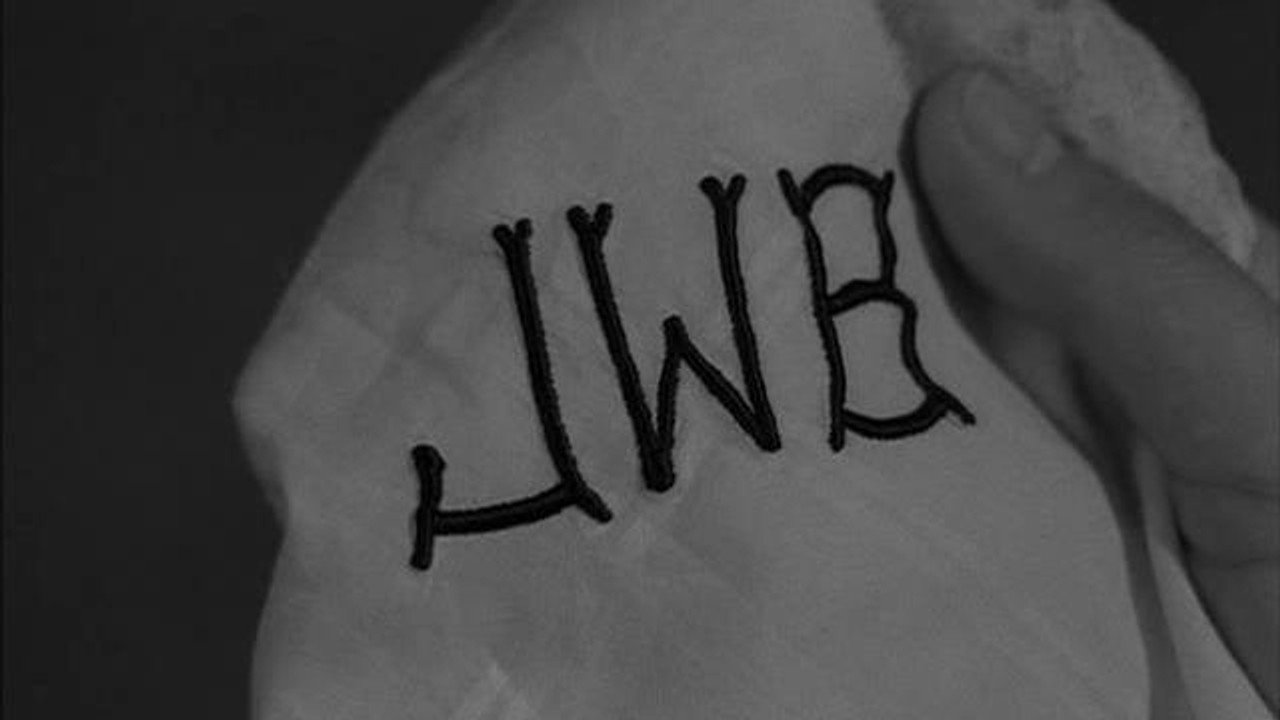
JWB
The kindly Wellington is John Wilkes Booth, and a handkerchief marked "JWB" proves it. Peter told the assassin exactly what was going to happen, and the assassin made sure Peter was asleep when it did. Outside, the news spreads that the president has been shot. Peter pounds on a window, and he is back in the Potomac Club in 1961.
One thing has moved. William, who was the club's attendant, is now a wealthy member. His great-grandfather was the policeman who believed Peter, and after "predicting" the assassination he rose to chief of police, then councilman, then a millionaire through real estate. Peter couldn't save Lincoln, but his warning made a family's fortune.
Serling's closing narration spells out the rule the episode has been testing, and the handkerchief in Peter's pocket is his proof that he was there.
Behind the scenes
- Serling first wrote it as an hour-long teleplay called "Afterwards," then cut it to about 23 minutes and retitled it.
- It was Russell Johnson's second Twilight Zone, after "Execution" in season one. David Orrick McDearmon directed both.
- Filming ran September 20 to 22, 1960, after rehearsals on September 16 and 19. The episode cost $47,090.82.
- The Ford's Theatre interior and the crowd shots are stock footage from the 1936 film The Prisoner of Shark Island.
- A scene with an 1865 attendant, played by Fred Kruger, was filmed and then cut.
- Jerry Goldsmith composed the score, and its tracks were reused in ten other episodes.
- John Lasell, who plays Wellington, was 32 during filming, older than the real Booth, who was 26 in 1865.
The thread
The Twilight Zone kept asking whether you can change the past, and kept answering "not much."
Came before
Shares DNA with
Left its mark on
DNA strand
Time Loops & Timelines
Most time-travel stories ask whether you can change the past. This one settles that early and spends its time on what trying costs, and on who ends up profiting. History here is tough fabric: the big events hold, and the small threads around them can be pulled.
Every great sci-fi story is built from a handful of strands like this one. Each strand page explains how it works and traces it across shows, books and films.
If this one stayed with you
Where to go next, and why.
Watch · Twilight Zone
"Execution"
Same star, same director, and another man pulled across the years into a time that doesn't want him.
Watch · Film
Twelve Monkeys
If you liked the idea of a warning nobody believes, Terry Gilliam's film runs that dread at feature length.
Watch · Star Trek
"The City on the Edge of Forever"
Kirk and Spock in the past, learning how stubborn history can be, with a much bigger heart at stake.
Read · Novel
11/22/63 — Stephen King
A man goes back to stop a presidential assassination, and the past pushes back. Peter's evening stretched into a whole novel.