More from the episode
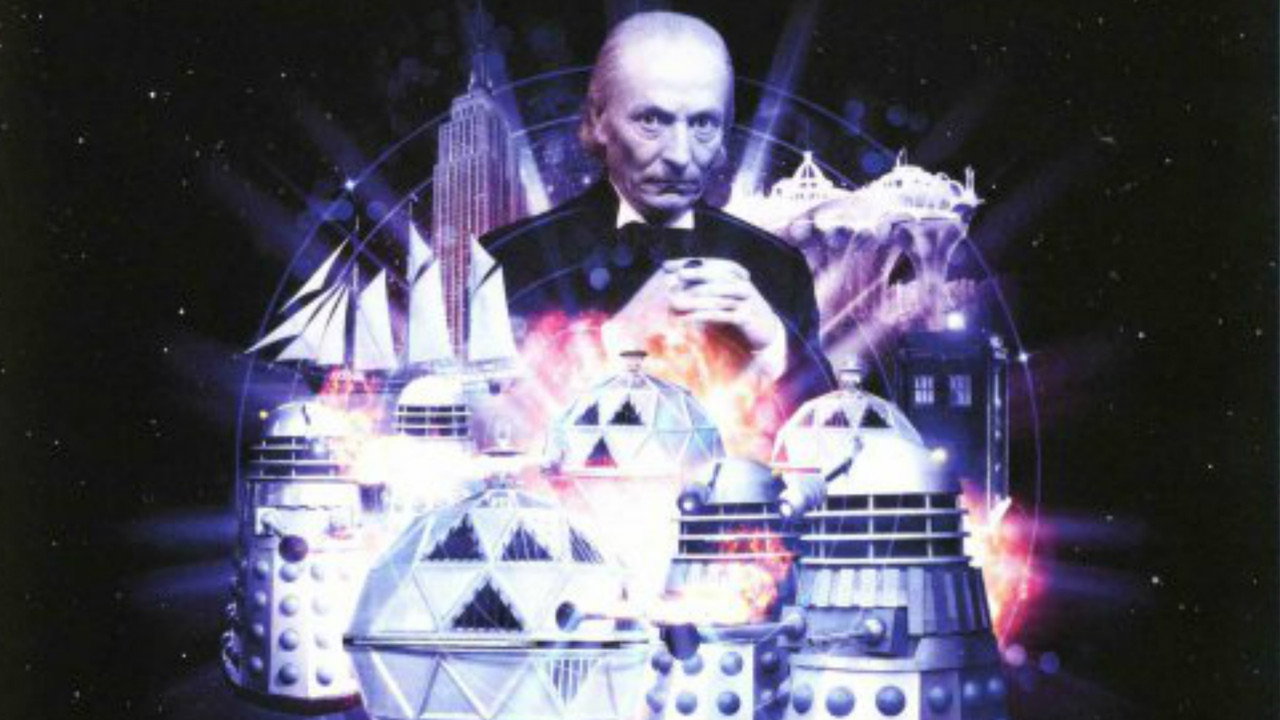

The story in 5 beats
- The Visualiser
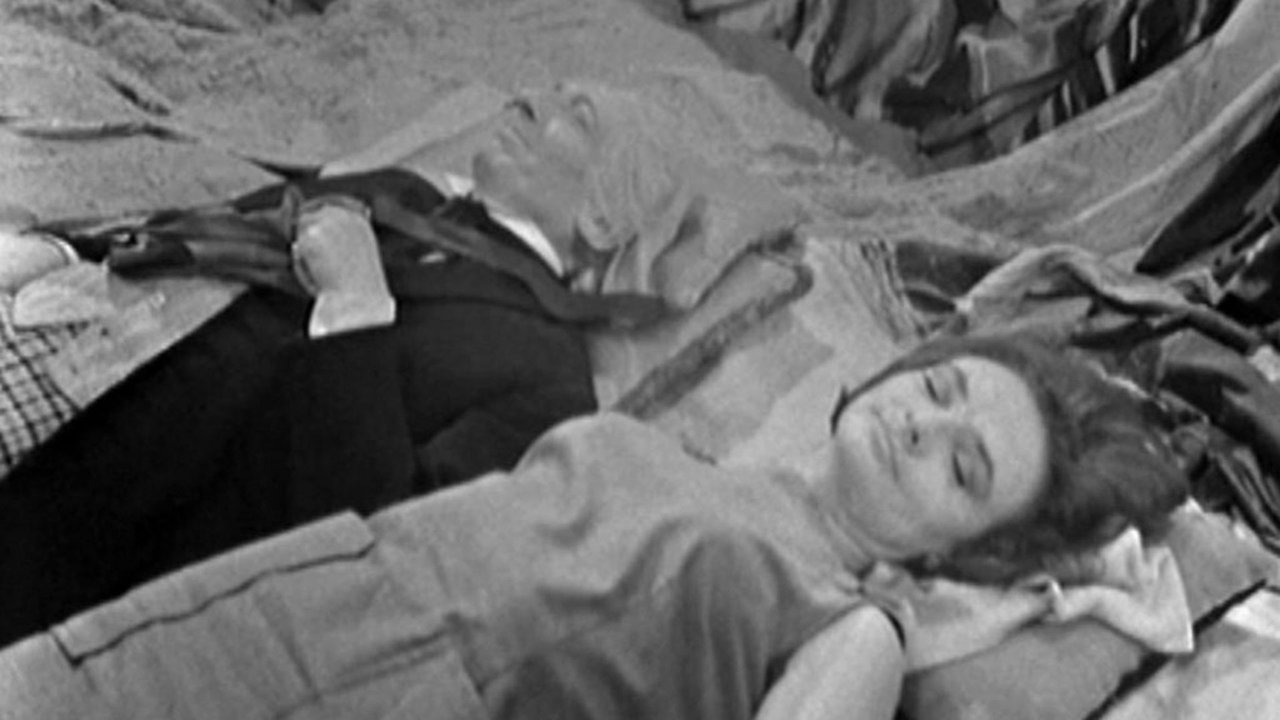
On the planet Aridius, the Doctor and Barbara tune their new souvenir through history and catch the Daleks setting off on a mission to wipe them out.
- Out of the sand
Ian and Vicki are trapped by a tentacled Mire Beast, the Daleks rise out of the dunes, and they threaten to kill the fish-like Aridians unless they hand the travellers over.
- Flight through eternity
The TARDIS stops on the Empire State Building, then aboard the Mary Celeste, then in a house haunted by Dracula and Frankenstein's monster. Each time, the Daleks arrive.
The other DoctorSpoiler · tap to reveal
On the jungle world of Mechanus, the Daleks send out a robot double of the Doctor, built to kill. A slip of the tongue gives it away.
The planet of decisionSpoiler · tap to reveal
Daleks and Mechonoids fight it out, and Ian and Barbara see a way home in the Daleks' own time machine.
Why it still matters
This is the story where the Daleks learn to travel in time, and Doctor Who turns its biggest monsters loose on a romp. Terry Nation's six episodes hop from a desert planet to 1960s New York to a ghost ship and a house full of horror-film monsters, with the Daleks never far behind. Radio Times reviewer Patrick Mulkern called it "unashamedly childish and comic-strip in tone and pace," and the 1995 Discontinuity Guide called it "one of the most bizarre Doctor Who stories." Composer Dudley Simpson was even asked to write light music, to take the edge off the Daleks.
It also left odd treasures behind. The opening episode is the first time viewers saw the TARDIS in flight, done by mixing a kaleidoscope shot of stars with a two-inch model. The travellers' new Time-Space Visualiser shows them Abraham Lincoln, Shakespeare and the Beatles playing "Ticket to Ride," and because the BBC wiped so much of Top of the Pops, that minute of footage is the only surviving record of the Beatles on that show.
The BBC put a large share of the budget into a new rival for the Daleks, the Mechonoids, gave them their own press launch and offered toy makers the merchandising rights. The toys sold poorly. The last episode, though, is the one people remember: the battle in the Mechonoid city and an ending that Sydney Newman, the BBC's head of drama, singled out when he called the serial "one of the best ever," and that Doctor Who Magazine's Graham Kibble-White said made up for the six episodes before it.
Silly old fusspots
The robot Doctor gives itself away by calling Vicki "Susan", and Barbara works it out. In the Mechonoids' city the travellers meet a stranded astronaut, Steven Taylor, played by Peter Purves, who had already turned up in the third episode as the hayseed tourist Morton Dill. Richard Martin, Hartnell and O'Brien enjoyed working with him so much that they told Verity Lambert he should be considered for the next companion. While the Daleks and Mechonoids destroy each other, the Doctor's friends escape, and Ian and Barbara decide to take the abandoned Dalek time machine home to London, 1965. They persuade the Doctor to help them work it.
Their return is told in a run of still photographs of the pair at Trafalgar Square, Westminster Bridge and other London sights, directed by Douglas Camfield. William Russell and Jacqueline Hill had each decided to leave on their own, and Hartnell, now the last of the original regulars, was greatly upset. The script only told him to say "something about always fussing and bothering and getting in the way." What he said was "Silly old fusspots." Lambert had them leave together, in a mildly romantic way, and SFX's Will Salmon later counted it among the best companion exits of all.
Challenge the DNA
Is The Chase a romp or a goodbye?
Or skip ahead to our reading
A romp that turns into a goodbye, and the goodbye is why it lasts. Five episodes of silliness earn the ending, because you've spent so long with these four. When the photos of London start, the jokes stop mattering.
Behind the scenes
- An early plan had the Beatles, dressed as old men, playing a fictional 50th-anniversary concert in the studio. Brian Epstein said no, thinking it bad for the band's image, but after they played "Ticket to Ride" on Top of the Pops in April 1965 he agreed to a minute of it. Much of Top of the Pops was later wiped, so this is the only surviving footage of the Beatles from that show.
- Verity Lambert gave the serial a bigger budget than usual, so the stories on either side of it, The Space Museum and The Time Meddler, were made on very little. It was the last Doctor Who job for Richard Martin, known as the "Dalek director", and for Dennis Spooner as story editor.
- Raymond Cusick based the Mechonoids on the designs of Richard Buckminster Fuller. They cost £812 and were launched to the press on April 14, 1965, with merchandising rights offered to manufacturers. The toys sold poorly.
- The crew had to round up Dalek props that were out on loan, including two at Belle Vue Zoo. Milton Subotsky offered eight casings from the film Dr. Who and the Daleks; they looked too different from the TV ones, so three stood in the background of the Dalek ship. The Dalek rising from the sand was finally done with an 18-inch puppet worked from below.
- Edmund Warwick, who plays the robot Doctor, saw the part as a thank-you for stepping in at short notice when Hartnell was injured during The Dalek Invasion of Earth. Hartnell showed him his mannerisms, Warwick shaved off his moustache, and he mimed to dialogue Hartnell had pre-recorded.
- The Mary Celeste's name plate was first painted "Marie Celeste" before being corrected. Barbara and Vicki's snack in the third episode was Mars bars; the production bought twelve.
- The first episode drew 10 million viewers and the rest between 9 and 9.5 million. The BBC erased the original tapes in 1967–69, but 16mm film copies made for overseas sales turned up at BBC Enterprises in 1978, so all six episodes survive.
The thread
Daleks in time machines, horror-film monsters in a fairground house, and a robot that almost passes for the Doctor.
Came before
Shares DNA with
Left its mark on
DNA strand
Sci-Fi Played for Laughs
The Daleks are still out to kill everyone, but here they chase the TARDIS into a haunted house and onto the Empire State Building, and Dudley Simpson was asked for light music to take the edge off them. The scariest monsters on television become part of the fun.
Every great sci-fi story is built from a handful of strands like this one. Each strand page explains how it works and traces it across shows, books and films.
If this one stayed with you
Where to go next, and why.
Watch · Doctor Who
"The Space Museum"
The story just before, where the travellers pick up the Time-Space Visualiser they use in the first episode here.
Watch · Doctor Who
"The Dalek Invasion of Earth"
The same writer and director's Dalek story from six months earlier, played straight. A good measure of how far The Chase leans into comedy.
Watch · Star Trek
"What Are Little Girls Made Of?"
Another 1960s show giving its hero an android double, the year after The Chase.
Read · Novelisation
Doctor Who: The Chase, John Peel
Peel's 1989 novelisation puts back most of Nation's original ideas, many of which were cut for time and money rather than taste.
Your next episode
Three directions to go from here, all on Sci-Fi DNA.
More of this feeling
The Chase
Star Trek: The Next Generation
Same title, different chase: Picard racing rivals across the galaxy after a puzzle.

Same question, different answer
USS Callister
Black Mirror
What happens when a copy of someone can pass for the real thing?
Something completely different
The Time Meddler
Doctor Who
A smaller, sharper story set on the eve of 1066.
Sources
- “The Chase (Doctor Who),” Wikipedia
- “Doctor Who (1963–1996), Season 2, The Chase: The Executioners,” BBC
- “Doctor Who (1963–1996), Season 2, The Chase: The Death of Time,” BBC
- “Doctor Who (1963–1996), Season 2, The Chase: Flight through Eternity,” BBC
- “Doctor Who (1963–1996), Season 2, The Chase: The Death of Dr Who,” BBC
- “Doctor Who (1963–1996), Season 2, The Chase: The Planet of Decision,” BBC