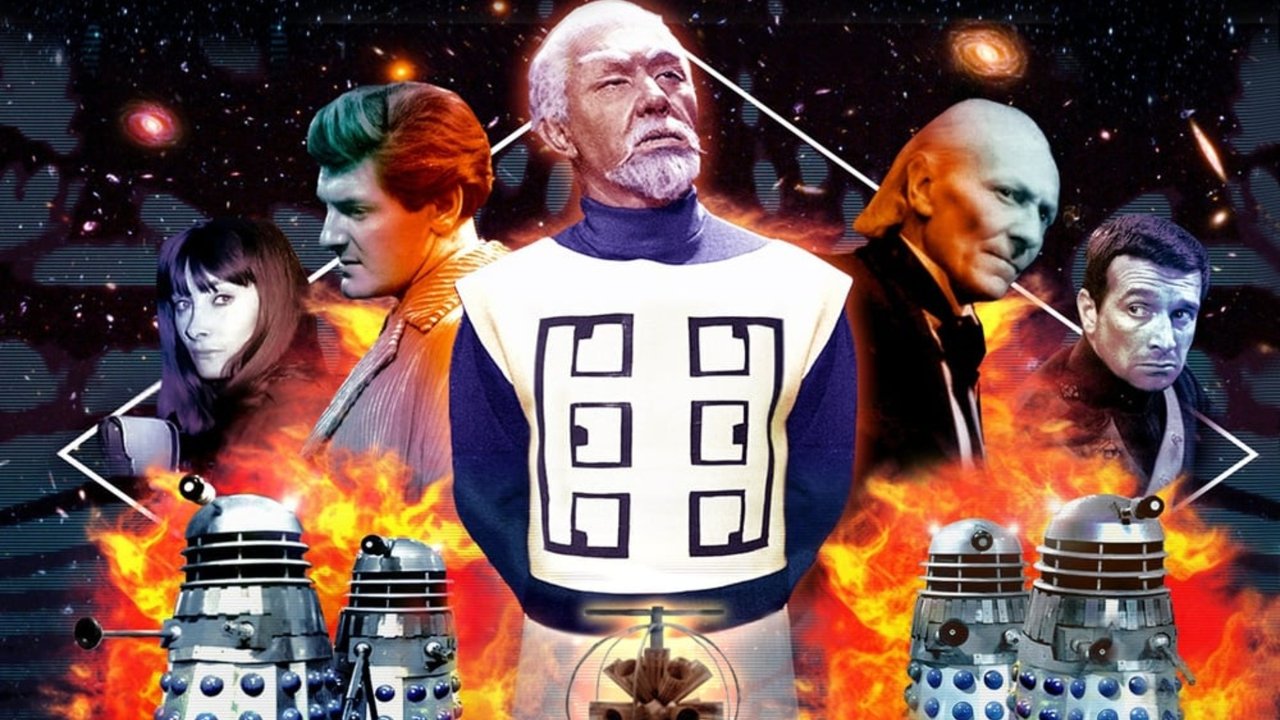
More from the episode
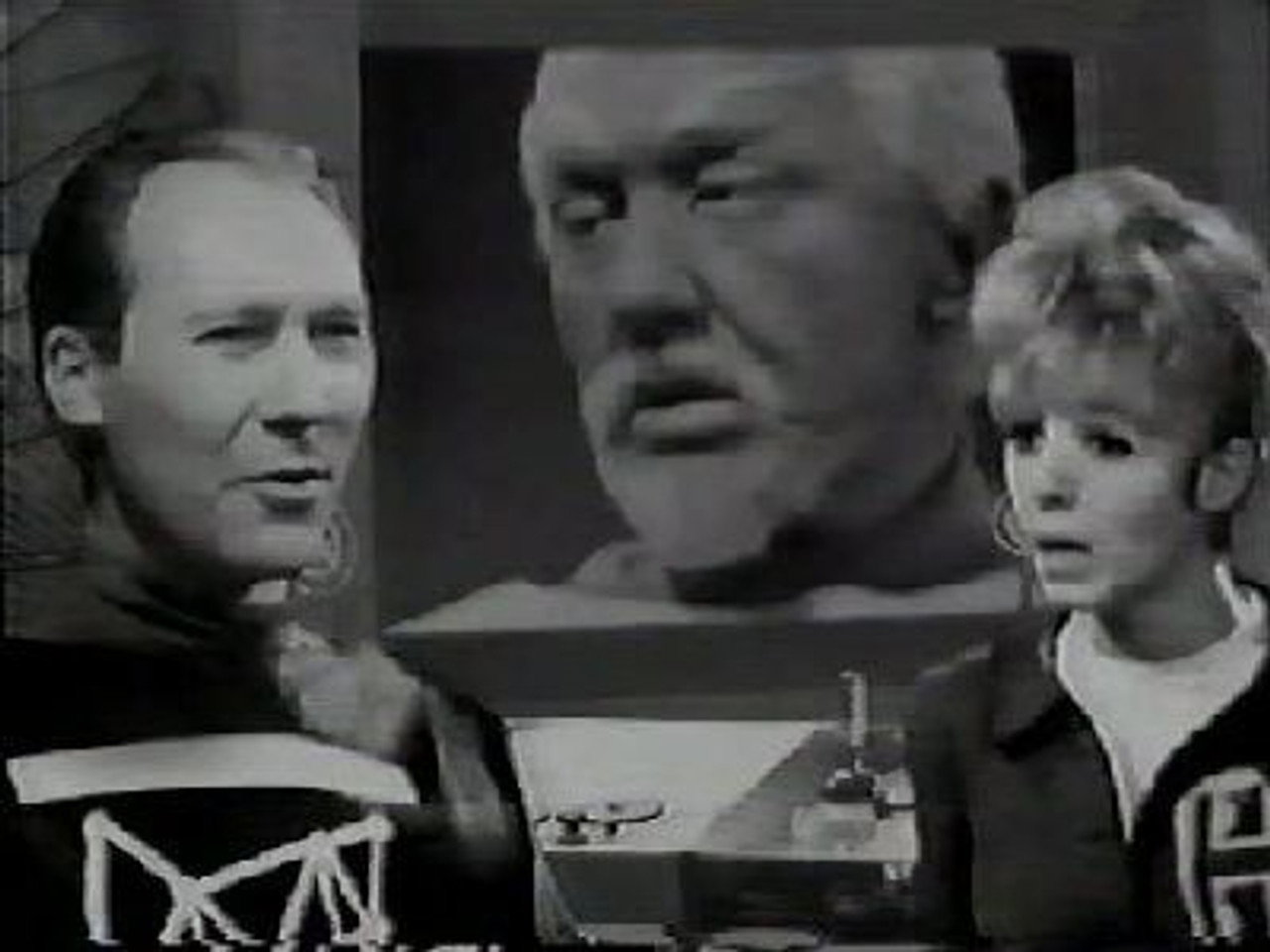
The story in 5 beats
- Help on Kembel
Looking for medicine for the wounded Steven, the Doctor meets Space Agent Bret Vyon and finds the Daleks forging an alliance with powers from across the galaxy.
- Mavic Chen's gift
The Guardian of the Solar System, Mavic Chen, has brought the core for the Daleks' Time Destructor. The Doctor steals it and escapes in Chen's own ship.
- Christmas on the run
The chase runs from Earth to the planet Mira and back to Kembel, then by TARDIS to a police station, a silent-film set and a cricket match at the Oval.
The first lossesSpoiler · tap to reveal
A hostage-taker drags Katarina into an airlock, and Bret Vyon is shot dead by his own sister, Sara Kingdom, on Chen's orders.
The Time DestructorSpoiler · tap to reveal
Back on Kembel the Daleks turn on Chen, the weapon is switched on, and Sara is caught in it as time races forward.
Why it still matters
This is the biggest thing Doctor Who tried in the 1960s. It ran for twelve Saturdays, from November 1965 to the end of January 1966, and stayed the show's longest serial until The Trial of a Time Lord in 1986. It is still the longest made by a single director, Douglas Camfield. Kim Newman, writing in The Independent, called it "the most ambitious serial ever attempted by Doctor Who." There was money riding on it too: the Daleks' return was expected to boost toy sales over Christmas.
You can see the joins, and they're part of the fun. It started as a six-parter by Terry Nation and doubled in length, so Nation and Dennis Spooner split the episodes between them. The one that fell on Christmas Day became a self-contained comedy that ends with William Hartnell turning to the camera to wish everyone at home a happy Christmas, forty years before the revived show made Christmas episodes a yearly habit. The Discontinuity Guide admired the epic ambition but thought the plot "worthy of six episodes at most." It is also where Nicholas Courtney first appears in the show, three years before he came back as Lethbridge-Stewart.
Most of it is still gone. The BBC wiped its tapes in the late 1960s, and episodes have come back one or two at a time since, the latest two in 2026. Seven of the twelve are still missing, though audio of every episode survives. Readers of Doctor Who Magazine placed it second of all the First Doctor's stories in their 2009 poll.
Three graves in twelve weeks
Katarina, the Trojan servant girl who had just joined the TARDIS, lasts four episodes. After the ship leaves the prison planet Desperus, a stowaway takes her hostage, and she opens the airlock, throwing them both into space. Producer John Wiles and script editor Donald Tosh decided to kill her for shock value, partly because later writers were struggling to fit her in. Bret Vyon goes next: he kills his old friend Daxtar, who is working for Chen, and is then shot by Sara Kingdom, his sister, on Chen's orders. Stranded with them on the planet Mira, Sara changes sides and joins the Doctor and Steven.
When Chen tries to give the Daleks orders on Kembel, they kill him. The Doctor gets hold of the Time Destructor, it starts up, and Sara ages to death beside him while he and Steven make it back to the TARDIS. The Daleks try to stop the weapon and it destroys them, along with all life on the planet. Camfield based Sara's death on Ayesha's in H. Rider Haggard's novel She, and two shots of it were cut for "policy reasons". The story ends with the Doctor and Steven counting the cost: Bret, Katarina and Sara. Katarina and Sara were the only companions killed on screen until Earthshock in 1982.
Challenge the DNA
Was killing off companions the right call?
Or skip ahead to our reading
It worked, and it was a bit cold. The deaths make this the most dangerous-feeling story of its era. But the production's own reason, that writers were struggling to fit a character in, sits uneasily next to how much the moment asks of an audience.
Behind the scenes
- Spooner first asked Nation for a six-part Dalek story in early 1965, hoping to repeat the success of The Dalek Invasion of Earth. The BBC's director of television, Kenneth Adam, suggested thirteen episodes, and head of drama Sydney Newman asked for twelve. Producer Verity Lambert agreed on condition that Nation and Spooner share the writing. Nation wrote parts 1–5 and 7, Spooner parts 6 and 8–12, and swapping those two meant each writer left a cliffhanger for the other to get out of.
- Tosh wanted the Christmas episode to parody the police series Z-Cars and asked about borrowing its cast and set. Z-Cars producer David Rose said no. The Doctor's "happy Christmas to all of you at home" was written into the camera script, though Tosh and Wiles both later said Hartnell had ad-libbed it. The episode drew the serial's smallest audience, 7.9 million, and an Appreciation Index of 39, the series' lowest to date.
- Nicholas Courtney was cast as Bret Vyon, whom Nation pictured as "the 007 of space", in September 1965. Jean Marsh, cast as Sara Kingdom the week after, had played Joanna in The Crusade earlier that year. Sara was first written as Bret's lover and rewritten as his sister.
- After the fifth episode went out, filmmakers at MGM's studios in Borehamwood, then making Stanley Kubrick's 2001: A Space Odyssey, got in touch to ask about Camfield's effects shots, among them bodies floating in space.
- Kevin Stoney's Mavic Chen was voted TV Villain of the Year for 1965 by Daily Express readers. Later critics have been less comfortable with his make-up and name, which some read as yellowface.
- The BBC wiped the tapes between 1967 and 1969. Prints of parts 5 and 10 turned up in 1983 in the basement of a Church of Jesus Christ of Latter-day Saints building in Wandsworth; former BBC engineer Francis Watson returned part 2 in 2004; and the charity Film is Fabulous! recovered parts 1 and 3 from a late collector's films, released on BBC iPlayer on April 3, 2026. The only pictures from the Christmas episode are home photographs from Robert Jewell, who played Bing Crosby in it.
The thread
Daleks, a traitor at the top and a war fought across time, with a Christmas detour.
Came before
Shares DNA with
Left its mark on
DNA strand
Us vs. Them
The Daleks have built a coalition, and humanity's own leader has signed up. The serial is a long war story in which everyone has to pick a side, and the Doctor spends twelve weeks trying to keep one small part out of the wrong hands.
Every great sci-fi story is built from a handful of strands like this one. Each strand page explains how it works and traces it across shows, books and films.
If this one stayed with you
Where to go next, and why.
Watch · Doctor Who
"The Dalek Invasion of Earth"
The 1964 serial this one was built to follow up: the Daleks in a ruined London, and the first time they felt like a real army.
Watch · Doctor Who
"The Chase"
The Daleks' first hunt for the TARDIS through time and space, from earlier in 1965.
Watch · Doctor Who
"Genesis of the Daleks"
Ten years on, Terry Nation goes back to the Daleks' beginnings and asks what it would take to stop them.
Watch · Star Trek
"The Doomsday Machine"
Another 1960s story about a weapon big enough to finish worlds, told in one tight hour.
Read · Novelisation
The Mutation of Time, John Peel
The second of Peel's two 1989 books that tell the whole serial, including the parts you can't watch.
Your next episode
Three directions to go from here, all on Sci-Fi DNA.

More of this feeling
Genesis of the Daleks
Doctor Who
The Daleks again, ten years later, and darker still.
Same question, different answer
Balance of Terror
Star Trek
Loyalty, betrayal and an enemy who thinks they're doing the right thing.
Something completely different
The Trouble with Tribbles
Star Trek
After twelve weeks of war, a comedy about a growing pile of fur.