More from the episode

The story in 5 beats
- London in ruins
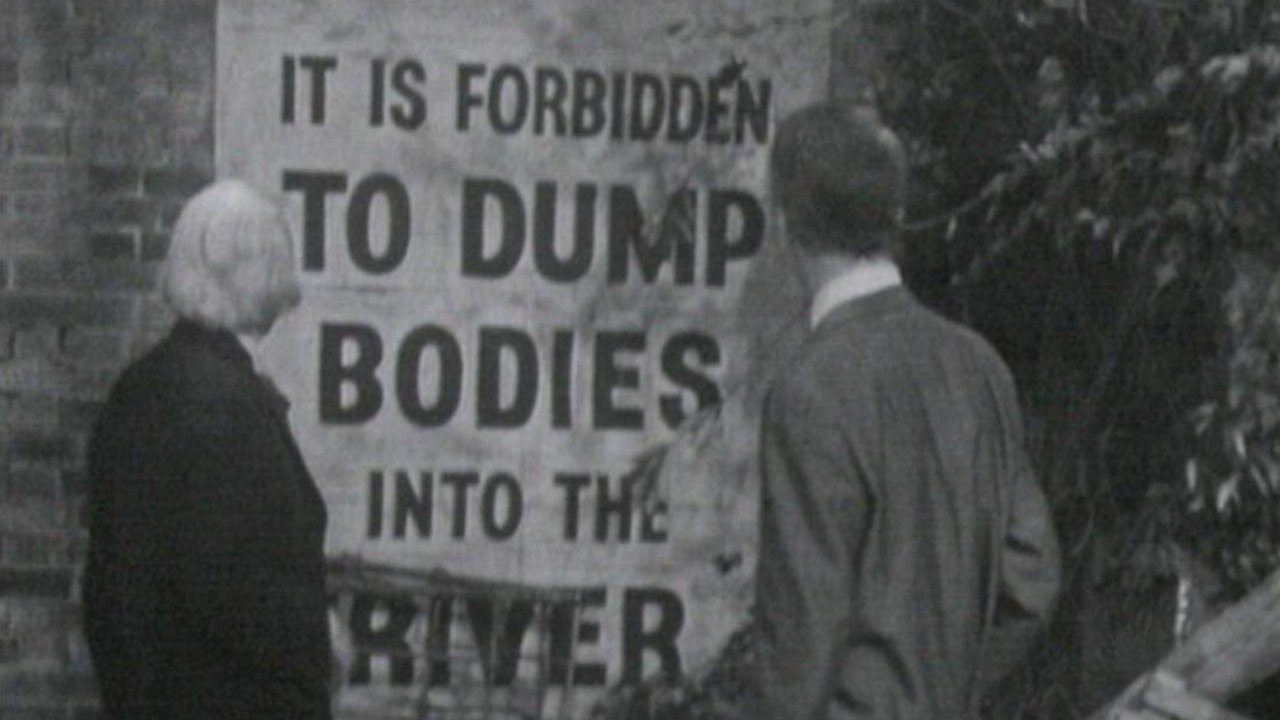
The travellers think they are home in London at last, until they see the state of it. The city is in ruins and the streets are empty.
- Out of the water
The Doctor and Ian are cornered by Robomen, humans with helmets that make them obey, and a Dalek rises from the river.
- The resistance
Barbara and Susan join rebels hiding in an old Underground station, led by Dortmun, a scientist in a wheelchair with a bomb he thinks can crack Dalek casings.
The mineSpoiler · tap to reveal
Everyone converges on a vast Dalek mine near Bedford, where the invaders mean to blow out the Earth's core and fly the planet like a ship.
A key in the dustSpoiler · tap to reveal
After the battle, the Doctor locks the TARDIS doors with Susan outside and says goodbye.
Why it still matters
This is where the Daleks became a fixture. They had been the hit of the first season, and in March 1964 script editor David Whitaker commissioned Terry Nation to bring them back; by the time it aired, word in the BBC was that the Director-General, Hugh Greene, was eager to see more of them. Bringing them to Earth, and to London in particular, was the big idea. The Financial Times critic T. C. Worsley praised the serial for creating a universal image for the Daleks.
It was also the first major location shoot in Doctor Who. Director Richard Martin had an agreement with the police to clear parts of central London, and at about 5:30 on a Sunday morning in August 1964 the crew filmed a deserted Trafalgar Square, then Whitehall, Westminster Bridge and the Royal Albert Hall. Those empty streets give the story a grim, occupied feel, and the BBC's audience report found some viewers thought it too gruesome for children.
Audiences came in numbers: four million more than the previous story, with 12.4 million for the second and last episodes. The first episode ends with a Dalek rising out of the Thames, and Charlie Jane Anders of io9 later listed it among the show's greatest cliffhangers. In a Doctor Who Magazine readers' poll, it was voted the best First Doctor story.
The Doctor decides for her
The mine is the Daleks' real plan: drill through the crust, blow out the Earth's core and replace it with a device so they can pilot the planet through space. Ian jams the bomb capsule halfway down the shaft, the Doctor frees Barbara and Jenny, and with the Daleks' radio control broken, Barbara and the Doctor turn the Robomen against their masters. The explosion destroys the Dalek forces and sets off a volcanic eruption in England. Dortmun does not live to see it; he sacrificed himself earlier so Barbara and Jenny could escape.
Back in London, the resistance fighter David asks Susan to stay and marry him. She loves him but says she has to go with her grandfather, so the Doctor decides for her: he locks her out, tells her she deserves a life of her own, and promises to come back one day. She drops her TARDIS key and walks away with David. It was the show's first companion departure. Carole Ann Ford had announced in March 1964 that she was leaving because she was unhappy with how Susan had been written, and Hartnell, struggling through a difficult recording on October 23, left out two lines of the speech, including the closing "And remember love is the most precious jewel of all." Critics have praised the scene ever since, though John Kenneth Muir noted a sexist edge in the Doctor's last words and Christopher Bahn of The A.V. Club felt it lacked impact because the Doctor chooses for her.
Challenge the DNA
Was the Doctor right to lock Susan out of the TARDIS?
Or skip ahead to our reading
We think he was right, even though he didn't ask. Susan says she has to go with him, and she would have kept saying it. Locking the door is the kindest thing he does in the whole first run, and his speech through it is the reason this ending stays with people.
Behind the scenes
- Script editor David Whitaker commissioned Terry Nation in March 1964 after the success of the first Dalek story. Nation's storyline arrived in April as "The Return of the Daleks", and "The Daleks in Europe" turned up on some design paperwork before the title was settled.
- Location filming began at Trafalgar Square at about 5:30 a.m. on August 23, 1964. The designers painted Dalek markings on landmarks including Nelson's Column, and the police asked for them to come off. Later that week the crew used the closed Wood Lane tube station and Hammersmith Bridge.
- Hammersmith Bridge was picked because a hospital was close by in case anyone swallowed river water, and a taxi waited on standby. On August 28 the crew filmed in a quarry at Stone, in Kent, the first of many quarries in the show's history.
- The Dalek props were refurbished with new eyestalks, a dish on the back, better bases and a pedal mechanism. Peter Hawkins and David Graham recorded the voices.
- During camera rehearsals for episode three on October 2, William Hartnell hurt his back when a prop ramp failed. He was given a week off, the next episode was lightly rewritten, and Edmund Warwick stood in for the Doctor in episode four.
- Nicholas Smith, later Mr. Rumbold in Are You Being Served?, had his first speaking role here as Wells. When he found he was only in one episode he asked Richard Martin for more, and Martin brought him back to lead the human uprising.
- Jean Conroy, one of the two women in the woods, died in a street accident on November 14, 1964, before her episode was broadcast.
The thread
An occupied London, people turned into tools, and a resistance that keeps losing.
Came before
Shares DNA with
Left its mark on
DNA strand
First Contact & Invaders
Most invasion stories start with the landing. This one starts ten years later, when the war is over and lost, and asks what ordinary people do then: hide, collaborate, inform on strangers, or keep fighting with homemade bombs. The Daleks barely need to be on screen; the empty streets do the work.
Every great sci-fi story is built from a handful of strands like this one. Each strand page explains how it works and traces it across shows, books and films.
If this one stayed with you
Where to go next, and why.
Watch · Doctor Who · Season 1
"The Daleks"
The Daleks at home on Skaro, a year earlier. This sequel makes more sense, and looks bigger, once you know where they started.
Watch · Film
Daleks' Invasion Earth 2150 A.D. (1966)
The same story in colour and widescreen, with Peter Cushing. Worth watching next to the BBC original to see what changed.
Watch · Doctor Who · Season 25
"Remembrance of the Daleks"
Twenty-four years on, the show sends the Daleks back to London, and back to the junkyard where it all began.
Watch · The Outer Limits · S1
"The Invisibles"
Made the same year: another story of invaders who rule by putting something on people and making them obey.
Read · Novel
Doctor Who and the Dalek Invasion of Earth by Terrance Dicks
The 1977 Target novelisation, written from the camera scripts, for anyone who grew up reading the show before they could rewatch it.
Your next episode
Three directions to go from here, all on Sci-Fi DNA.
More of this feeling
The Daleks
Doctor Who
Where the Daleks began, on their own planet. See them before they came to London.
Same question, different answer
Metalhead
Black Mirror
Survivors hiding from machines in a broken Britain, half a century on.
Something completely different
The Rescue
Doctor Who
After the epic, a small two-part mystery on a distant planet.
Sources
- “The Dalek Invasion of Earth,” Wikipedia
- “The Dalek Invasion of Earth (Classic Episode Guide),” BBC
- “Daleks' Invasion Earth 2150 A.D.,” Wikipedia
- “Carole Ann Ford,” Wikipedia
- “Nicholas Smith (actor),” Wikipedia
- “The Dalek Invasion of Earth,” Radio Times (Mark Braxton), 2008
- “Doctor Who (Classic): "The Dalek Invasion Of Earth",” The A.V. Club (Christopher Bahn), 2011