
More from the episode
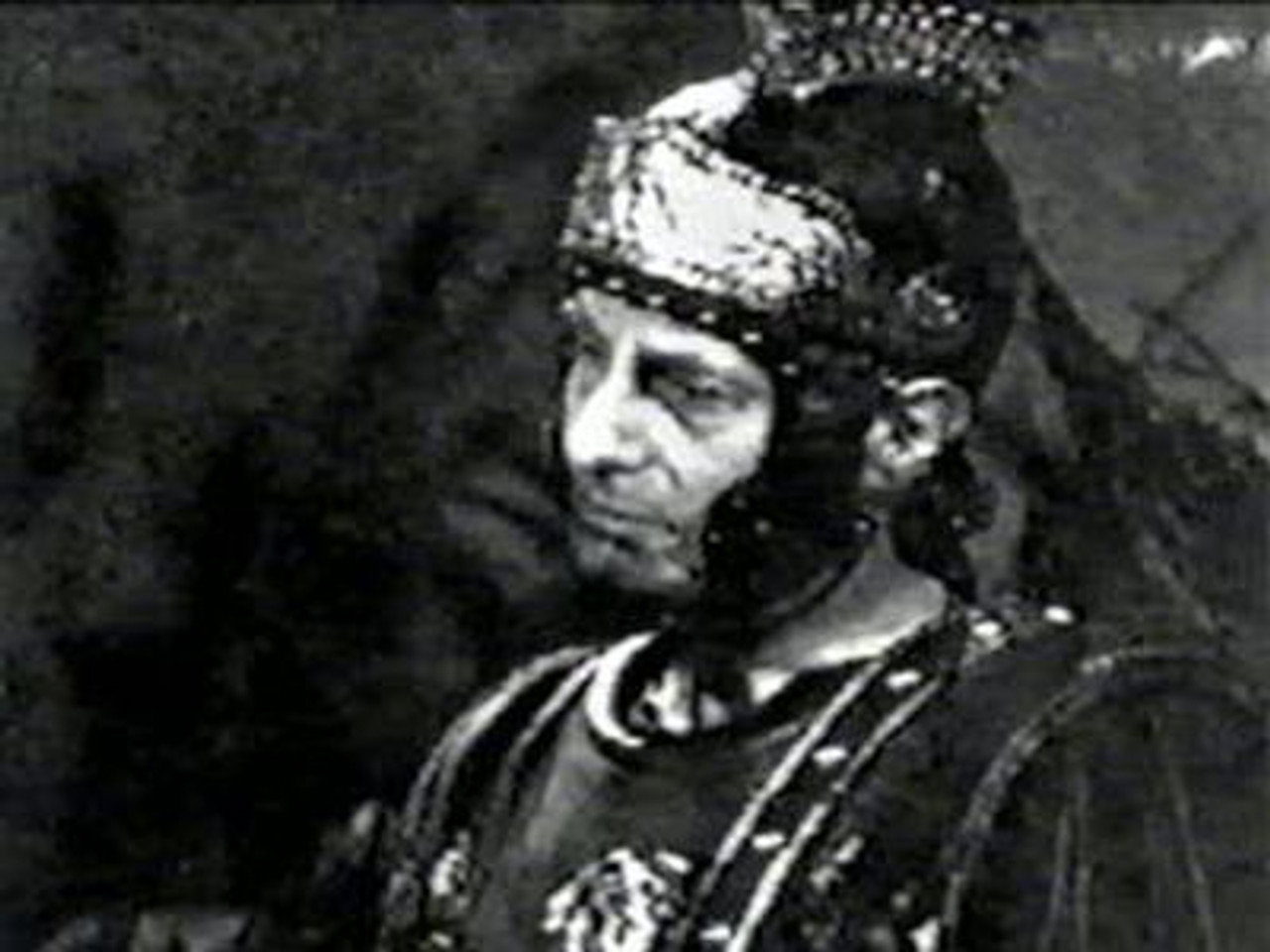
The story in 5 beats
- Zeus, apparently
The TARDIS appears just as Achilles is fighting Hector. Achilles takes the old man who steps out for Zeus and marches him to the Greek camp.
- A god with a deadline
Agamemnon wants his visiting god to help win the war. Steven goes looking for the Doctor and is caught by Odysseus.
- Cressida
Paris drags the TARDIS into Troy as a trophy. Vicki steps out, is renamed Cressida, earns the suspicion of the prophet Cassandra and the attention of Prince Troilus.
The horseSpoiler · tap to reveal
The Doctor proposes a wooden horse. The Greeks pretend to sail away, and the Trojans pull their prize inside the walls.
The fall of TroySpoiler · tap to reveal
The city burns. Vicki stays behind with Troilus, and the handmaiden Katarina helps a wounded Steven into the TARDIS.
Why it still matters
Doctor Who had been to real history plenty of times by 1965. This was its first trip into a myth: the siege of Troy and the wooden horse, a story that may never have happened, with the Doctor dropped into the middle of it. The writer, Donald Cotton, had written about Greek mythology for the BBC's Third Programme, and he agreed to write for the show only if he could pick the subject and bring some of his radio colleagues with him. Story editor Donald Tosh called the result "high comedy".
It is funny, and Cotton liked a pun so much that the BBC had to veto his punning episode titles (part four was briefly "Is There a Doctor in the Horse?"; part two still went out as "Small Prophet, Quick Return"). But the last episode is a city being sacked, and the BBC's own Programme Review Board called the serial "too brutal" afterwards.
It was also a turning point behind the camera. This was the first story Tosh controlled from the start, working with the new producer John Wiles, the first made in the show's third production block, and a hard few weeks for William Hartnell, who was unhappy about the changes around him. All four parts are missing from the BBC archive; what's left is a complete off-air audio recording and a few brief clips caught on 8 mm film during the Australian broadcast.
The Doctor writes the legend
Stuck in the Greek camp and short of options, the Doctor does the obvious thing for a man who knows the legend: he suggests the wooden horse. The Greeks hide inside, the Trojans take it in, and Troy falls. So the Doctor ends up as the author of the legend he arrived knowing. Cotton himself thought the horse was "almost certainly completely myth", and found the idea of the Doctor having a hand in it too good to leave out.
In the sack of the city Priam and Paris are killed and Cassandra taken prisoner. Vicki, now Cressida and in love with Troilus, chooses to stay with him. Her place in the TARDIS goes to Katarina, Cassandra's handmaiden, who helps the badly wounded Steven aboard. Behind the scenes it was Wiles's call: he declined to renew Maureen O'Brien's contract and told her on September 3, 1965. She was shocked, having come back from holiday expecting to carry on, but in the end glad to leave a part she had come to dislike. Vicki already had lines in the next serial's scripts, so they were rewritten for a new companion.
Challenge the DNA
Is it funny that the Doctor invents the wooden horse?
Or skip ahead to our reading
It's funny until it isn't, which is what makes the serial unusual. The jokes about Greek heroes give way to a city falling, and the story doesn't pretend the two belong to different worlds.
Behind the scenes
- Cotton researched the setting in The Cambridge Ancient History, N. G. L. Hammond's A History of Greece to 322 B.C. and other textbooks, and noted how often they disagreed with each other.
- He brought the composer Humphrey Searle from the Third Programme. Searle conducted eight players from the Sinfonia of London, who had also played on Cotton's Greek radio trilogy, for about 14 minutes of music, mostly guitar and horns.
- Troy was a model, built by designer John Wood's team in a little over a week so it would look hastily put together, and filmed on location so the actors seemed to be moving inside the city.
- Recording began at Riverside Studios on September 17, 1965. In camera rehearsals for part one Hartnell was hit by a camera and bruised his shoulder, and the production schedule kept him from his aunt Bessie's funeral.
- Max Adrian, best known for comedy, played Priam at Cotton's suggestion. Barrie Ingham, the Trojan prince Paris, had played the Thal Alydon in the cinema film Dr. Who and the Daleks, and the comedian Mike Reid, later of EastEnders, is an extra.
- Adrienne Hill, who plays Katarina, had auditioned for Joanna in The Crusade earlier that year; the part went to Jean Marsh.
- The serial averaged 8.35 million viewers. The tapes were wiped in 1967 and 1969, and only the audio and some brief 8 mm clips filmed off the Australian broadcast survive. Cotton's 1985 novelisation is narrated by Homer.
The thread
Homer, Shakespeare's Troilus and the show's first go at a legend instead of a history lesson.
Came before
Shares DNA with
DNA strand
Sci-Fi Played for Laughs
Cotton plays the Trojan War like a drawing-room comedy, with squabbling Greek commanders and a Doctor who has to bluff his way through being Zeus. The jokes stop in the last episode, and the BBC's own review board found what replaced them "too brutal".
Every great sci-fi story is built from a handful of strands like this one. Each strand page explains how it works and traces it across shows, books and films.
If this one stayed with you
Where to go next, and why.
Watch · Doctor Who
"The Romans"
The serial critics most often compare it with: the same mix of jokes and danger in an ancient city, and one you can still watch.
Watch · Star Trek
"Who Mourns for Adonais?"
Two years later, Apollo himself turns up and wants the Enterprise crew to worship him. A very different way of putting Greek gods in science fiction.
Read · Novelisation
Doctor Who: The Myth Makers, Donald Cotton
Cotton retold his own story in 1985 with Homer as the narrator, and added more jokes than the episodes had.
Read · Epic poem
The Iliad, Homer
The original cast list. Knowing who Hector, Achilles and Odysseus are meant to be makes Cotton's versions funnier.
Your next episode
Three directions to go from here, all on Sci-Fi DNA.
More of this feeling
The Romans
Doctor Who
Another ancient-world story that's happy to be funny.
Same question, different answer
The City on the Edge of Forever
Star Trek
What if a time traveller's actions are part of history all along?

Something completely different
Time Enough at Last
The Twilight Zone
From Homer to one of TV's best-known punchlines, in half an hour.