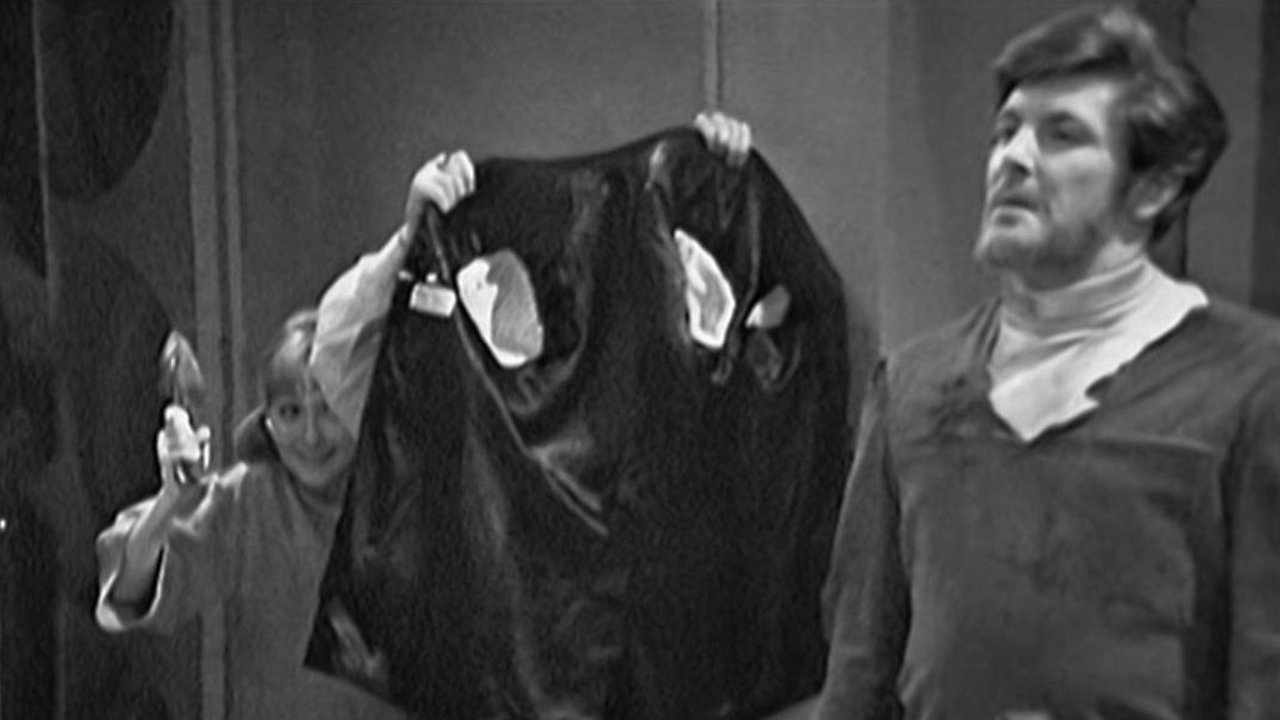
More from the episode

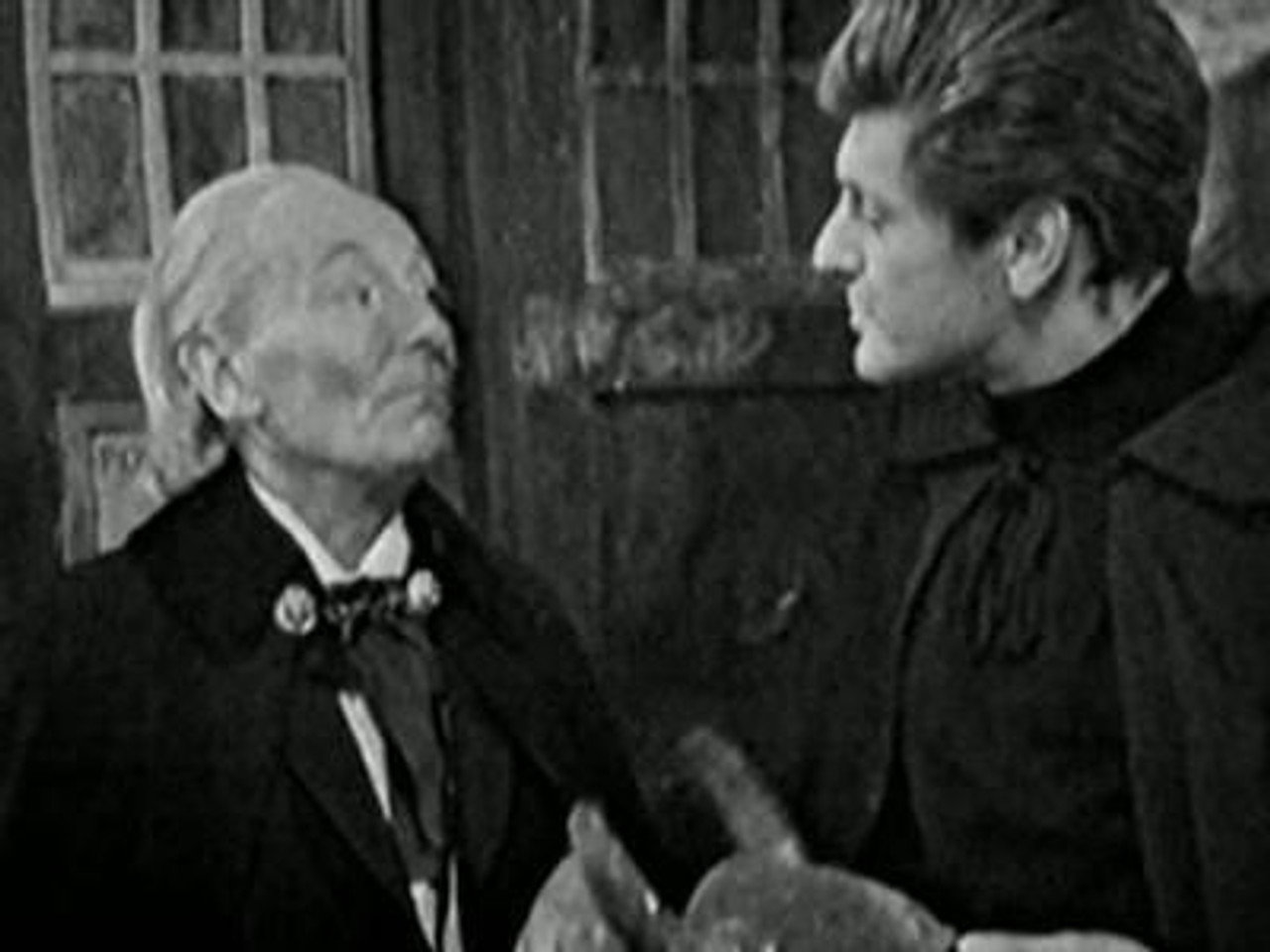
The story in 5 beats
- A stowaway aboard
The Doctor and Vicki find Steven Taylor, an astronaut, has stumbled into the TARDIS. It lands on a rocky beach, and a monk on the cliffs is watching.
- Saxons on edge
A discarded Viking helmet and the villagers' talk date the trip to 1066, before Harold has fought Harald Hardrada. The Doctor heads for the monastery.
- Chanting on a record
The monks' chanting turns out to be a gramophone. Steven and Vicki find a Saxon with a wristwatch, while Viking raiders land along the coast.
The sarcophagusSpoiler · tap to reveal
Under the monastery, a power cable runs into a stone coffin. It's the Monk's own TARDIS, so he must come from the Doctor's world.
CheckmateSpoiler · tap to reveal
The Monk plans to wreck Hardrada's fleet with a cannon and bombs, so Harold wins at Hastings. The Doctor sabotages his ship and leaves him stuck in 1066.
Why it still matters
Until mid-1965, Doctor Who's trips into history were costume dramas: the Aztecs, the French Revolution, Nero's Rome, with no monsters in sight. Dennis Spooner, who had written two of those and was now leaving as story editor, wanted to blend them with the show's science fiction, and The Time Meddler is the result: a real place and a real year, 1066, with something in it that doesn't belong. Fans call this kind of story a pseudo-historical, one of the new avenues Verity Lambert's team tried that season.
It also asks a question the series had mostly answered by decree. In "The Aztecs" the Doctor told Barbara that you can't rewrite history, not one line. Here someone wants to try, cheerfully, and thinks it would be an improvement. Spooner built the Monk as the Doctor's opposite after studying the show's original 1963 writers' guide: where the Doctor takes meddling seriously, the Monk finds it funny. He pictured him as a schoolboy prankster out of the Billy Bunter books.
Peter Butterworth, Lambert's choice for the part, plays him with a sly, pleased-with-himself charm, and his scenes with William Hartnell are the reason people remember the story. The Discontinuity Guide praised the pair, and Radio Times's Patrick Mulkern called the serial "the Doctor Who equivalent of comfort food." In 2020 Doctor Who Magazine readers voted it the second-best First Doctor story, with writer Emma Reeves pointing to how many things that would later define the show it tries out first.
Another one like the Doctor
In the crypt Steven and Vicki find a sarcophagus with a heavy cable running into it, and inside, another TARDIS. The Monk comes from the same place as the Doctor, and he has a very different idea of what to do with a time machine. His plan is to destroy Harald Hardrada's Viking fleet with neutron bomb shells from a cannon on the beach, so King Harold's army reaches Hastings fresh, beats William of Normandy and, he boasts, speeds human progress along by centuries.
The Doctor stops him with a bit of meddling of his own. He takes the dimensional control out of the Monk's TARDIS, and its interior shrinks until it is useless, leaving him stranded in 1066 while the real history goes ahead. Spooner wasn't done with him: when he came to work on The Daleks' Master Plan later that year, he asked for the Monk to be brought back, and Butterworth was keen.
Challenge the DNA
Is the Monk a villain or just a man with good intentions?
Or skip ahead to our reading
He's a menace, a cheerful one. Wanting to improve history sounds kind until you ask who gets a say. The Doctor's answer, a bit of meddling of his own, is the right one: nobody gets to edit the past to suit themselves.
Behind the scenes
- Spooner was leaving as story editor when Verity Lambert commissioned him to write a story introducing the new companion. Story editors weren't supposed to commission themselves, so Lambert had to justify it to the head of serials; he was approved on March 15, 1965. It was the first serial for his successor, Donald Tosh.
- The working title was Doctor Who and the Monk. Production assistant David Maloney joked that the crew called it The Vikings until they noticed how many more Saxon extras there were, and then called it The Saxons.
- It was made cheaply to balance the bigger budget of The Chase. Douglas Camfield did without a composed score and used drumbeats played by percussionist Charles Botterill plus stock music.
- Peter Purves had grown a beard to play Steven, but wore a fake one in the opening episode because Steven shaves partway through. Hartnell was on holiday when the second episode was recorded and taped his lines separately.
- The first episode went out at 6:55 p.m. instead of the usual 5:40 because Grandstand ran long with the Henley Regatta and the Wimbledon final. The four parts averaged 8.42 million viewers.
- The BBC wiped its tapes and later junked most of its film negatives. All four episodes were found in Nigeria in October 1984, cut in places. A 12-second shot of Vikings being stabbed, removed by censors, is still lost; its sound is on the 2008 DVD, and the picture was recreated for the 2022 Blu-ray.
The thread
Can you change the past, and should you? The first time *Doctor Who* let someone try.
Came before
Shares DNA with
Left its mark on
DNA strand
Time Loops & Timelines
The Monk treats history as something you can fix, like a typo. The story is a small, funny argument about whether the past can be changed, and it lets the Doctor win it by being just as sneaky as his opponent.
Every great sci-fi story is built from a handful of strands like this one. Each strand page explains how it works and traces it across shows, books and films.
If this one stayed with you
Where to go next, and why.
Watch · The Twilight Zone
"Back There"
Rod Serling's take on the same question four years earlier: a man who knows what happens at Ford's Theatre and tries to warn everyone.
Watch · Star Trek
"The City on the Edge of Forever"
The serious version of the argument, where changing one life in 1930 changes everything.
Watch · Doctor Who
"The Aztecs" (1964)
The other side of the debate, played straight, with Barbara trying to change history and the Doctor telling her she can't.
Read · Short story
"A Sound of Thunder" — Ray Bradbury
The classic story about how small a change to the past has to be before it matters.
Read · Novelisation
Doctor Who: The Time Meddler — Nigel Robinson
Target's own editor wrote it in 1987. Peter Purves read the audiobook in 2016.
Your next episode
Three directions to go from here, all on Sci-Fi DNA.
More of this feeling
The Romans
Doctor Who
Another history story that knows how to be funny.

Same question, different answer
Yesterday's Enterprise
Star Trek: The Next Generation
What happens when someone tampers with history, and who gets to put it right?

Something completely different
Galaxy 4
Doctor Who
Off to an alien planet with robots and a ticking clock.