
More from the episode
The story in 5 beats
- Paris, 1572
The TARDIS lands in a city where Catholics and Huguenots are close to open violence. The Doctor goes to see the apothecary Preslin; Steven meets Nicholas Muss in a tavern.
- Anne Chaplet
A frightened servant girl has overheard Catholic guards talking about a coming massacre. Nicholas finds her a place in the household of Admiral de Coligny.
- The Abbot of Amboise
The Doctor doesn't come back, and Steven becomes convinced that the Abbot, a powerful Catholic, is the Doctor in disguise.
The dateSpoiler · tap to reveal
The Doctor finally learns what day it is, insists they leave at once, and the TARDIS goes as the killing begins. Steven is furious.
Wimbledon CommonSpoiler · tap to reveal
In 1966 Steven walks out. The Doctor, alone, thinks about the friends who have left him, until a young woman named Dodo wanders in.
Why it still matters
There are no monsters in The Massacre, and for most of it there is barely a Doctor. It's a story set in the days before the St. Bartholomew's Day massacre of 1572, when Huguenots were killed across Paris. Script editor Donald Tosh suggested it, and producer John Wiles took it because he wanted the Doctor to witness history rather than interfere with it. At the BBC's Programme Review Board, Huw Wheldon found its "quiet episodes" refreshing. The Discontinuity Guide went as far as calling it "arguably the best ever Doctor Who story."
There are two firsts here. Paddy Russell was the first woman to direct Doctor Who, and William Hartnell, for the first time, plays two parts: the Doctor and the Abbot of Amboise. Hartnell was on holiday for part of the production, so Peter Purves's Steven carries much of the story; in Radio Times, Patrick Mulkern wrote that Purves "acquits himself admirably." Hartnell is billed only as the Abbot in parts 2 and 3, the only episodes in the show's history where the Doctor doesn't get top billing.
Nobody can watch it. The BBC wiped the tapes and got rid of the film prints, and no footage is known to survive. What's left is an off-air sound recording and some production photographs. Mark Gatiss, in Doctor Who Magazine, thought the loss "not quite the usual tragedy" because the audio "could almost have been written for radio."
History stays put
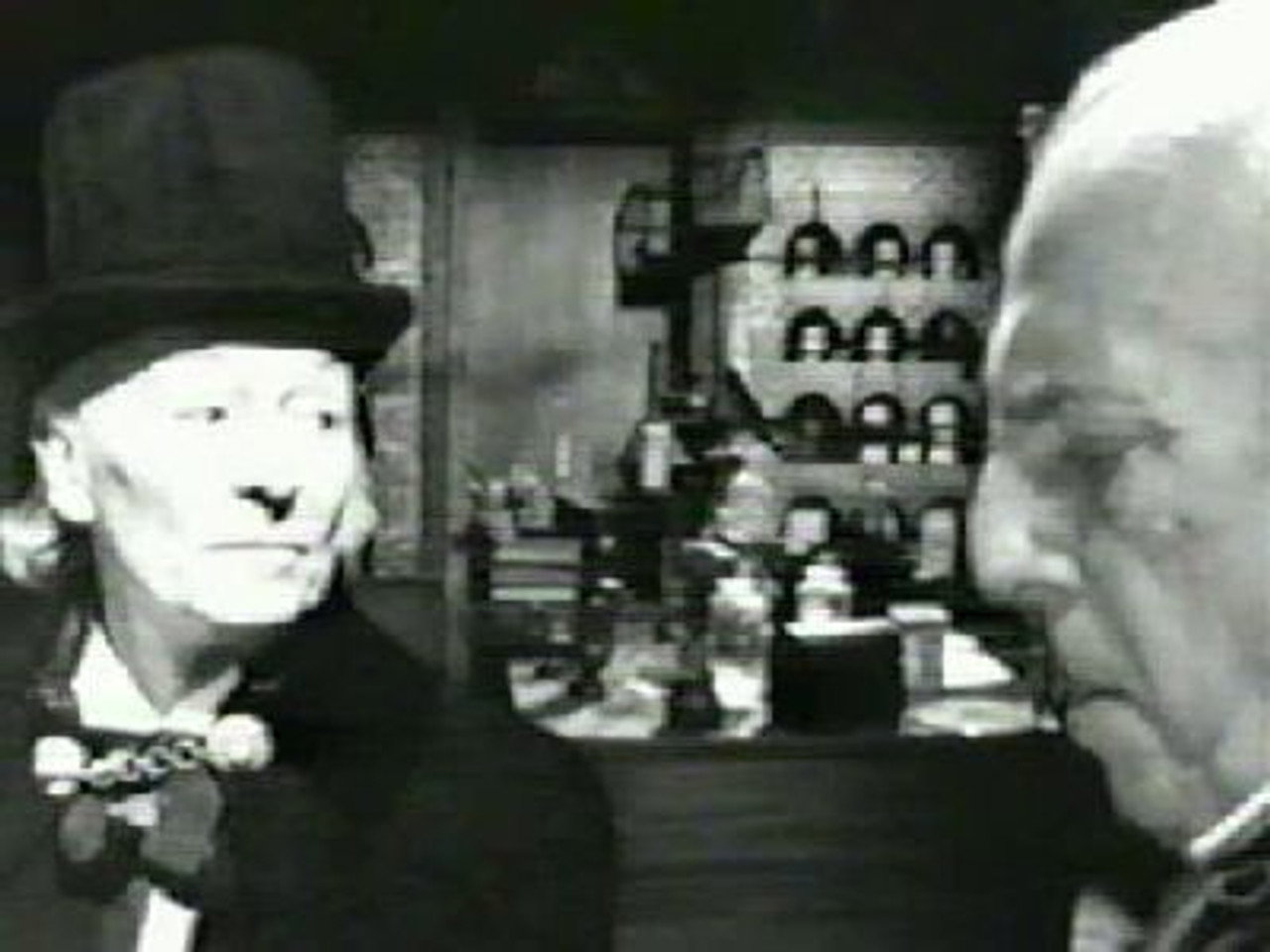
After the Abbot is killed, Steven and Anne meet the Doctor at Preslin's shop. Once he learns the date, he tells Anne to stay at her aunt's house and gets Steven back to the TARDIS as the massacre begins. Steven is angry at leaving his friends to die, and the Doctor insists that history can't be changed. When they land on Wimbledon Common in 1966, Steven says a curt goodbye and goes outside. Left alone, the Doctor speaks about his former companions and the home he can't go back to. Donald Tosh wrote that speech and called it his "final signature on the programme"; Hartnell worried it was too long but kept every word after Tosh praised it in rehearsal.
Then a young woman wanders in, Steven returns, and she introduces herself as Dodo Chaplet. Steven wonders whether she is Anne's descendant, and the Doctor takes off with her still aboard. Anne herself was first considered as the new companion, but Tosh and Wiles felt that rescuing her would mean changing history, so the script brought in her descendant instead, which suggests Anne survived. Jackie Lane's first work as Dodo was the location shot of her running to the TARDIS, for which she had to jump a ditch, and at one point fell in. The production had hoped the same scene would include a cameo from William Russell and Jacqueline Hill as Ian and Barbara; nobody knows whether they were asked.
Challenge the DNA
Was the Doctor right to leave Anne behind?
Or skip ahead to our reading
He was right by the rules the show set out, and that's what makes it hard. Steven's anger is fair. The Doctor's speech alone in the TARDIS shows what the rule costs him, and that's the part that stays with you.
Behind the scenes
- John Lucarotti, who had written Marco Polo and The Aztecs, first pitched the Indian Rebellion of 1857, which was turned down because historical stories then had to be set before 1600. His Viking story about Erik the Red was rejected next, as too like The Time Meddler. Wiles wanted a religious conflict, and Tosh suggested St. Bartholomew's.
- Tosh spent two days researching at the British Museum and two weeks rewriting Lucarotti's scripts, partly to avoid misrepresenting Admiral de Coligny. Lucarotti asked for his name to be taken off, but his agent talked him out of it. Tosh got a co-writer credit on part 4. It was his last credited work on the show, and part 4 was the first credit for his successor as script editor, Gerry Davis.
- Of the fifteen speaking characters, seven are real historical figures, among them Catherine de' Medici and Charles IX, and two more are based on real history. None of those nine talks to the Doctor, and only two share a scene with him, which James Cooray Smith describes as a deliberate choice to avoid any suggestion that he meddled with history.
- It was recorded at Riverside Studios in January and February 1966. Russell used sound effects on the studio floor for atmosphere: horses and carts in the streets, birdsong in the apothecary's shop, a bell for the curfew. Prints supplied by the British Museum stood in for the massacre in the last episode, which J. C. Trewin, in The Listener, called "a surely needless and nightmare-raising portfolio."
- André Morell, cast as Marshal Tavannes, was then offered a part in the film Daleks' Invasion Earth 2150 A.D., but his Doctor Who contract kept him from taking it.
- Audiences fell every week, from 8 million for part 1 to 5.8 million for part 4, the show's lowest figure since its first episode. Abroad it sold widely; Australia's ABC aired it and destroyed its prints in 1976. In a 2019 Digital Spy piece, Charles Norton, director of several animated reconstructions of missing episodes, said an animated version was unlikely any time soon because of the costumes and characters it would need.
The thread
Real history, a fixed date, and the question of whether the Doctor is allowed to help.
Came before
Shares DNA with
Retold in
DNA strand
Us vs. Them
Paris in 1572 is a city already split in two, Catholic and Huguenot, and Steven walks straight into one side of it. The serial keeps its eye on ordinary people caught in that split, and on how little a visitor from outside can do about it.
Every great sci-fi story is built from a handful of strands like this one. Each strand page explains how it works and traces it across shows, books and films.
If this one stayed with you
Where to go next, and why.
Watch · Doctor Who
"The Aztecs"
Lucarotti's earlier historical, built around the Doctor's insistence that history can't be rewritten.
Watch · Twilight Zone S2
"Back There"
A half-hour on the same itch: a man who knows what is about to happen in history and wonders whether he can do anything about it.
Watch · Doctor Who
"The Reign of Terror"
France again, two centuries on, in the Revolution's Terror of 1794.
Read · Novelisation
The Massacre, John Lucarotti
The closest you can get to seeing it, and to Lucarotti's own version, which gives the Doctor a bigger part in events.
Read · Book
The Black Archive: The Massacre, James Cooray Smith
A whole book on one lost serial: who wrote what, what changed, and why it reads the way it does.
Your next episode
Three directions to go from here, all on Sci-Fi DNA.

More of this feeling
The Reign of Terror
Doctor Who
Another trip into the bloodiest days of French history.

Same question, different answer
The Obsolete Man
The Twilight Zone
A state that decides some people don't deserve to live.

Something completely different
Back to Reality
Red Dwarf
Something completely different: four men in a very strange situation, played for laughs.