More from the episode
The story in 5 beats
- A mission from Gallifrey
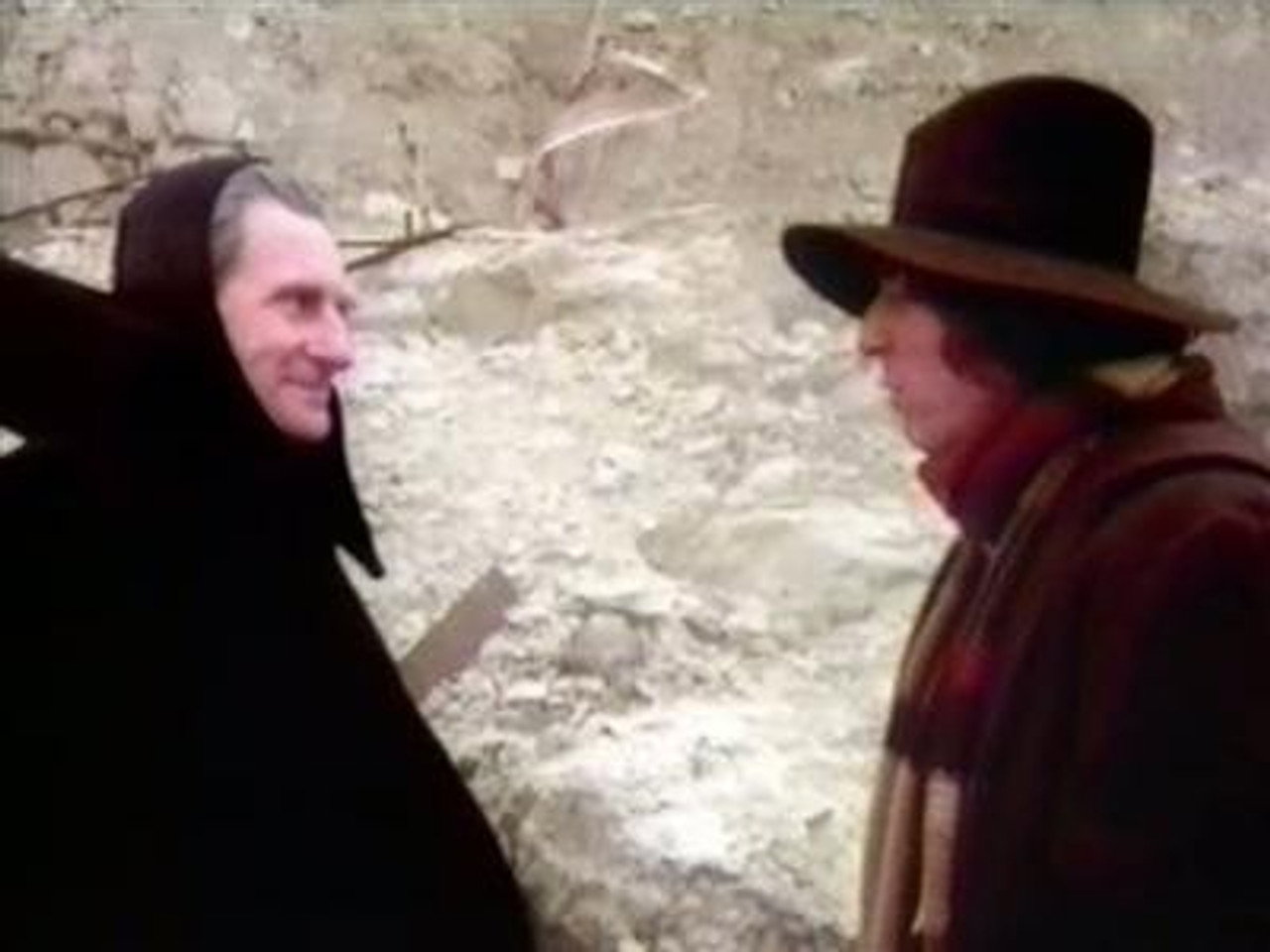
A Time Lord intercepts the Doctor, Sarah and Harry and sends them to Skaro, at the moment the Daleks are about to be created.
- The thousand-year war
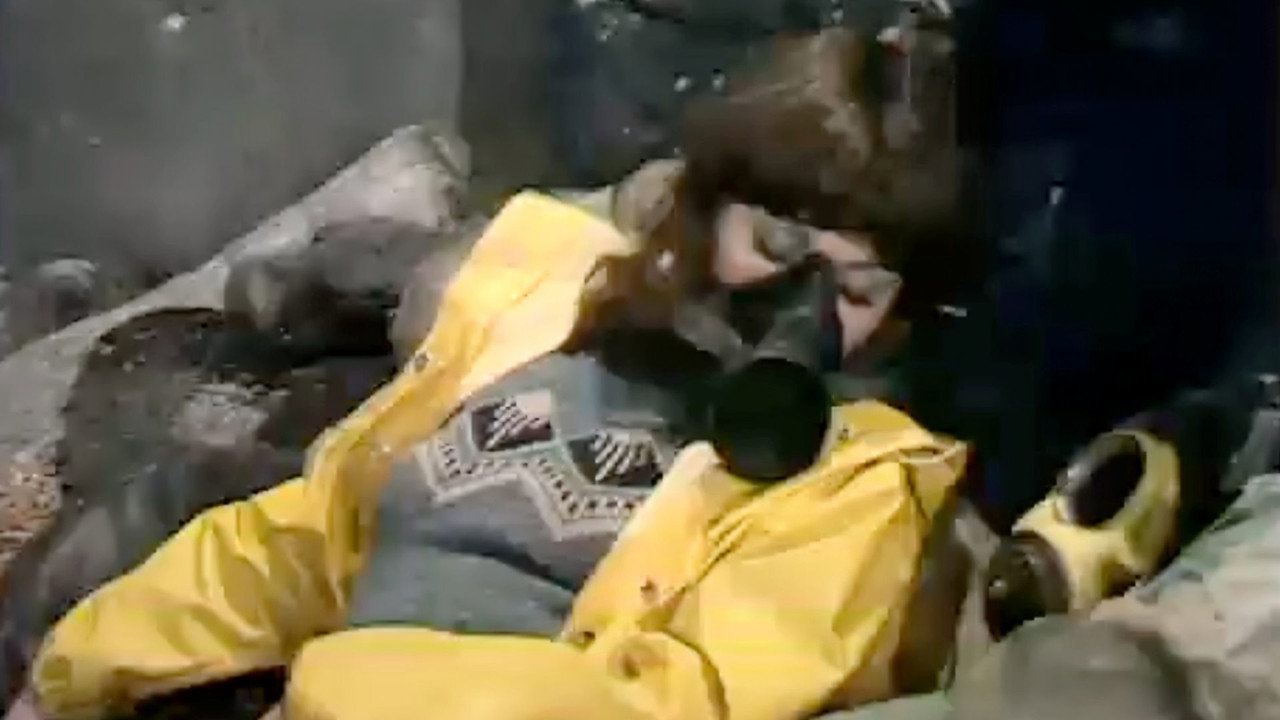
Kaleds and Thals fight on from domed cities across a poisoned wasteland of trenches, gas masks and land mines.
- Davros
In the Kaled bunker the Doctor meets the chief scientist, Davros, and the first of his new travel machines.
Have I the right?Spoiler · tap to reveal
With the means to end the Daleks in his hands, the Doctor stops to ask whether he has the right to wipe out a species.
The creation turnsSpoiler · tap to reveal
Davros's own people try to rein him in, and the Daleks show what they were built to be.
Why it still matters
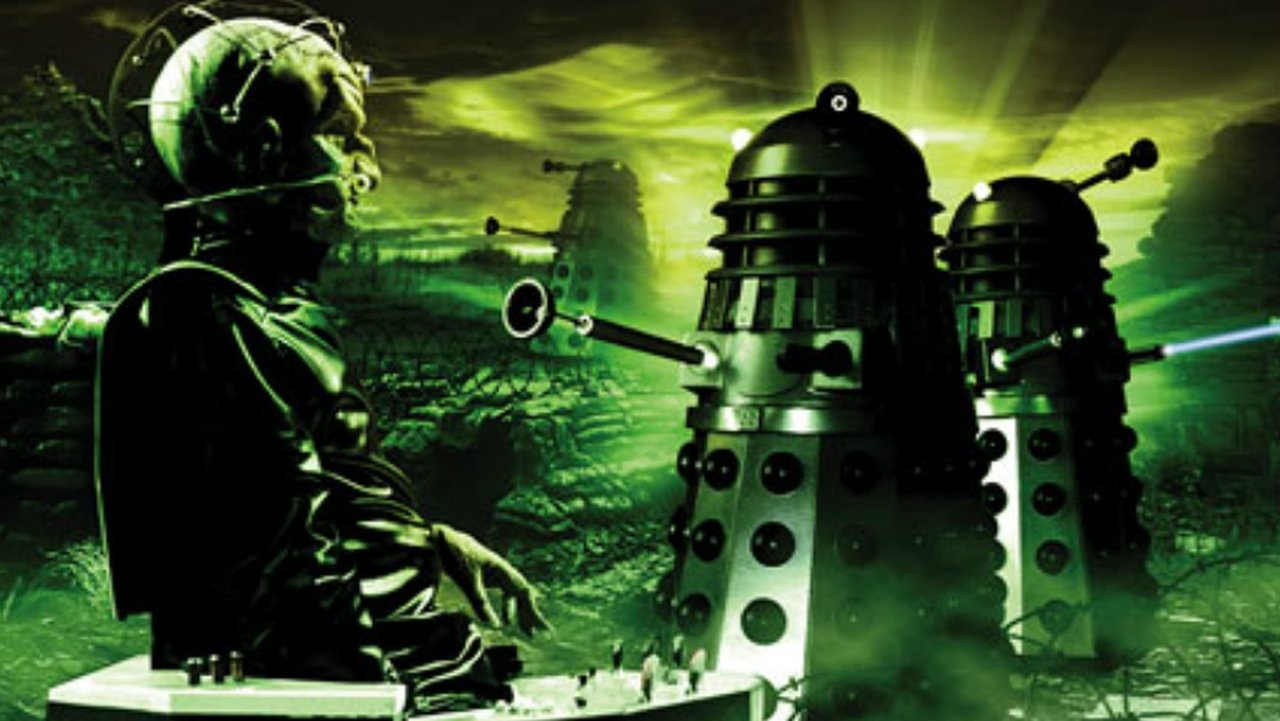
This is the story that gave the Daleks a creator, and Doctor Who one of its great villains. Terry Nation's first pitch was too close to his earlier Dalek stories, so producer Barry Letts and script editor Terrance Dicks asked him for an origin story instead. Nation's answer was Davros, a scientist of the Kaled people, wheeled about in a chair that is half a Dalek already. Every Davros story since, through the revived series, grows out of these six weeks.
It also gave the Doctor his hardest question. The Time Lords send him to interfere in history itself, and the story keeps asking whether he should. Reviewers have long read the Kaleds, with their black uniforms and their obsession with purity, as a portrait of the rise of the Nazis, and Peter Miles plays Davros's security chief Nyder as the human face of that cold obedience.
People noticed at the time. The first part drew 10.7 million viewers, and in 2009 more than 6,700 readers of Doctor Who Magazine rated every story to date and put it third of all, behind The Caves of Androzani and "Blink." It came in Tom Baker's first season, with Elisabeth Sladen and Ian Marter beside him.
A thousand years, not forever
Holding two wires that would destroy the Dalek embryos, the Doctor hesitates. He compares it to killing a child because you know it will grow up a tyrant, and decides he can't. Davros, meanwhile, has already betrayed his own people to the Thals to protect his work, and when the Kaled scientists move against him, the Daleks exterminate the rebels and then, apparently, Davros himself. They have learned their lesson too well: nothing that isn't a Dalek matters, including the man who made them.
The Doctor seals the Daleks in their bunker and reckons he has delayed them by perhaps a thousand years. He also suggests that some good may come out of their evil, since other peoples will unite against them. It's a modest win, and that's the point. The story turns down the easy victory of genocide and settles for the Doctor's conscience staying intact, a choice later series would keep coming back to.
Challenge the DNA
Should the Doctor have touched the wires together?
Or skip ahead to our reading
We'd keep his hands apart, and so would he. If he wipes out a species for what it will become, the Daleks win the argument without firing a shot. He takes the small win, a thousand years' delay, and keeps his conscience. Later series keep coming back to that choice for a reason.
Behind the scenes
- Letts and Dicks found Nation's first script too like his earlier Dalek stories and proposed an origin story instead. It went out under the next team, producer Philip Hinchcliffe and script editor Robert Holmes, and the story grew darker under them.
- Michael Wisher, the first actor to play Davros, said he based his performance on the philosopher Bertrand Russell. John Friedlander made the latex mask, which left only Wisher's mouth showing; make-up artist Sylvia James blackened his lips and teeth to hide the join.
- The Skaro wasteland was filmed at Betchworth Quarry in Surrey. Most of the serial was made in January 1975, with some studio recording carried into February.
- David Maloney cast John Franklyn-Robbins as the Time Lord because they had worked together before, and meant him to look like Death in Ingmar Bergman's The Seventh Seal.
- The first part drew 10.7 million viewers and the last 9.1 million; part three was the lowest, at 8.5 million.
- BBC Records put out an edited soundtrack on LP in 1979, with linking narration by Tom Baker. It came back on blue vinyl for Record Store Day 2016.
The thread
Origins, genocide and the scientist who builds a weapon out of his own people.
Came before
Shares DNA with
Left its mark on
DNA strand
Technology Outpaces Ethics
Davros is the scientist who never asks whether he should, and the Doctor is the one who can't stop asking. The whole story sits in the gap between them: a machine built to survive at any cost, and a man holding two wires who won't use them lightly.
Every great sci-fi story is built from a handful of strands like this one. Each strand page explains how it works and traces it across shows, books and films.
If this one stayed with you
Where to go next, and why.
Watch · TNG S5
"I, Borg"
Picard faces the Doctor's question with a different enemy, and a way to end them handed to him on a plate.
Watch · Doctor Who
"The Daleks"
The first Skaro story, eleven years earlier. Seeing the Daleks before you know where they came from makes Genesis land harder.
Watch · Star Trek
"Patterns of Force"
An earlier science-fiction show using an alien world to look straight at fascism, seven years before Skaro.
Read · Novel
Frankenstein — Mary Shelley
The original story of a creator and the thing he makes, and who is really the monster.
Your next episode
Three directions to go from here, all on Sci-Fi DNA.
More of this feeling
Remembrance of the Daleks
Doctor Who
The Daleks thirteen years later, loose on a London street in 1963. Big, loud and full of callbacks.

Same question, different answer
I, Borg
Star Trek: The Next Generation
Another crew handed the means to wipe out a terrible enemy, and a long argument about whether they should.

Something completely different
Timeslides
Red Dwarf
After all that darkness, Lister and a box of photographs that turn out to be much more fun than they look.