
More from the episode
The story in 5 beats
- Held in a web
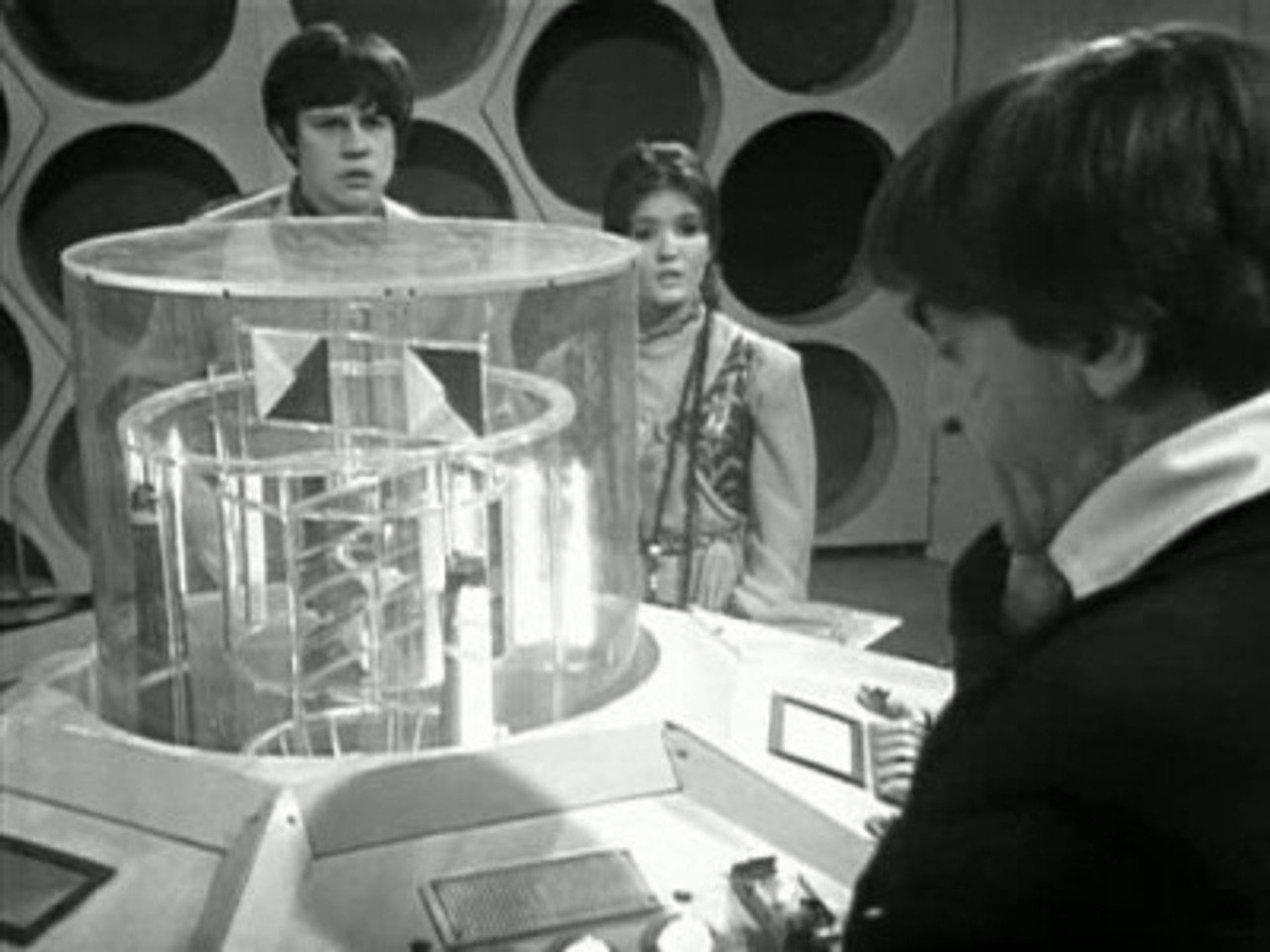
Something holds the TARDIS fast in space. The Doctor breaks free and lands in the London Underground, which is deserted. So, it seems, is the rest of London.
- Travers, much older
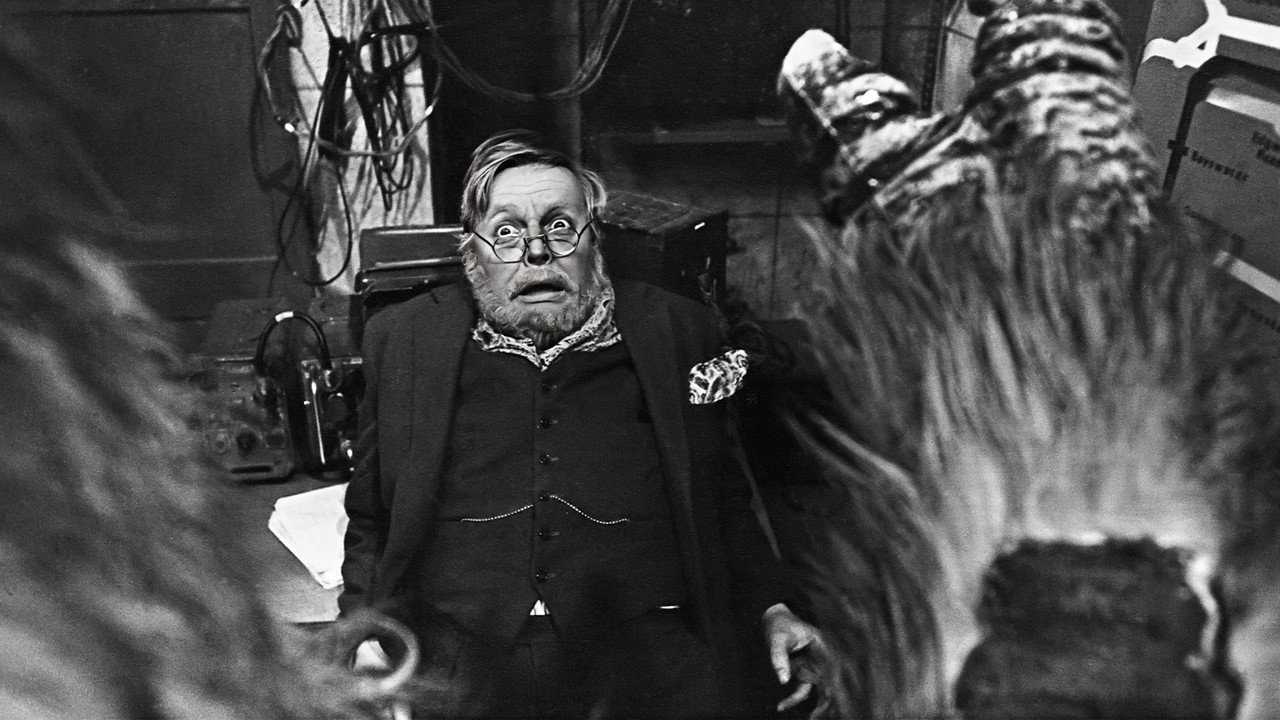
Professor Travers, whom they met in Tibet, is now an old man. He brought a Yeti home and accidentally switched it back on, and a deadly web is spreading through the Tube.
- The Colonel takes charge
Colonel Lethbridge-Stewart arrives to command the soldiers in the tunnels. The Doctor finds a beacon that calls the Yeti: someone inside the base is helping the Great Intelligence.
What the Intelligence wantsSpoiler · tap to reveal
A possessed Travers brings the Intelligence's terms. It wants to drain the Doctor's mind, and the Doctor appears to give in.
The face of the traitorSpoiler · tap to reveal
The Intelligence's agent is unmasked. The Doctor's friends drag him out of the machine just in time, and he's furious with them.
Why it still matters
The Web of Fear is where Doctor Who first met Colonel Lethbridge-Stewart. Nicholas Courtney had been in the show before, as Bret Vyon in The Daleks' Master Plan, but this is the part he went on to play off and on for decades, and the story lays out much of what the 1970s series would run on: soldiers, a threat in an ordinary British setting, and a Doctor who has to win the army's trust. The critic John Kenneth Muir counts it as one of the most important stories in the show's history for exactly that reason.
It also brought a monster somewhere viewers knew. Story editor Peter Bryant liked Mervyn Haisman and Henry Lincoln's The Abominable Snowmen so much that he ordered a sequel before the first one had aired, and the writers moved the Yeti from Tibet to the London Underground to bring the danger "far closer to home." London Transport wanted £200 an hour and would only allow filming between 2am and 5am, so designer David Myerscough-Jones built the tunnels in the studio instead. They were convincing enough that London Transport reportedly accused the BBC of filming in the real tunnels without permission.
For decades most of it was gone. Episode 1, found by chance in 1978 among film cans returned from Hong Kong, was the only part in the archive until 2013, when four more episodes turned up at a TV relay station in Jos, Nigeria. Mark Gatiss called it "the quintessential Doctor Who story" when the find was announced. Episode 3 is still missing, and according to the BBC it's the one where Courtney first appears.
Arnold, and a rescue the Doctor didn't want
The traitor is Staff Sergeant Arnold, one of the soldiers. He was killed and the Intelligence has been using his body. Jack Woolgar, who plays Arnold, also gave the Intelligence its voice, uncredited. Stacey Smith?, writing with Graeme Burk in The Doctors Are In, points out that a modern viewer is at a disadvantage here: knowing Lethbridge-Stewart's later career, nobody can suspect the newcomer the way 1968 audiences could.
The Doctor had rigged the mind-draining machine to work the other way and drain the Intelligence. His friends, seeing him strapped in, pull him out and wreck it, and the Intelligence slips away into space. The A.V. Club's Christopher Bahn felt the ending was weak and let down by the lack of a sequel. The Intelligence did come back on screen eventually, in "The Snowmen" (2012), which nods to this story with a glimpse of a London Underground map.
Challenge the DNA
Should the soldiers have spotted the traitor sooner?
Or skip ahead to our reading
No, and the story is fair about it. Arnold is one of the least suspicious people in the tunnels, which is the point. Smith?'s observation stands: a modern viewer knows too much, and the 1968 audience didn't.
Behind the scenes
- By the time the serial was made, Peter Bryant had become producer and Derrick Sherwin script editor. Sherwin clashed with Haisman and Lincoln, who were protective of their scripts.
- The Yeti were redesigned: the old costumes were falling apart and had been called too cuddly. The new ones were rougher, with glowing eyes, and for the first time they roared. Brian Hodgson made the roar by slowing down the sound of a toilet flushing.
- The Yeti's fights with the army above ground were filmed early on a Sunday morning in an old yard in Covent Garden. Underground, one platform set stood in for every station; only the signs changed.
- The Doctor's disappearance in Episode 2 is down to Patrick Troughton taking a week's holiday.
- Inside one of the Yeti costumes was John Levene, who had played a Cyberman in The Moonbase and later joined the UNIT regulars as Sergeant Benton.
- Episode 1 was the only part in the BBC archive until 2013. Episodes 2, 4, 5 and 6 were found by Philip Morris of Television International Enterprises Archive in Jos, Nigeria, and released as downloads on October 11, 2013, with Episode 3 rebuilt from stills.
- A special edition with an animated Episode 3 came out on DVD and Blu-ray on August 16, 2021.
The thread
Monsters in the tunnels you take to work, and a soldier the show would keep.
Came before
Shares DNA with
Left its mark on
DNA strand
First Contact & Invaders
The invader here never shows itself. It works through robots, a fungus and borrowed bodies, and it picks the London Underground, a place millions used every day, as its front door. Simon Morgan-Russell reads that as 1968 anxieties getting into the most ordinary corner of British life.
Every great sci-fi story is built from a handful of strands like this one. Each strand page explains how it works and traces it across shows, books and films.
If this one stayed with you
Where to go next, and why.
Watch · Doctor Who
"The Abominable Snowmen" (1967)
The first round with the Yeti and the Great Intelligence, and where the Doctor meets the young Travers.
Watch · Doctor Who
"The Invasion" (1968)
Lethbridge-Stewart comes back with a promotion, and the show tries the soldiers-and-monsters-in-London formula again.
Watch · The Twilight Zone S1
"The Monsters Are Due on Maple Street"
If the best part for you is the suspicion, here's half an hour built entirely on it.
Read · Novelisation
Doctor Who and the Web of Fear — Terrance Dicks
Terrance Dicks's 1976 Target novelisation tells the whole story, Episode 3 included.
Your next episode
Three directions to go from here, all on Sci-Fi DNA.

More of this feeling
The Abominable Snowmen
Doctor Who
The Yeti's first story, on a Tibetan mountain.

Same question, different answer
The Monsters Are Due on Maple Street
The Twilight Zone
Trapped with people you can't trust, waiting to see who cracks.

Something completely different
Fury from the Deep
Doctor Who
From tunnels under London to a gas rig in the North Sea.