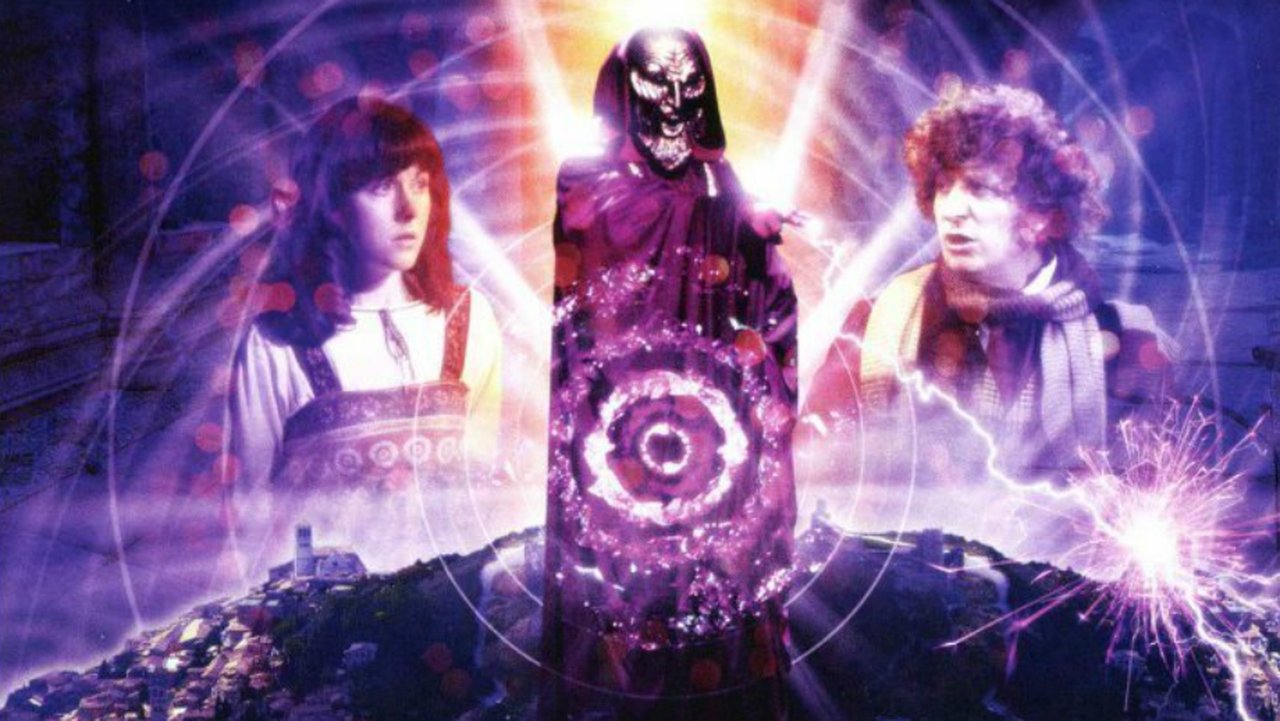
More from the episode
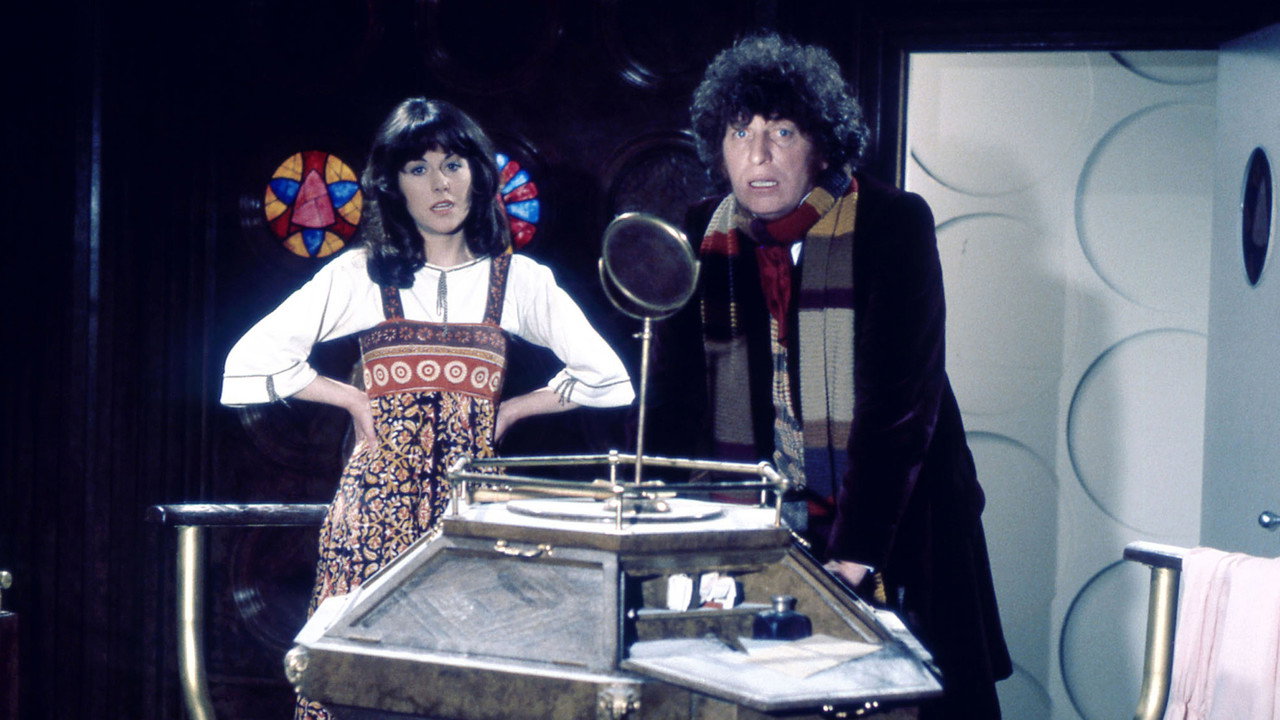
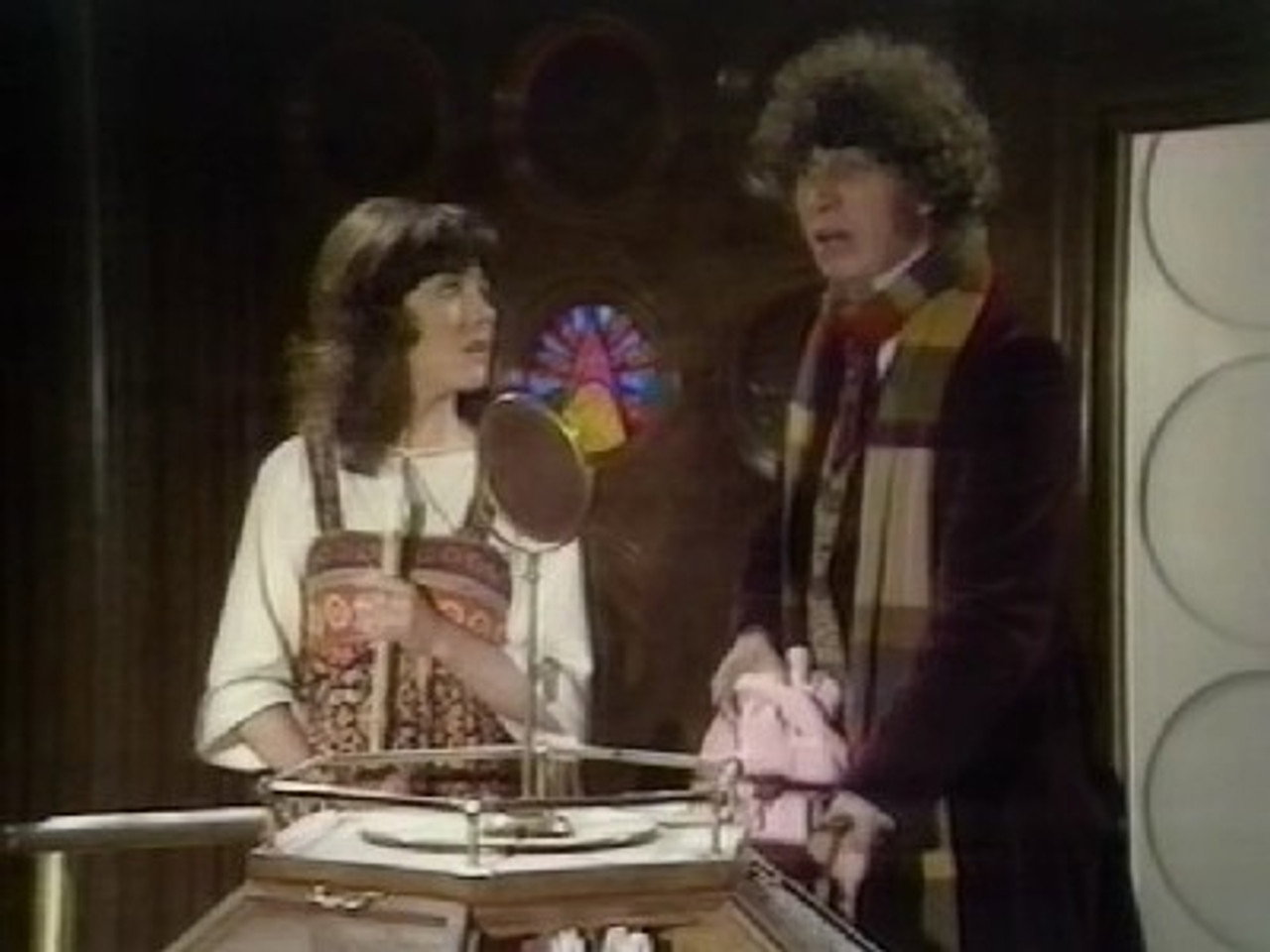
The story in 5 beats
- Lost inside the Helix
While the Doctor shows Sarah round the TARDIS, the ship is drawn into the Mandragora Helix. They get out, but something comes with them.
- San Martino
They land in a 15th-century Italian duchy where Count Federico and his astrologer Hieronymous have just disposed of the Duke, and the heir, Giuliano, is next.
- Off with his head
Sarah is seized by a hooded cult, and the Doctor, trying to warn the court about the Helix, ends up facing the executioner.
The brothers of DemnosSpoiler · tap to reveal
The cult's leader makes a bargain with the Helix for power, and Sarah is sent back to the Doctor with orders to kill him.
The masqueSpoiler · tap to reveal
Giuliano's masked ball goes ahead with the cult ready to strike, and the Doctor has prepared a surprise in the temple.
Why it still matters
This is Doctor Who doing the Renaissance properly. Louis Marks studied history at Balliol College, Oxford, and went on to a doctorate, and his San Martino has all the period trimmings: a scheming uncle, a science-minded young heir, and an astrologer with a private cult in the catacombs. The alien menace is an intelligence that wants humanity kept in the dark at the exact moment people are starting to think for themselves.
It opened Tom Baker's third season, and it went on location to Portmeirion in north Wales, the Italianate village Clough Williams-Ellis built and The Prisoner made famous. For four days in May 1976 the crew used its piazza, colonnades and woods to stand in for a 15th-century Italian town.
Critics have been fond of it since. The Shakespeare scholar Martin Wiggins compared it to Hamlet, with its "inexperienced, intellectual prince" and usurping duke, and Patrick Mulkern in Radio Times called it polished, singling out the masked ball, the costumes and the music. He had one complaint: "perhaps the only feeble note is the representation of the Helix."
A dance with the Helix
The cult's high priest is Hieronymous himself, and his deal with Mandragora costs him his body: by the end he is pure Helix energy under the robes, and he kills Federico when the Count comes to unmask him. Sarah, hypnotised, goes for the Doctor with a dagger, but he disarms her and breaks the spell, then persuades Giuliano not to cancel the masque.
The cultists storm the ball, and "Hieronymous" appears to order the survivors to the temple for sacrifice. It's the Doctor in disguise; the real astrologer died in their earlier fight. Thanks to the wire he wound round the altar, the cultists die and the fragment is thrown off Earth. As they leave Giuliano, the Doctor reckons Mandragora will be back around the end of the 20th century.
Challenge the DNA
Is Hieronymous a villain or a fool?
Or skip ahead to our reading
A fool who became a villain. He wanted power and made a deal with Mandragora for it. The story's sting is that the deal cost him his body and, in the end, his life.
Behind the scenes
- The serial was filmed at Portmeirion as Secret of the Labyrinth; a few days after the crew got back to London it was renamed The Masque of Mandragora. Earlier working titles included The Catacombs of Death and The Curse of Mandragora.
- Location filming ran from Monday, May 3, to Thursday, May 6, 1976, with the Friday morning kept for pick-up shots. The ruined temple in the woods was a polystyrene structure put up in one of the clearings north of the village.
- Louis Marks had written for the series three times before: Planet of Giants (1964), Day of the Daleks (1972) and Planet of Evil (1975).
- Tim Pigott-Smith, who plays Marco, had been Captain Harker in The Claws of Axos. Norman Jones (Hieronymous) had been Khrisong in The Abominable Snowmen, and Robert James (the High Priest) had played Lesterson in The Power of the Daleks.
- Part one drew 8.3 million viewers and part four 10.6 million.
- Producer Philip Hinchcliffe wrote the Target novelisation himself, published in December 1977.
The thread
Astrology against science, a usurping uncle and an alien force that likes people superstitious.
Came before
Shares DNA with
DNA strand
First Contact & Invaders
Mandragora never lands a ship or fires a shot. It invades by finding the one man at court who wants power badly enough to listen, and its goal is to stop a whole civilisation from waking up.
Every great sci-fi story is built from a handful of strands like this one. Each strand page explains how it works and traces it across shows, books and films.
If this one stayed with you
Where to go next, and why.
Watch · Doctor Who
"The Dæmons"
Another story where the occult turns out to be alien science, with a village cult in place of a court one.
Watch · Doctor Who
"The Time Warrior"
Sarah's first adventure takes her to the Middle Ages, where another alien is pulling strings in a castle.
Watch · Star Trek
"Who Mourns for Adonais?"
A being with godlike powers asks for worship, and the question is whether people need gods or their own reason.
Read · Play
Hamlet — William Shakespeare
Read it after watching and see how much of Giuliano's court is Elsinore with better weather.
Read · Novelisation
Doctor Who and the Masque of Mandragora — Philip Hinchcliffe
The story retold by the producer who made it.
Your next episode
Three directions to go from here, all on Sci-Fi DNA.
More of this feeling
The Romans
Doctor Who
Another trip into history, with court intrigue and danger.

Same question, different answer
The Menagerie, Part I
Star Trek
A power that offers people what they want most.

Something completely different
The Hand of Fear
Doctor Who
From Renaissance Italy to a quarry, a fossilised hand and a power station.