
More from the episode
The story in 5 beats
- A distress call
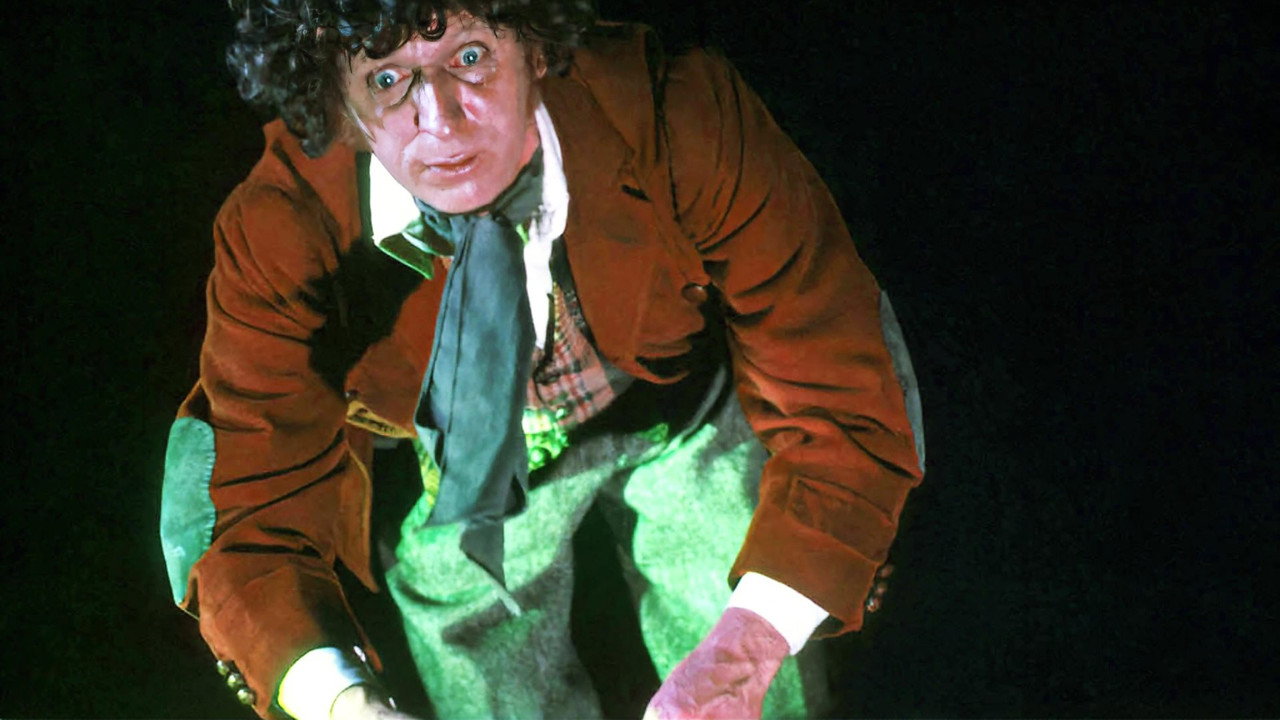
The TARDIS picks up a call from Zeta Minor. The Doctor and Sarah find a Morestran expedition dead except for its leader, Professor Sorenson.
- Suspects
A Morestran military ship arrives to look for the expedition and decides the two strangers make the likeliest killers.
- The pit
Something invisible is doing the killing. It comes from a pit in the jungle, and Sorenson has taken antimatter samples from around it.
Dragged backSpoiler · tap to reveal
The Morestran ship takes off but can't get away from the planet, and Sorenson is turning into something that isn't quite him.
A bargainSpoiler · tap to reveal
With the ship overrun, the Doctor takes Sorenson and his samples back to the pit to keep a promise he made to the creature.
Why it still matters
Producer Philip Hinchcliffe, script editor Robert Holmes and writer Louis Marks set out, on purpose, to cross Forbidden Planet with Strange Case of Dr Jekyll and Mr Hyde. Marks had been reading science magazine articles about antimatter and wanted a story built on it. Hinchcliffe, in his first season of commissioning his own scripts, wanted to get away from rubber-suited aliens, so he gave the story three threats instead of one: a scientist changing into something else, an antimatter creature, and the planet itself, which Sorenson says knows what his team is up to.
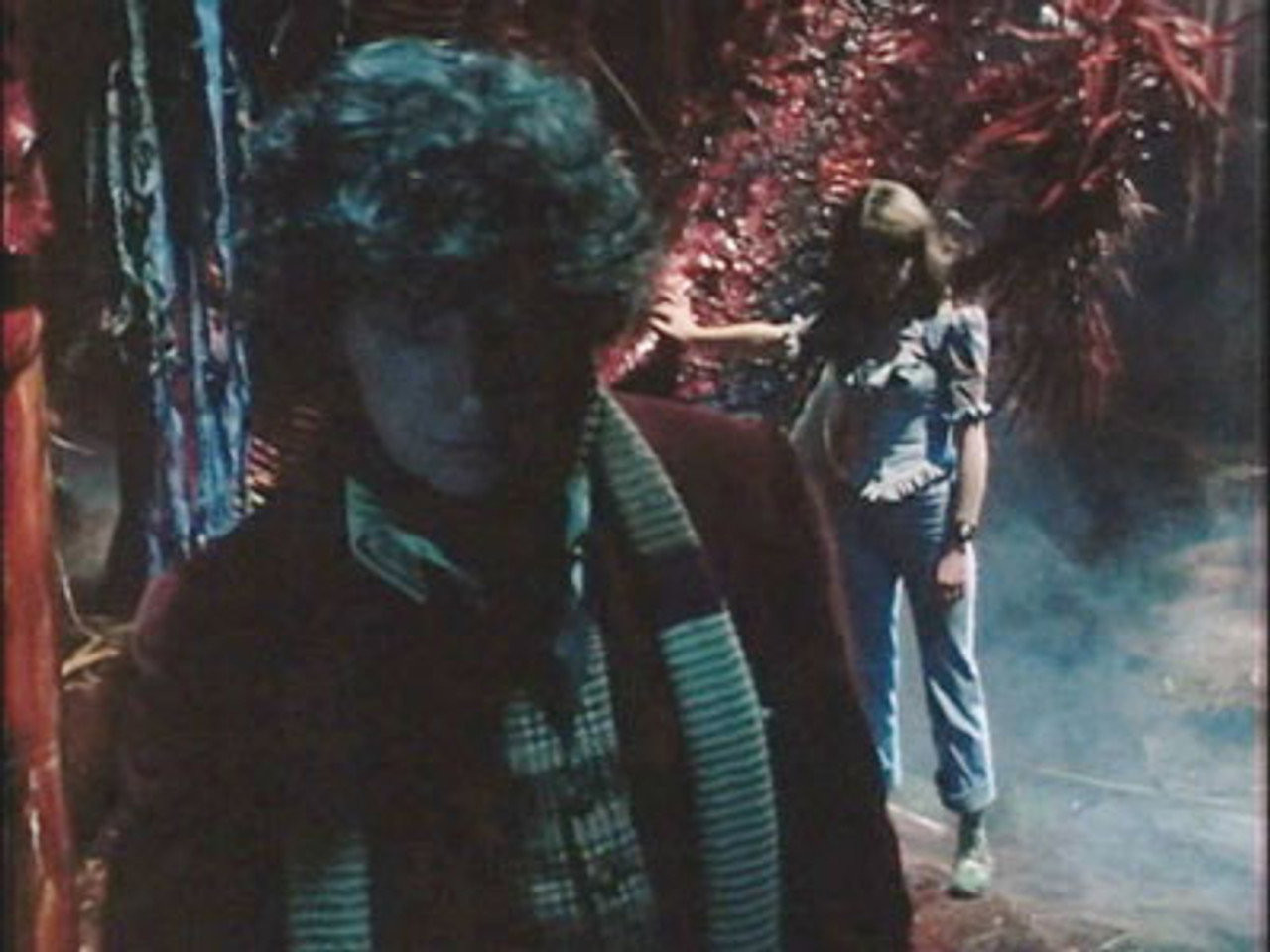
The planet is the star. Designer Roger Murray-Leach built a dense jungle on a stage at Ealing Studios, and David Maloney shot it all on film. The BBC kept photographs of the set for several years as an example of excellent design, and Hinchcliffe recommended Murray-Leach for an award nomination. Radio Times's Patrick Mulkern, giving the story four stars in 2010, singled out the jungle and Maloney's direction. The creature, seen only as a shimmering red outline, is in Howe and Walker's words "in all but name, the Id monster" from Forbidden Planet.
Critics have enjoyed the borrowing. Howe and Walker called it "a wonderfully creepy story" that wears its sources with so much style you enjoy spotting them. The Discontinuity Guide said that for an eight-year-old it was "the most terrifying slice of Who", and found the cheap-looking spaceship a letdown after the jungle. John Kenneth Muir pointed out how much it resembles Alien (1979): a ship answering a distress call, a crew killed off one by one, bodies ejected into space in metal coffins. He stopped short of saying Alien took anything from it.
Give it back
The creature is retaliating because Sorenson took antimatter from around the pit, the meeting point between our universe and an antimatter one. With the samples on board, the Morestran ship is slowly hauled back toward Zeta Minor. Sorenson, infected, turns by stages into an "antiman" that drains the life out of the crew. The increasingly unhinged commander, Salamar, hits him with radiation, and that only multiplies him into a crowd of anti-Sorensons loose on the ship.
The Doctor finds the real Sorenson, takes him down in the TARDIS and throws him and the samples into the pit, as he had agreed with the creature. Sorenson comes back out unharmed and cured, and the freed ship can go home. The original script had him die in the pit; Hinchcliffe changed it, feeling that was too grim for "the little ones" and that Sorenson was the planet's victim, not an evil man.
Challenge the DNA
Was Sorenson a villain or a victim?
Or skip ahead to our reading
A victim of his own ambition. He took the samples from around the pit and paid for it as they changed him. The story is kind enough to give him a way back, which wasn't the original plan.
Behind the scenes
- Hinchcliffe, Holmes and Marks planned the story as a mix of Forbidden Planet (1956) and Robert Louis Stevenson's Strange Case of Dr Jekyll and Mr Hyde (1886).
- Despite the jungle, nothing was shot on location. Roger Murray-Leach's set at Ealing Studios was filmed by David Maloney. The monster is invisible in the filmed scenes, where a wind machine shows it moving, and appears as red outlines in the videotaped ones, made with Colour Separation Overlay.
- Marks also wrote Planet of Giants (1964) and Day of the Daleks (1972), and would come back for The Masque of Mandragora in 1976.
- The four parts drew 10.4, 9.9, 9.1 and 10.1 million viewers.
- In July 1976 BBC1 repeated it over four consecutive evenings, the first Doctor Who story ever shown on consecutive evenings.
- Terrance Dicks's novelisation, Doctor Who and the Planet of Evil, came out from Target in 1977. The DVD followed on October 15, 2007.
The thread
A jungle planet with a grudge, a scientist with two faces, and a crew picked off one at a time.
Came before
Shares DNA with
DNA strand
Technology Outpaces Ethics
Sorenson takes Zeta Minor's antimatter home without asking what it belongs to. The planet answers, and the price lands on him first.
Every great sci-fi story is built from a handful of strands like this one. Each strand page explains how it works and traces it across shows, books and films.
If this one stayed with you
Where to go next, and why.
Watch · Film
Forbidden Planet
Watch the original and you'll see exactly where the red-outlined monster came from.
Watch · Film
Alien
Muir's comparison holds up: another crew answering a distress call and learning to regret it.
Watch · Star Trek
"The Enemy Within"
Star Trek's own take on Jekyll and Hyde, with a captain split into his better and worse halves.
Read · Novella
Strange Case of Dr Jekyll and Mr Hyde — Robert Louis Stevenson
Short, and the source of Sorenson's whole arc: a respectable scientist, a private experiment and the other man it lets out.
Your next episode
Three directions to go from here, all on Sci-Fi DNA.
More of this feeling
The Enemy Within
Star Trek
A man split between his civilised side and something much darker.
Same question, different answer
The Architects of Fear
The Outer Limits
Science that goes too far, and the price someone pays for it.

Something completely different
Pyramids of Mars
Doctor Who
An Egyptian god, a haunted manor and one of the best villains of the era.