More from the episode
The story in 5 beats
- Kastria, long ago
On a distant planet a condemned criminal named Eldrad is executed in a pod. Something survives the blast.
- The quarry
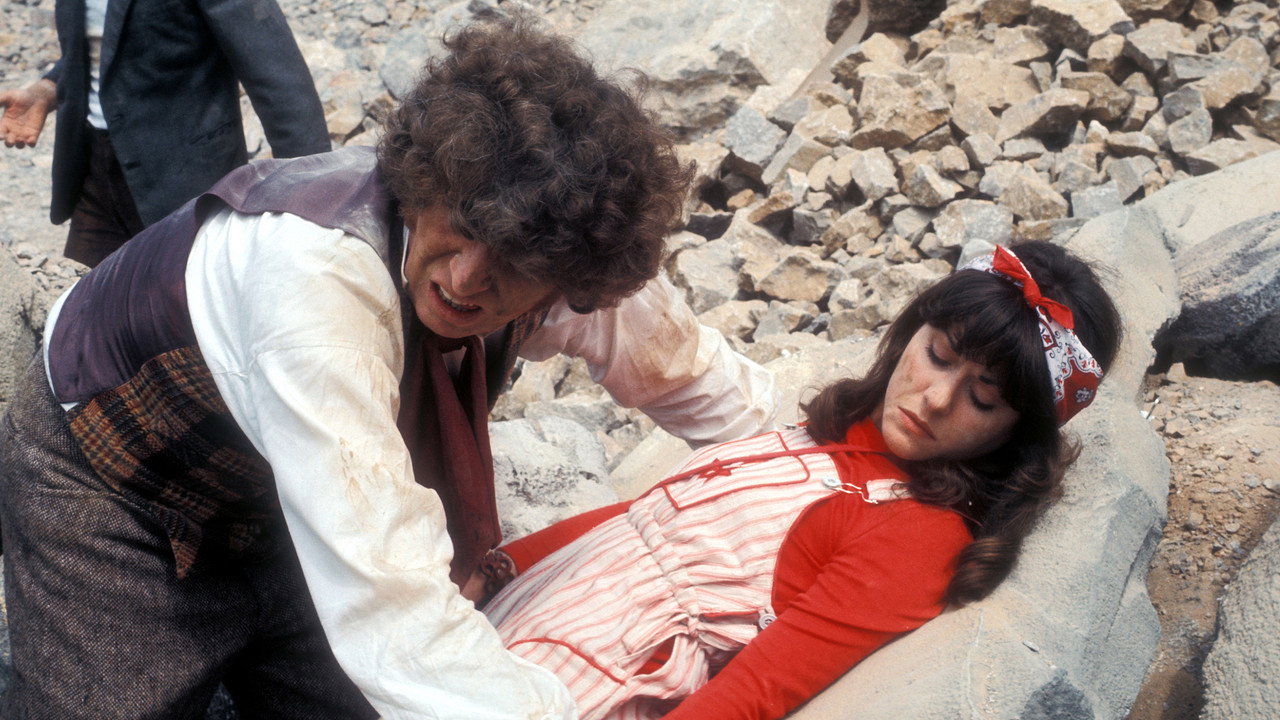
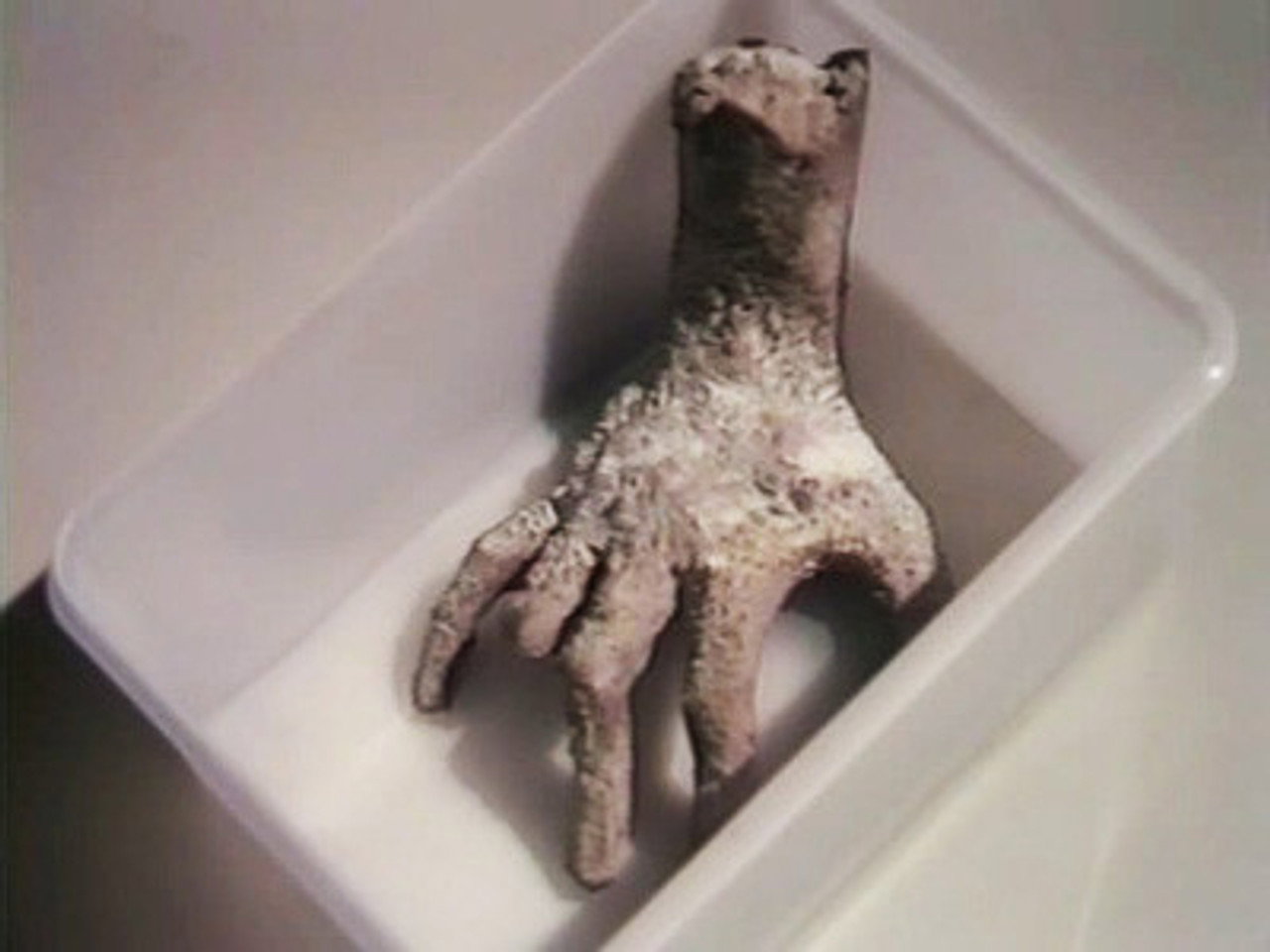
In present-day England the TARDIS lands in a working quarry just as the charges go off. Sarah is buried, and her hand finds a stone hand wearing a ring.
- Eldrad must live
Under the ring's control, Sarah slips out of hospital and takes the hand to the Nunton complex, where it starts feeding on the reactor.
Home to KastriaSpoiler · tap to reveal
Eldrad, rebuilt, asks the Doctor for a lift home. What waits on Kastria isn't what Eldrad has described.
Don't forget meSpoiler · tap to reveal
Back in the TARDIS, Sarah threatens to leave, and a summons from Gallifrey takes the choice away.
Why it still matters
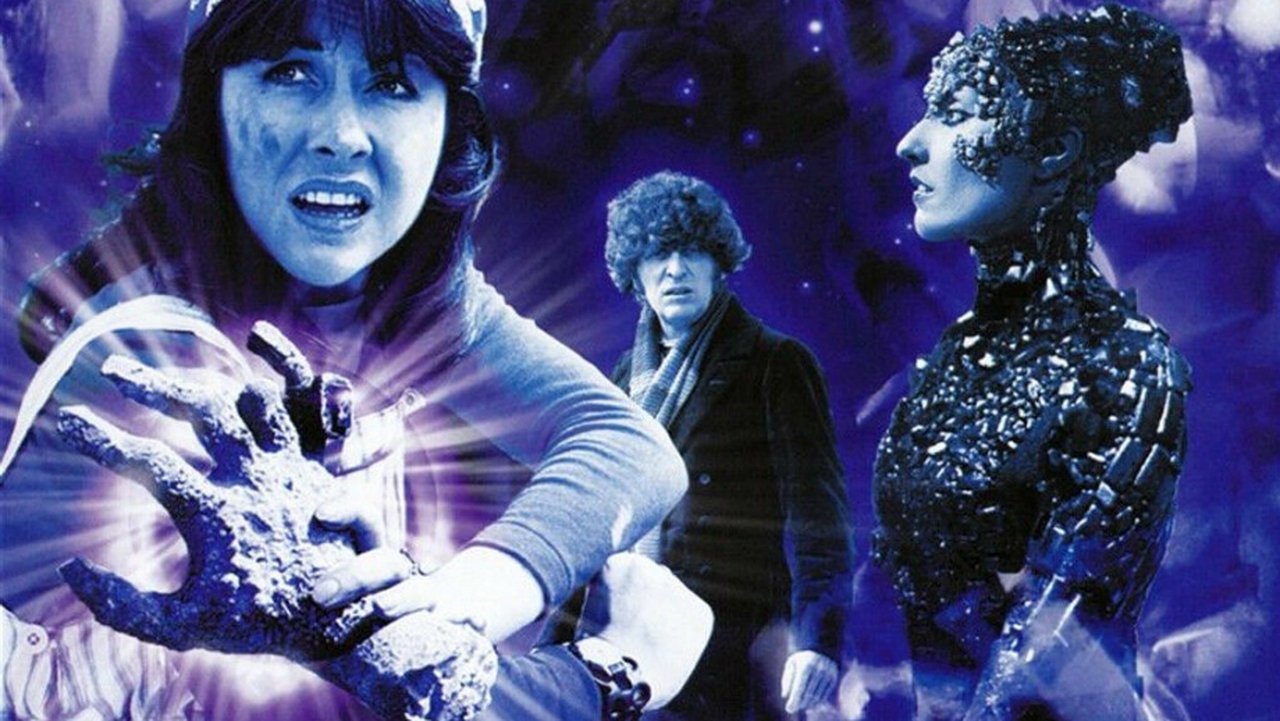
For most of its four weeks this is Elisabeth Sladen's story. The ring turns Sarah into the hand's servant, carrying it from a hospital bed into the heart of a reactor, and Sladen gets to play the companion as the danger. David J. Howe and Stephen James Walker singled out her performance in The Television Companion, along with Judith Paris as Eldrad, the alien the hand grows back into.
It is also a very 1970s fear given a monster's shape. Bob Baker and Dave Martin, who had already put an alien at a British power station in The Claws of Axos, set this one at the fictional Nunton Experimental Complex, and the production filmed it at a real one, Oldbury nuclear power station in Gloucestershire. The quarry explosion in the first part is real too.
Audiences grew as it went on, and part four drew 12 million viewers. Radio Times's Mark Braxton later praised the location filming and Paris's Eldrad, while the authors of The Discontinuity Guide called it "engaging and well-acted" and felt it went "a bit pear shaped" in the final episode.
Till we meet again, Sarah
Eldrad lied. Far from a hero, Eldrad destroyed Kastria's solar barriers in a bid to rule, and once regenerated on Kastria returns in his true, male form, now played by Stephen Thorne, who had been Omega in The Three Doctors. It was Thorne's last Doctor Who role. The Kastrians chose extinction over life underground and destroyed their race banks so Eldrad could never rule them. When Eldrad turns his eyes to Earth instead, the Doctor trips him into an abyss and throws the ring in after him. Howe and Walker found Thorne too close to his Omega, and The Discontinuity Guide mocked the tyrant "tripping over the Doctor's scarf."
Then comes the goodbye: this was Sarah Jane Smith's last story as a regular companion. Fed up, Sarah announces she's leaving and goes to pack. She doesn't mean it, but the Doctor has been summoned to Gallifrey and can't take her. He drops her off, she asks him not to forget her, and she realises too late that she isn't in South Croydon. Sladen had not wanted Sarah killed or married off, and was relieved when an earlier plan to kill her off fell through. She asked for the final shot to be a freeze frame, and she couldn't whistle, so as Sarah walks off whistling "Daddy Wouldn't Buy Me a Bow-Wow" she is miming to director Lennie Mayne. When Sladen died in April 2011, BBC Four repeated the story over two nights in May as a tribute.
Challenge the DNA
Was Sarah right to leave when she did?
Or skip ahead to our reading
It was time, and the story handles it gently. Her exit isn't a death or a wedding. It's a goodbye between friends, and the quietness is what makes it hurt.
Behind the scenes
- The quarry explosion was a real blast filmed for the story. For years fans said it destroyed a camera; according to the DVD commentary, that never happened.
- The power station was meant to be the Nuton complex from Baker and Martin's The Claws of Axos and was renamed the Nunton Experimental Complex. It was filmed at Oldbury nuclear power station in Gloucestershire, with nearby Thornbury used for the closing scene.
- A fly got into the studio during one recording session. It can be seen walking across Glyn Houston's brow, and Elisabeth Sladen eventually swallowed it by accident mid-scene, according to the BBC.
- Viewing figures went from 10.5 million for part one, through 10.2 and 11.1 million, to 12 million for part four.
- Terrance Dicks wrote the Target novelisation, Doctor Who and the Hand of Fear, published in January 1979.
The thread
A buried hand, a borrowed companion and a reactor that gives an alien back its body.
Came before
Shares DNA with
DNA strand
First Contact & Invaders
The invasion starts with one fossil in one quarry and one person who happens to touch it. Eldrad never needs an army, just Sarah's hands and a reactor's worth of radiation.
Every great sci-fi story is built from a handful of strands like this one. Each strand page explains how it works and traces it across shows, books and films.
If this one stayed with you
Where to go next, and why.
Watch · Doctor Who
"The Claws of Axos"
The same writers' earlier power-station invasion, with aliens offering gifts instead of grabbing companions.
Watch · Outer Limits
"Production and Decay of Strange Particles"
A 1960s take on the same nightmare: a reactor nobody can switch off and people who stop being themselves.
Watch · Doctor Who
"The Three Doctors"
The same writers' tenth-anniversary story, in which three Doctors have to work together.
Read · Novelisation
Doctor Who and the Hand of Fear — Terrance Dicks
Dicks's retelling, for the version of Kastria a BBC budget couldn't build.
Your next episode
Three directions to go from here, all on Sci-Fi DNA.

More of this feeling
The Seeds of Doom
Doctor Who
Another story where something ancient comes back to life and takes hold.
Same question, different answer
Wolf in the Fold
Star Trek
Something old possessing people to get what it wants.

Something completely different
The Masque of Mandragora
Doctor Who
Back a story, to Renaissance Italy and a masked ball.