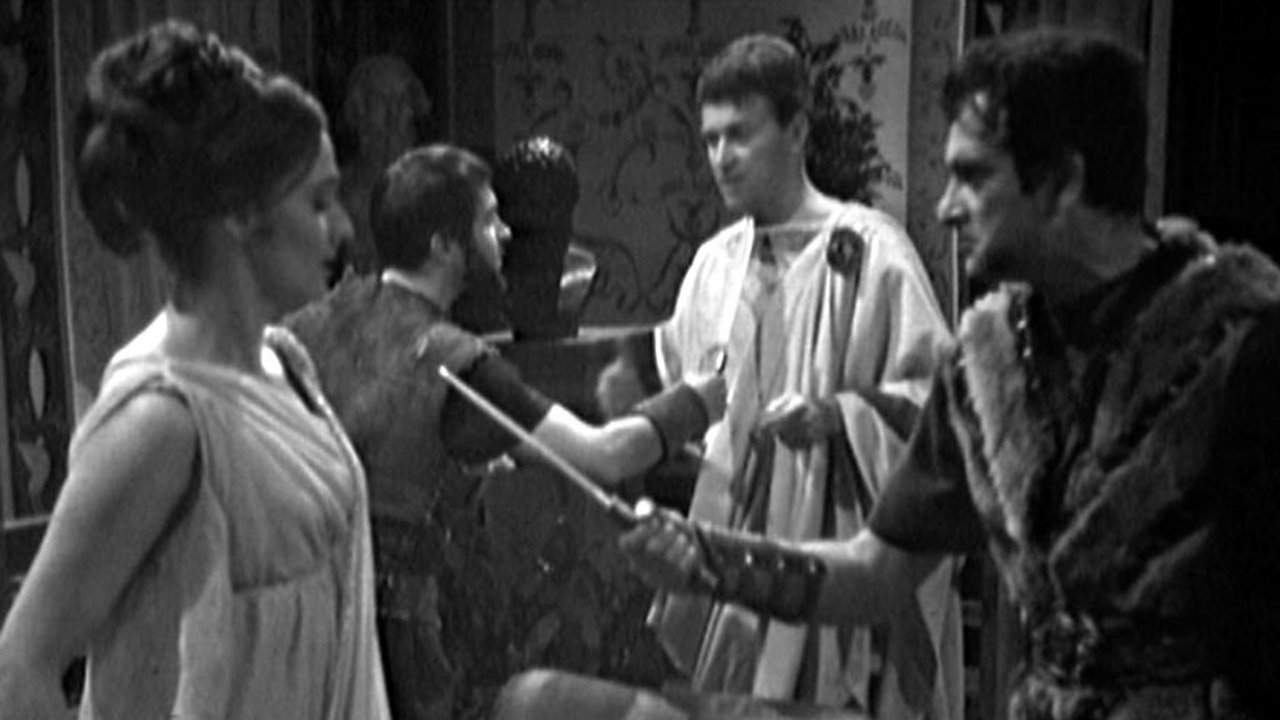
More from the episode
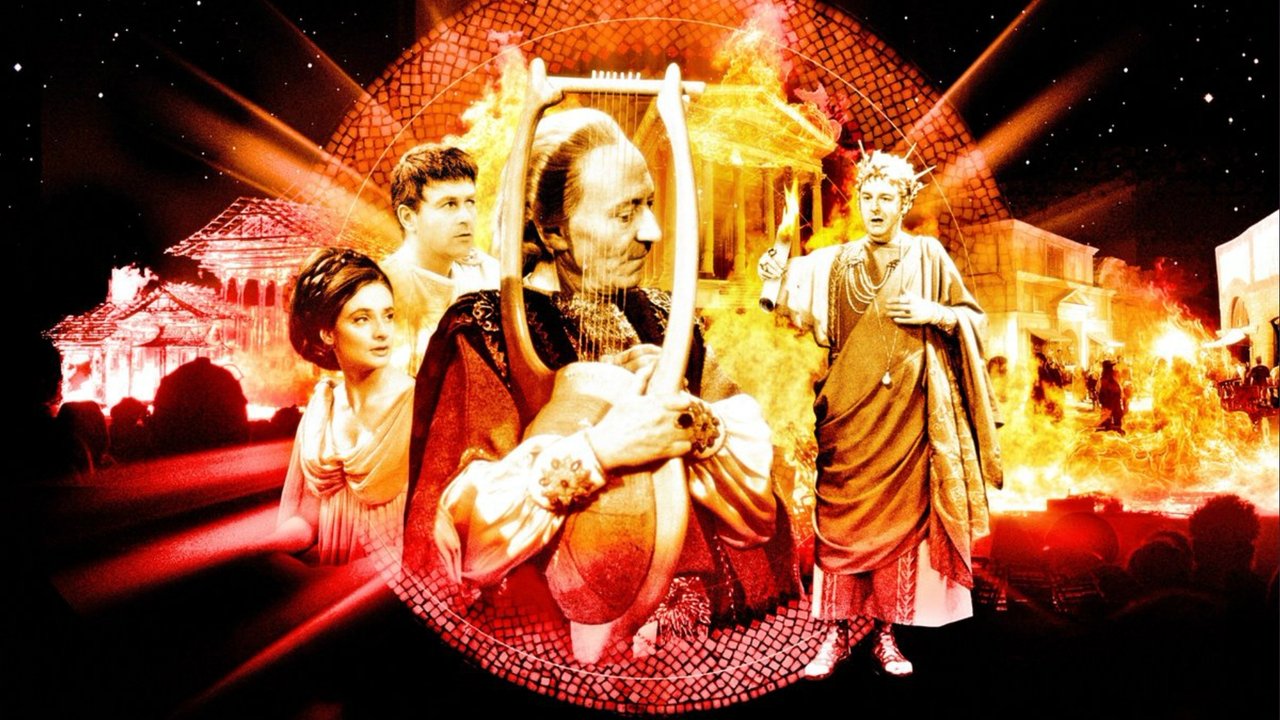
The story in 5 beats
- A villa near Rome
A month after the TARDIS fell off a cliff, the travellers are resting in an empty Roman villa. The Doctor and Vicki set off for Rome.
- Sold
Slave traders seize Ian and Barbara. Barbara goes to the court as a handmaiden to Nero's wife, Poppaea; Ian is chained to a galley oar.
- Maximus Pettulian
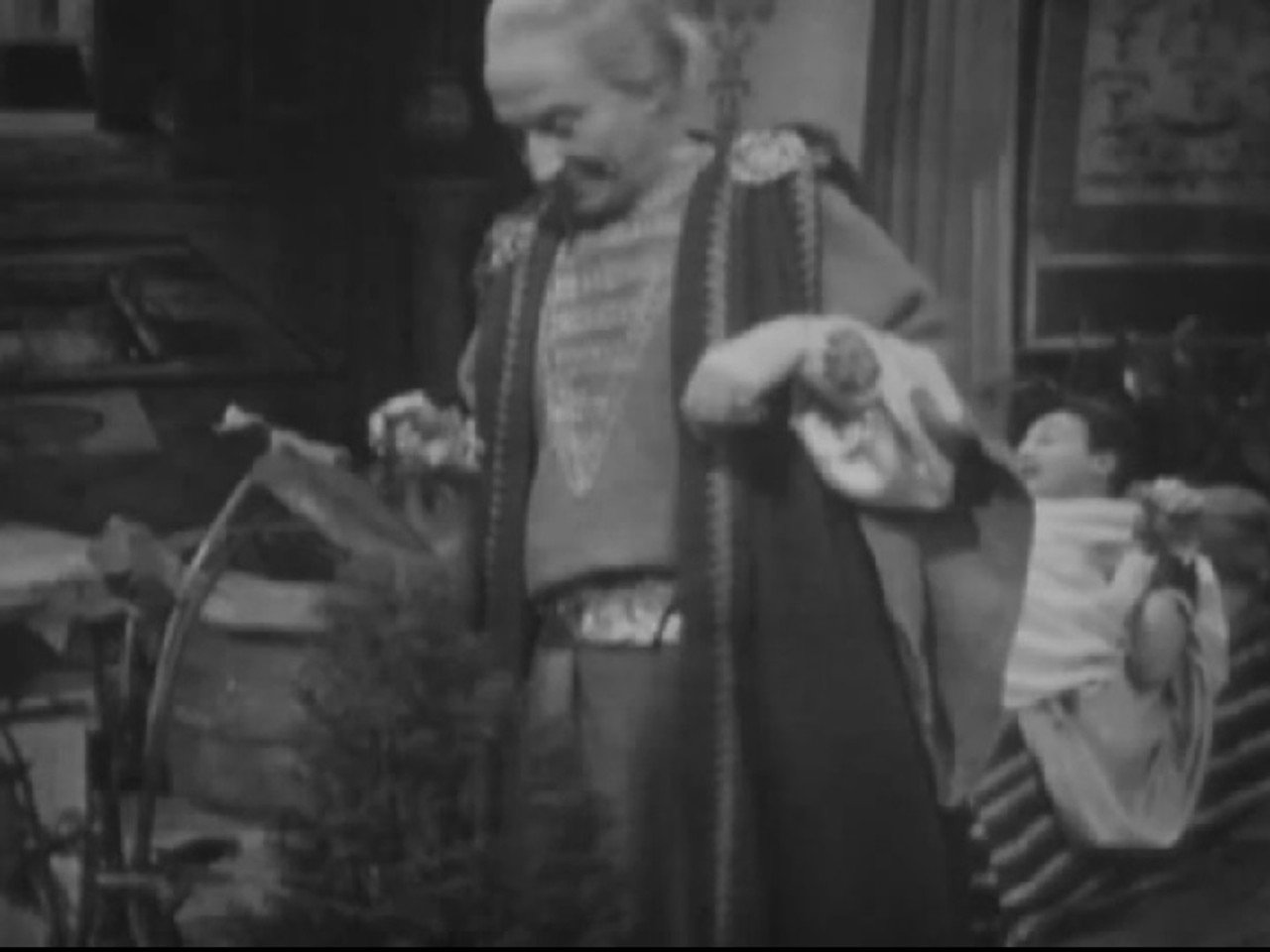
On the road, the Doctor is taken for a murdered lyre player who was due at Nero's palace, and decides to keep up the act.
- Poison and lions
Poppaea, jealous of Nero's interest in Barbara, tries to poison her. Ian is trained as a gladiator, and the Doctor's silent lyre recital lands him a date with the lions.
An idea for NeroSpoiler · tap to reveal
The Doctor finds Nero's plans for a new Rome, and an accident gives the Emperor an idea.
Why it still matters
The Romans was planned as the first Doctor Who story with a comic tone. Producer Verity Lambert had wanted to try a funny one, and according to William Russell she saw that the new script editor, Dennis Spooner, had the sense of humour for it. The first idea was to send up the 1951 MGM epic Quo Vadis, though the team soon found that another Roman spoof, Carry On Cleo, was already in production. What came out is a farce at Nero's court running alongside a grim story about slavery.
It also shows a side of William Hartnell people forget. He was at ease here because the story let him do comedy, and the scene where he "plays" the lyre without making a sound, telling Nero that only the most sensitive ears can hear it, is pure music hall. Derek Francis's Nero, petulant and dangerous, gives him someone to play off. The Discontinuity Guide wrote that "Hartnell shows the talent that got him the part".
Not everyone was won over in 1965. A BBC audience report was negative: several viewers felt the serial looked corny and amateurish, though even they praised Hartnell and Francis. A writer in The Times called Doctor Who "the strongest weapon in the BBC armoury" during its run, and later critics, from Radio Times to The A.V. Club, have mostly come round to it.
Who started the fire?
The year is AD 64. Tavius tells the Doctor that Pettulian was meant to be an assassin all along, and that Nero now means to have him killed. Then the Doctor accidentally sets fire to Nero's plans for rebuilding the city, and Nero gets the idea for the Great Fire of Rome and spares him. Ian and Barbara are reunited and slip back to the villa, while the Doctor and Vicki watch the city burn from a hill nearby. Back in the TARDIS, a strange force drags the ship off to somewhere unknown, which is where the next story picks up.
It's the darkest joke in the serial: the hero, by accident, sparks one of history's great disasters, and the story treats it as a punchline. That mix is what critics have argued about since. Mark Braxton of Radio Times praised the "playful" comedy Spooner put into a story with dark elements, and Christopher Bahn of The A.V. Club thought it cared less about historical accuracy than about the comedy, and got the comedy right.
Challenge the DNA
Is it funny that the Doctor sparks the Great Fire of Rome?
Or skip ahead to our reading
It's funny and it's uncomfortable, and we think the writers knew both. If you stop to think about the Doctor watching the city burn from a hill, it's shocking. The serial never asks you to stop, which is both its charm and its problem.
Behind the scenes
- A Roman story was on the plans for the second season by April 1964, allotted four episodes under the heading "Roman". It was commissioned as Doctor Who and the Romans on August 31, 1964. Richard Martin was meant to direct; Christopher Barry took over in October so that it could be made in one six-episode block with The Rescue.
- Barry contacted Antonio Maria Colini of Rome's Museum of Roman Civilisation to learn more about Nero's rule.
- Raymond Cusick designed it on a budget of £450 an episode. It was his only historical serial, and his least favourite piece of work.
- The music was Raymond Jones's first for the series: a score for harp, French horn, flute and clarinet, recorded at Broadcasting House on November 25, 1964.
- Derek Francis, a friend of Jacqueline Hill and her husband Alvin Rakoff, had been promised a part in the show since it began. Barry had also thought of Paul Whitsun-Jones, George A. Cooper and Dick Emery for Nero.
- Peter Diamond was hired to arrange the fights and also cast as Delos, since the part needed a fighter. In rehearsal Hartnell hurt his knuckle on a wooden sword, and William Russell cut his wrist. Part three was recorded on January 8, 1965, William Hartnell's 57th birthday.
- Part one drew 13 million viewers, tying the show's best to date. Part three fell to 10 million, a drop put down to its broadcast in the wake of Winston Churchill's televised funeral.
The thread
Roman epics, the Carry On films and the moment *Doctor Who* found out it could be funny.
Came before
Shares DNA with
DNA strand
Sci-Fi Played for Laughs
The Doctor bluffs his way through a lyre recital with no notes in it, and Nero sulks like a toddler with the power of life and death. A few scenes away, Ian is chained to an oar and Barbara is property. The comedy works because the danger never quite goes away.
Every great sci-fi story is built from a handful of strands like this one. Each strand page explains how it works and traces it across shows, books and films.
If this one stayed with you
Where to go next, and why.
Watch · Film
Carry On Cleo
The other British Roman spoof of 1964, which Spooner's team found was already being made when they planned their own.
Watch · Star Trek
"Bread and Circuses"
Three years later, Kirk's crew land among gladiators and slaves on a planet that never stopped being Rome.
Watch · Doctor Who
"The Aztecs"
The first season's serious take on a trip into history, with Barbara at its centre. Watch the two side by side to see how far the show moved in a year.
Read · Novelisation
The Romans by Donald Cotton
Told as letters and documents supposedly collected by Tacitus, including the Doctor's diary and Nero's scrapbook. The joke suits the story.
Your next episode
Three directions to go from here, all on Sci-Fi DNA.
More of this feeling
A Piece of the Action
Star Trek
Another crew dropped into somebody else's history and having fun with it.

Same question, different answer
The Aztecs
Doctor Who
The flip side: Barbara trying to change history, and the Doctor warning her off.

Something completely different
San Junipero
Black Mirror
Something completely different: a love story with a secret.