
More from the episode
The story in 5 beats
- Found in the permafrost
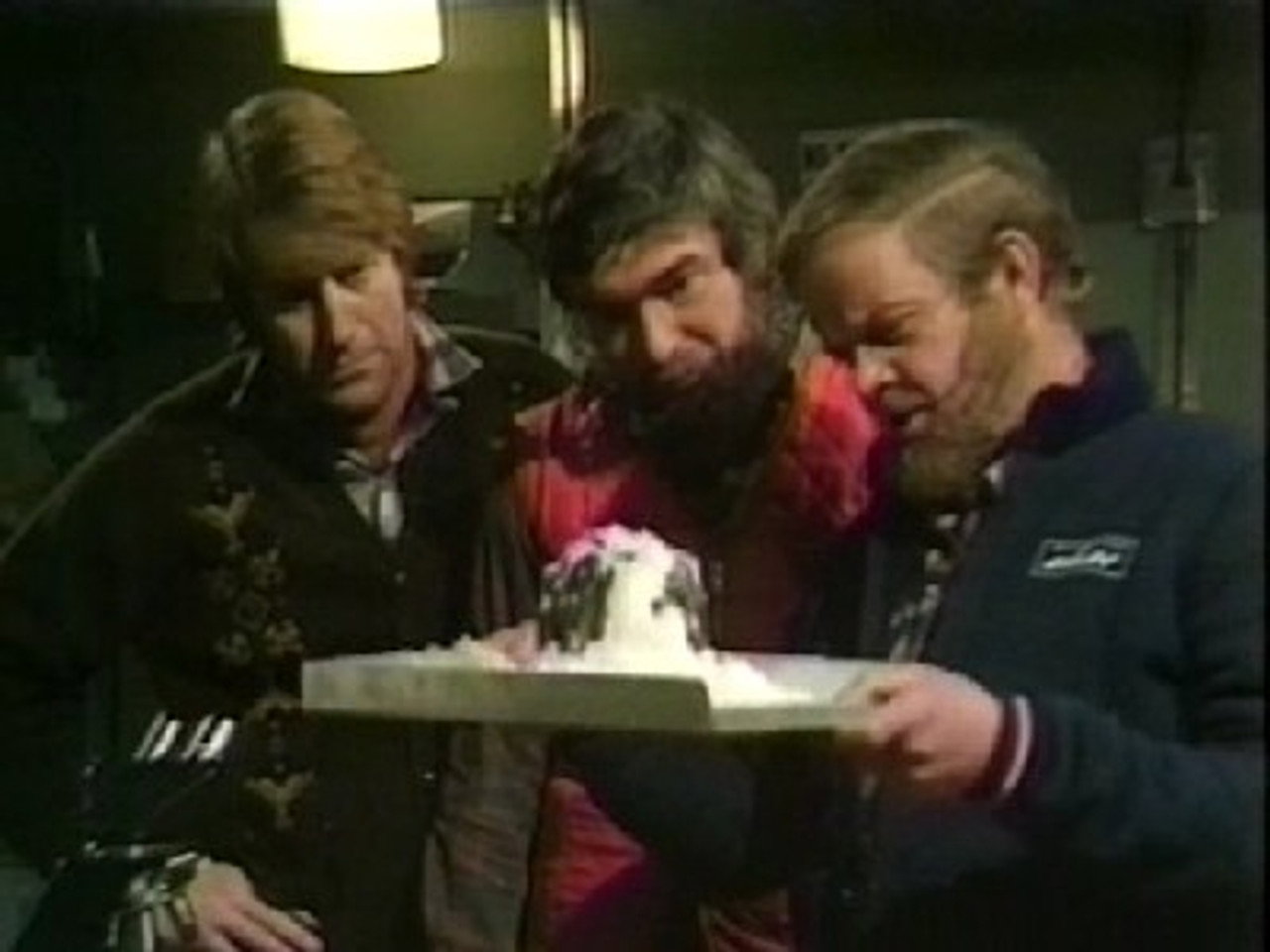
An Antarctic expedition digs up a seed pod from a layer older than any known plant life. It splits open and a tendril catches a scientist's arm.
- A collector's order
In England, the millionaire Harrison Chase hears about the pod and sends his henchman Scorby and the botanist Keeler to fetch it for him.
- Krynoid
The Doctor names the thing a Krynoid, a plant that could wipe out animal life on Earth. Chase's men steal the second pod and leave a bomb behind.
Home-grownSpoiler · tap to reveal
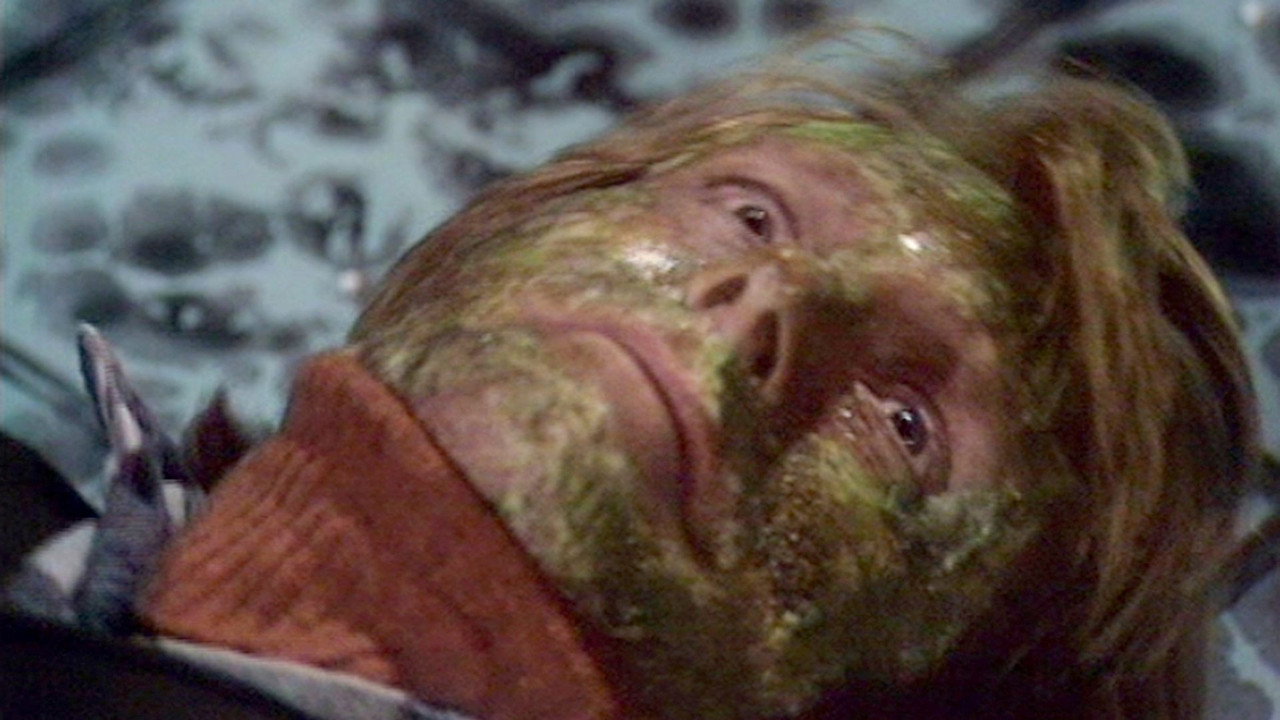
At Chase's estate the second pod takes Keeler. Chase feeds him, and the Krynoid grows to the size of a house and turns the garden against people.
Call in UNITSpoiler · tap to reveal
With the Krynoid about to release its own pods, the Doctor tells UNIT to destroy it and the mansion from the air, whoever is still inside.
Why it still matters
This is the Hinchcliffe era at its most like an action thriller: six parts that move, a villain in a country house, a henchman with a bomb and a monster that keeps getting bigger. In 2018 The Daily Telegraph put it at number 14 of the show's 56 greatest stories and called it "probably the high-water mark of the series as an action adventure programme" and "the closest it ever got to a Bond movie." The Discontinuity Guide had a different comparison: "an Avengers episode in disguise."
Robert Banks Stewart, who had written Terror of the Zygons earlier in the same season, was an experienced television writer brought in by Robert Holmes, and he would go on to create Shoestring and Bergerac. His villain is the best thing in it. Tony Beckley plays Harrison Chase, a reclusive millionaire whose love of plants has crowded out any feeling for people, and the Discontinuity Guide singled out his "excellent performance." John Challis plays his hired muscle, Scorby.
It was the last Doctor Who story directed by Douglas Camfield, who had been there from the very start as a production assistant on An Unearthly Child. Audiences stayed with it, from 11.4 million for part one to 11.5 million for the last. So did Mary Whitehouse, who objected to "strangulation – by hand, by claw, by obscene vegetable matter."
Into the mulcher
Scorby loses his nerve, runs, and is dragged into a lake by the Krynoid's plants. Chase, now wholly under the Krynoid's influence, tries to feed Sarah into his industrial compost machine and goes into it himself when the Doctor arrives. The Doctor and Sarah get out of the mansion just before the air strike destroys it and the Krynoid with it. Needing a rest, they set course for a tropical planet and land back in Antarctica.
Mark Braxton of Radio Times gave it five stars in 2010 but spotted a "giant crevasse" in the plot: the first Krynoid was killed by an explosion back in Antarctica, yet it takes everyone a ridiculous amount of time to remember that. Howe and Walker's Television Companion had a different complaint. UNIT comes in at the end without any of its old regulars and, they wrote, comes across as "a faceless and characterless bunch whose sole function in the story is to resolve the situation."
Challenge the DNA
Is Harrison Chase the scariest human villain of the era?
Or skip ahead to our reading
He's scary because he means it. Chase loves plants more than people and sees nothing wrong with that. The story plays him straight, and that's what makes the compost machine work.
Behind the scenes
- Location work was done at Athelhampton in Dorset for Chase's estate and in a quarry at Buckland, Surrey, for Antarctica. BBC Television Centre in London stood in for the World Ecology Bureau.
- It was Douglas Camfield's last Doctor Who as director. Soon after it, Philip Hinchcliffe commissioned him to write a four-parter, The Lost Legion, set at a French Foreign Legion outpost in North Africa. It kept slipping and was dropped.
- Robert Holmes brought Robert Banks Stewart to the show as part of a push for new writers. Stewart meant to write a third story, but left to work for Thames Television instead.
- The Doctor's exchange with the painter Amelia Ducat about a car boot and a model is a nod to Oscar Wilde's The Importance of Being Earnest. Scorby quotes Voltaire on money and religion, and the Doctor tells him it was Franklin Pierce Adams.
- Mary Whitehouse wrote: "Strangulation – by hand, by claw, by obscene vegetable matter – is the latest gimmick, sufficiently close up so they get the point. And just for a little variety show the children how to make a Molotov Cocktail."
- Philip Hinchcliffe, the producer, wrote the Target novelisation himself. It came out in February 1977.
- The music is by Geoffrey Burgon.
The thread
Killer plants, a country-house villain and a monster that started in the ice.
Came before
Shares DNA with
DNA strand
First Contact & Invaders
The Krynoid doesn't land, talk or demand anything. It grows, and it uses whatever animal it catches to grow faster. That makes Earth's real problem the human who wants one in his greenhouse.
Every great sci-fi story is built from a handful of strands like this one. Each strand page explains how it works and traces it across shows, books and films.
If this one stayed with you
Where to go next, and why.
Watch · Doctor Who
"Terror of the Zygons"
Same writer, same season, and the story that gave the show the Zygons, who keep coming back.
Watch · Star Trek S1
"This Side of Paradise"
Another plant from elsewhere that changes the people it gets hold of, though these spores are much nicer about it.
Read · Novella
Who Goes There? — John W. Campbell
If the Antarctic opening is your favourite part, this is the classic version: scientists, ice, and something that should have stayed buried.
Read · Novel
The Day of the Triffids — John Wyndham
Wyndham's 1951 novel is the British original for plants that kill, told through ordinary people trying to keep up.
Your next episode
Three directions to go from here, all on Sci-Fi DNA.
More of this feeling
The Zanti Misfits
The Outer Limits
A small team holding off something from space that keeps growing.

Same question, different answer
The Green Death
Doctor Who
What happens when people with money stop caring who gets hurt?

Something completely different
The Masque of Mandragora
Doctor Who
Off to Renaissance Italy, a masked ball and a strange energy.
Sources
- “The Seeds of Doom,” Wikipedia
- “Douglas Camfield,” Wikipedia
- “Robert Banks Stewart,” Wikipedia
- “Doctor Who: the 56 greatest stories and episodes, ranked,” The Daily Telegraph, 2017
- Mark Braxton, “Doctor Who: The Seeds of Doom,” Radio Times, 2010
- Toby Hadoke, “Robert Banks Stewart obituary,” The Guardian, 2016