More from the episode

The story in 5 beats
- The dig at Devil's Hump
A TV crew covers the opening of a Bronze Age barrow. Miss Hawthorne, the village witch, warns it will wake something, and the Doctor agrees with her.
- The new vicar
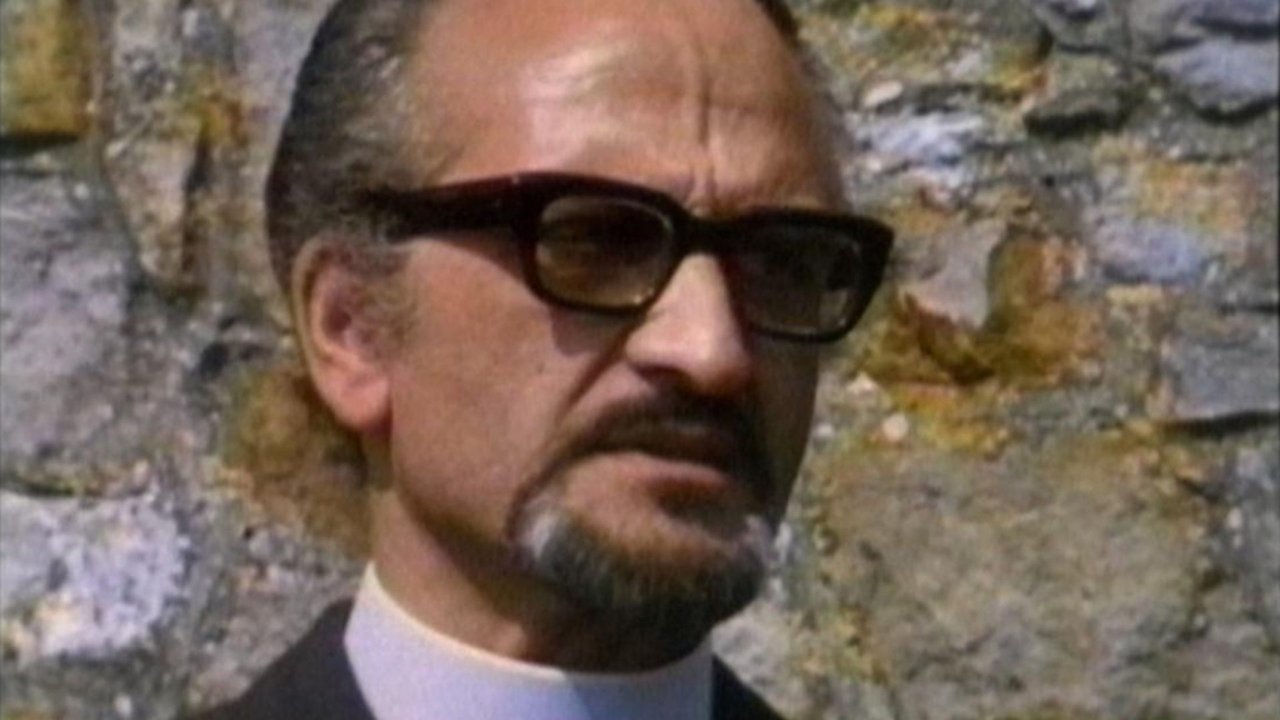
The Reverend Magister has taken over the parish, and in the cavern under his church a coven is chanting to summon something called Azal.
- The heat barrier
An invisible dome seals off Devil's End. The Brigadier is stuck outside, and anything that tries to cross bursts into flame.
The third summoningSpoiler · tap to reveal
The villagers tie the Doctor to the maypole, and below the church the Master calls Azal for the last time, with Jo on the altar.
Kill me insteadSpoiler · tap to reveal
Jo steps between Azal and the Doctor, and the Dæmon can't make sense of it.
Why it still matters
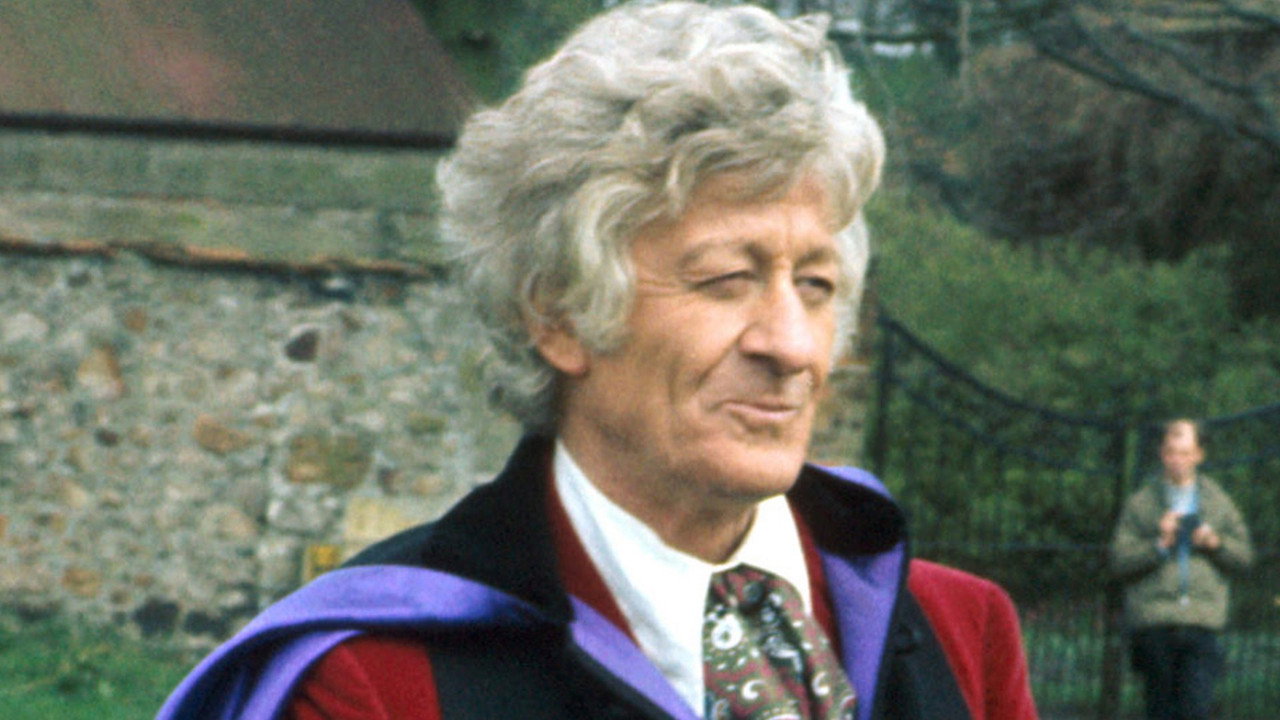
If you want one story that sums up the Jon Pertwee years, this is the usual pick: the Doctor, Jo, the Brigadier, Captain Yates, Sergeant Benton and the Master all in one English village, with a horned beast under the church. The Daily Telegraph called it "the quintessential Pertwee story" and noted that it was a particular favourite of the cast. Readers of Doctor Who Magazine voted it the second-best Third Doctor story in 2009.
It's also the show doing folk horror, and getting away with it. Producer Barry Letts wanted a black-magic story, and script editor Terrance Dicks worried viewers would take it for Satanism, so everything supernatural gets a science-fiction explanation: the Devil is an alien, and the old stories about him are humanity's memory of a very long experiment. The Telegraph heard Hammer Films in it, and the making-of documentary on the DVD is titled The Devil Rides Out.
And it looks unlike most Doctor Who of its day, because so much of it was shot outdoors. The team got two weeks on location in Aldbourne, Wiltshire, more than double the usual, and the village turned out as extras. The result has a sunny spring mood that sits oddly, and nicely, against the gargoyles.
Illogical, and it works
Azal judges the Earth and decides to hand his power to the Master, then turns on the Doctor. Jo steps in front of him and asks to be killed instead. A creature that has treated humanity as an experiment for thousands of years can't account for a sacrifice that makes no sense, and his own power turns on him. He is destroyed, and the church goes with him.
The Master tries to slip away and is caught by UNIT. Then the story throws a party. The Doctor, Jo, Miss Hawthorne and the UNIT men join the villagers' May Day celebrations. Critics who disliked the climax still liked that last scene; Paul Cornell, Martin Day and Keith Topping called the ending risible and the final scene charming.
Challenge the DNA
Did Jo's sacrifice really defeat Azal?
Or skip ahead to our reading
Yes, and it's the best kind of convenient. Azal treats humanity as an experiment and can't account for someone choosing to die for a friend. It's a fairy-tale ending, and the story earns it.
Behind the scenes
- "Guy Leopold" was producer Barry Letts and playwright Robert Sloman, a friend of Letts's wife. The BBC frowned on production staff writing for their own series, so they used a pseudonym. Letts later wrote the 1974 novelisation under his own name.
- The story grew out of a scene Letts had written to audition actresses for Jo Grant; it ended up in part four. The Master's altar was meant to stand in the church itself, and was moved first to a crypt and then to a "cavern" so as not to upset religious viewers.
- Location filming in Aldbourne began on April 19, 1971, in sunshine; in the second week the village woke up to snow. Katy Manning remembered it falling the morning they were due to film a heat-barrier scene. The Blue Boar pub became the Cloven Hoof.
- Damaris Hayman, who played Miss Hawthorne, had an interest in the supernatural and acted as an unofficial adviser; a friend of hers who practised witchcraft praised the scripts for their accuracy. The Master's incantation, for the record, is "Mary Had a Little Lamb" said backwards.
- The church explosion in the final part was a model, and the BBC received letters from viewers who believed it had blown up a real church. An Aldbourne villager told BBC Wiltshire about a man who insisted his son's fiancée couldn't marry there because the church had been blown up in Doctor Who.
- All the original colour videotapes except part four were wiped. In 1992 the colour was restored to the black-and-white film copies using an off-air recording made in America from a 1978 broadcast on KCET.
- Nicholas Courtney titled his 1998 memoir Five Rounds Rapid, after the Brigadier's line: "Jenkins. Chap with the wings there. Five rounds rapid."
The thread
The Devil explained as an alien, an English village with a secret, and a story that ends with a dance.
Came before
Shares DNA with
Left its mark on
DNA strand
First Contact & Invaders
The invader here arrived so long ago that he turned into folklore. Horns, gargoyles and witchcraft all get traced back to one alien visitor, and the Doctor spends the story patiently insisting that it's science, while standing in a cavern full of hooded figures.
Every great sci-fi story is built from a handful of strands like this one. Each strand page explains how it works and traces it across shows, books and films.
If this one stayed with you
Where to go next, and why.
Watch · Film
Quatermass and the Pit
If you like the idea of the Devil as an ancient visitor, this is the other great British take on it, with a dig in a London Underground station.
Watch · Star Trek S2
"Who Mourns for Adonais?"
Same premise from the other side of the Atlantic: the old gods were real, and they were aliens who liked being worshipped.
Watch · Doctor Who
"Terror of the Autons"
The start of the season and of Delgado's Master. You'll enjoy his vicar act more for having seen his first schemes.
Read · Novelisation
Doctor Who and the Dæmons — Barry Letts
The co-writer and producer retelling his own story in 1974, this time without a pseudonym.
Your next episode
Three directions to go from here, all on Sci-Fi DNA.
More of this feeling
Who Mourns for Adonais?
Star Trek
Another ancient being who once inspired human legend and wants to be taken seriously again.

Same question, different answer
The Squire of Gothos
Star Trek
A godlike power treating humanity as a test it can mark.
Something completely different
Day of the Daleks
Doctor Who
From English folk horror to guerrillas from the future.