More from the episode


The story in 5 beats
- The hand
A vast green energy hand stops the Enterprise in space. A voice orders the crew down to the planet, or the ship gets crushed.
- The temple
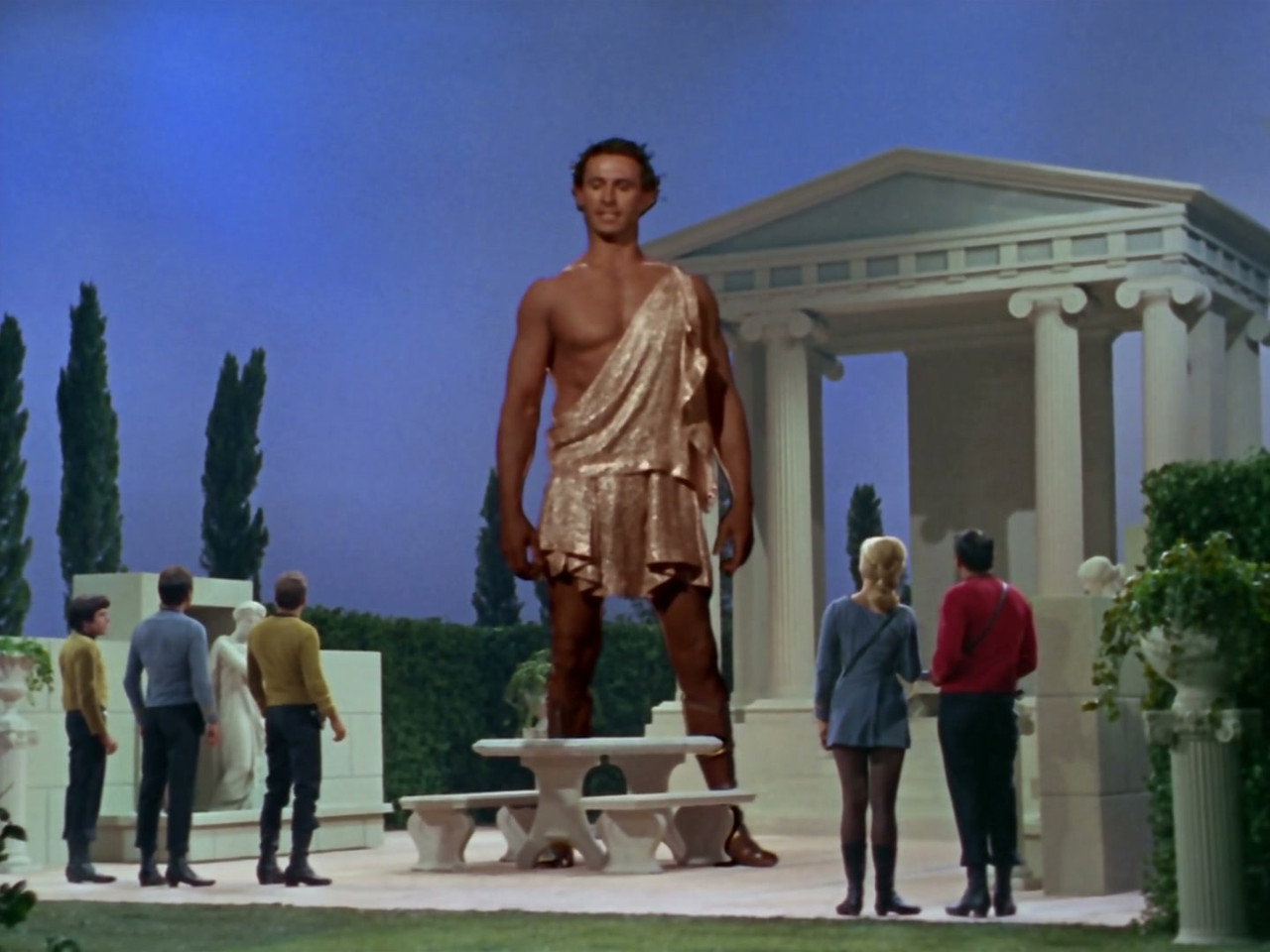
Kirk's party finds a Greek temple and Apollo, who wants them to worship him the way their ancestors did.
- A god's favorite
Apollo takes a liking to Lt. Carolyn Palamas. When Scotty objects, Apollo shows him exactly how much power he has.
Tired godsSpoiler · tap to reveal
Kirk notices that every display of power leaves Apollo tired, and starts provoking him on purpose.
Carolyn's choiceSpoiler · tap to reveal
Kirk asks Carolyn to reject Apollo. Up on the ship, Spock finds the source of his power.
Why it still matters
The image everyone remembers is the hand: a huge glowing palm in space, holding the ship still. The idea behind it is more interesting. Suppose the gods of Olympus were real, and were simply aliens the ancient Greeks met and worshipped. Apollo has been waiting thousands of years for people to come back to him, and he's sure they will be glad to.
Michael Forest plays him with real dignity, which is hard to do in a gold tunic. Keith R.A. DeCandido at Reactor called it a "bravura performance." The episode's heart is Lt. Carolyn Palamas, the ship's specialist in ancient civilizations, whom Apollo wants as his consort. She has to choose between him and the crew, and the way she does it is the cruelest moment in the hour.
It's also a good ensemble episode. Kirk leads the landing party, but Uhura, Spock and Sulu on the ship and Chekov on the planet all do part of the work of beating a god.
The last of the gods
Apollo is the last of a race of powerful beings who visited Earth long ago and lived on the love and worship of the Greeks. When people stopped believing, the others faded away. He stayed, waiting for humans to return, and he can't understand why they won't kneel.
Carolyn does what Kirk asks. She tells Apollo he's nothing more to her than a specimen, a new strain of bacteria, and it breaks him. Spock's phasers cut through the shield and destroy the temple's power source. Apollo admits that the time of the gods is over, calls out to the others and fades away. Kirk and McCoy end on a gentler note than you'd expect: they owe the Greeks a great deal, and wish they hadn't had to do it.
Behind the scenes
- The title quotes Percy Bysshe Shelley's 1821 elegy Adonais, written for John Keats.
- Gilbert Ralston has the writing credit. Gene L. Coon rewrote the script without credit.
- The producers considered Jon Voight for Apollo, but he was unavailable. Michael Forest got the part after the head of a San Diego theater recommended him. He told StarTrek.com he read three times and was asked to take his shirt off.
- Forest said they filmed during the Six-Day War of June 1967, and that he only learned about a planned pregnancy storyline for Carolyn after the episode aired. James Blish's prose adaptation kept that ending.
- In 2013 Forest played Apollo again, much older, in "Pilgrim of Eternity," an episode of the fan series Star Trek Continues.
The thread
Old gods, new visitors, and the crew's habit of saying no to beings who want to be adored.
Came before
Shares DNA with
Left its mark on
DNA strand
First Contact & Invaders
Here first contact runs backwards. The aliens came to us thousands of years ago, and we called them gods. The episode imagines how that would feel to the one left behind, and makes Apollo more pitiable than frightening. Kirk's reply is the series in a sentence: humanity has outgrown the need for gods, though it can still be grateful to them.
Every great sci-fi story is built from a handful of strands like this one. Each strand page explains how it works and traces it across shows, books and films.
If this one stayed with you
Where to go next, and why.
Watch · Star Trek S1
"The Squire of Gothos" (1967)
If Apollo's tantrums appealed, Trelane is the same problem played for comedy: a being who could crush the ship and mostly wants to be admired.
Watch · Film
Stargate (1994)
The same big idea, that Earth's ancient gods were visitors from elsewhere, built out into an adventure movie.
Watch · Star Trek Continues
"Pilgrim of Eternity" (2013)
A fan-made sequel with the original Apollo, decades older, asking the Enterprise for help. A kind coda to this story.
Read · Poem
Adonais by Percy Bysshe Shelley (1821)
The elegy the title comes from. It's about mourning someone who's gone and insisting they live on, which is roughly Apollo's position too.