More from the episode
The story in 5 beats
- The wreck
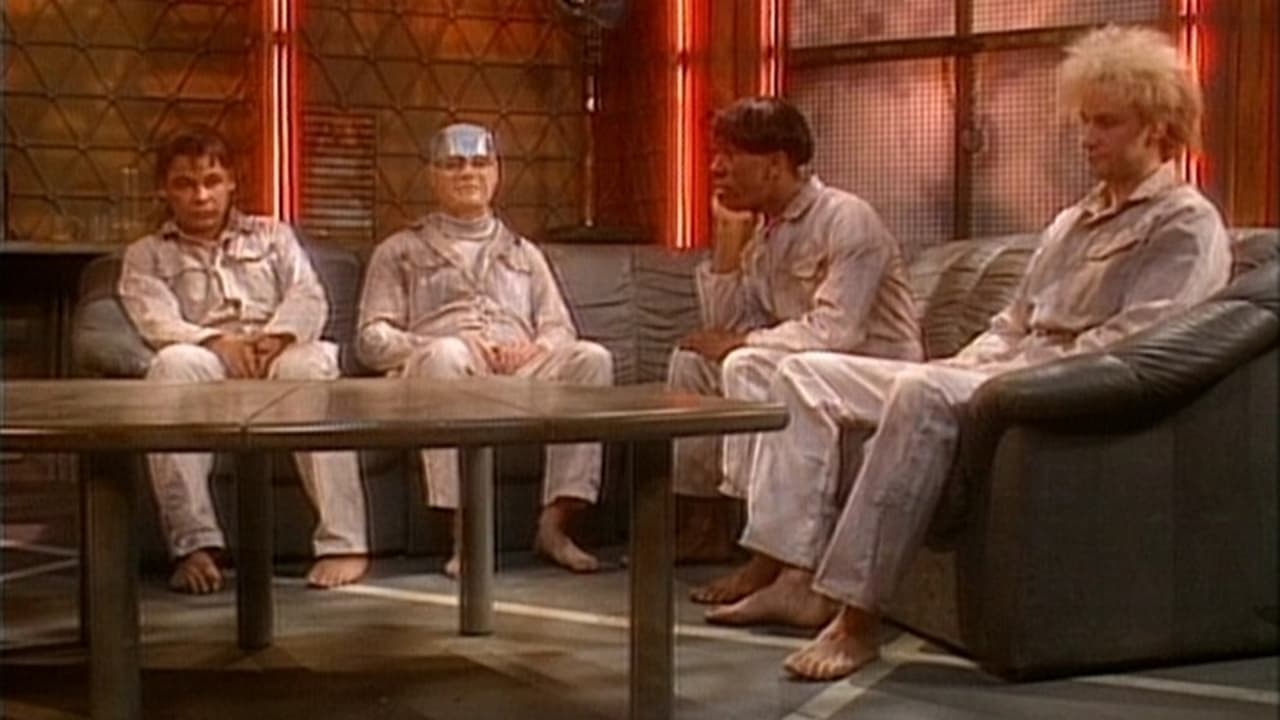
The crew explore the SSS Esperanto, a research ship whose entire crew killed themselves.
- Game over
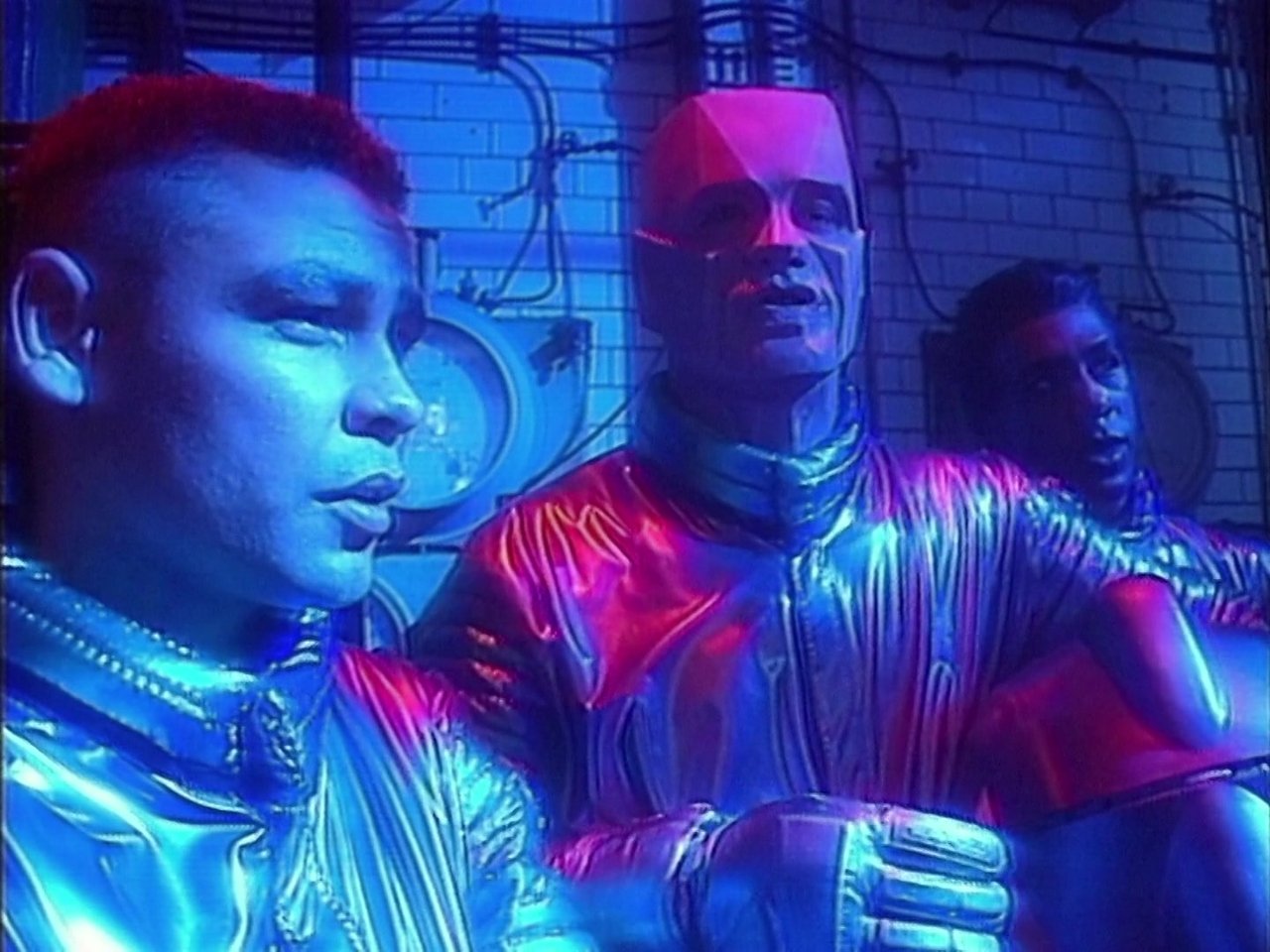
Starbug crashes. They wake up in a game facility and are told the last four years were a total immersion game called Red Dwarf.
Score: 4%Spoiler · tap to reveal
Their real selves are worse: Lister runs a fascist secret police, Rimmer is a tramp, the Cat is Duane Dibbley.
Rock bottomSpoiler · tap to reveal
Kryten, now a half-human cop, has to take a life to save one, and the crew decide there's no point going on.
The squidSpoiler · tap to reveal
None of it was real. A despair squid's ink made them hallucinate, and Holly snaps them out of it just in time.
Why it still matters
Ask a Red Dwarf fan for the best episode and there's a good chance you'll hear this one. It takes the show's whole setup, a slob, a hologram, a cat and a mechanoid stranded three million years from home, and throws it all away. The crew wake up and are told none of it was real. They were players in a total immersion game called Red Dwarf, and they scored four percent.
What makes it a classic is how far Rob Grant and Doug Naylor push the joke. Each crew member discovers that their "real" self is the worst possible version of who they thought they were, and the comedy turns darker by the minute. It's one of the funniest half-hours of British sci-fi, and it also gets something true about depression: how quickly it can convince you that the worst version of your life is the real one.
Who they "really" are
Lister becomes
Voter Colonel Sebastian Doyle
Head of the secret police in a fascist state
Rimmer becomes
Billy Doyle
A tramp, and the half-brother of the man he resents most
The Cat becomes
Duane Dibbley
A spectacularly uncool human. The coolest being aboard, now a dork
Kryten becomes
Detective Jake Bullet
A half-human traffic cop, forced to take a life to save one
And the twist on the twist: none of that is real either. Earlier, the crew found the wreck of the research ship SSS Esperanto, where everyone had killed themselves. The culprit was a despair squid, whose ink is a hallucinogen that brings on crushing hopelessness. The game, the crash and the miserable new lives were all the squid's ink at work. Holly snaps them out of it just in time.
The big idea behind it
Simulation Theory
Open questionHow it connects (shows the twist)
The "simulation" is itself fake: a hallucination from despair squid ink. It's a reveal about the reveal.
Behind the scenes
- It was the first script written for Series V, at a time when everyone thought it might be the last series. Chris Barrie was busy with The Brittas Empire and Robert Llewellyn was making the American Red Dwarf USA pilot, which could have tied him up for years.
- Timothy Spall, years before playing Peter Pettigrew in the Harry Potter films, plays Andy, the cheerful technician at the game facility.
- Lenny Von Dohlen (Twin Peaks) agreed to play the Cop after talking to Frances Barber, who had guest-starred in "Polymorph."
- The despair squid didn't survive filming. The model shots didn't work, so the finished episode uses a superimposed shadow instead.
- The game facility's corridors were reused from the earlier episode "Holoship," and the Esperanto interiors were shot at Sunbury Pumphouse.
- It was Hattie Hayridge's final appearance as Holly.
The thread
What fed into this episode, what it shares DNA with, and where it shows up later.
Came before
Shares DNA with
 ClipOfficial featurette · Netflix · 1:09
Left its mark on
 ClipOfficial clip · BBC Studios · 3:10
DNA strand
Is Any of This Real?
Telling the characters, and the audience, that the world they know is fake is one of sci-fi's oldest moves. It works because it makes us wonder what we'd lose if our own lives turned out to be a simulation. Most stories use it to make us paranoid. Red Dwarf uses it for something sharper: the fear that the "real" you is worse than the one you've been playing.
Every great sci-fi story is built from a handful of strands like this one. Each strand page explains how it works and traces it across shows, books and films.
If this one stayed with you
Where to go next, and why.
Watch · Red Dwarf II
"Better Than Life" (1988)
The crew's first trip into a total immersion game, played for pure wish-fulfilment. "Back to Reality" is the nightmare version.
Watch · Film
eXistenZ (1999)
If the "it was all a game" reveal was your favorite part, Cronenberg stacks game levels until nobody, including you, can tell which one is real.
Watch · Red Dwarf VI
"Emohawk: Polymorph II" (1993)
For anyone who wanted more Duane Dibbley. The show brought him back, and he's just as tragic.

Read · Scripts
Primordial Soup (1993)
The Grant Naylor script collection that includes this episode. Great for spotting jokes you missed on screen.