More from the episode

The story in 5 beats
- Ten million years on
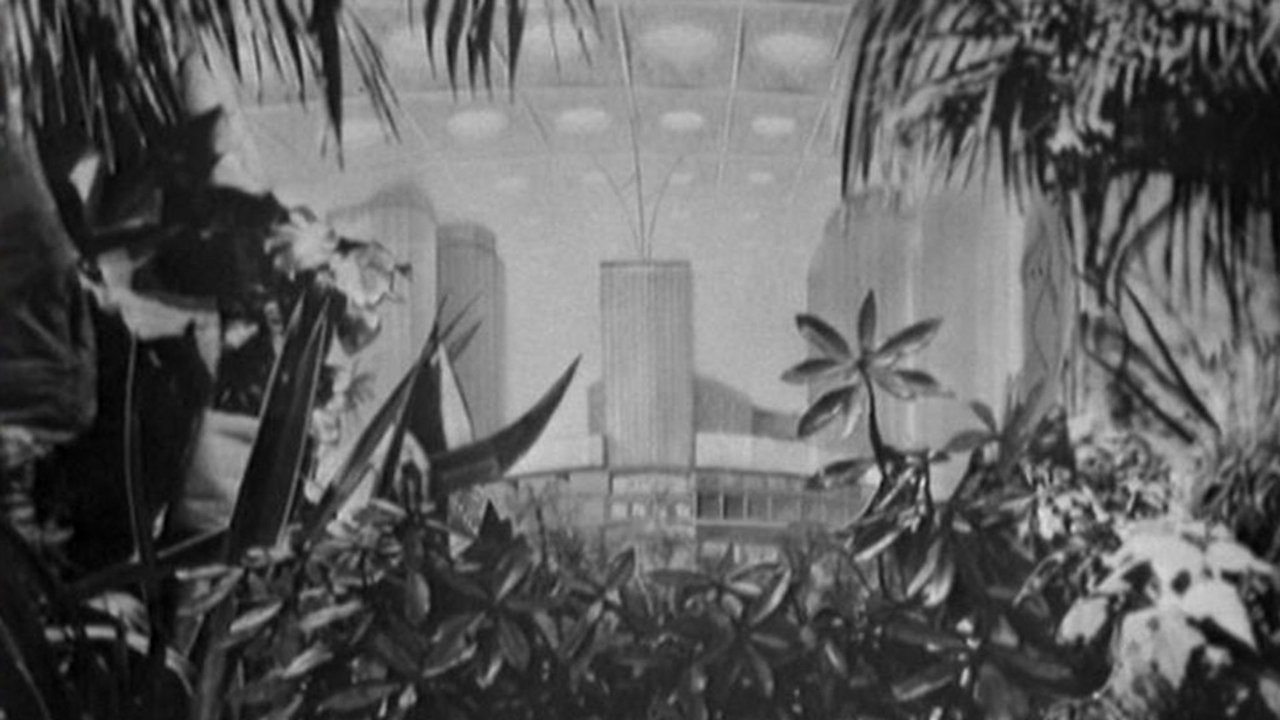
The TARDIS lands on a huge ship leaving an Earth about to be swallowed by the Sun. Humanity, miniaturised, is on a 700-year voyage to Refusis II, with Monoids as servants.
- Dodo's cold
Dodo has a cold, and nobody on the Ark has any immunity to it. The infection spreads, the Commander collapses, and his deputy Zentos takes charge.
- On trial
Zentos tries the travellers for infecting the ship and sentences them to death. The ailing Commander gives the Doctor a chance to find a cure instead.
The finished statueSpoiler · tap to reveal
The TARDIS brings them back to the Ark at the end of its voyage. The giant statue is done, with a Monoid's head, and the humans are now the servants.
RefusisSpoiler · tap to reveal
The Monoids plan to settle Refusis II and leave the humans to a bomb hidden in the statue. The planet's invisible owners have their own terms.
Why it still matters
Producer John Wiles wanted a spaceship big enough to hold forests and need vehicles to cross it, roughly the size of South London. His story editor, Donald Tosh, worried the idea was too ambitious for a BBC studio and compared it to Arthur C. Clarke. The Ark is what came out of that argument: an ark carrying humanity, its animals and a servant race away from the Earth's last days, made on a 1966 budget, with a real baby elephant in the studio.
It's also a story about who does the work. The human Guardians run the ship, and the mute, one-eyed Monoids do the chores. Nobody aboard thinks much about that arrangement, the Doctor included, and the serial keeps coming back to it. The Discontinuity Guide called it "a clever and tightly constructed tale," and the end of part two is often counted among the show's best cliffhangers; at io9, Charlie Jane Anders called it "a really neat visual trick that tells you everything you need to know."
Unlike much of season 3, you can watch all of it. The BBC wiped the videotapes in 1967, but in 1978 BBC Enterprises found it still held all four parts on 16 mm film, which makes The Ark the earliest serial of season 3 that survives complete. Director Michael Imison drew up elaborate storyboards and camera scripts and later admitted he was probably "deliberately trying to show off." Critics have praised the direction ever since.
Seven hundred years later
The Doctor's vaccine works, and the travellers leave after watching the Earth burn up on the scanner. Then the TARDIS lands on the Ark again, at the end of the voyage. The cold weakened the humans for generations, and the Monoids, now with voice machines, have taken over. Their leader plans to settle Refusis II and blow up the Ark with the humans on it. Steven leads a breakout, the Monoids split into factions and fight each other, and an invisible Refusian throws the statue and its bomb off the ship in time. The Refusians agree to share their world, on condition that humans and Monoids live in peace. In the TARDIS, the Doctor suddenly turns invisible.
Critics have argued about what the story is saying. David J. Howe and Stephen James Walker felt that blaming the Monoids' rise on the cold "dilutes the moral questions" raised by how the humans treated them in the first half. Andrew Crome read the human and Monoid plot against the debates around the Race Relations Act 1965, and pointed out that the Doctor accepts the Monoids' servitude without a word but is keen for the humans to rebel. Several reviewers singled out the time jump, because it shows the travellers what their own visit did.
Challenge the DNA
Did the humans deserve what happened to them?
Or skip ahead to our reading
Neither side looks good, which is the interesting part. The humans took the Monoids' service for granted, and the Monoids turned out no gentler in charge. The story ends on the two sides agreeing to share, which is the right answer and an unusually grown-up one for 1966.
Behind the scenes
- John Wiles conceived the ship; Donald Tosh developed the storyline with Paul Erickson, who was commissioned in May 1965. The Ark was Wiles's last credited work as producer. His successor, Innes Lloyd, shadowed him during filming.
- Erickson's agent asked in January 1966 for Lesley Scott, Erickson's partner at the time, to be added as co-writer without a fee. Erickson later called it a "personal arrangement". Scott was the first woman credited as a writer on Doctor Who.
- The scripts called the Monoids "Reptiles"; Imison renamed them after their single eye, suspecting they might sell as toys. Daphne Dare's Monoid costumes were one-piece suits with yak-hair wigs. The eyes were ping-pong balls, and in four of the costumes the performers could move the eye with their tongues. The numbers on the Monoids' collars were changed between shots so there seemed to be more of them.
- Monica, a baby Indian elephant trained by Mary Chipperfield, spent the night before filming in a van outside Imison's home because the BBC wouldn't let the driver park at the studio. Hartnell got on well with her, probably thanks to the peanuts in his pocket. Imison filmed her alongside the regular cast to show he hadn't used stock footage.
- To save money, about nine minutes of Tristram Cary's music from The Daleks was reused. The first episode cost more than double its £2,700 budget, and savings were made on the next serial, The Celestial Toymaker, to cover it.
- Imison was told shortly before the final recording that his BBC contract would not be renewed, which he put down to the studio overruns on The Ark. It was his last television directing job.
The thread
An ark, a servant class, and a long trip to a promised planet.
Came before
Shares DNA with
Left its mark on
DNA strand
Us vs. Them
The Guardians give the orders and the Monoids carry them out, and the Doctor, as Andrew Crome noted, accepts that without a word. The serial is more interested in that setup than its heroes are, and it asks what a ship full of the last humans owes the people who do its work.
Every great sci-fi story is built from a handful of strands like this one. Each strand page explains how it works and traces it across shows, books and films.
If this one stayed with you
Where to go next, and why.
Watch · Doctor Who
"The Ark in Space" (1975)
Nine years later the show built another ark for humanity. Andrew Crome compared the two stories, and they make a good pair.
Watch · Star Trek S3
"For the World Is Hollow and I Have Touched the Sky"
Another long voyage to a promised world, with a people who have their own ideas about where they're going and who's in charge.
Watch · Doctor Who
"The Celestial Toymaker" (1966)
The next story, with the same TARDIS crew. It goes about as far from a sensible spaceship as the show ever went.
Read · Novel
Doctor Who: The Ark — Paul Erickson
Erickson novelised his own story in 1986 and expanded several of its ideas along the way.
Read · Novel
Non-Stop — Brian Aldiss
A generation-ship novel from 1958, for anyone who wants more of what happens to people after centuries in transit.
Your next episode
Three directions to go from here, all on Sci-Fi DNA.
More of this feeling
The Neutral Zone
Star Trek: The Next Generation
Another story about people waking up far in the future and finding the world has moved on.

Same question, different answer
The Obsolete Man
The Twilight Zone
Who gets treated as less than a person, and who decides?

Something completely different
The Celestial Toymaker
Doctor Who
From a generation ship to a playroom run by a bored god.