More from the episode
The story in 5 beats
- A holiday in Paris
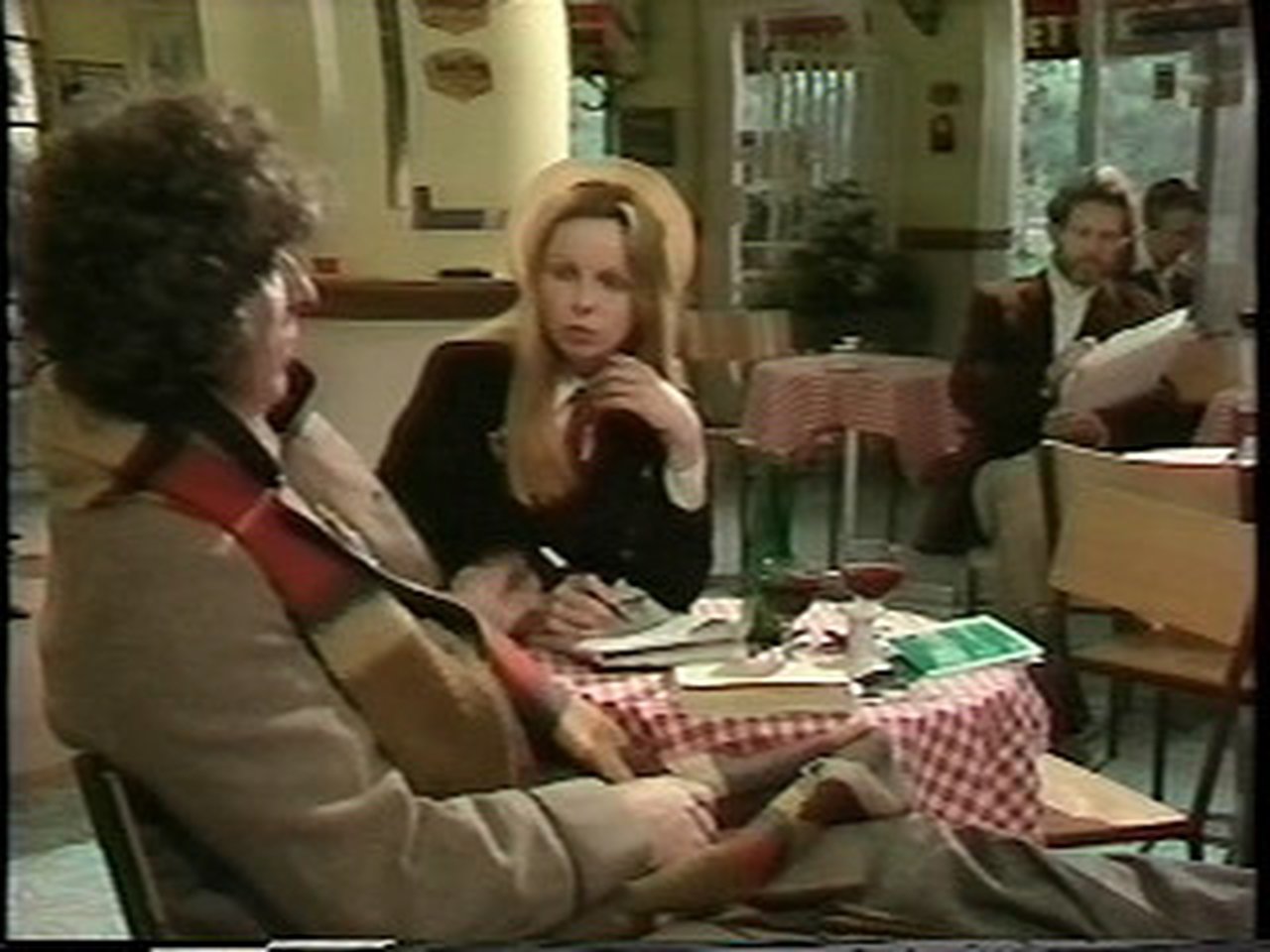
The Doctor and Romana sightsee in Paris in 1979. In a café, time seems to jump back a few seconds and repeat itself.
- The count's cellar
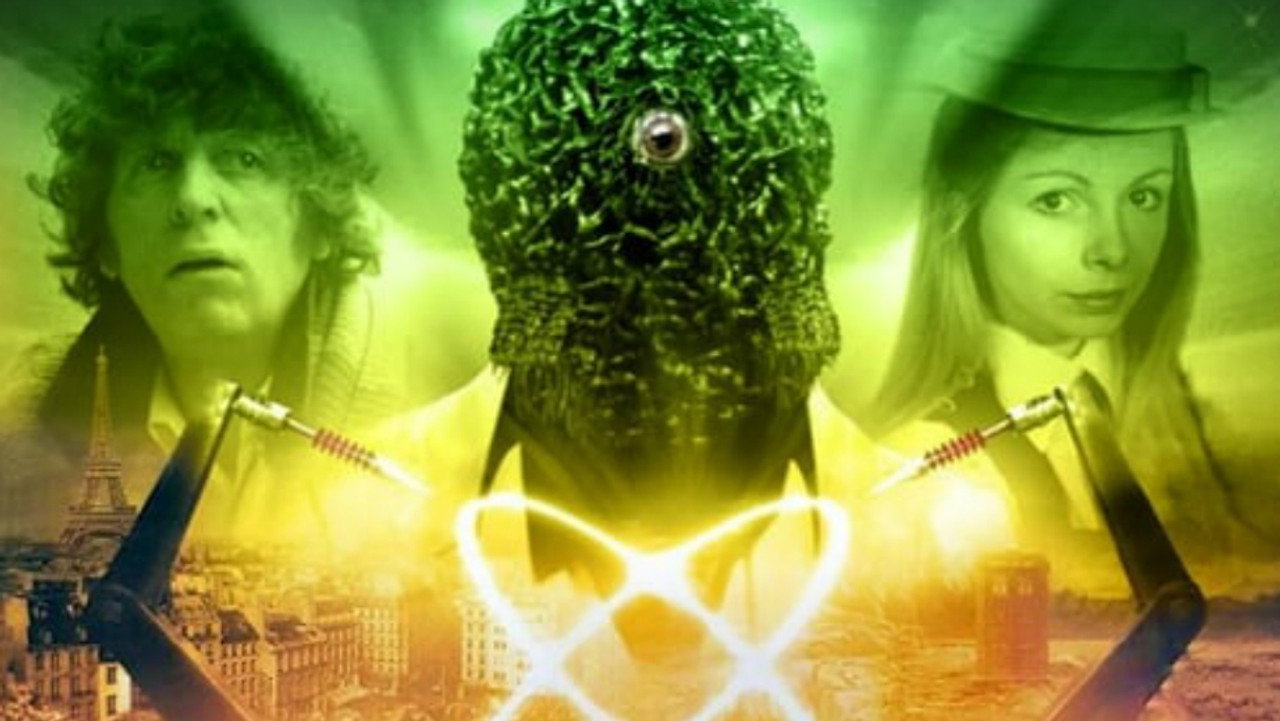
Count Scarlioni is rich, charming and planning to steal the Mona Lisa, while his scientist Kerensky runs time experiments below the house.
- Six Mona Lisas
In the Count's house the Doctor, Romana and the detective Duggan find six Mona Lisas, and every one of them looks genuine.
The last of the JagarothSpoiler · tap to reveal
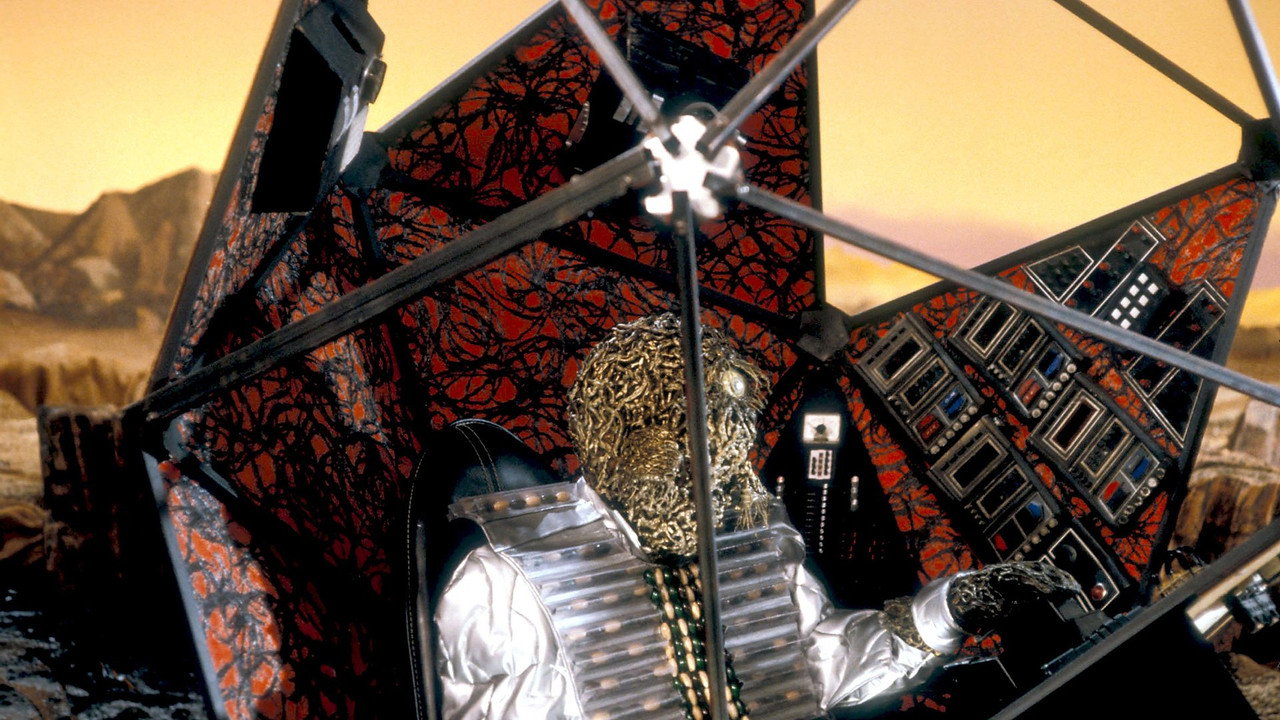
Scarlioni is Scaroth, an alien split across history when his ship exploded on primeval Earth. He wants to go back and stop it happening.
Back to the beginningSpoiler · tap to reveal
Everyone races to the moment of the explosion, where stopping Scaroth matters more than anyone in Paris realised.
Why it still matters
No single episode of Doctor Who has drawn a bigger audience than part four of this one: 16.1 million viewers on October 20, 1979. There's an asterisk: a strike had taken ITV off the air, so most of Britain had only the two BBC channels to choose from. What those viewers got was the show at its most relaxed and quotable, with the script editor, Douglas Adams, doing most of the writing.
It was also the first Doctor Who serial to film outside the United Kingdom. The crew shot in Paris from April 30 to May 3, 1979, over the May Day holiday, and it shows on screen: Tom Baker and Lalla Ward really are walking through the city, and a good part of the story's charm is two Time Lords on holiday, chatting about art and time while a detective named Duggan tries to keep up.
The writing credit hides a scramble. David Fisher had pitched "The Gamble with Time," about rigging casinos to pay for time-travel experiments, and at the producer's request reworked it as a send-up of the 1920s Bulldog Drummond adventures, set mostly in 1928 with a casino in Monte Carlo. When the team found they could afford to film in Paris, the scripts needed rewriting, and Fisher, going through a divorce, couldn't do it. So Adams and producer Graham Williams rebuilt it over a weekend, moved it to present-day Paris, dropped the costly period setting and put the result out under the BBC pseudonym David Agnew. The joke-a-minute surface sits on top of a properly big idea, one Adams liked well enough to reuse in a novel years later.
Life on Earth, and one honest fake
Count Scarlioni is Scaroth, the last of the Jagaroth. His ship blew up on Earth some four hundred million years ago and the blast scattered him through time in splinters, each living a human life, including Captain Tancredi in Leonardo's day. Every splinter has been nudging human progress along so that Kerensky's time machine can finally be built and Scaroth can go back and stop the explosion. The catch is that the explosion is what started life on Earth. Saving his people would erase humanity. The Doctor, Romana and Duggan follow him to the primeval past, where Duggan knocks him out before he can warn his earlier self. Back in the present his bodyguard unmasks him, and in the fight and fire that follow Scaroth dies and the paintings burn.
One copy survives. On his trip to Leonardo's studio the Doctor had written "This is a fake" in felt-tip on the blank boards, so the painting left over is a real Leonardo with a hidden label calling it a forgery, and the Doctor doesn't seem troubled. It suits a story that has been teasing the art world all along, from the Count's sales plan to the two gallery visitors who mistake the TARDIS for an exhibit.
Challenge the DNA
Is Scaroth a villain, or a man trying to save his people?
Or skip ahead to our reading
Both, and Julian Glover plays him as both. What he wants is completely understandable. It just happens that the price is all of us. In the end Duggan's punch settles a question that philosophy can't.
Behind the scenes
- David Fisher's original proposal, "The Gamble with Time," was about rigging casinos to finance time-travel experiments. Graham Williams asked him to rework it as a send-up of Sapper's Bulldog Drummond stories, and the draft was set mostly in 1928, with the villain's partner cheating at roulette in Monte Carlo. Fisher was going through a divorce and couldn't do the later rewrites.
- Once production manager John Nathan-Turner worked out that a small crew could afford Paris, Douglas Adams and Graham Williams rewrote the scripts over a weekend, moving the action to 1979 Paris and dropping the 1920s setting, partly because of the expense. The credit went to "David Agnew," a BBC in-house pseudonym.
- It was the first Doctor Who serial filmed on location outside the United Kingdom. Location shooting in Paris ran from April 30 to May 3, 1979.
- Adams knew John Cleese and Eleanor Bron through Monty Python and the Cambridge Footlights. Learning both would be at BBC Television Centre on the day the gallery scenes were recorded, he talked them into a quick cameo as two visitors admiring the TARDIS. They agreed on condition that there was no advance publicity.
- Part four's 16.1 million viewers is the biggest audience for any single episode of Doctor Who. ITV was off the air because of a strike at the time, leaving only the two BBC channels.
- Adams reused parts of this story and of his unfinished serial "Shada" in his 1987 novel Dirk Gently's Holistic Detective Agency.
- There was no novelisation for decades. Adams turned down Target's offers, and he wasn't willing to let another author write one. After his death, James Goss finally wrote it, working from Fisher's original outline and Adams's rehearsal scripts; BBC Books published it in May 2015.
The thread
Time slips, stolen masterpieces and the art world taken less seriously than it takes itself.
Came before
Shares DNA with
Left its mark on
DNA strand
Time Loops & Timelines
Time keeps hiccuping in this story, starting with a café moment that replays itself, and the Count's interest in history runs deeper than a collector's. Under the jokes sits a big idea about how fragile the past is, and the Doctor's job is to keep it the way it was.
Every great sci-fi story is built from a handful of strands like this one. Each strand page explains how it works and traces it across shows, books and films.
If this one stayed with you
Where to go next, and why.
Watch · Star Trek
"Requiem for Methuselah"
Another rich recluse with a private gallery of unknown masterpieces, and another story that has fun with art history.
Read · Novel
Dirk Gently's Holistic Detective Agency — Douglas Adams
Adams took pieces of this story with him. If you liked the Doctor's breezy logic, Dirk is a close cousin.
Read · Novel
Doctor Who: City of Death — James Goss
The 2015 novelisation, written with Fisher's original outline and Adams's scripts to hand, for when four parts aren't enough Paris.
Watch · Star Trek: The Next Generation
"The Chase"
Picard picks up his old archaeology professor's last puzzle and chases it across the galaxy: a big science-fiction idea wrapped in a treasure hunt, played straight.
Watch · Red Dwarf
"Timeslides"
A comedy about meddling with the past to get rich, which is roughly the Count's business plan.
Your next episode
Three directions to go from here, all on Sci-Fi DNA.
More of this feeling
The Big Goodbye
Star Trek: The Next Generation
Another period romp with its tongue in its cheek: Picard in a 1940s trench coat instead of the Doctor in a Paris café.

Same question, different answer
Yesterday's Enterprise
Star Trek: The Next Generation
What if fixing the past means undoing the present? The Enterprise has to decide which version of history to keep.

Something completely different
Time Enough at Last
The Twilight Zone
From the wittiest story in the run to one of TV's bleakest punchlines, in half an hour of black and white.
Sources
- “City of Death,” Wikipedia
- Mark Harrison, “City Of Death at 40: revisiting Doctor Who's most-watched story,” Den of Geek, 2019
- “We'll Finally Have Paris,” SFX, 2015
- “Doctor Who: City of Death (Douglas Adams and James Goss),” Penguin Books
- “In Review: Doctor Who and the City of Death,” downthetubes.net
- “Dirk Gently's Holistic Detective Agency,” Wikipedia
- “City of Death novelisation for 21st May,” Doctor Who News, 2015
- “David Fisher (writer),” Wikipedia