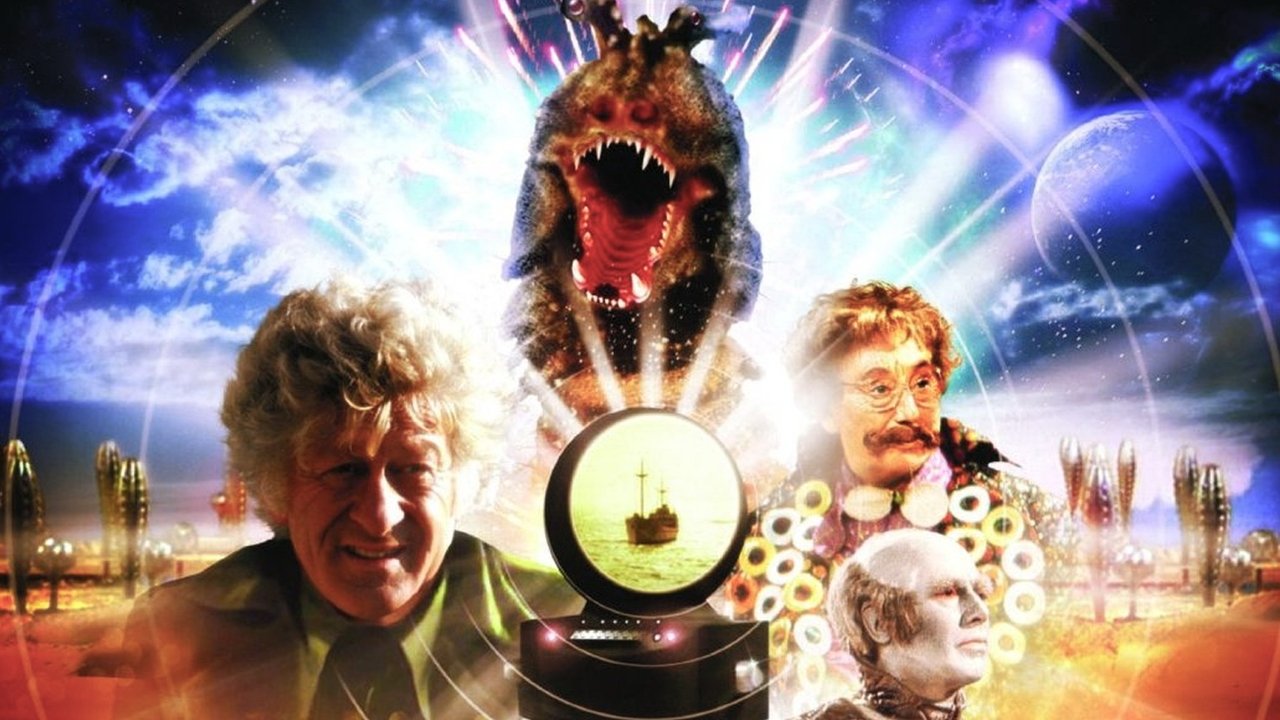
More from the episode
The story in 5 beats
- The SS Bernice, 1926
The TARDIS materialises in the hold of a cargo ship. The Doctor and Jo are caught as stowaways, escape, and are caught again by crew who don't remember them.
- Customs on Inter Minor
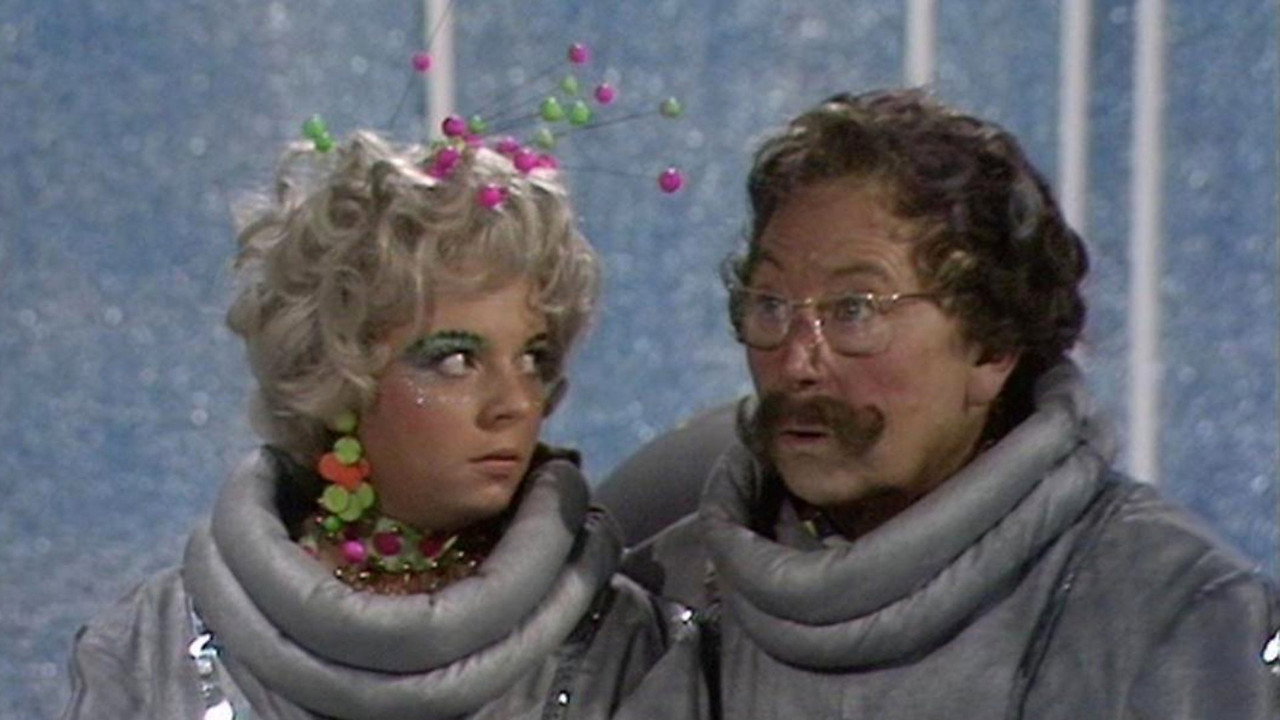
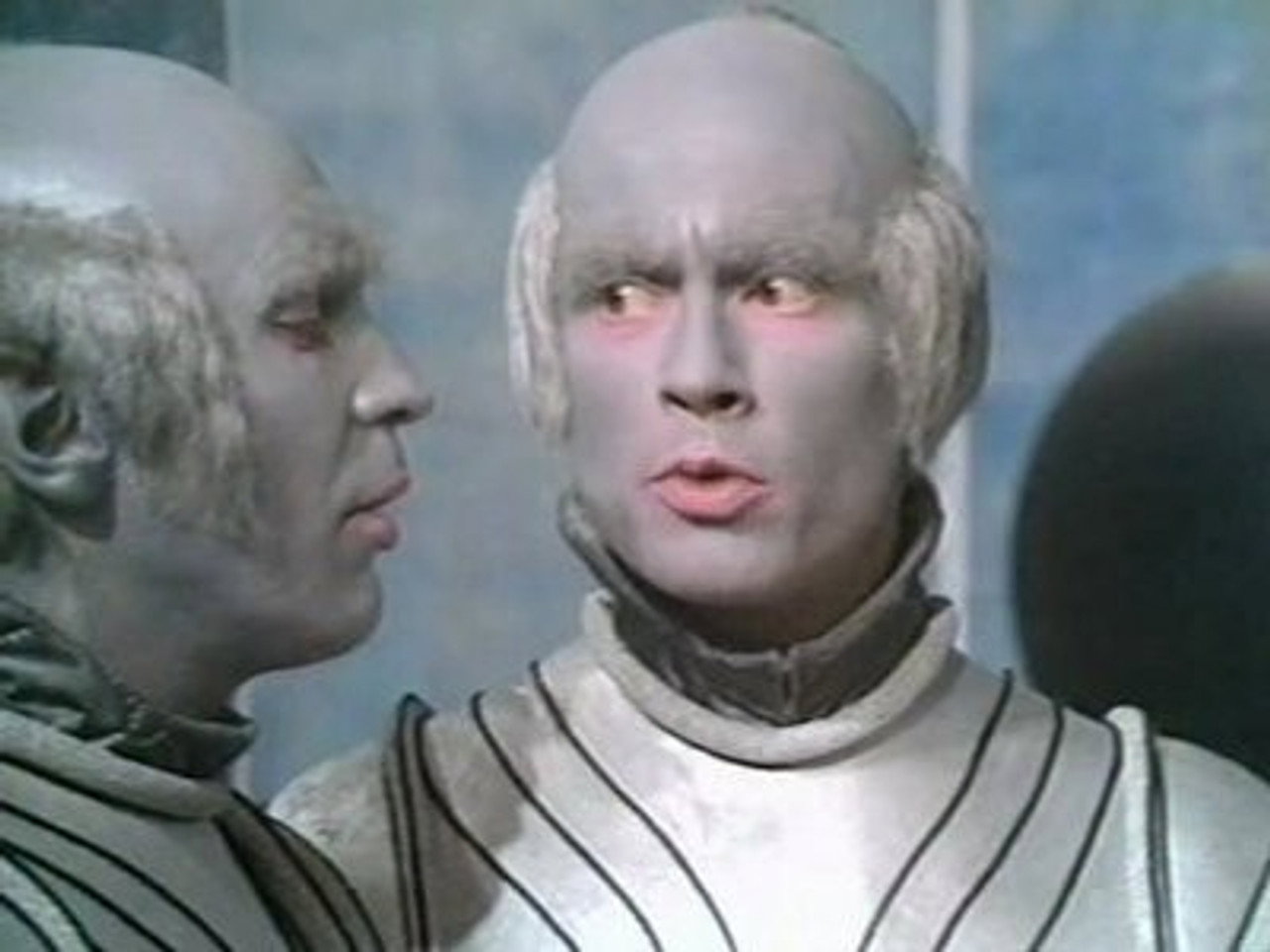
Vorg and Shirna arrive on Inter Minor with their Miniscope. The tribunal of Kalik, Orum and Pletrac suspects them of spying and won't let them in.
- Behind the panel
A hatch the crew can't see leads the Doctor and Jo into circuitry, then a swamp full of Drashigs. They aren't outside at all. They're inside the Miniscope.
A plot on the tribunalSpoiler · tap to reveal
Kalik and Orum plan to let the Drashigs loose and force the president out. The Doctor gets out at full size, but the machine is failing, with Jo still inside.
Vorg's best trickSpoiler · tap to reveal
Vorg, of all people, saves the day, and sends everyone in the Miniscope home. Then he goes back to cheating the locals at the shell game.
Why it still matters
Robert Holmes went on to write some of the best-loved Doctor Who of the 1970s, and this is where you can watch his style arrive fully formed. The story runs on two tracks. On one, the Doctor and Jo are stuck on a ship whose passengers repeat the same afternoon. On the other, a seedy showman called Vorg and his assistant Shirna argue with three grey alien bureaucrats who would like them to go away. The joke is how the two tracks connect, and Holmes lets the audience work it out a step ahead of the Doctor.
The heart of it is the Miniscope, a machine that keeps shrunken creatures in shrunken copies of their homes for the paying public to gawp at. Part zoo, part fairground booth, it also looks a lot like a television set, and Holmes doesn't let anyone off: the showman exploits his exhibits, the officials of Inter Minor despise all outsiders, and the exhibits themselves have no idea they're on show.
It's also funny. Leslie Dwyer plays Vorg as a fairground hustler down on his luck, and DVD Talk's John Sinnott singled him out in a review that called the serial "light and fun". The Radio Times's Mark Braxton later called the premise "ingenious". He thought the Drashigs were a mixed bag, but the ideas are strong enough to carry them.
The showman saves the day
Kalik and Orum sabotage the Miniscope's eradicator and let two Drashigs loose on Inter Minor, hoping the panic will force the president to resign. The Doctor climbs out of the machine and returns to full size, then goes back in to rescue Jo, linking the Scope to the TARDIS, only for his device to be shot. Inside, the life support fails and he and Jo collapse. The plot kills its plotters: Kalik and Orum both die to the Drashigs. Vorg repairs the eradicator, destroys the escaped beasts, then fixes the Doctor's device, and the Doctor and Jo come back just in time.
Everything else in the Miniscope goes home too, the Bernice back to the Indian Ocean in 1926. It's typical Holmes that the hero of the hour is a small-time con man, and that the last we see of him he's trying to win his fare home with three magum pods and a yarrow seed.
Challenge the DNA
Is Vorg a villain for keeping people in the Miniscope?
Or skip ahead to our reading
Not a villain, but not off the hook. Vorg never thinks of the creatures in his machine as people, and that thoughtlessness is what Holmes is poking at. The real villains are the officials who'd use the Drashigs for politics.
Behind the scenes
- Robert Holmes had already written "Spearhead from Space" (1970) and "Terror of the Autons" (1971) for the Third Doctor. His next was "The Time Warrior" later in 1973. The working title was Peepshow.
- It was recorded with the previous season's production block and held back for Season 10, so that Barry Letts could direct it. As producer, he had found directing at the start of a block hard going on "Terror of the Autons".
- The SS Bernice was the Royal Fleet Auxiliary ship Robert Dundas, decommissioned in December 1971. The BBC filmed on her on June 1–2, 1972, while she was being taken from Chatham to the breakers at Grays in Essex, where she arrived on June 3.
- Cheryl Hall (Shirna) and Jenny McCracken (Claire Daly) had both been on the shortlist to play Jo Grant. Letts remembered them and cast them both here.
- Ian Marter, who plays First Officer John Andrews, had been offered the part of Captain Mike Yates in 1971 but had another commitment. In 1974 he joined the series as Harry Sullivan.
- Tenniel Evans (Major Daly) had worked with Jon Pertwee for years on the BBC radio comedy The Navy Lark. Michael Wisher (Kalik) went on to be the first actor to play Davros, in "Genesis of the Daleks" in 1975.
- The opening titles were made with a new synthesizer arrangement of the theme by Paddy Kingsland, the "Delaware" version. BBC executives disliked it and the original was restored, but it survives on an uncorrected copy of part two sent to Australia by mistake. The Miniscope's specimens include Ogrons and Cybermen as well as the Drashigs.
The thread
A zoo, a sideshow and a television set, all in one box.
Came before
Shares DNA with
Left its mark on
DNA strand
Is Any of This Real?
The people on the Bernice think they're at sea in 1926. They're in a box on a showman's cart, living the same few hours on a loop for an audience they never see. Holmes plays it for laughs, but the idea underneath is the one behind every story where the world turns out to be a display case.
Every great sci-fi story is built from a handful of strands like this one. Each strand page explains how it works and traces it across shows, books and films.
If this one stayed with you
Where to go next, and why.
Watch · The Twilight Zone S4
"Miniature"
A tiny world behind glass, and a man who can't stop watching it. The same box, seen from the outside.
Watch · Star Trek S2
"The Gamesters of Triskelion"
Captives kept for someone else's entertainment, with the gamblers watching from somewhere out of sight.
Watch · Star Trek: TNG S2
"The Royale"
Another little world built to someone's idea of Earth, where the locals repeat their lines and the visitors can't find the exit.
Watch · Film
The Truman Show (1998)
A man living inside a set for an audience of millions. Vorg would have loved the ratings.
Read · Novel
Gulliver's Travels — Jonathan Swift
Read the Brobdingnag voyage for the other side of the Miniscope: Gulliver, tiny among giants, is exhibited for money.
Your next episode
Three directions to go from here, all on Sci-Fi DNA.
More of this feeling
The Zanti Misfits
The Outer Limits
Monsters in miniature, and the people who think they're in control.

Same question, different answer
White Bear
Black Mirror
What does it mean to be trapped as entertainment for someone else?
Something completely different
The Dæmons
Doctor Who
From a peepshow in space to an English village with something under the barrow.