More from the episode
The story in 5 beats
- A raid on a freighter
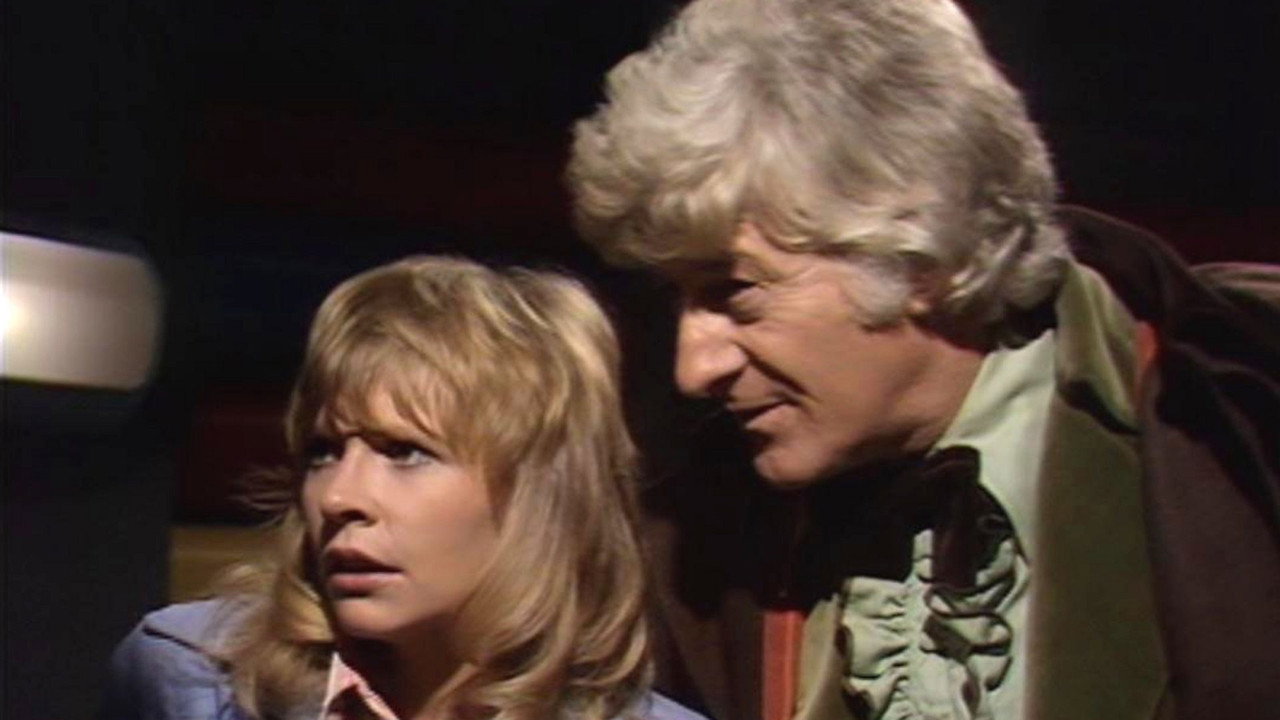
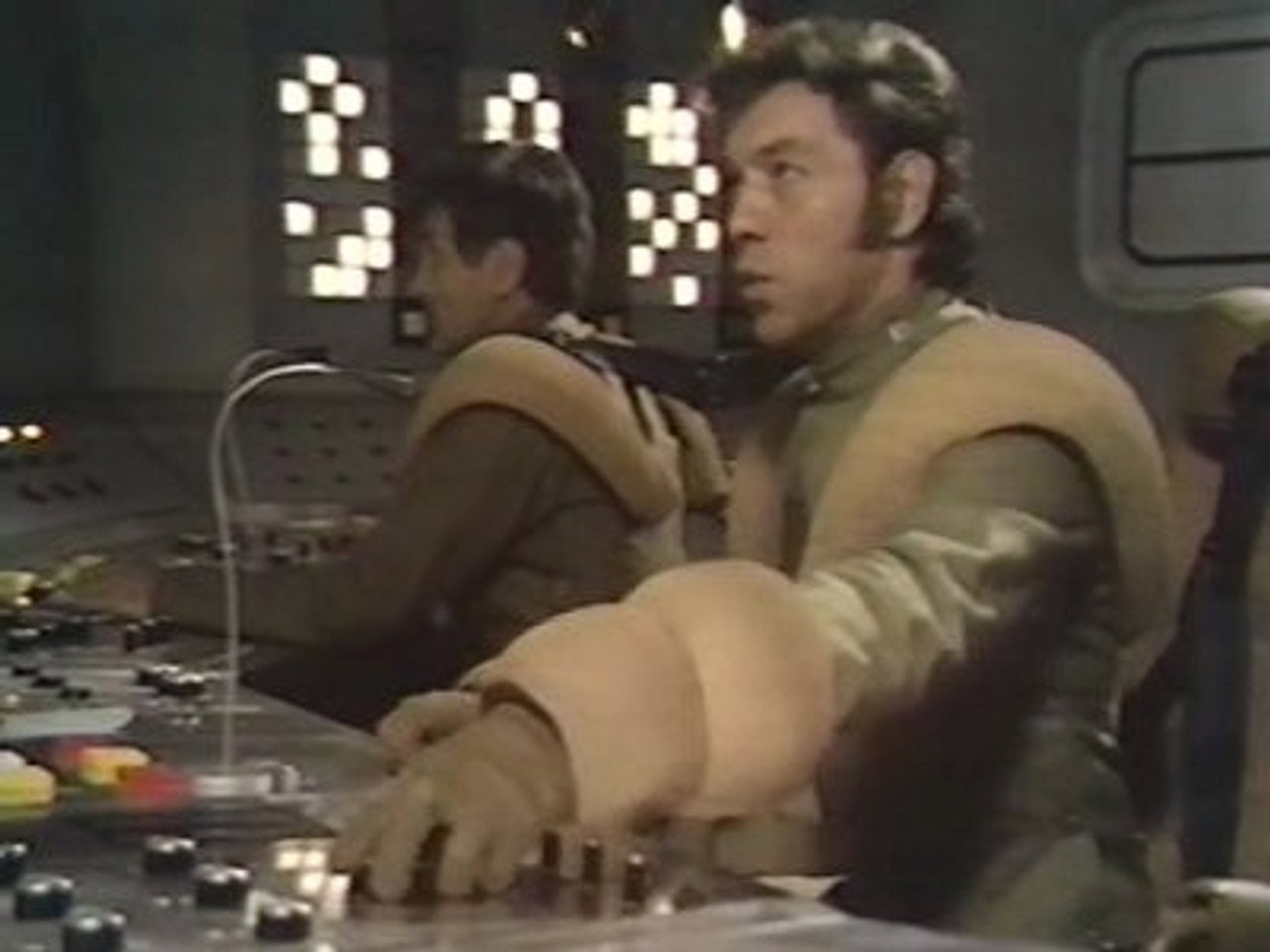
The TARDIS lands on an Earth cargo ship just as raiders strike. They take the cargo and the TARDIS, and the crew blame the two strangers.
- Spies, according to everyone
With Earth and Draconia trading accusations, the Doctor is shipped off to a prison on the Moon and Jo is left behind.
- An official from Earth
A man arrives to take Jo into custody. It's the Master, and he has been controlling the Ogrons with a device that plays on fear.
The Master's employersSpoiler · tap to reveal
An expedition to the Ogron planet finds who the Master is working for: the Daleks, who want the war so they can take the galaxy.
Confusion at the TARDISSpoiler · tap to reveal
In a scuffle with the Master and the Ogrons the Doctor is wounded. Jo gets him into the TARDIS and he sends a message to the Time Lords.
Why it still matters
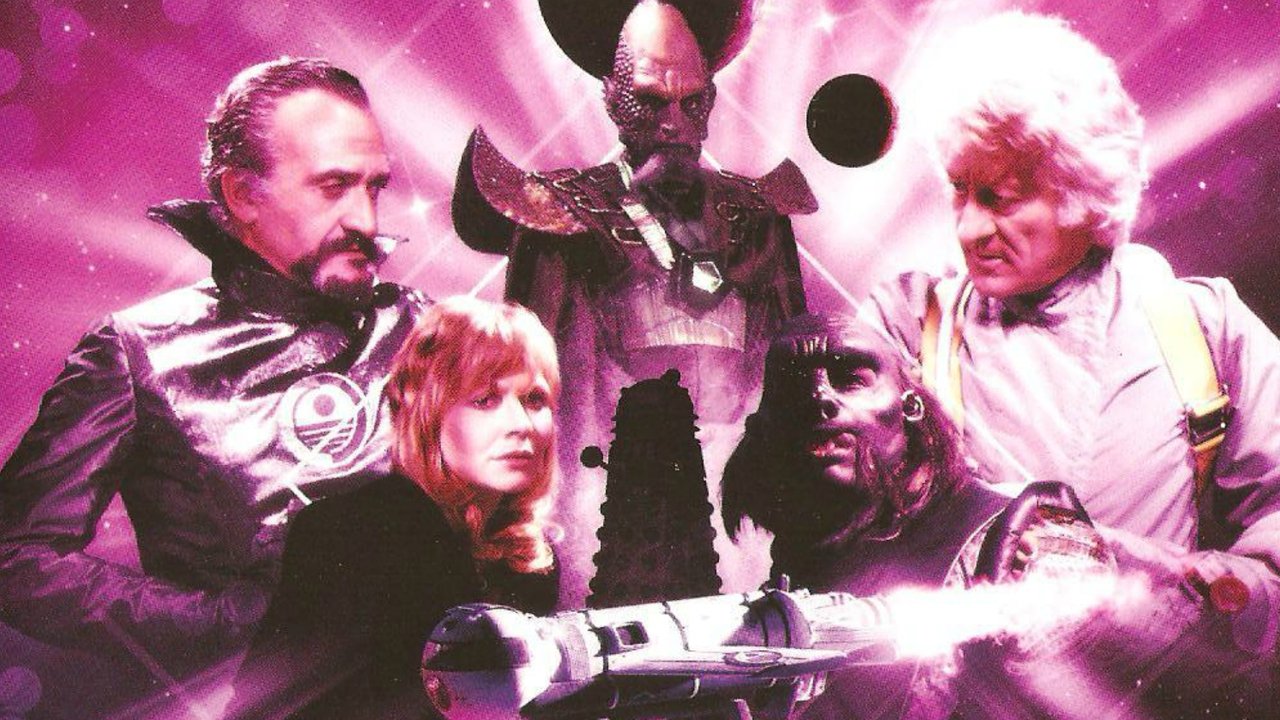
Malcolm Hulke, the writer who gave the show the Silurians, built this one on the Cold War. Earth and Draconia are two empires with a treaty, a frontier and a habit of assuming the worst about each other, and the story is careful not to make either side the villain. Hulke wanted the Draconians to come across as individuals and a noble people. They began on paper looking like Habsburg courtiers and ended up closer to Japanese shoguns, with big collars, hissing voices and masks made so the actors could still act through them.
Jon Pertwee later named the Draconians his favourite monster for exactly that reason: the latex let their faces move. The production went big to match. The BBC visual effects team had acquired many of the original models from Gerry Anderson series such as UFO and took them apart to build new spacecraft, and Earth in 2540 is London's South Bank, all concrete stairways and walkways around the Hayward Gallery.
Opinion has always been split on the pacing. The BBC's own audience report at the time was warm, and The Discontinuity Guide (1995) called it worthy and designed to the hilt but "obviously padded in parts". Patrick Mulkern of Radio Times gave it four stars in 2010 while grumbling that the Doctor and Jo spend perhaps two-thirds of the story locked up. Peter Capaldi has listed it among his favourite classic stories.
A war with a third party
The Ogron planet holds the answer. The Master is working for the Daleks, who want Earth and Draconia to wear each other down so the galaxy is easier to take. Three Daleks turn up in the last episode, played by the same props used in "Day of the Daleks", and Michael Wisher voices them for the first time; he would go on to play Davros. The Doctor gets the human and Draconian crews off the planet to warn their governments, and then turns the Master's fear device on the Ogrons. In the shooting that follows he is hit, and the Master slips away with them.
Jo helps the half-conscious Doctor into the TARDIS, and he uses its telepathic circuits to ask the Time Lords to send him after the Daleks. The story runs straight on into the next one. It was also the last time Roger Delgado played the Master. Shortly after making it he went to Turkey to film a television series, and on June 18, 1973, less than three months after the final part was shown, he was killed in a car accident on the way to a location. His last scene as the Master has him vanishing in the confusion with the panicking Ogrons.
Challenge the DNA
Were Earth and Draconia doomed to fight?
Or skip ahead to our reading
No, and that's the story's point. Both empires are proud and suspicious, but the war is being manufactured. It's a cold war story that blames the people who profit from fear.
Behind the scenes
- Hulke's war between Earth and Draconia was inspired by the Cold War split between East and West. The Draconians were first imagined as Habsburg-like nobles and then redesigned along the lines of a Japanese shogun's court.
- Jon Pertwee wrote that the Draconians were his favourite monster because their latex masks let the actors use their whole faces. In the same memoir he recalled filming around the Hayward Gallery on London's South Bank, which stood in for 26th-century Earth's prison complex.
- The many spacecraft were all models. The BBC visual effects department had acquired original models from Gerry Anderson series such as UFO and used their parts to build new ships.
- The Ogron planet has a large, blobby monster the Ogrons are terrified of. Director Paul Bernard didn't like the costume, so the creature barely appears.
- Waiting in a cell, the Doctor tells Jo how he once fooled the Medusoids' mind probe by saying he was off to meet a purple horse with yellow spots, a giant rabbit and a pink elephant. All true: they were delegates at a peace conference.
- The Master's fear device makes Jo see a Drashig from "Carnival of Monsters", a Sea Devil and a Mutant. On the long flight to the Ogron planet, the Master passes the time with H. G. Wells's The War of the Worlds.
- The BBC wiped its tapes of parts one, two, three and six. Colour copies came back from ABC Television in Australia in 1983, so all six parts survive.
The thread
Two empires, one frontier and someone who profits if they start shooting.
Came before
Shares DNA with
Left its mark on
DNA strand
Us vs. Them
Earth and Draconia each need the other to be the aggressor, and both have politicians and generals ready to believe it. Hulke's interest is in how easily that suspicion can be used by someone standing outside it.
Every great sci-fi story is built from a handful of strands like this one. Each strand page explains how it works and traces it across shows, books and films.
If this one stayed with you
Where to go next, and why.
Watch · Star Trek S3
"Day of the Dove"
Another pair of rivals pushed toward a fight, and a crew slowly working out that the fight isn't really theirs.
Watch · Star Trek S1
"Balance of Terror"
A Cold War border drama in space, with a frontier treaty and a captain trying hard not to start a war.
Read · Novelisation
Doctor Who and the Space War — Malcolm Hulke
Hulke's own novelisation, published by Target in 1976 under a new title, with a different ending from the television version.
Read · Novel
The War of the Worlds — H. G. Wells
The book the Master reads on the way to the Ogron planet, and the classic story of Earth invaded from outside.
Your next episode
Three directions to go from here, all on Sci-Fi DNA.
More of this feeling
Balance of Terror
Star Trek
Two powers on the edge of war, and a crew trying to stop the shooting.
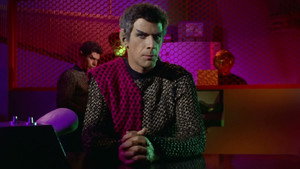
Same question, different answer
The Enterprise Incident
Star Trek
Who benefits when old enemies keep suspecting each other?

Something completely different
Carnival of Monsters
Doctor Who
Robert Holmes's satire set inside a peepshow, from the same season.