More from the episode
The story in 5 beats
- Something in the signal
A burst of energy from deep space lands near UNIT and starts taking things. A gamekeeper vanishes, then a scientist, Dr. Tyler. It seems to be looking for the Doctor.
- Help from the past
Gallifrey is losing its power down a black hole. The Time Lords break the First Law of Time and pull the Second Doctor out of his own past to help the Third.
- A Doctor on the screen
The two Doctors bicker so badly that the Time Lords bring in the First Doctor to keep order. Stuck in a time eddy, he can only talk to them through a screen.
Through the black holeSpoiler · tap to reveal
The Doctors, Jo, the Brigadier, Benton and the whole of UNIT HQ end up in a world of antimatter ruled by Omega, the legendary Time Lord whose experiments gave his people time travel.
The only way outSpoiler · tap to reveal
Omega can't leave: his body is gone, and only his will holds his world together. The Doctors find their way out in the Second Doctor's lost recorder.
Why it still matters
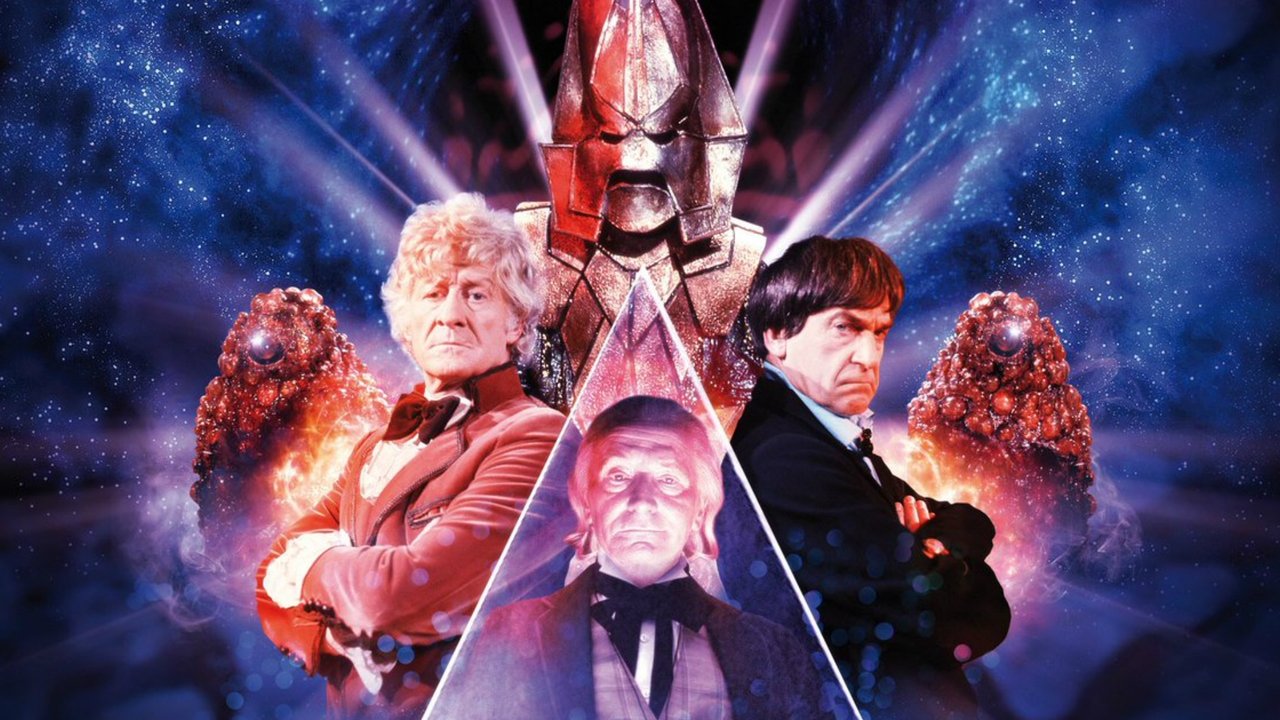
This is the first time an earlier Doctor came back. Doctor Who turned ten in 1973, and the production team opened the anniversary season by putting Jon Pertwee, Patrick Troughton and William Hartnell in the same story. Every multi-Doctor reunion since, from "The Five Doctors" onward, follows the trail this one made, and the idea that the Doctor's past selves are still out there somewhere, as cranky as ever, starts here.
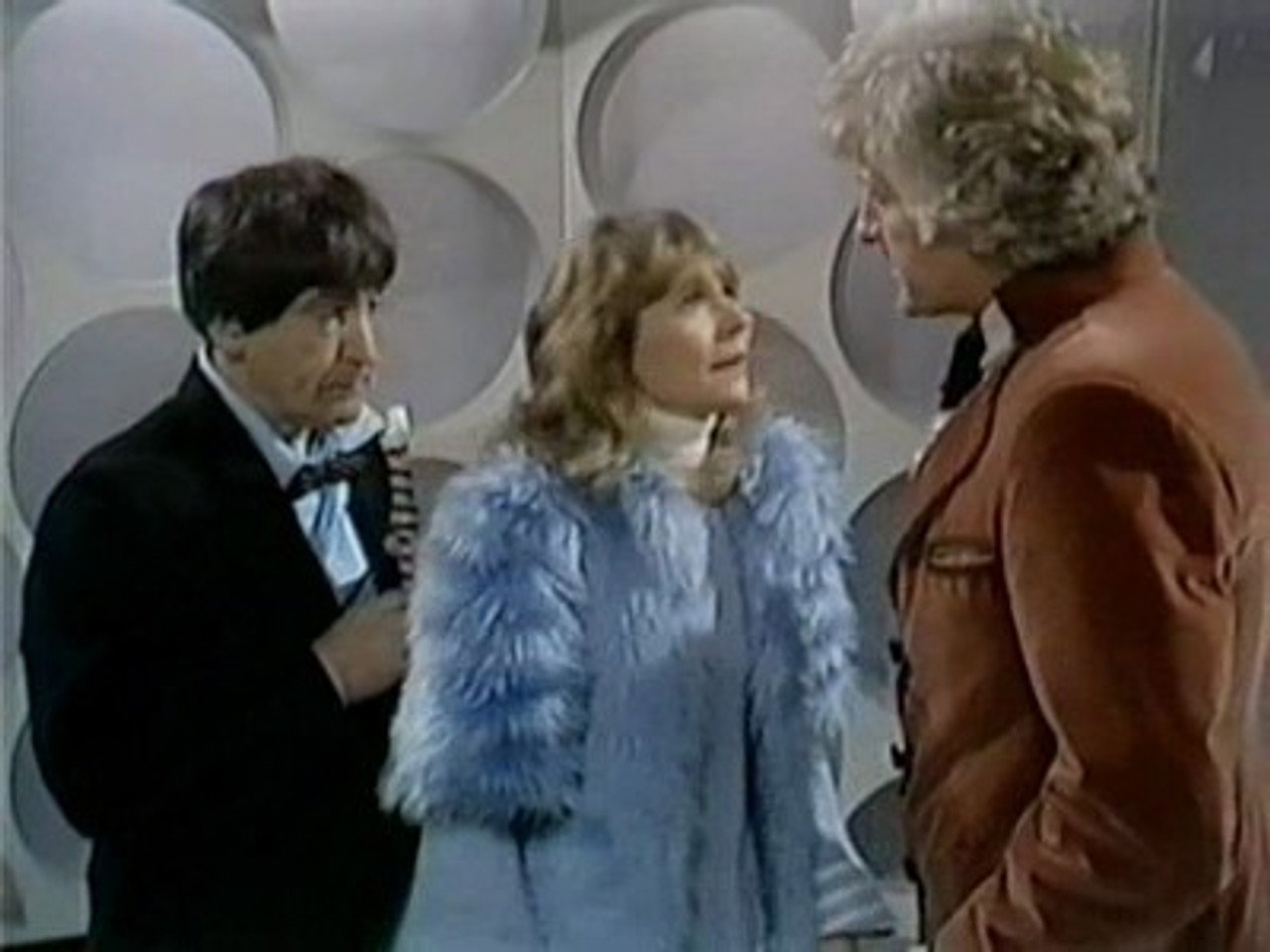
The plan didn't survive contact with reality. Hartnell was too unwell to take a full part, so the story was rewritten around him: the First Doctor appears only on screens, offering advice to his successors. What's left is a double act, and it's a good one. Troughton's scruffy, recorder-tooting Doctor and Pertwee's velvet-jacketed one can't stand each other, and the A.V. Club's Christopher Bahn picked their squabbling as the most enjoyable thing in the serial.
It's also where Bob Baker and Dave Martin introduced Omega, a figure from the Time Lords' own legend with a grudge against all of them. Patrick Mulkern of the Radio Times allowed that it "may not be the greatest story ever told", and DVD Talk's Ian Jane found the effects "definitely not the best that the series has had to offer". It's worth watching for the Doctors, and for Stephen Thorne's Omega.
Omega's prison, and the end of an exile
Omega turns out to be a wreck of his own legend. Centuries inside the black hole's singularity have destroyed his body; only his will keeps him, and his world, in existence. He wants the Doctors to take his place, and when he learns he can never leave, he decides to take everything down with him. The Doctors offer him a force-field generator. He knocks it over, and out falls the Second Doctor's recorder, which had dropped inside and stayed ordinary matter. Matter meets antimatter, Omega's world goes up, and the blast sends everyone home. Afterwards the Third Doctor suggests to Jo that the only freedom anyone could have given Omega was death. Omega himself came back in "Arc of Infinity" (1983) and in the 2025 two-parter "Wish World" and "The Reality War".
Then the Time Lords say thank you. They give the Doctor a new dematerialisation circuit and his memory of how to steer the TARDIS, ending the exile on Earth that began with "The War Games" in 1969. The next story, "Carnival of Monsters", is already a trip somewhere else. It was also William Hartnell's last time as the Doctor and his last acting work. He died in 1975.
Challenge the DNA
Is Omega a villain or a tragic figure?
Or skip ahead to our reading
Tragic, and dangerous because of it. His work gave the Time Lords their power, and he paid for it with centuries inside a black hole. The story lets you feel that before it shows what his anger can do.
Behind the scenes
- Bob Baker and Dave Martin, known to the production team as the Bristol Boys, wrote it after "The Claws of Axos" and "The Mutants". Omega was their creation, as K9 later was.
- Hartnell agreed with producer Barry Letts in 1972 to come back for the anniversary. His wife, Heather, then told Letts that his health couldn't stand a normal recording day, so the script moved him onto the TARDIS monitor, where he could read his lines from cards instead of learning them. He recorded his part on November 6, 1972.
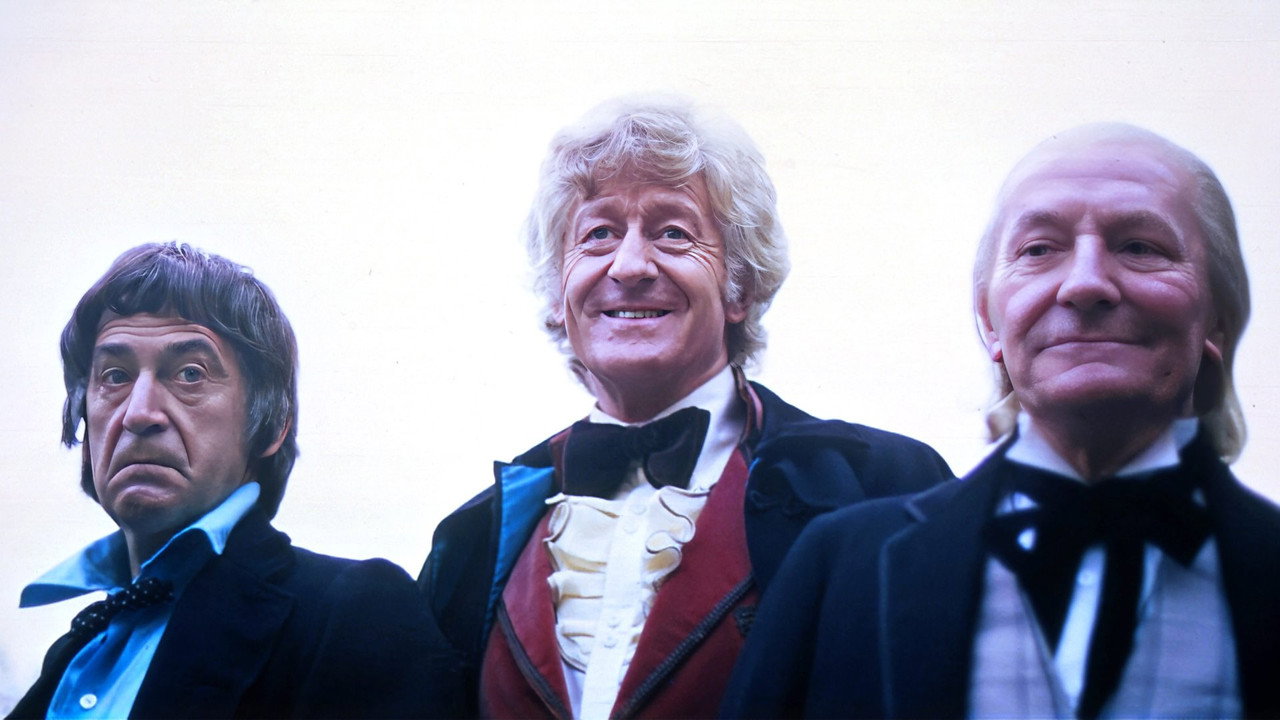
- The three Doctors never shared a scene. The only time all three were together was for promotional photographs, and an October 1972 session produced the Radio Times cover for the story.
- Clyde Pollitt plays the Chancellor; he had been one of the Time Lords who tried the Doctor in "The War Games", and Letts said on the DVD commentary that it was meant to be the same character. Graham Leaman is back as a Time Lord from "Colony in Space".
- Two regulars were missing. Frazer Hines couldn't return as Jamie because of Emmerdale Farm, and Richard Franklin (Captain Yates) wasn't available either, so Sergeant Benton took over much of their material and a new character, Corporal Palmer, took most of Benton's original lines.
- Stephen Thorne, who plays Omega, had been Azal in "The Dæmons" two years earlier, and later played Eldrad in "The Hand of Fear".
- Part four drew 11.9 million viewers, the most of the four. The BBC repeated the story on BBC2 in November 1981 as part of The Five Faces of Doctor Who.
The thread
The Doctor meets himself, and the Time Lords turn out to need him.
Came before
Shares DNA with
Left its mark on
DNA strand
Alternate Selves
Three versions of one man, and none of them much likes the others. The joke underneath is that the Doctor's worst critic is himself: the Second and Third Doctors bicker like rivals, and the First, watching from his screen, isn't impressed by either of them.
Every great sci-fi story is built from a handful of strands like this one. Each strand page explains how it works and traces it across shows, books and films.
If this one stayed with you
Where to go next, and why.
Watch · Doctor Who
"The War Games" (1969)
Where the Doctor first meets the Time Lords on screen, and where Clyde Pollitt's Time Lord first sits in judgement on him.
Watch · Star Trek: TNG S2
"Time Squared"
A captain meets the version of himself from six hours ahead and has to decide whether to trust him.
Watch · Red Dwarf Series II
"Stasis Leak"
The comedy version of meeting your own past: Rimmer heads back three weeks to save his own life, and the person he has to deal with is himself.
Read · Novel
The Man Who Folded Himself — David Gerrold
Published the same year. A short novel about a man who keeps running into his other selves and has to live with all of them.
Read · Novelisation
The Three Doctors — Terrance Dicks
The serial's own script editor novelised it for Target in 1975. A quick way back into the story.
Your next episode
Three directions to go from here, all on Sci-Fi DNA.

More of this feeling
The War Games
Doctor Who
The Time Lords' first appearance, and the reason the third Doctor is where he is.

Same question, different answer
The Squire of Gothos
Star Trek
A being so powerful it's lonely, and it wants company on its own terms.

Something completely different
Carnival of Monsters
Doctor Who
A Robert Holmes satire set inside a peepshow.