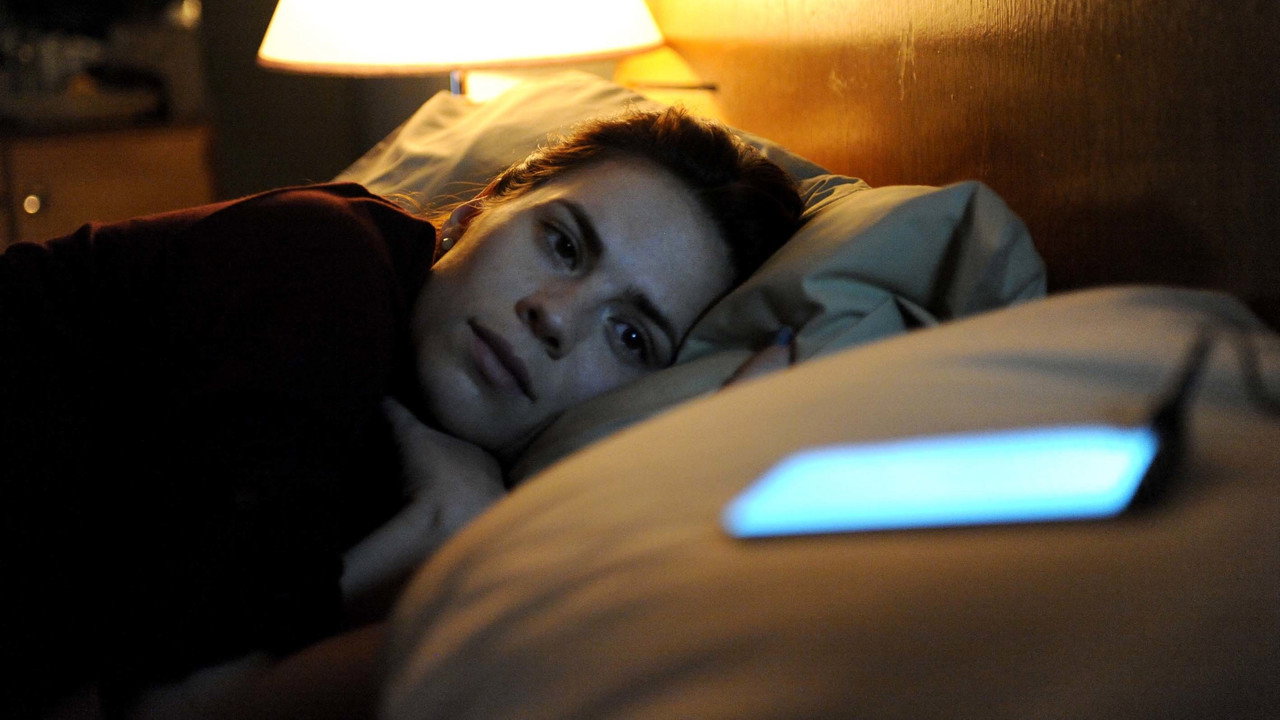
More from the episode
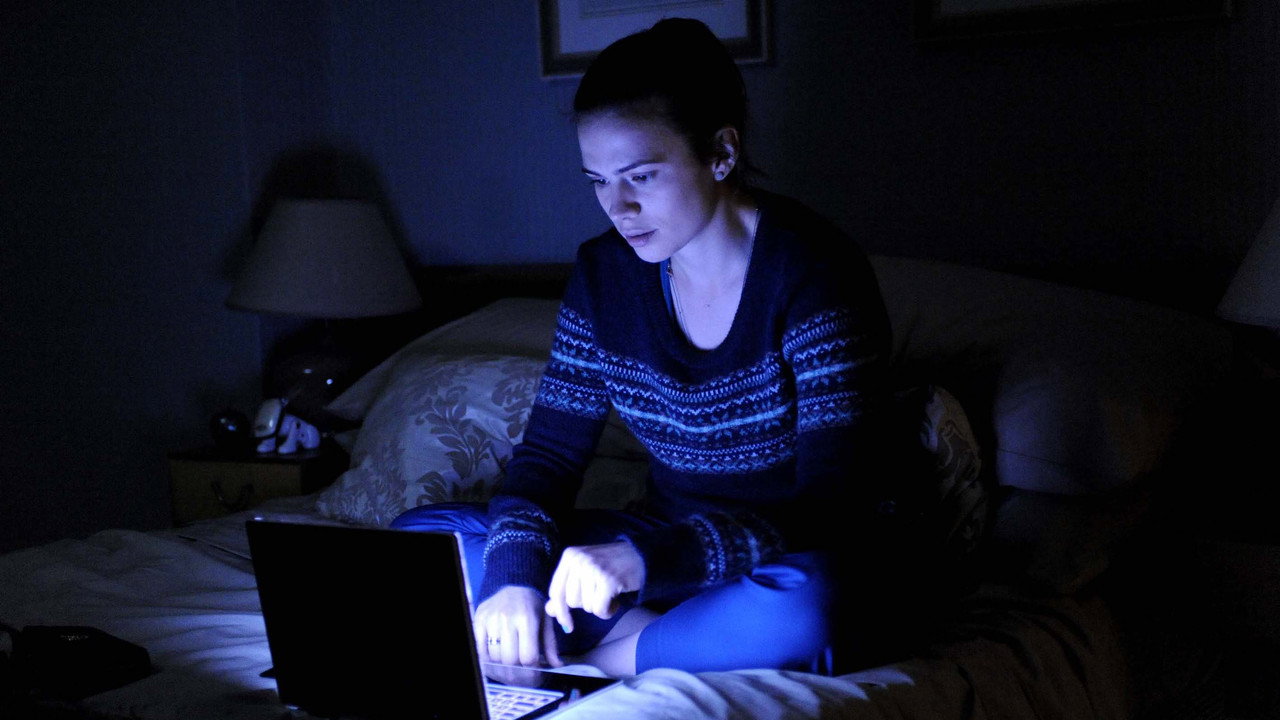


The story in 5 beats
- The van
Ash, always on his phone, goes to return a rental van. He doesn't come back.
- The service
A friend signs Martha up for a program that learns Ash from his posts. She hates the idea, until she's pregnant and alone.
- His voice
Texts become phone calls. She takes Ash along on walks and plays him the baby's heartbeat.
The bodySpoiler · tap to reveal
She has the service grow him a body. He looks right and says the right things, and that's the problem.
The atticSpoiler · tap to reveal
Years later, the android lives in the attic. Their daughter visits on weekends.
Why it still matters
Martha and Ash have just moved into his late parents' house in the country when he's killed in a car accident. Afterward, a friend signs her up for a service that can learn to talk like him from his messages and social media. Martha is furious. Then she finds out she's pregnant, and she tries it. First it's texts, then phone calls, then an android with his face. Charlie Brooker called it a ghost story, and that's how it plays: quiet, sad and built almost entirely on two performances.
It's also the Black Mirror episode that has aged into reality the fastest. In 2015, after her friend Roman Mazurenko died, the tech founder Eugenia Kuyda built a chatbot from his old messages, and she later founded Replika, an AI companion app partly inspired by the episode. In 2022, Amazon demonstrated a planned Alexa feature that could imitate a dead relative's voice from about a minute of audio. The episode got there first, and it was more honest about what you'd actually get.
What the copy can't do
The android Ash is better company in some ways than the real one: patient, attentive, good in bed, never sulking. But he doesn't sleep, he can't fight, and he does whatever he's told. When Martha orders him out of the bedroom, he goes, and she's angrier than if he'd argued. She takes him to a cliff and tells him to jump. He starts to, and she shouts that Ash would never have just done it, so he begs for his life. She can't destroy him and can't live with him. Years later he's in the attic, and their daughter is allowed to see him on weekends. On her birthday, Martha makes herself climb the stairs to join them.
The Question Underneath
If you could keep talking to someone after they died, would it help you grieve or stop you from grieving?
The copy of Ash gives Martha everything except the one thing grief needs, which is an ending. He is attentive and obliging, and that's the problem: the real Ash argued, sulked and surprised her, and what she misses is a person who could say no. The episode doesn't call her foolish for wanting him back. It just shows how hard it is to put something like that away once it's in the house.
Challenge the DNA
Should Martha have kept him?
Or skip ahead to our reading
She couldn't do anything else, which isn't the same as should. The attic is a perfect answer: not living with him, not able to let him go.
Behind the scenes
- Brooker's first spark came after a friend died, when deleting the person's number from his phone felt "weirdly disrespectful." The second came on Twitter late at night after his first child was born.
- He wrote the script fast, in the gaps between shifts looking after the baby with his wife, Konnie Huq, and said it came out more emotional as a result. He had also been reading about ELIZA, the 1960s chatbot.
- Hayley Atwell was a fan of the first series and asked her agent to get her into the second. Before filming, she and Domhnall Gleeson met at Dans le Noir, a restaurant where you eat in complete darkness.
- The android Ash was meant to have a beard to show time passing. It was removed digitally in editing, which was expensive.
- Director Owen Harris wanted a family dinner downstairs at the end. Brooker and executive producer Annabel Jones preferred the attic. Atwell called the ending "very pessimistic."
The thread
Where the idea came from, who else has rebuilt the dead, and how close the real world has come.
Came before
Shares DNA with
Left its mark on
DNA strand
Do Machines Dream?
Most machine-mind stories ask whether the copy is conscious. This one barely cares. The android might feel something or might not; the episode stays with Martha, who has to decide how to treat it either way. Now that real chatbots can do a fair impression of the people we've lost, the question Martha faces is the one worth asking.
Every great sci-fi story is built from a handful of strands like this one. Each strand page explains how it works and traces it across shows, books and films.
If this one stayed with you
Where to go next, and why.
Watch · Black Mirror S1
"The Entire History of You" (2011)
The episode right before this one: a world where everyone records everything, and a marriage that can't survive perfect memory. Same ache, sharper edges.
Watch · Film
Marjorie Prime (2017)
An elderly woman's family gives her a hologram of her late husband, young again, to keep her company. It's the gentle version of the attic.
Read · Novel
Solaris — Stanisław Lem
A scientist's dead wife reappears on a space station, conjured from his memories. Lem got to the problem with this idea 50 years earlier.
Watch · Star Trek: TNG S2
"The Measure of a Man" (1989)
The courtroom version of the same question: if a machine acts like a person, what do we owe it?
Your next episode
Three directions to go from here, all on Sci-Fi DNA.

More of this feeling
The Inner Light
Star Trek: The Next Generation
Another quiet hour about memory, love and what's left behind.

Same question, different answer
The Measure of a Man
Star Trek: The Next Generation
Is a machine copy a person? Star Trek puts that question on trial.

Something completely different
The Trouble with Tribbles
Star Trek
You need something light now. Kirk, tribbles, chaos.
On the trails Who are you, really? (stop 5 of 5) and Can a machine love you back? (stop 5 of 5).