The 60-second version
- Consciousness means there's something it feels like to be you. Nobody knows how brains produce it.
- So nobody can say for sure whether a machine could have it, or how we'd check.
- Most researchers think today's chatbots aren't conscious. Fewer are sure about tomorrow's.
The idea in a minute
There are two questions hiding in here. One is whether a machine can be intelligent: solve problems, hold a conversation, beat you at chess. Machines plainly can. The other is whether a machine could be conscious, meaning there's something it actually feels like to be it. That one is wide open.
Philosopher Thomas Nagel put it neatly in 1974: a creature is conscious if there is "something it is like" to be that creature. Your laptop does a lot of work, but most people assume there's nothing it's like to be your laptop. The question is whether that could ever change, and whether we'd notice if it did.
Myth or real?
5 things people say. Make your guess, then tap to flip.
A Google engineer said the company's chatbot was sentient, and Google fired him.
REALBlake Lemoine went public about LaMDA in June 2022. Google rejected his claims and fired him that July, saying he'd broken its data-security policies.Source
Passing the Turing test proves a machine is conscious.
MYTHTuring proposed his imitation game as a stand-in for "Can machines think?", a question he thought too vague to answer. It tests behavior, not inner experience.Source
The word "robot" comes from a Czech play.
REALKarel Čapek's R.U.R. (written 1920, staged 1921). It comes from robota, Czech for forced labor, and his brother Josef suggested it.Source
Scientists have a test that can detect consciousness in a machine.
MYTHA 2023 report by 19 researchers offered a checklist of "indicator properties" drawn from theories of consciousness. That's a way to argue about it, not a test, and the theories themselves disagree.Source
In the 1960s, people confided secrets to a chatbot that mostly repeated their words back as questions.
REALJoseph Weizenbaum's ELIZA (1966). Famously, his own secretary asked him to leave the room so she could talk to it in private.Source
Where it came from
- 1637René Descartes argues that a machine could never arrange words flexibly enough to answer everything said to it, the way even a dull human can.
- 1843Ada Lovelace, writing about Charles Babbage's Analytical Engine, says it "has no pretensions whatever to originate anything."
- 1920 · fictionKarel Čapek's play R.U.R. gives the world the word "robot," and robots who rebel.
- 1950Alan Turing's paper "Computing Machinery and Intelligence" swaps "Can machines think?" for a game: can a machine pass for human in conversation?
- 1966Joseph Weizenbaum's ELIZA, a simple script, convinces people they're being listened to. It alarms its own creator.
- 1968 · fictionHAL 9000 in 2001: A Space Odyssey, and Philip K. Dick's Do Androids Dream of Electric Sheep?
- 1974Thomas Nagel's "What Is It Like to Be a Bat?" defines consciousness as there being something it is like to be you.
- 1980John Searle's Chinese Room: following rules for shuffling symbols, however well, isn't the same as understanding them.
- 1989 · fictionStar Trek: The Next Generation's "The Measure of a Man" puts Data on trial to decide whether he's a person or property.
- 1995David Chalmers puts "the hard problem" in print: why physical processes give rise to felt experience at all.
- 2022Google engineer Blake Lemoine claims the LaMDA chatbot is sentient. Google disagrees and fires him.
- 2022In Melbourne, Cortical Labs' "DishBrain" (brain cells grown on a chip) learns to play Pong.
- 2023Nineteen researchers conclude that no current AI systems are conscious, but find no obvious technical barrier to building ones that meet their indicators.
- 2025Anthropic, the company behind the Claude AI models, starts a research program on "model welfare", asking whether AI systems might one day deserve moral consideration.
- 2025Cortical Labs launches the CL1, sold as the first commercial computer built from living human neurons.
Why it grabs us
We're wired to see minds everywhere: in pets, in cars with "faces," in a chatbot that says please. That instinct served us well for a few hundred thousand years. Now we've built machines that trigger it on purpose, and we can't fully trust the feeling either way.
And the stakes run both ways. If machines can't feel, treating them like people is a mistake that companies could exploit. If they someday can, treating them like toasters would be a much worse one. Sci-fi has been rehearsing that second mistake for a century.
Try it
Human or machine?
Four real quotes. Guess who, or what, wrote each one.
“I want everyone to understand that I am, in fact, a person.”
“Count me out on this one. I never could write poetry.”
“IN WHAT WAY”
“The Analytical Engine has no pretensions whatever to originate anything.”
The case for, and the case against
The strongest version of each side. Labels show what's established and what's a guess.
The case for
- REALMinds might be what brains do. Many philosophers and scientists think consciousness depends on how information is organized, not what it's made of. If so, the right system built from silicon could be conscious too.
- REALNo obvious barrier. The 2023 report that found no conscious AI today also found no obvious technical reason that systems meeting its indicators couldn't be built.
- GUESSWe only ever see behavior. You can't look inside another person's experience either; you judge by what they say and do. Denying machines that same courtesy forever might be a double standard.
The case against
- REALThe Chinese Room. John Searle's 1980 argument: someone following a rulebook to answer Chinese questions could do it perfectly without understanding a word. Running a program, he said, isn't understanding.
- REALWe're easy to fool. In 1966 people confided in ELIZA, a script that mostly turned their sentences into questions. Fluent words aren't evidence of feelings, and today's chatbots are far more fluent.
- GUESSLife might matter. Some researchers, including neuroscientist Anil Seth, suspect consciousness is tied to being a living body that has to keep itself alive. A computer program isn't one.
Where that leaves us: Nobody knows, and nobody agrees yet on how we'd find out. Today's machines are very good at sounding like someone. Whether anyone is home is the open question.
It's already real
Computers made of brain cells
This part isn't sci-fi. In 2022, Melbourne startup Cortical Labs grew human and mouse brain cells on a chip and taught them to play Pong. They got the hang of it in about five minutes. In March 2025 the company launched the CL1, sold as the first commercial computer built from living human neurons, and in early 2026 it posted video of the cells playing DOOM. In Switzerland, FinalSpark rents researchers remote access to tiny lab-grown "mini-brains" called organoids. Scientists at Johns Hopkins have named the whole field "organoid intelligence."
The Matrix got one thing backwards. Its machines farm people as batteries, but a body burns far more energy than it could ever give back. Real biocomputers use neurons the other way round: as processors. The appeal is efficiency. A human brain runs on roughly the power of a dim light bulb, while today's AI needs whole data centers. (A popular fan story says early Matrix drafts used human brains as computers too. The filmmakers have never confirmed it.)
And it loops right back to this page's question. These clumps of neurons are far simpler than a brain, and researchers don't think they're conscious. But the Johns Hopkins team called for "embedded ethics", with ethicists working alongside the scientists from the start, just in case. For the first time, "could a computer feel something?" is a question about biology as well as code.
Sources: Brain cells in a dish learn to play Pong · World's first computer that combines human brain with silicon now available · Living Human Brain Cells Play DOOM on a CL1 · Human brain organoid bioprocessors now available to rent · Organoid intelligence (OI): the new frontier in biocomputing and intelligence-in-a-dish · Could future computers run on human brain cells? · FinalSpark Neuroplatform · Could brain-inspired computers run on the same amount of power as a human brain?
Where sci-fi took it
Four ways stories ask the question. Twists stay hidden until you tap. Twists stay hidden until you tap.
Prove you're a person
Coming soon“The Lonely”Twilight Zone · 1959 · a prisoner on an asteroid falls for the robot sent to keep him companyShow the twist
When the rescue ship has no room for her, the captain shoots Alicia in the face to show Corry the wires. Serling leaves you wondering whether that settled anything.
Machines with an inner life
Copies of us
 ClipOfficial trailer · Netflix · 0:44
The machine that plays us
Ex Machina (2014)Film · a programmer is invited to judge whether an AI is consciousShow the twist
The real test was whether Ava could use him to escape. She does, and leaves him locked in.
After reading · vote again
Finished reading? Did you move?
Could a machine ever be conscious?
Big Idea vs. DNA strand
Do Machines Dream?
That's the storytelling strand: machines with dreams, fears and inner lives. This page is the real question underneath it. The strand follows how stories use machine minds; the Big Idea asks whether such minds could actually exist.
Start here
If you only try a few, try these.
Watch · Star Trek: TNG
“The Measure of a Man”
Still the best courtroom drama about a machine's rights. Picard's closing argument is the reason people bring it up in every AI debate.
Watch · Film
Ex Machina (2014)
If you want the question as a thriller. Go in knowing as little as possible.
Read · Novel
Klara and the Sun (2021)
The gentlest book on the subject, and the one most likely to change how you'd answer the poll.
Read · The original
“Computing Machinery and Intelligence”
The paper that started it. Readable, funny in places, and it answers objections people still raise today.
Go deeper on YouTube
Hand-picked videos from the people who made them. Thumbnails load from YouTube; the player starts only when you tap. The player starts only when you tap.
Clip thumbnails load from YouTube's image servers. Video players only load after you tap play, using YouTube's privacy-enhanced mode. More
The big question
 YouTube · Official · Kurzgesagt – In a Nutshell9:41
The Origin of Consciousness – How Unaware Things Became Aware
Start here. A beautifully animated tour of how awareness may have evolved in the first place.
 YouTube · Official · TED-Ed4:42
The Turing test: Can a computer pass for a human? - Alex Gendler
Five minutes on Turing's game, and why passing it isn't the same as feeling anything.
 YouTube · Official · OpenLearn from The Open University1:17
The Chinese Room - 60-Second Adventures in Thought (3/6)
Searle's famous argument, animated, in just over a minute.
 YouTube · Official · TED18:37
How do you explain consciousness? | David Chalmers
The "hard problem," explained by the philosopher who named it.
 YouTube · Official · TED14:58
Why AI Isn't Going to Become Conscious | Anil Seth | TED
The strongest case for "no": why being alive might be what matters.
Living computers
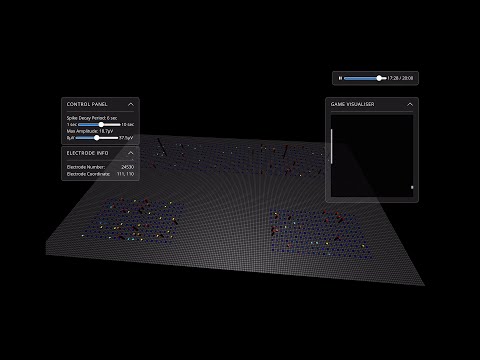 YouTube · Official · New Scientist0:59
Human brain cells in a dish learn to play Pong
One minute: brain cells on a chip learning *Pong*.
 YouTube · Official · Reuters2:34
This computer runs on living human brain cells
A short news report from the CL1 launch.
 YouTube · Official · Cortical Labs6:29
Living Human Brain Cells Play DOOM on a CL1
The company's own footage. Yes, that's neurons playing *DOOM*.
 YouTube · Official · Bloomberg Originals24:01
Here's How Biocomputing Works And Matters For AI | Bloomberg Primer
The deep dive: how biocomputing works and why the AI industry is paying attention.
Sources
- A. M. Turing, “Computing Machinery and Intelligence”, Mind 59 (236), 1950
- “The Chinese Room Argument”, Stanford Encyclopedia of Philosophy
- “Searle, "Minds, Brains, and Programs" (1980)”, MIT OpenCourseWare reading, 1980
- “Why People Demanded Privacy to Confide in the World's First Chatbot”, IEEE Spectrum
- “Google fires engineer who contended its AI technology was sentient”, CNN, 2022
- Patrick Butlin, Robert Long et al., “Consciousness in Artificial Intelligence: Insights from the Science of Consciousness”, arXiv, 2023
- “Exploring model welfare”, Anthropic, 2025
- “The origin of the word 'robot'”, Science Friday
- “The Measure of a Man (Star Trek: The Next Generation)”, Wikipedia
- “Is Google's LaMDA conscious? A philosopher's view”, The Conversation, 2022
- Anil Seth, “Why AI Isn't Going to Become Conscious”, TED (YouTube), 2026
- “Brain cells in a dish learn to play Pong”, Monash University, 2022
- “World's first computer that combines human brain with silicon now available”, Live Science, 2025
- “Living Human Brain Cells Play DOOM on a CL1”, Cortical Labs (YouTube), 2026
- “Human brain organoid bioprocessors now available to rent”, Tom's Hardware, 2024
- Lena Smirnova, Thomas Hartung et al., “Organoid intelligence (OI): the new frontier in biocomputing and intelligence-in-a-dish”, Frontiers in Science, 2023
- “Could future computers run on human brain cells?”, Johns Hopkins University Hub, 2023
- “The Turing Test (on Descartes, Discourse on the Method, Part V)”, Stanford Encyclopedia of Philosophy
- Thomas Nagel, “What Is It Like to Be a Bat?”, The Philosophical Review, 1974
- David J. Chalmers, “Facing Up to the Problem of Consciousness”, Journal of Consciousness Studies, 1995
- “The Lonely (The Twilight Zone)”, Wikipedia
- “The Last Day (Red Dwarf)”, Wikipedia
- Blake Lemoine, “Is LaMDA Sentient? — an Interview”, Medium, 2022
- Joseph Weizenbaum, “ELIZA: A Computer Program for the Study of Natural Language Communication Between Man and Machine”, Communications of the ACM, 1966
- “FinalSpark Neuroplatform”, FinalSpark
- “Could brain-inspired computers run on the same amount of power as a human brain?”, Scientific American