
More from the episode

The story in 5 beats
- The map
Serling's narration starts on a map of the United States and closes in on one small town in Ohio.
- Real good
The Fremonts and their neighbors praise everything Anthony does, including a gopher with three heads. Thinking unhappily is dangerous.
- TV night
Once a week Anthony puts on his own television show, and everyone has to watch and say they loved it.
Dan's birthdaySpoiler · tap to reveal
Dan Hollis gets a bottle of brandy and a record nobody has been allowed to play. The brandy goes to his head, and he says what everyone is thinking.
SnowSpoiler · tap to reveal
Anthony punishes Dan, then makes it snow on the crops. His father starts to protest and stops himself.
Why it still matters
Anthony Fremont can read minds, change things into other things and send anyone he doesn't like "into the cornfield," which is a place nobody comes back from. He has already made the rest of the world disappear, or maybe just Peaksville's view of it. So the adults of the town live on whatever they can grow, smile constantly, and tell him everything he does is good, real good. He's listening for the thought underneath.
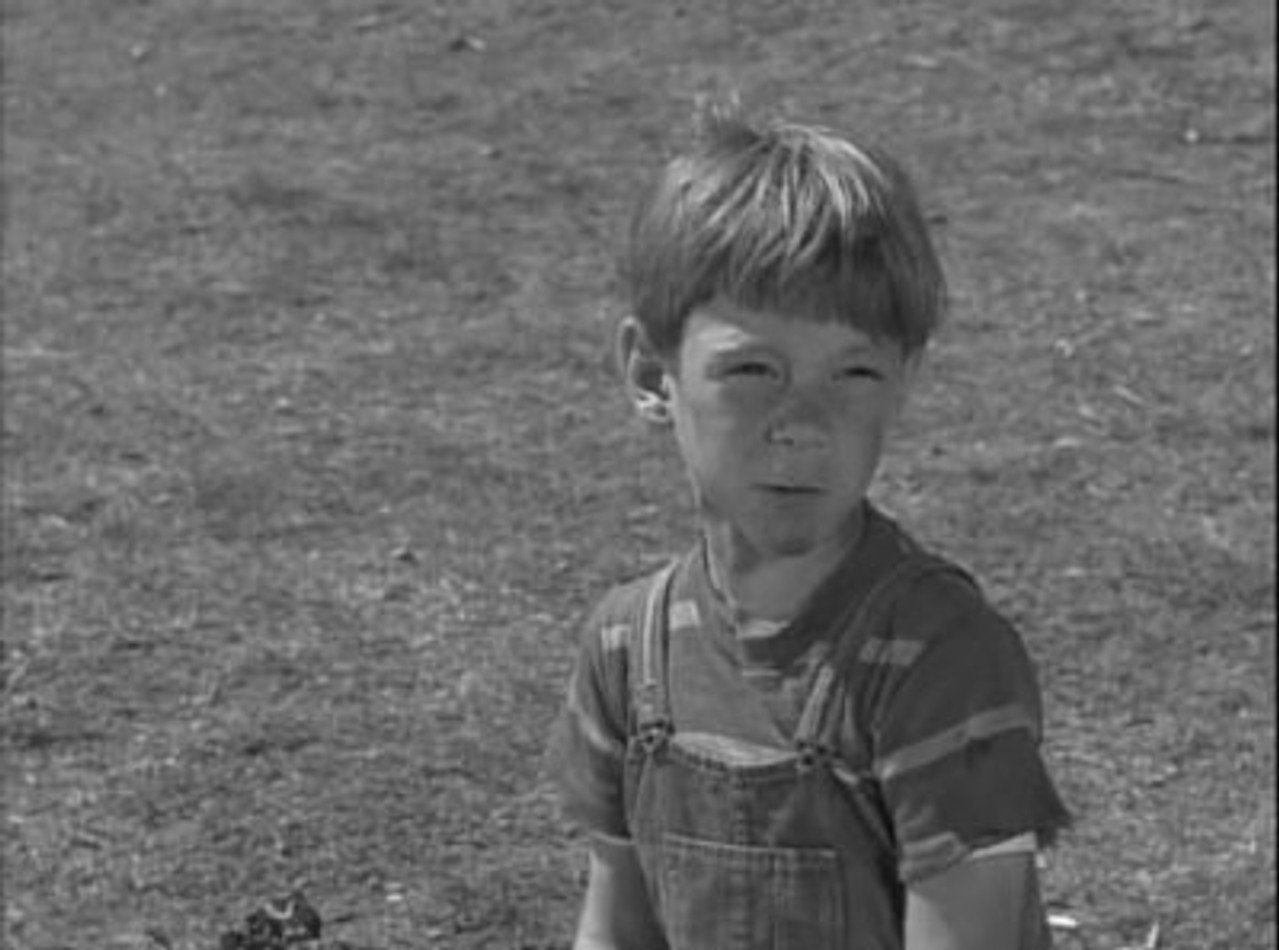
That's what makes it scarier than a monster story. Anthony isn't evil exactly. He's six. The horror is in the grown-ups, who have turned into a perfect little police state run on flattery, because one wrong thought is the end. Billy Mumy plays him with a flat, sweet face and doesn't wink once, and Serling lets the camera sit on the adults' frozen smiles until they're hard to watch. Time ranked it the third-best episode of the whole series.
Dan Hollis's birthday
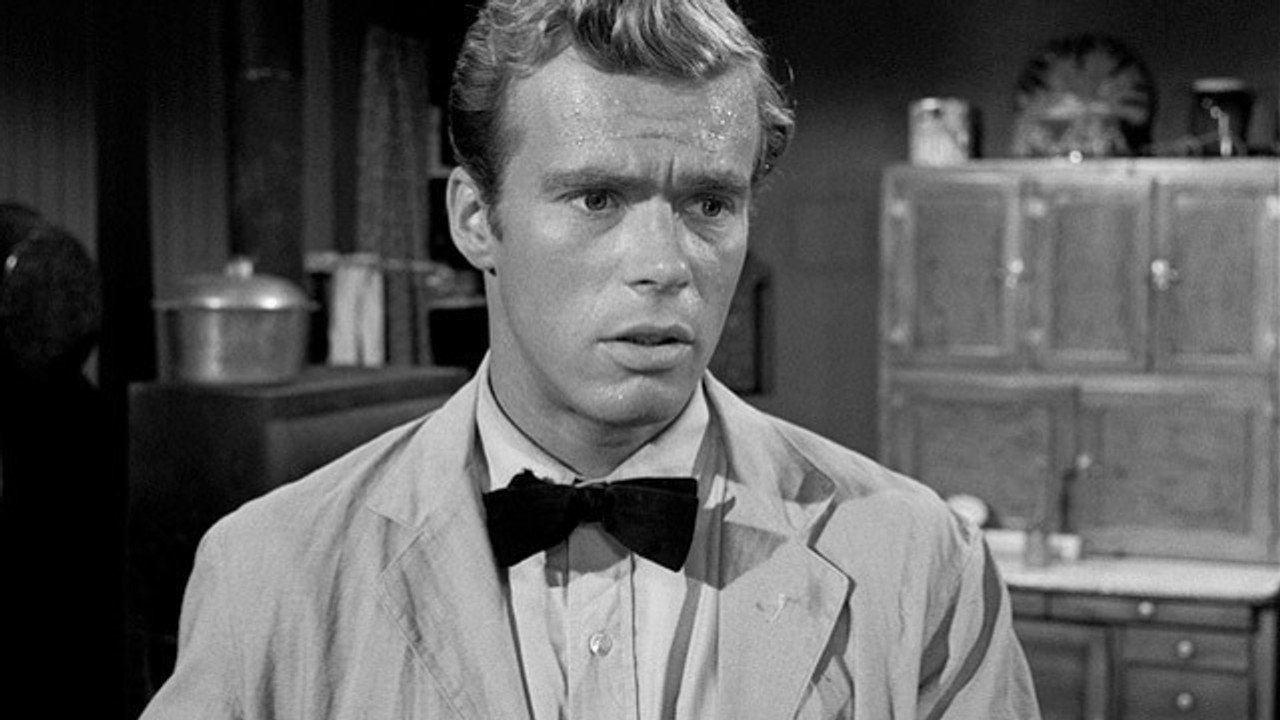
Drunk on one of the town's last bottles of brandy, Dan finally says it: Anthony is a monster and a murderer, and someone should come up behind him and end it. Aunt Amy's hand moves toward the fireplace poker. Nobody moves. Anthony turns Dan into a jack-in-the-box, and then, with the adults begging him to, sends him to the cornfield. The town's one chance passes in silence.
Afterward Anthony makes it snow, which will kill at least half the crops in a town that already doesn't have enough to eat. His father starts to object, catches himself, and forces out the line he always says: it's good that he did it, and tomorrow's going to be a good day. Serling's closing narration advises us to think only good thoughts if we ever meet him.
The Question Underneath
What happens to a community when everyone is afraid to tell the truth?
Anthony's power is terrible, but what makes Peaksville unbearable is how the adults have learned to live with him: smiling, praising, saying everything is good. The one man who finally speaks up pays for it, and nobody joins him. The episode is about fear's quiet work. A tyrant doesn't need everyone's loyalty, only their silence.
Challenge the DNA
Are the adults cowards, or just trapped?
Or skip ahead to our reading
Trapped. A whole town has learned that one wrong thought is fatal. Aunt Amy's hand moving toward the poker is the bravest thing in the episode.
Behind the scenes
- Serling adapted it from Jerome Bixby's 1953 short story. Bixby also wrote the Star Trek episode "Mirror, Mirror."
- Director James Sheldon kept Billy Mumy on set past the six o'clock cutoff for child actors to get one more shot. He later said the producers gave him an earful the next day, and that getting caught could have shut down all of MGM, where most of the series was filmed. Mumy said he never watched the clock.
- In 1974, Serling said he was on the third draft of a feature film version of the story, to be produced by Alan Landsburg. He died the next year, and it was never made.
- Time named it the third-best Twilight Zone episode, after "Time Enough at Last" and "The Monsters Are Due on Maple Street." TV Guide put it 31st on its 1997 list of the 100 greatest episodes of all time.
- Mumy and Cloris Leachman came back for a sequel, "It's Still a Good Life," in the 2002 revival series, with Mumy's real daughter Liliana playing Anthony's daughter. It's the only original Twilight Zone episode ever given a sequel.
The thread
The story it came from, and how far the cornfield has traveled since.
Came before
Shares DNA with
Left its mark on
 ClipOfficial trailer · Netflix · 0:44
DNA strand
The State Knows Best
Most stories about this strand need a government. Peaksville has a six-year-old. Everything else is the same: thoughts are watched, praise is required, and people disappear for saying the wrong thing. It works as a picture of tyranny because the adults do most of the enforcing themselves.
Every great sci-fi story is built from a handful of strands like this one. Each strand page explains how it works and traces it across shows, books and films.
If this one stayed with you
Where to go next, and why.
Watch · Black Mirror
"USS Callister"
Black Mirror's version of Peaksville: a man who controls everything in a world he made, and the people stuck smiling inside it.
Read · Short story
"It's a Good Life" — Jerome Bixby
The original is short and colder than the episode. Anthony's victims are stranger, and the town even more resigned.
Watch · Star Trek
"Mirror, Mirror"
The same writer, six years later, on a starship where everyone survives by flattering whoever has the power.
Your next episode
Three directions to go from here, all on Sci-Fi DNA.

More of this feeling
Eye of the Beholder
The Twilight Zone
Another Twilight Zone town where everyone has to agree, or else.

Same question, different answer
USS Callister
Black Mirror
One man in total control of a little world, and the people forced to smile in it.

Something completely different
Marooned
Red Dwarf
Two men, one frozen planet and a lot of bickering. The opposite of everyone being nice.