More from the episode

The story in 5 beats
- Mr. Schmidt
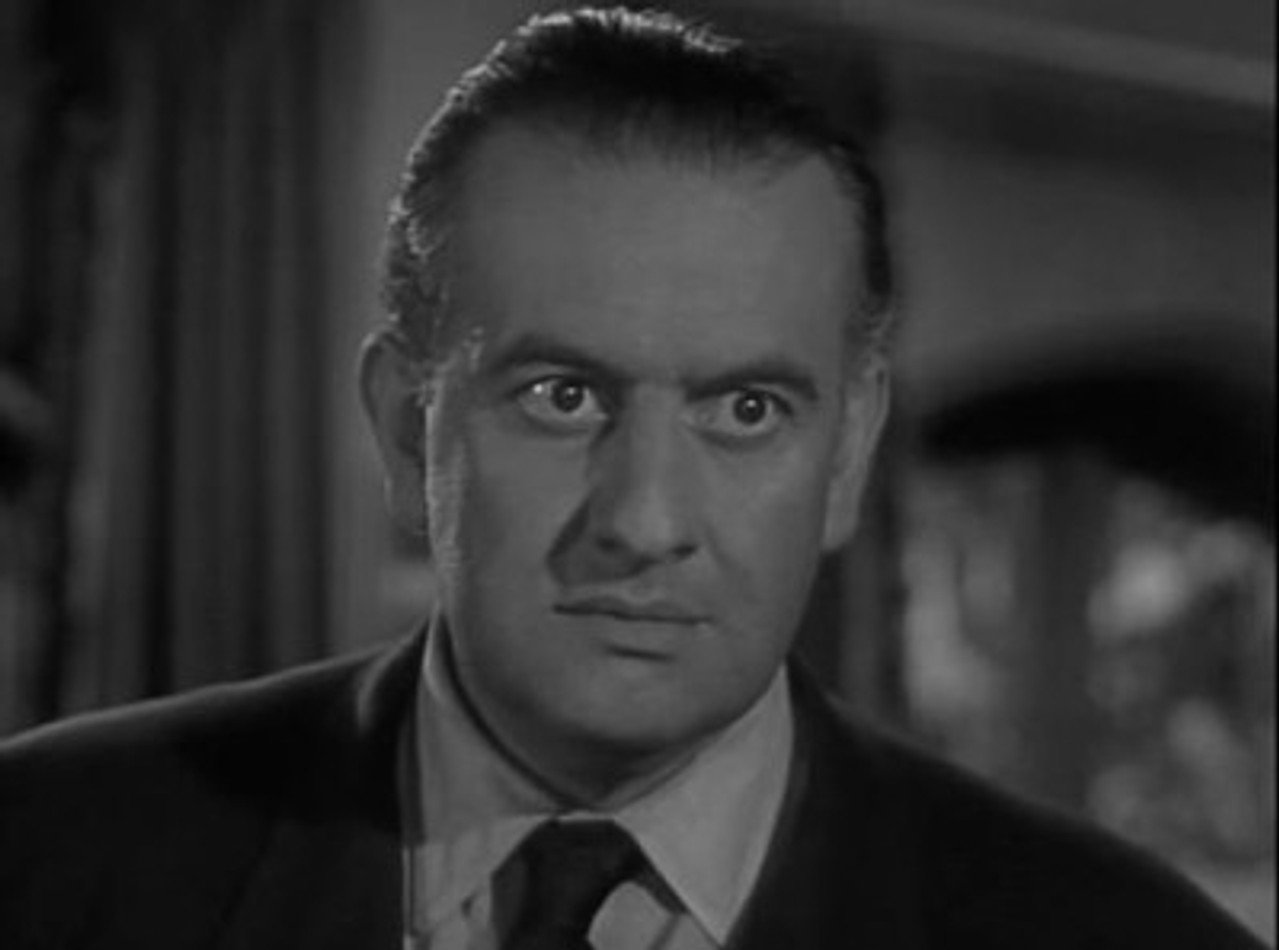
A well-dressed man checks into a Dachau inn and says he spent the war on the Eastern Front. Then he goes to see the camp.
- Back at the camp
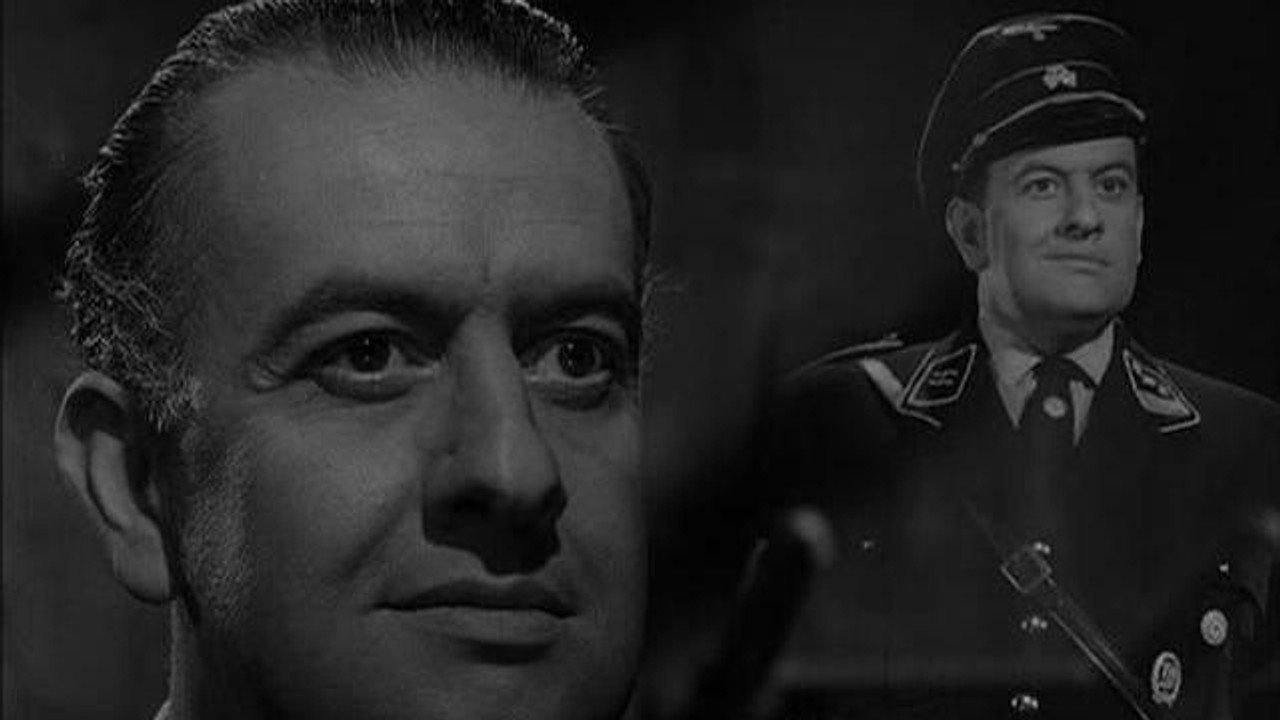
Walking the empty grounds, Lutze runs into Becker, a former inmate who looks exactly as he did years ago.
- Following orders
Becker reminds him what happened in each building. Lutze says he only did what he was told and heads for the gate, which is locked.
The trialSpoiler · tap to reveal
The dead prisoners gather and put Lutze on trial. He's found guilty, and made to feel what he did to them.
Why is it still here?Spoiler · tap to reveal
Lutze is found raving and taken away. A doctor looks at the camp and asks why a place like this is still standing.
Why it still matters
Serling wrote this while the world was watching Adolf Eichmann stand trial in Israel, and you can feel it: this may be the angriest episode he ever made, and he makes no effort to hide it. A former SS captain, Gunther Lutze, comes back to Dachau in 1960 for a nostalgic stroll through the place where he tortured and killed prisoners, and finds that one of his prisoners, Alfred Becker, is still there and hasn't aged a day.
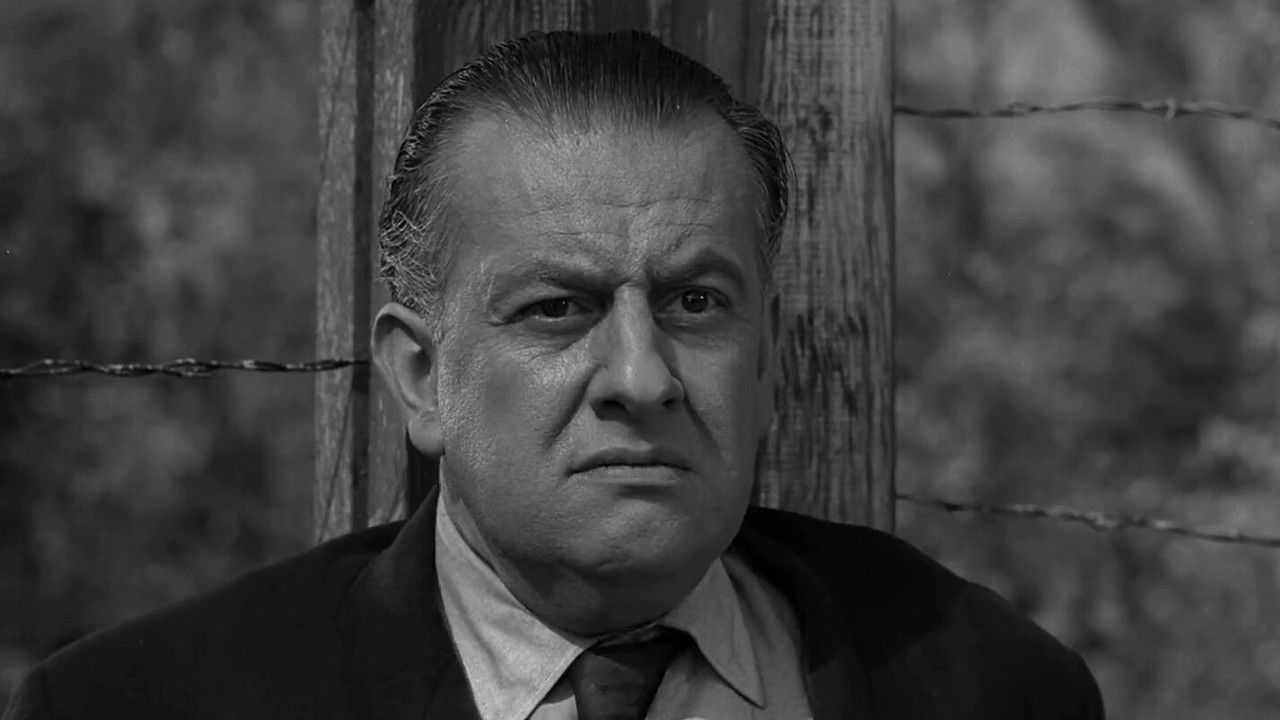
Most of the episode is two men talking in an empty camp. Oscar Beregi Jr. plays Lutze as a man who is honestly puzzled that anyone would still be upset, and his defense is the one everyone of that era knew by heart: he was following orders. Joseph Schildkraut, famous for playing Otto Frank, gives Becker a soft, patient voice that is harder to sit through than shouting would be.
Stay for the final two minutes, when Serling's closing narration drops the usual wryness and speaks straight to the audience about why places like Dachau must stay standing. It plays like a sermon, and he means every word.
Retribution, not revenge
Becker isn't a survivor. Lutze, with the American troops closing in, killed him and others himself and tried to burn the camp, and as the ghosts gather he finally remembers it. They try him, find him guilty, and sentence him to feel everything he inflicted: execution at the gate, hanging, torture, all of it played out in his mind. Becker is careful to say this is retribution, not revenge, and that Lutze's final judgment will come from God.
The authorities find him raving, sedate him and send him to an asylum. A doctor stands in the yard and wonders aloud why Dachau still stands, and Serling's narration answers him: the camps must remain standing as monuments, because the moment we forget what happened in them, we become the gravediggers. That holds, he says, well beyond the Twilight Zone.
Behind the scenes
- Serling wrote the script partly in response to the trial of Adolf Eichmann, which was nearing its end when the episode aired. Serling was Jewish and enlisted during the Second World War hoping to fight the Nazis in Europe; he was sent to the Pacific instead.
- The exterior camp is a frontier-fort set built for an unsold Western pilot. Producer Buck Houghton said it cost about $200,000 and needed only minor redressing to become Dachau.
- Houghton described Don Medford as an "action" director, chosen for his skill with shock moments and his willingness to let emotional scenes run.
- Joseph Schildkraut won an Academy Award for The Life of Emile Zola and was known for playing Otto Frank. This was Oscar Beregi Jr.'s second episode, after "The Rip Van Winkle Caper."
- The title combines Evelyn Waugh's novel Brideshead Revisited with the "Death's Head" units of the SS that ran the camps.
- The episode was never broadcast on German television.
The thread
A ghost story written in the shadow of the Eichmann trial, about what we owe the dead by remembering them.
Came before
Shares DNA with
Left its mark on
DNA strand
The State Knows Best
Lutze is the end product of a state that told him what to do and who didn't count, and he still believes "orders" is a complete answer. Serling puts that excuse on trial in front of the people it killed and won't let the system take the blame for the man.
Every great sci-fi story is built from a handful of strands like this one. Each strand page explains how it works and traces it across shows, books and films.
If this one stayed with you
Where to go next, and why.
Read · Book
Eichmann in Jerusalem — Hannah Arendt
The trial that set Serling writing, seen up close. Arendt's picture of Eichmann as a terrifyingly normal careerist is Lutze without the ghosts.
Watch · Twilight Zone S2
"The Obsolete Man"
If Serling's closing speech hit you, here he puts a whole totalitarian state in the dock, with Burgess Meredith as the man it wants to erase.
Watch · TV
Night Gallery, the debut
Serling, years later, coming back to the question of what a war criminal deserves, and this time a painting does the work.
Read · Biography
Serling: The Rise and Twilight of Television's Last Angry Man — Gordon F. Sander
The biography that tells how this episode came out of the Eichmann trial, and why Serling cared so much.
Sources
- “Deaths-Head Revisited,” Wikipedia
- Josh Weiss, “How the Real-Life Trial of a Nazi War Criminal Inspired This Classic Episode of The Twilight Zone,” SYFY WIRE
- Zack Handlen, “The Twilight Zone: "Deaths-Head Revisited"/"The Midnight Sun",” The A.V. Club, 2013
- PJ Grisar, “How Rod Serling Fought Injustice – And Nazis – On 'The Twilight Zone',” The Forward
- “Eichmann in Jerusalem by Hannah Arendt,” EBSCO Research Starters