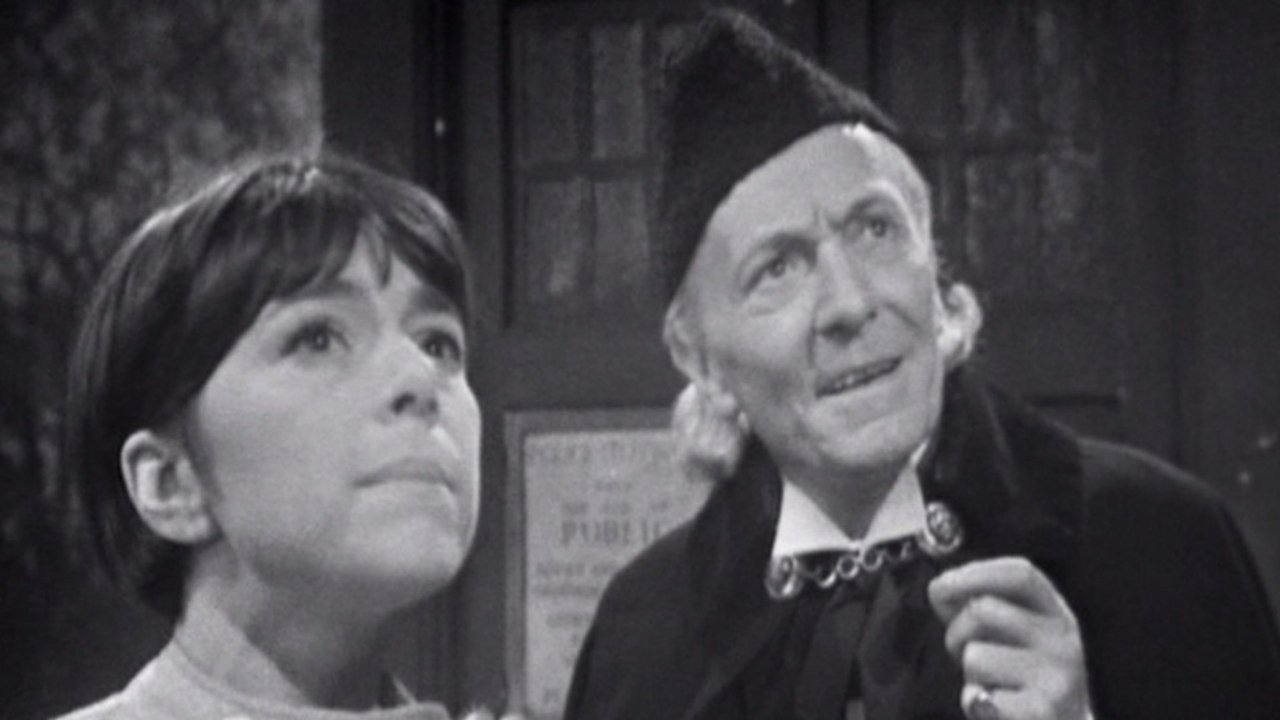
More from the episode
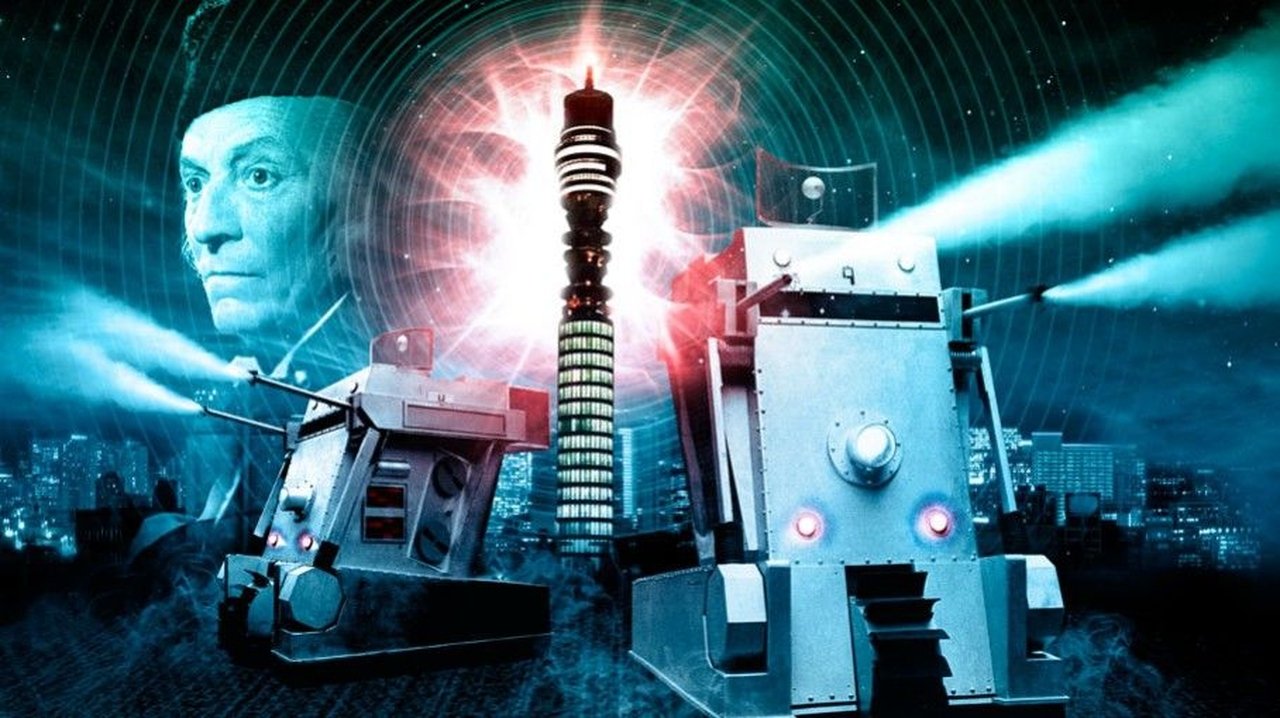
The story in 5 beats
- A new tower
The TARDIS lands near the Post Office Tower. The Doctor and Dodo meet Professor Brett, whose computer WOTAN will soon be linked to the world's other major computers.
- Down the phone line
Dodo goes to the Inferno nightclub with Brett's secretary Polly and meets a sailor, Ben. WOTAN hypnotises Brett, then reaches Dodo by telephone.
- Twelve machines
WOTAN's hypnotised workforce builds War Machines at points around London. Ben finds one fully assembled in a Covent Garden warehouse, and learns when they'll attack.
- The Doctor stands his ground
Soldiers storm the warehouse and fall back. The Doctor walks out alone to face the Machine.
Turning the weaponSpoiler · tap to reveal
The Doctor traps a Machine in a force field and reprograms it to attack WOTAN. Ben gets Polly out of the Tower, and Dodo sends word that she's staying in London.
Why it still matters
For three seasons the Doctor had mostly been somewhere else: the far future, an alien planet, a famous moment in history. The War Machines drops him into London in the summer it was made, hailing taxis and sitting in on a meeting at the Royal Scientific Club, and the threat lives in a London landmark that had only just opened. Only Planet of Giants had been set entirely in the present day before. IGN's Arnold T. Blumberg went as far as calling this the point where modern Doctor Who begins, and the present-day Earth story it set up became routine for the show in the early 1970s.
It came from a change at the top. New producer Innes Lloyd and story editor Gerry Davis wanted fewer history lessons and more contemporary science fiction, and Davis went looking for a scientist to feed the show ideas. He found Kit Pedler, a University of London academic who was keen on the genre. Davis wanted a story where the Post Office Tower, opened to the public just days before filming began, "took over", and Pedler's rogue computer did the job.
WOTAN is the show's first sentient supercomputer, an idea that later became standard sci-fi furniture. It's linked to the telephone network, plans to connect itself to the world's other big computers, and hypnotises people down the line. Critics have since pointed out how much that looks like an early sketch of the networked world of ARPANET and the internet. The Doctor's stand-off with a War Machine at the end of Part Three is often counted among the show's best cliffhangers.
Goodbye Dodo, hello Ben and Polly
The reprogrammed Machine smashes into WOTAN, the other War Machines stop and the hypnosis breaks. Ben and Polly bring the Doctor a message: Dodo has decided to stay in London. We never see her say goodbye. The Doctor goes into the TARDIS, Ben and Polly follow him in, and it dematerialises with them inside.
Lloyd had decided not to renew Jackie Lane's contract, and wanted two contemporary companions viewers could relate to, partly inspired by The Man from U.N.C.L.E. and the Bond films. Anneke Wills and Michael Craze were offered contracts for four serials. Many reviewers rate Dodo's exit as the worst any companion got, and Valerie Estelle Frankel notes that she leaves with as little fanfare as she arrived in The Massacre. The new pair went down far better: The A.V. Club's Christopher Bahn called them the liveliest characters in the story.
Challenge the DNA
Is WOTAN's idea, that machines should run the world, completely mad?
Or skip ahead to our reading
Mad in method, uncomfortably sensible in its starting point. WOTAN was built to think, so it thought. The serial is a romp, but it's a romp about a real question, and it got there early.
Behind the scenes
- Gerry Davis met several academics looking for a scientific adviser, including Alex Comfort, Eric Laithwaite and Patrick Moore, but found their ideas too tied to real science. Kit Pedler was more flexible, and an outline came out of a single meeting. He was paid £25 per episode.
- The scripts were first given to BBC staff writer Pat Dunlop, who asked to leave after one draft episode to work on United!. Ian Stuart Black, who had just written The Savages, took over, making him the first writer to script two Doctor Who serials in a row.
- This is the first time anyone in the show calls the lead character "Doctor Who". Black believed that was his name, and Davis left it in.
- Director Michael Ferguson had been an assistant floor manager on The Daleks, where he worked a Dalek's arm in the first episode. The War Machine was operated by Gerald Taylor, a Dalek operator since 1963, who also voiced WOTAN.
- The General Post Office refused permission to film from its tower, so the opening shot was taken over Bedford Square from Centre Point, with the permission of the builders George Wimpey. A taxi driver drove his own cab in one scene and was paid two guineas.
- The BBC wiped the tapes in March 1974. A film print of Part Two turned up with a private collector in Australia in the late 1970s, the first missing episode ever recovered, and all four parts were found at a TV station in Nigeria in 1984. Short censored cuts from Parts Three and Four are still missing and were reconstructed for the 1997 VHS.
- It was the first video release handled by the Doctor Who Restoration Team, released by BBC Video on June 2, 1997, with a DVD following in August 2008.
The thread
A thinking machine in the middle of London, plugged into everything.
Came before
Shares DNA with
Left its mark on
DNA strand
Technology Outpaces Ethics
Professor Brett builds WOTAN to think and then plugs it into the phone network before anyone has asked what it might think about. Scientists and reporters line up to admire it, and the machine has opinions of its own. The story's worry is the hookup, more than the computer: one clever box connected to everything.
Every great sci-fi story is built from a handful of strands like this one. Each strand page explains how it works and traces it across shows, books and films.
If this one stayed with you
Where to go next, and why.
Watch · Star Trek S2
"The Ultimate Computer"
A computer built to replace the people who run things, and a test run that goes wrong. A good double bill with WOTAN.
Watch · Doctor Who
"The Tenth Planet" (1966)
Kit Pedler's next story for the show, written with Gerry Davis, and the debut of the Cybermen, the monsters he co-created.
Watch · Film
2001: A Space Odyssey (1968)
The most famous computer that thinks it knows better, two years after WOTAN.
Read · Novelisation
The War Machines — Ian Stuart Black
Black wouldn't let anyone else adapt his scripts. His 1989 book expands the story and gives some of the War Machines names.
Your next episode
Three directions to go from here, all on Sci-Fi DNA.
More of this feeling
The Ultimate Computer
Star Trek
Another computer that decides it knows best.
Same question, different answer
The Architects of Fear
The Outer Limits
What happens when the people building the future stop asking who it's for?

Something completely different
The Smugglers
Doctor Who
From the Post Office Tower to pirates on the Cornish coast.