
More from the episode
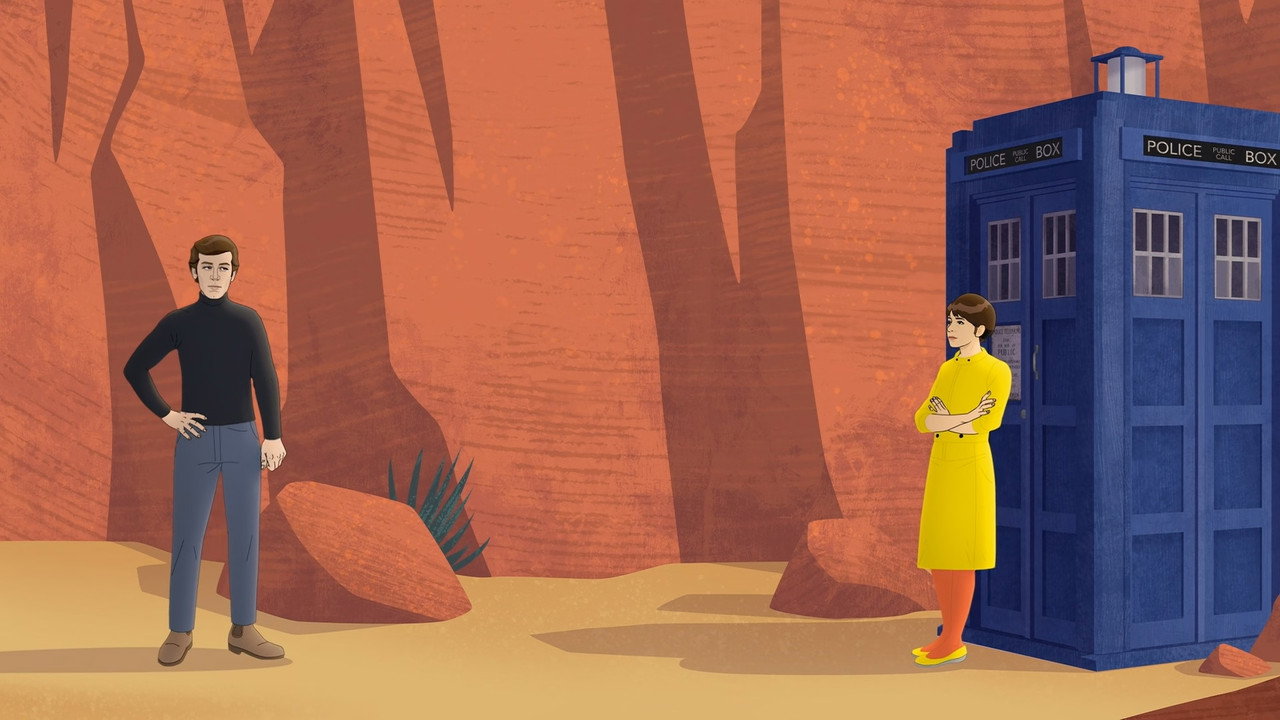
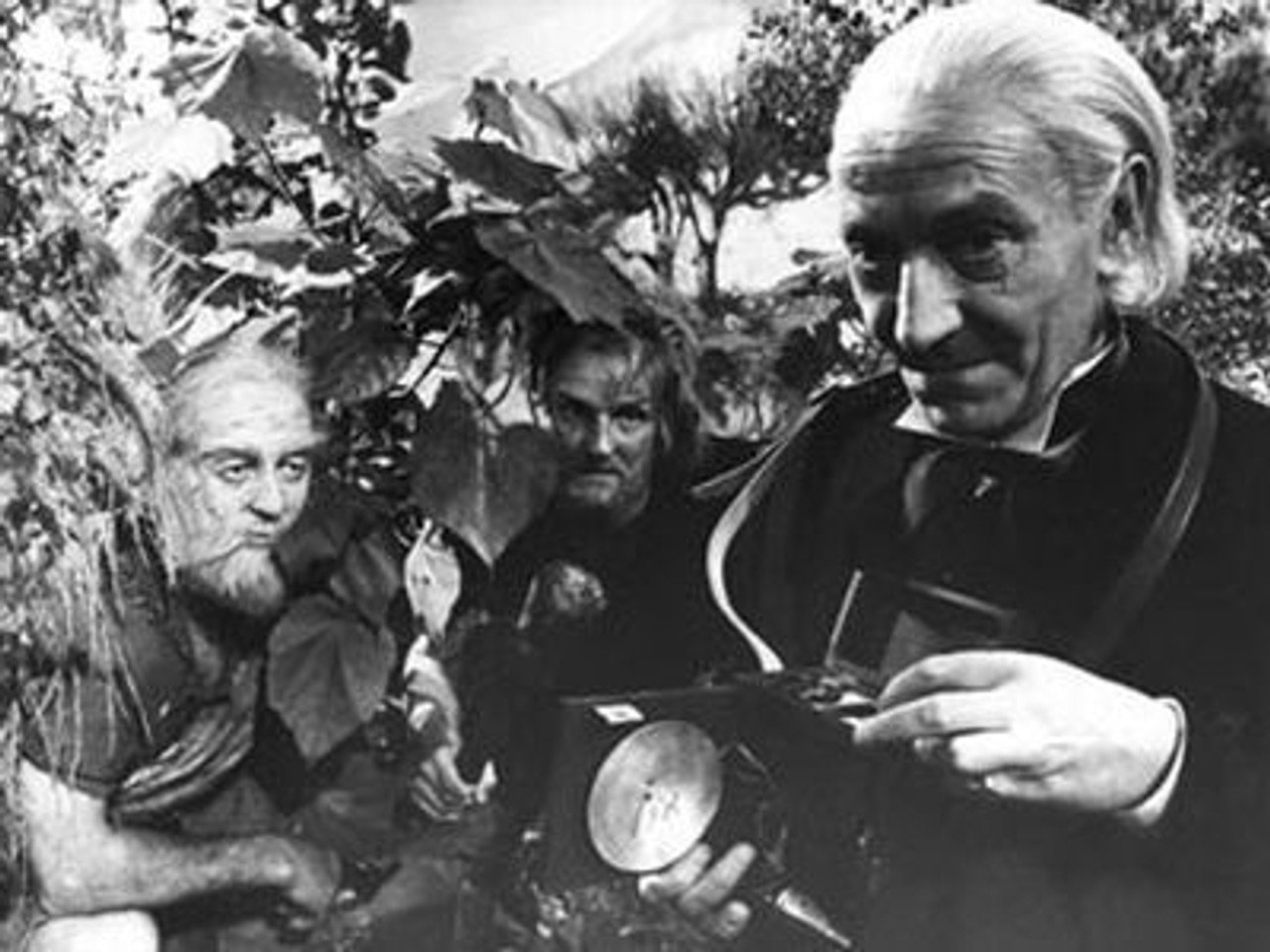
The story in 5 beats
- Expected guests
The TARDIS lands on a far-future planet where the Elders greet the Doctor as a hero whose travels they have followed from afar. They even predicted his arrival.
- What keeps the lights on
Dodo wanders where she shouldn't and finds the secret: the Elders drain the life force of the savages who live outside the city.
- The Doctor objects
Showered with compliments, the Doctor tells the Elders exactly what he thinks of their civilisation.
Jano takes the DoctorSpoiler · tap to reveal
Jano puts the Doctor in the transfer machine to take his intelligence and gets his conscience and mannerisms along with it.
Someone has to staySpoiler · tap to reveal
With the laboratory wrecked, Elders and savages need a go-between, and the Doctor has someone in mind.
Why it still matters
The Savages has no monster. Ian Stuart Black had watched Doctor Who with his children since the first episode, and he wanted a story that appealed to the audience's reasoning instead of leaning on action and violence. His idea: a gentle, artistic civilisation that keeps itself going by draining the life force of the people outside its walls. Scholars have since read it as an anti-colonial story, and Marcus Harmes, Marc Hudson and Richard Douglas link it to Rhodesia's 1965 declaration of independence, with a compound-bound elite living off everyone beyond the fence. Radio Times's Mark Braxton called it "a cogent essay on man's inhumanity to man."
It is also a strong week for William Hartnell. His Doctor is flattered, feted and offered gifts, and turns on his hosts the moment he understands what the gifts cost. Doctor Who Magazine's Jamie Lenman counted his "bursts of fiery indignation" in part two "amongst his finest performances." Frederick Jaeger, making his first Doctor Who appearance as the Elders' leader Jano, has a tricky job later on, and Hartnell helped him with it.
Not many people saw it. Ratings sank to 4.5 million by the last part, the lowest since the first episode in 1963, and the BBC later wiped the tapes and destroyed the film prints. For years it had a reputation as forgettable. In March 2025 it came back as an animated version on DVD and Blu-ray, which follows Christopher Barry's original camera scripts closely.
Steven stays
The transfer backfires. Jano absorbs the Doctor's outlook along with his intelligence and starts arguing the Doctor's side to the other Elders, while the guard Exorse comes round too. The Doctor decides the Elders must be forced, not persuaded, and joins Jano, Exorse, Steven and Dodo in smashing the laboratory. Then he surprises Steven by suggesting he stay behind to lead the new society, and when both sides agree to accept him, Steven says yes. Dodo is heartbroken. It's the first Doctor Who story in which every guest character survives, and Mark Clapham, Eddie Robson and Jim Smith called the last part "an intelligent ending to an intelligent story."
Peter Purves found out on February 25, 1966, after recording the second part of The Ark, a day after his contract had been renewed to the end of this serial. Gerry Davis and Innes Lloyd felt Steven lacked depth and was hard to write. Purves was surprised and upset at how it was done, though he had his own frustrations with the part, and he and Hartnell were sad to stop working together. He later pitched a sequel in which the Doctor comes back to find Steven's regime as corrupt as the Elders'. In 2002 he narrated the CD release of this serial's soundtrack.
Challenge the DNA
Was smashing the laboratory the right answer?
Or skip ahead to our reading
Yes, and the Doctor has thought it through. Persuasion fails, and he chooses force only after that. The story's last surprise, who stays behind to keep the peace, is a vote of confidence in someone the show had been underselling.
Behind the scenes
- Black was working on the BBC2 series Ransom for a Pretty Girl in late 1965 when he walked into the neighbouring Doctor Who office and asked to pitch a story. Davis commissioned it as Doctor Who and the White Savages; Black later suggested the title was shortened because it implied a racial element. When the next serial's writer dropped out, Davis gave The War Machines to Black as well, making him the first writer to script two Doctor Who serials in a row.
- Christopher Barry, who had directed The Daleks, came back at Lloyd's invitation. He found the script uninteresting and the programme stale, but most of the cast admired his patience.
- Location filming took place at a gravel pit near Chalfont St Peter, later covered by the M25, and at Oxshott quarry in Surrey. It was the first time Doctor Who used a quarry as an alien planet, which became a habit for years.
- Raymond Jones wrote a 27-minute score for string quartet and percussion. Reviewers singled it out, and Doctor Who Magazine's Vanessa Bishop was surprised to learn it was original. Nanina's fur costume had been used in One Million Years B.C.
- Senta's laboratory was the centrepiece set, with working props including a cabinet pumping dry ice and a tank of bubbling liquid. Hartnell helped Frederick Jaeger copy some of his own mannerisms for the scenes where Jano takes on the Doctor's personality.
- Jamie Lenman of Doctor Who Magazine counted Hartnell's "bursts of fiery indignation" in part two among his finest performances. It was the first serial without separate episode titles; Lloyd felt numbered parts told viewers when a new story had begun.
- All four parts are missing. The videotapes were wiped in 1967 and the prints destroyed in the 1970s. What survives is the complete soundtrack, more than 60 of John Cura's telesnaps and about 45 seconds of 8mm film shot off a television during an Australian screening. The 2025 animation, directed by AnneMarie Walsh, gave the barefoot savages shoes to spare the animators drawing toes.
The thread
A paradise that runs on other people, and a visitor who won't be bought.
Came before
Shares DNA with
Left its mark on
DNA strand
Us vs. Them
The Elders call the people outside their walls savages, and the story spends four weeks showing who has earned the word. Doctor Who Magazine's Jonathan Morris made the same point: the title fits the civilised side best.
Every great sci-fi story is built from a handful of strands like this one. Each strand page explains how it works and traces it across shows, books and films.
If this one stayed with you
Where to go next, and why.
Watch · Star Trek S3
"The Cloud Minders"
Three years later, Kirk walks into another beautiful city that keeps its workers out of sight, and has the same argument with its rulers.
Watch · Black Mirror
"Fifteen Million Merits"
A modern version of a comfortable world built on someone else's effort, told from the bottom of it.
Watch · Doctor Who
"The War Machines"
Black's next script, straight after this one, and a very different kind of threat in 1966 London.
Read · Novel
The Time Machine — H. G. Wells
The classic far-future story of a society split in two, and a visitor trying to work out which half is which.
Read · Novelisation
Doctor Who: The Savages — Ian Stuart Black
Black adapted his own scripts rather than let another writer do it, so this is as close to the original as print gets.
Your next episode
Three directions to go from here, all on Sci-Fi DNA.

More of this feeling
This Side of Paradise
Star Trek
Another society that looks perfect until you ask what it costs.
Same question, different answer
Fifteen Million Merits
Black Mirror
A comfortable life paid for by people kept out of sight.
Something completely different
The War Machines
Doctor Who
The TARDIS comes home to swinging London and a computer with ideas.