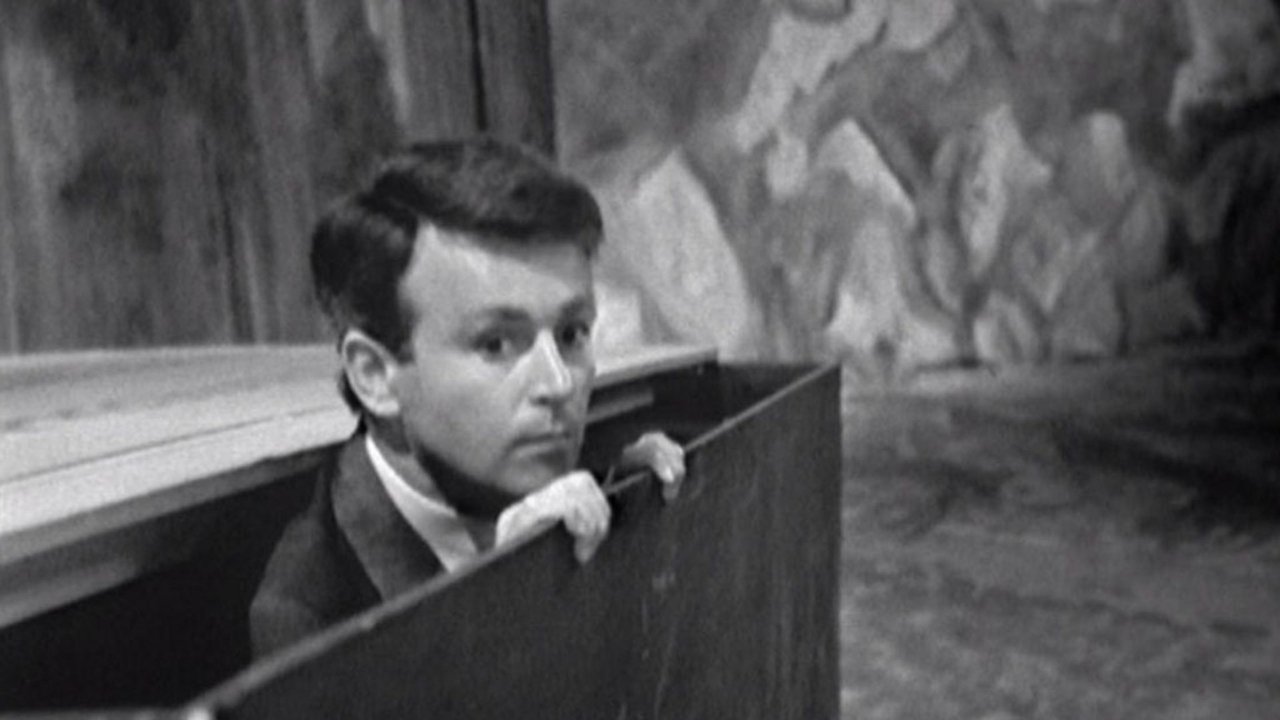
More from the episode
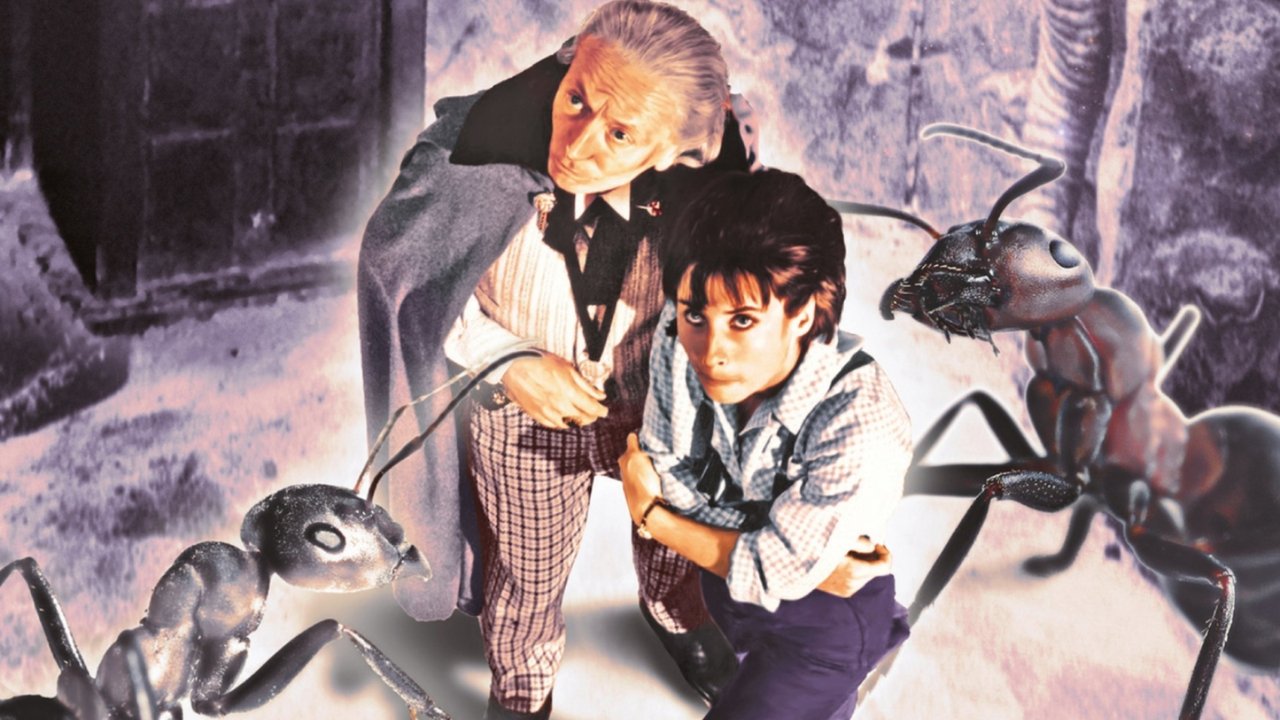
The story in 5 beats
- A fault the TARDIS can't find
Something seems to go wrong with the TARDIS on landing, but the fault locator says all is well, so the Doctor, Susan, Ian and Barbara step outside.
- An inch tall
Beside a giant dead earthworm and ant, the travellers work out that they are back on Earth and have shrunk to the size of an inch.
- A shot in the garden
A government scientist tells the industrialist Forester that his insecticide DN6 is too deadly to license. Forester shoots him.
Barbara touches a seedSpoiler · tap to reveal
Inside the house, a giant fly drops dead on seeds sprayed with DN6, and Barbara, who has handled one, starts to feel ill.
Fire in the labSpoiler · tap to reveal
Unable to make themselves heard on the telephone, the travellers set an aerosol can against a gas jet and blow it up in Forester's face.
Why it still matters
Doctor Who had wanted to do this story from the very beginning. Shrinking the travellers was pitched as the first serial of all, by C. E. Webber under the title "The Giants", and Sydney Newman turned it down in June 1963 as too hard to make and too thin on character. It went to another writer, stalled, and only reached the screen when Louis Marks took it on in 1964 and found it a subject.
That subject was Rachel Carson's Silent Spring, published two years earlier. Marks based his fictional insecticide, DN6, on Carson's accounts of what DDT did to insects, and the villain is a businessman who will do anything to get it licensed. So a Saturday family serial ended up being about pesticides, broadcast, as the writer Mark Wilson has pointed out, just as the British public was starting to think about the environment.
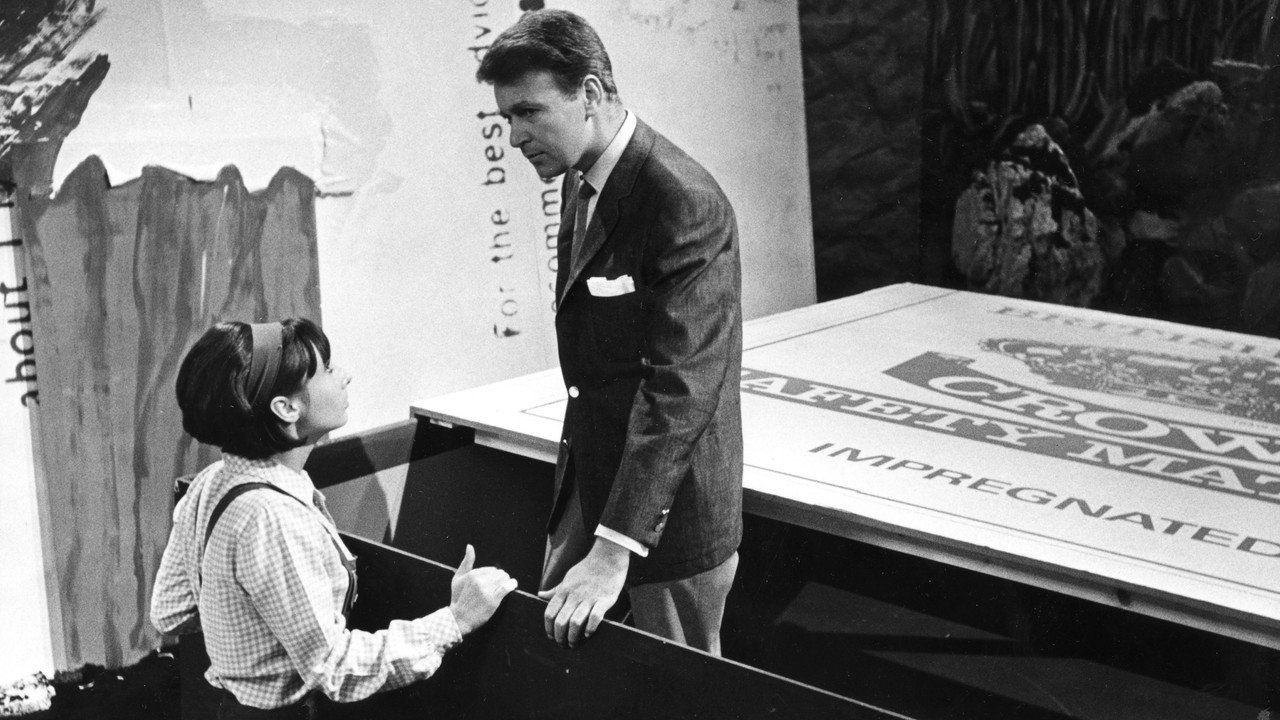
It also gave the show its first go at playing with scale. The travellers share the screen with a giant matchbox, a giant briefcase, an earthworm and a fly, and the BBC's first audience report singled out the props and effects for praise. Critics since have found the plot slight (Patrick Mulkern of Radio Times called the drama "less than enthralling"), but it opened Season 2 with 8.4 million viewers and brought in the composer Dudley Simpson, who went on to contribute music to 62 Doctor Who stories.
Small people, loud bang
The Doctor works out that Barbara has been poisoned by DN6 and that the travellers need help fast. They try to lift the giant telephone receiver and shout down it, but nobody can hear them. What they do manage is to keep the line engaged, which worries the local telephone operator, Hilda Rowse, who had already overheard Forester faking the dead man's voice. Her husband, a policeman, goes round to the house.
Meanwhile Forester's assistant Smithers learns how lethal DN6 really is and turns on his employer. The travellers push an aerosol can into the flame of a Bunsen burner, and the makeshift bomb goes off in Forester's face just as PC Rowse arrives. Back in the TARDIS, the Doctor restores the ship and crew to normal size, which also cures Barbara. The original climax ran across two episodes; the BBC cut them into one shortly before broadcast, which is why the ending moves so fast.
Challenge the DNA
Is Forester a villain or just a businessman?
Or skip ahead to our reading
A villain, and an ordinary one, which is the point. He isn't a monster or an alien. He's a man with a product he wants licensed. The story's warning about poison in the garden lands harder because the person behind it is so dull.
Behind the scenes
- The shrinking idea was first proposed as the show's opening serial, C. E. Webber's "The Giants". Sydney Newman rejected it in June 1963; writer Robert Gould then worked on it as a four-part story until it was dropped by January 1964, and Louis Marks had it by February.
- Marks drew on Rachel Carson's 1962 book Silent Spring, and the deadly insecticide DN6 was based on what Carson described DDT doing to insects.
- The giant-prop scenes were shot by filming the actors through glass with the object reflected in a half-silvered mirror. The first footage was judged unsatisfactory and reshot on August 13, 1964. Shots of the cat were filmed on 35mm on July 30.
- It is the first Doctor Who serial with music by Dudley Simpson, who first recorded for it on August 14, 1964.
- It was made as four episodes, with Douglas Camfield directing the last. On October 19, 1964, head of serials Donald Wilson decided it was a weak opening to the season and had the third and fourth episodes cut together into one 25-minute episode. Camfield got the credit for it.
- The three episodes drew 8.4, 8.4 and 8.9 million viewers. BBC Director-General Hugh Greene was less taken with it and said he was keen to see the Daleks back.
- The original tapes were wiped in the late 1960s, but 16mm film prints turned up at BBC Enterprises in 1977, so the serial survives complete. The 2012 DVD added an animated recreation of the original episodes three and four from the scripts, with new dialogue recorded by Carole Ann Ford and William Russell.
The thread
Shrinking people, giant gardens and a poison sold as progress.
Came before
Shares DNA with
DNA strand
Technology Outpaces Ethics
Forester has a product that works and a report that says it kills everything it touches. He shoots the man who wrote the report and rewrites it. Seen from an inch high, DN6 is a dead fly on a seed, and the story asks you to keep that picture in mind next time someone calls a chemical safe.
Every great sci-fi story is built from a handful of strands like this one. Each strand page explains how it works and traces it across shows, books and films.
If this one stayed with you
Where to go next, and why.
Watch · The Twilight Zone · S3
"The Little People"
Scale used the other way round: the visitors are the giants, and one of them likes it.
Watch · Film
The Incredible Shrinking Man (1957)
The big-screen version of a person lost in an ordinary house, made seven years earlier and played much darker.
Watch · Doctor Who · Season 2
"The Dalek Invasion of Earth"
The very next story, and the one the BBC's Director-General was waiting for. Much bigger, much grimmer.
Read · Nonfiction
Silent Spring by Rachel Carson
The book behind DN6. The real account is more alarming than the TV version.
Read · Novel
The Shrinking Man by Richard Matheson
The novel the 1957 film was made from, by the writer who also scripted the film and some of the best Twilight Zones.
Your next episode
Three directions to go from here, all on Sci-Fi DNA.
More of this feeling
The Zanti Misfits
The Outer Limits
More oversized insects in 1960s black and white.
Same question, different answer
Hated in the Nation
Black Mirror
Insects, chemicals and people who don't count the cost. Black Mirror's version is set fifty years later.
Something completely different
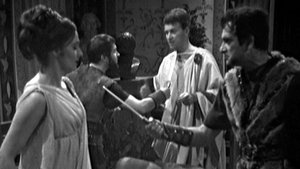
The Romans
Doctor Who
From an inch tall to ancient Rome, and a comedy.