More from the episode
The story in 5 beats
- A summons from the Time Lords
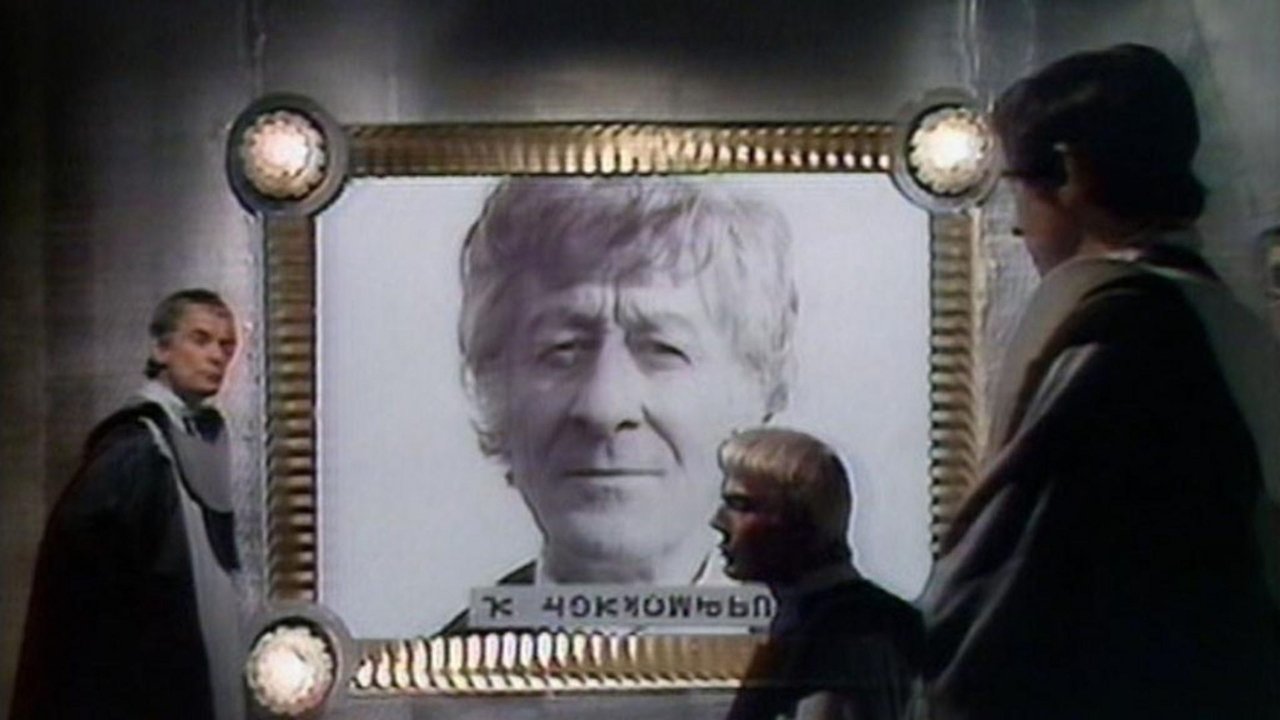
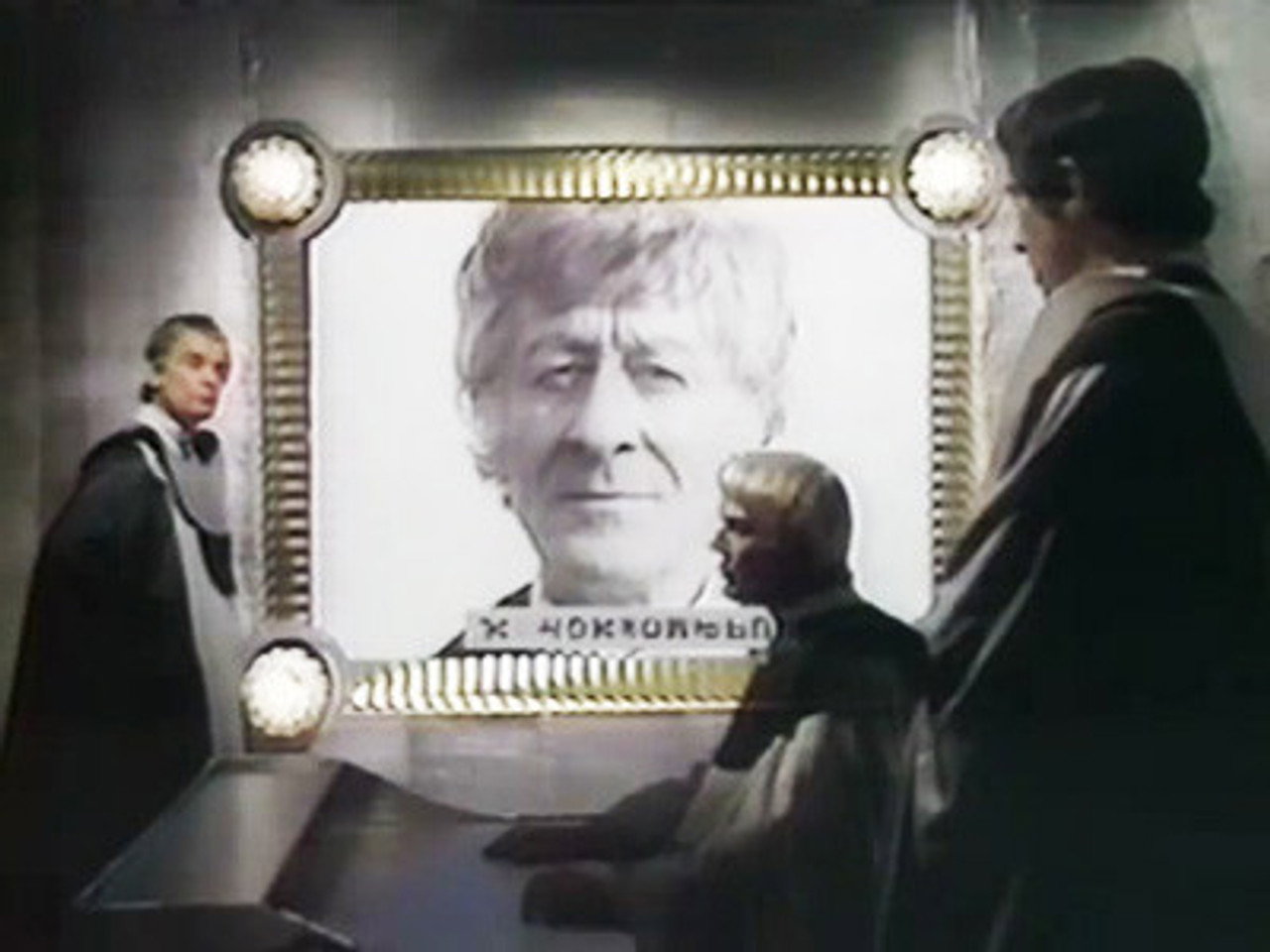
Three Time Lords fret over stolen files on a Doomsday Weapon, and send the Doctor and Jo off in the TARDIS to the planet Uxarieus in 2472.
- A colony going hungry
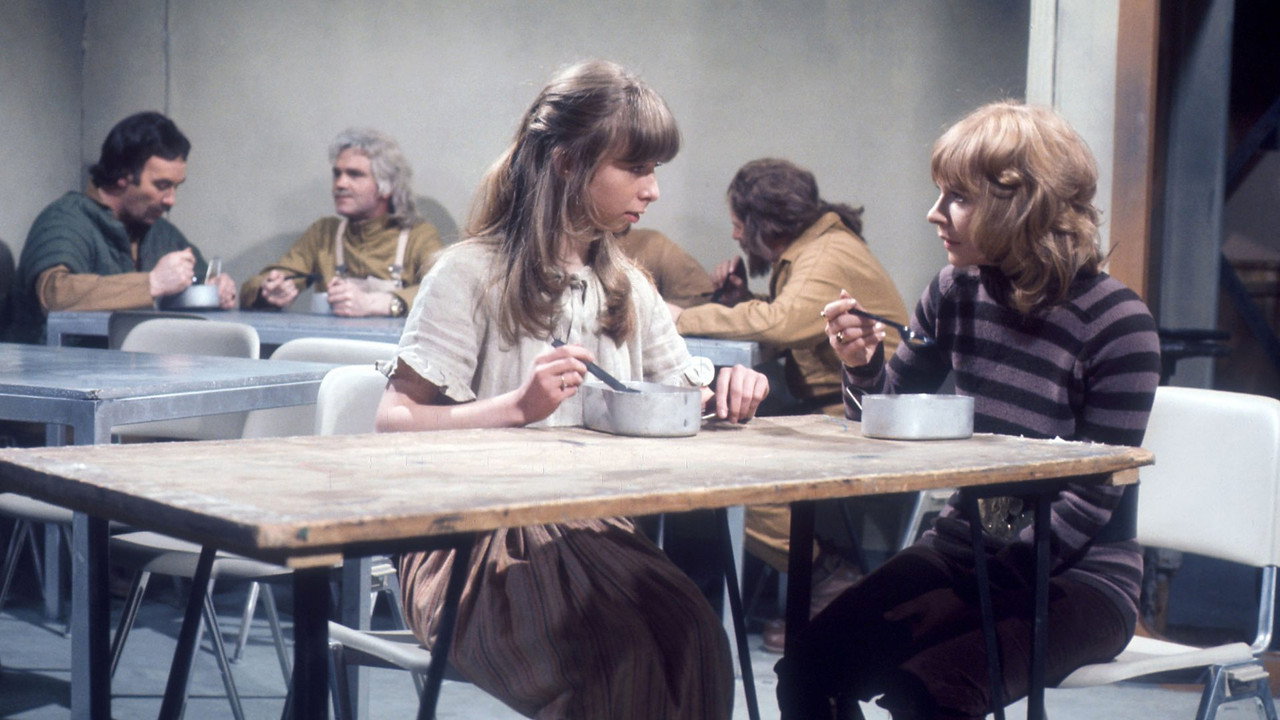
Human colonists are scratching a living from crops that won't grow, and at night something is killing them.
- IMC lands
The Interplanetary Mining Corporation, led by Captain Dent, arrives to mine the planet's rare minerals and wants the colonists gone.
The judge from EarthSpoiler · tap to reveal
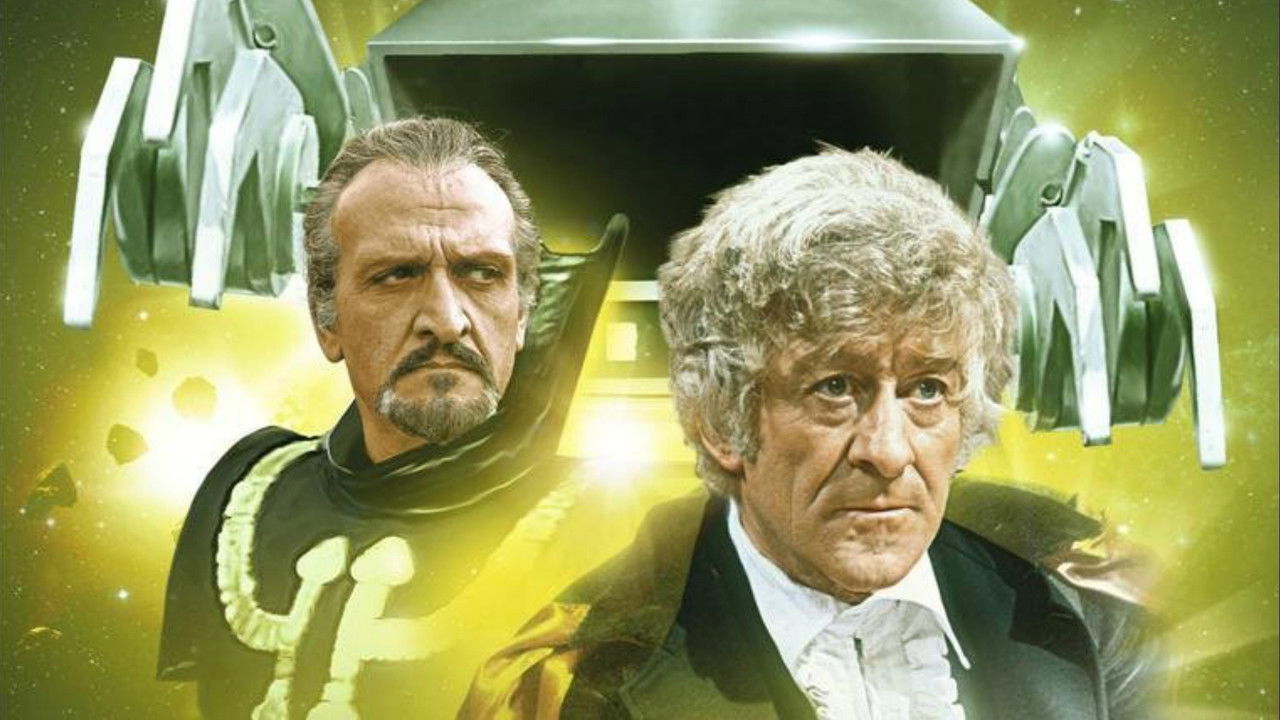
The monster attacks were IMC's work. The Adjudicator sent to settle the claim is the Master, and he wants the Doomsday Weapon.
The city of the primitivesSpoiler · tap to reveal
In the natives' city, the Doctor turns down the Master's offer to help him rule the galaxy and sets off the weapon's self-destruct.
Why it still matters
For the first time since The War Games in 1969, the TARDIS leaves Earth. Script editor Terrance Dicks never liked keeping the Doctor stuck on our planet and meant to get around it as soon as he could. In a documentary for the Inferno DVD he recalled Malcolm Hulke pointing out that the Earthbound format left them only two kinds of story: alien invasion and mad scientist. Hulke, Dicks's friend and mentor, wrote the way out.
He used it to write about who owns a planet. On Uxarieus, settlers who came to farm are up against the Interplanetary Mining Corporation, which wants the planet's minerals, while the planet's own people watch from the edges. Hulke had joined the Communist Party of Great Britain in 1945, and Radio Times later called the story "unashamedly left wing," with its pioneering colonists and greedy IMC. The academic David Butler reads it as a story about colonialism, and Howe and Walker in The Television Companion saw a Western in space, with the colonists carrying rifles like cowboys.
Fans have argued about it ever since. The Discontinuity Guide (1995) found it "rather like watching socially-aware paint dry," while Patrick Mulkern of Radio Times called it "richly detailed, fast-moving drama" that works best a week at a time, the way it was shown. In 1971 the audience grew from 7.6 million to 9.5 million by part three. Look out for Helen Worth as Mary Ashe, three years before she started a 50-year run as Gail in Coronation Street.
The weapon under the city
The reptile attacks are faked by IMC's men to scare the colonists off. When an Adjudicator arrives from Earth to rule on the competing claims, it is the Master, travelling on stolen credentials, and he rules for IMC, who order the colonists off the planet. What he really wants is the Doomsday Weapon.
The primitives, the Master explains, were once an advanced civilisation, and before they declined they built a super-weapon they never used. In the city he offers the Doctor a share in ruling the galaxy with it, and the Doctor refuses; Mulkern singled out that conversation in his review. One of the native elders tells the Doctor to set off the weapon's self-destruct, and the city starts to crumble. The colonists come out of hiding and overpower IMC, the Master slips away in the confusion, the Doctor explains that the weapon's radiation was what was killing their crops, Earth promises a real Adjudicator, and the TARDIS lands back at UNIT headquarters seconds after it left.
Challenge the DNA
Should the colonists have given up the planet?
Or skip ahead to our reading
No. The colonists' stubbornness is the moral centre of the story. IMC has money and guns. The settlers have a claim and nowhere else to go, and Hulke is clear about whose side he's on.
Behind the scenes
- Terrance Dicks said in a DVD documentary that Malcolm Hulke had pointed out that keeping the Doctor on Earth left only two kinds of story, alien invasion and mad scientist. Dicks had disliked the Earthbound format and planned to get around it as soon as he could.
- Hulke and Dicks went back a long way: they had co-written four episodes of The Avengers in 1962, Dicks's first television credit among them, and The War Games in 1969.
- The exteriors on Uxarieus were filmed at a china clay pit in Carclaze, Cornwall.
- The BBC wiped the original colour tapes. NTSC copies came back from TV Ontario in Canada in 1983, so all six parts survive that way, along with 16mm colour film trims of the location scenes.
- The 2011 DVD put back four seconds missing from the VHS and US masters, restoring two lines of dialogue.
- Hulke's own novelisation, Doctor Who and the Doomsday Weapon (Target, 1974), was the first book of a 1971 story. Because of that, Hulke has Jo meet the Doctor for the first time in it, though on television she arrived in Terror of the Autons.
- Helen Worth, who plays Mary Ashe, joined Coronation Street in 1974 and played Gail there for 50 years.
The thread
Settlers, a mining company and the people who were there first.
Came before
Shares DNA with
Left its mark on
DNA strand
Us vs. Them
Hulke puts three groups with a claim on one planet and won't make it simple. The colonists are decent and stubborn, the company is greedy, and the people who lived there first get the least say of anyone.
Every great sci-fi story is built from a handful of strands like this one. Each strand page explains how it works and traces it across shows, books and films.
If this one stayed with you
Where to go next, and why.
Watch · Doctor Who
"Doctor Who and the Silurians"
Hulke's story from the year before, where the question of who has the right to a world is asked on Earth.
Watch · Star Trek
"The Devil in the Dark"
Miners on a far planet and deaths nobody can explain, from Star Trek's first season.
Watch · TNG S3
"The Ensigns of Command"
Data has to persuade stubborn colonists to leave their homes, the same tug-of-war over land with a different referee.
Read · Novelisation
Doctor Who and the Doomsday Weapon by Malcolm Hulke
Hulke rewrote his own story for Target in 1974 and added a prologue in which an old Time Lord explains the Doctor and the Master's rivalry.
Your next episode
Three directions to go from here, all on Sci-Fi DNA.

More of this feeling
The Space Pirates
Doctor Who
Another frontier story where the real danger comes from greedy people.
Same question, different answer
A Taste of Armageddon
Star Trek
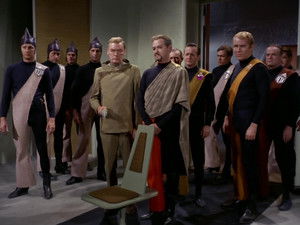
Settlers, a mining company and an official who decides who gets the planet.
Something completely different
The Dæmons
Doctor Who
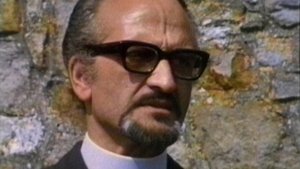
Back to Earth for a village, a dig and something very old under a barrow.