
More from the episode
The story in 5 beats
- The bikes
Bing pedals all day for merits. The screens around him never switch off, and skipping an advert costs money.
- Abi sings
He hears Abi singing and spends nearly everything he has on her Hot Shot ticket. She gives him an origami penguin.
- The judges
Hope, Charity and Wraith call her above average. Wraith has another kind of offer for her.
The shardSpoiler · tap to reveal
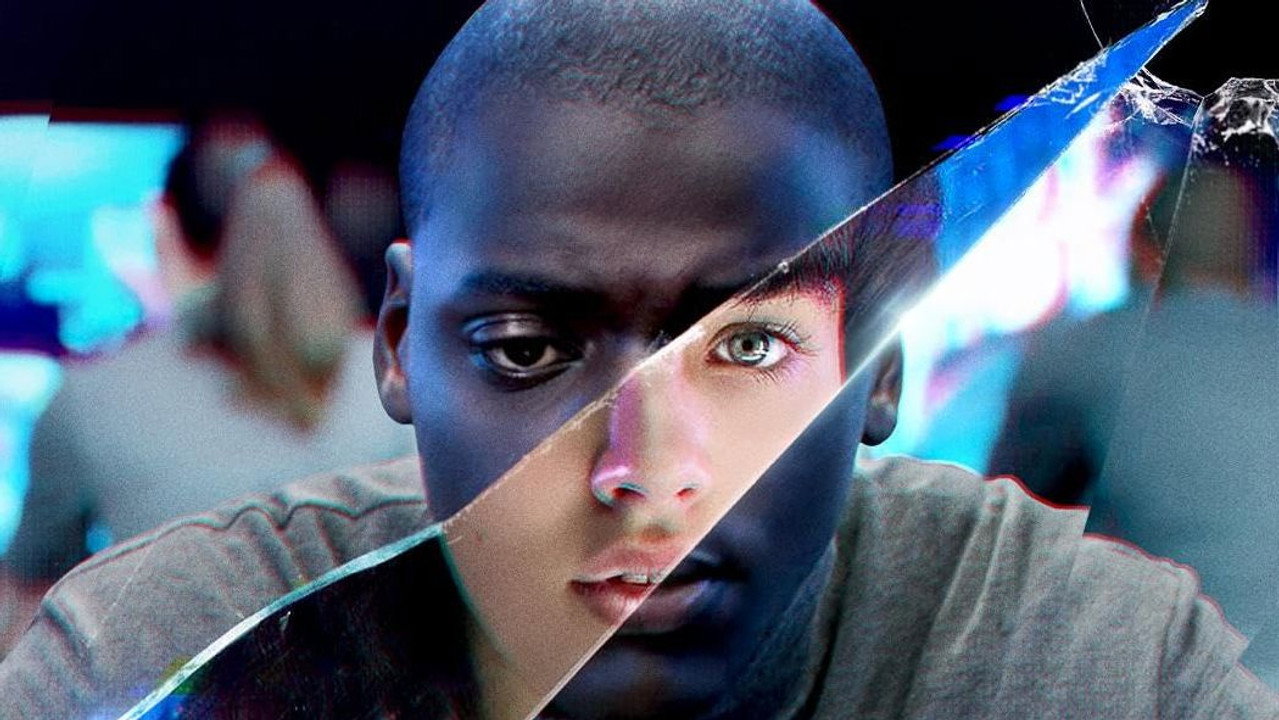
Bing smashes a screen, hides a piece of glass, and pedals until he can afford his own audition.
The speechSpoiler · tap to reveal
On stage, with glass at his throat, Bing tells the judges exactly what they've built. They love it.
Why it still matters
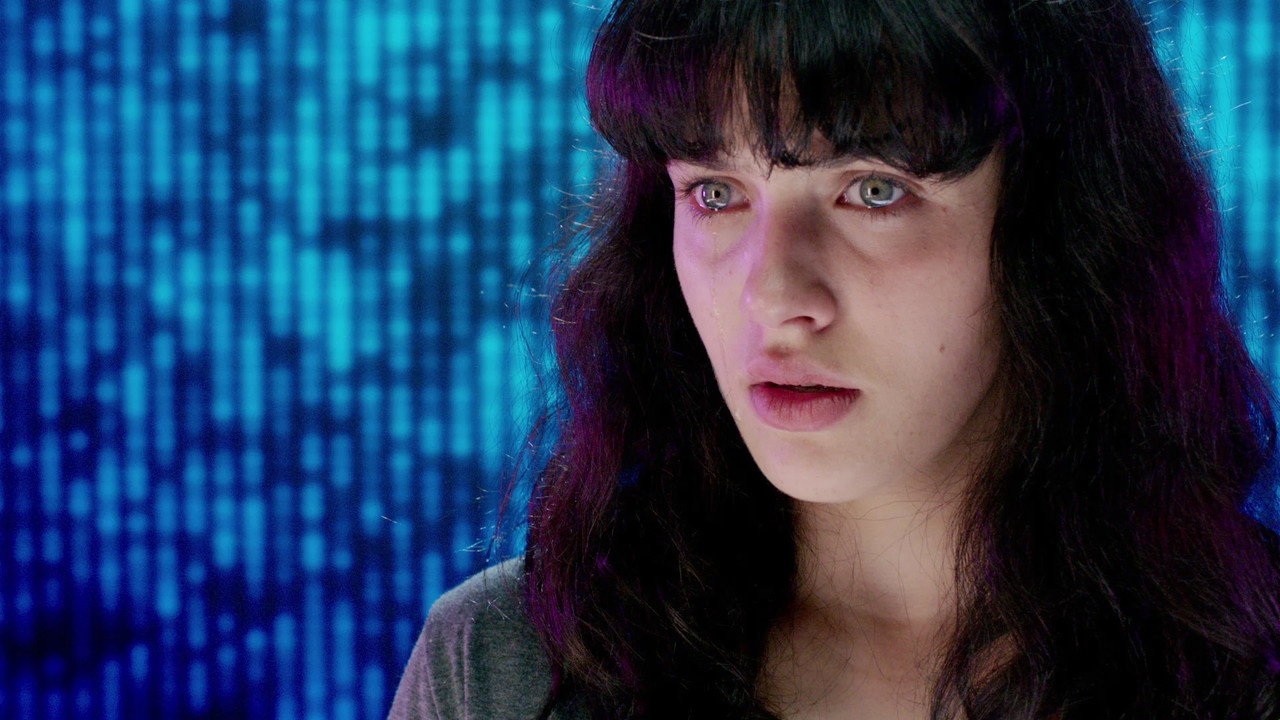
Bing lives in a cell whose walls are screens. Every day he pedals an exercise bike to make electricity and earn merits, and he spends them skipping ads and dressing his on-screen avatar. The only way out is Hot Shot, a talent show. When he hears Abi singing in the bathroom, he gives her his entire savings, fifteen million merits inherited from his dead brother, to buy her an audition.
It was the first Black Mirror script ever written, by Charlie Brooker and his wife Konnie Huq, and it's still the series' bleakest joke about entertainment. Daniel Kaluuya's furious speech near the end is one of the show's great moments, and the episode's point is what happens to it after he's finished.
What happens to the rant
Abi takes Wraith's offer, a spot on his pornography channel, under pressure. Later Bing sees her in an advert for it that he can't afford to skip; it plays whenever he looks away. So he saves up again, gets onto Hot Shot, and holds a shard of screen glass to his neck. Wraith dares him to do it. Hope and Charity tell him to speak instead, and he pours out everything he hates about the system. Hope calls it the most heartfelt speech in the show's history and gives Bing his own programme.
In the last scene Bing is recording his show, still holding the glass to his throat, in a large apartment with a window onto a green forest. It may be real, or it may be another screen. His rebellion has become something to sell. Brooker considered other endings, including one revealing the bikes were connected to nothing, but this one is crueller: nothing is fake except his anger, which is now part of the product.
The Question Underneath
What would you spend everything you had on?
Bing's outburst is the most honest thing anyone says in this world, and the system absorbs it in minutes. The judges give him a show. That's the episode's bleakest idea: a culture built on screens can schedule rage, brand it and run ads around it, so it never has to bother censoring it. Whether Bing chose that or was cornered into it is the question it leaves you with.
Challenge the DNA
When Bing takes his own show, has he sold out or been trapped?
Or skip ahead to our reading
Trapped, mostly. He still holds the glass to his throat on every show, which tells you he knows exactly what happened to him.
Behind the scenes
- Brooker and Huq wrote it first, though it aired second, after "The National Anthem." Huq is credited as Kanak Huq. She also suggested gyms powered by their own exercise equipment.
- Channel 4 moved it to a later slot so it wouldn't clash with the final of The X Factor. About 1.52 million people watched.
- The 1968 play The Year of the Sex Olympics was an influence. Brooker also drew on the avatars of the Xbox and Wii.
- It was shot at a disused university campus in Buckingham, with one set redressed again and again on a small budget. The screens were real working displays.
- Kaluuya's audition was built on Bing's Hot Shot speech. Jordan Peele later cast him in Get Out, partly because of this episode.
- Brooker picked the Irma Thomas song "Anyone Who Knows What Love Is (Will Understand)" for Abi's audition. It turns up again in later Black Mirror episodes.
- Joel Collins and Daniel May were nominated for a BAFTA Craft Award for production design.
The thread
Talent shows, attention as money, and the dystopias Brooker was reading when he wrote it.
Came before
Shares DNA with
 ClipOfficial featurette · Netflix · 1:09
Left its mark on
DNA strand
Technology Outpaces Ethics
The bikes, the screens and the merit economy aren't really the frightening part. The frightening part is a system clever enough to buy its own critics. Bing's anger is real, and the machine turns it into one more channel.
Every great sci-fi story is built from a handful of strands like this one. Each strand page explains how it works and traces it across shows, books and films.
If this one stayed with you
Where to go next, and why.
Watch · Black Mirror
"Nosedive"
Same hunger for approval, five years later and in pastel. Funnier, and just as hard on its heroine.
Read · Novel
Brave New World — Aldous Huxley
The dystopia that keeps everyone happy instead of scared. Critics compared the episode to it.
Your next episode
Three directions to go from here, all on Sci-Fi DNA.

More of this feeling
Nosedive
Black Mirror
Approval as currency again, five years later and much more pastel.

Same question, different answer
Eye of the Beholder
The Twilight Zone
What does a society do with someone who won't fit? A very different kind of judging panel.

Something completely different
Marooned
Red Dwarf
Two men, one freezing ship and an argument about books. A comedy about having nothing.