
More from the episode

The story in 5 beats
- Omicron Ceti III
The Enterprise is sent to a colony exposed to radiation that should have killed everyone within a week. The colonists are alive, healthy and glad to see them.
- Leila
Among them is Leila Kalomi, who loved Spock years ago. McCoy's scans find nothing wrong with anyone, though the planet has no animal life at all.
- The flowers
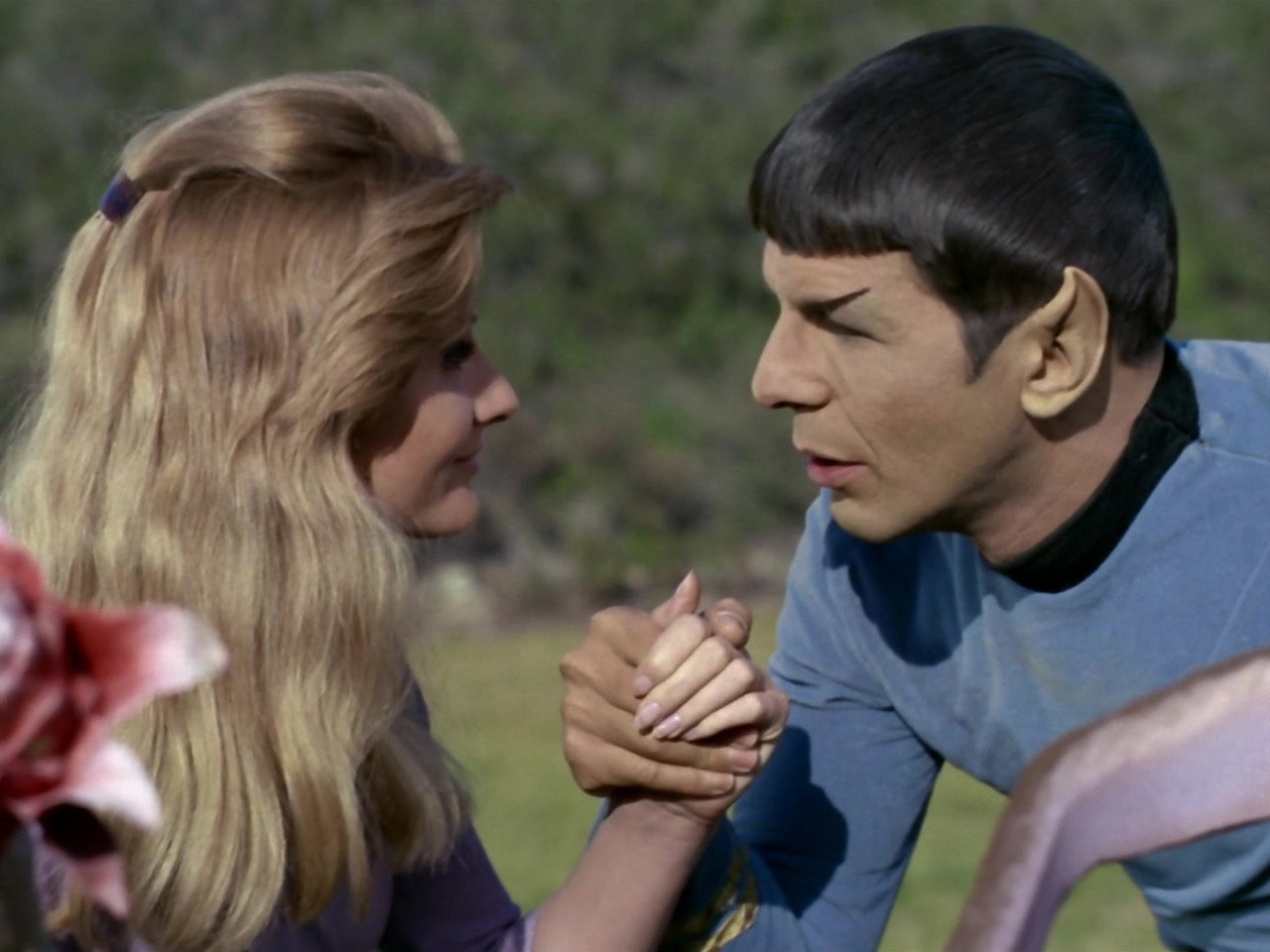
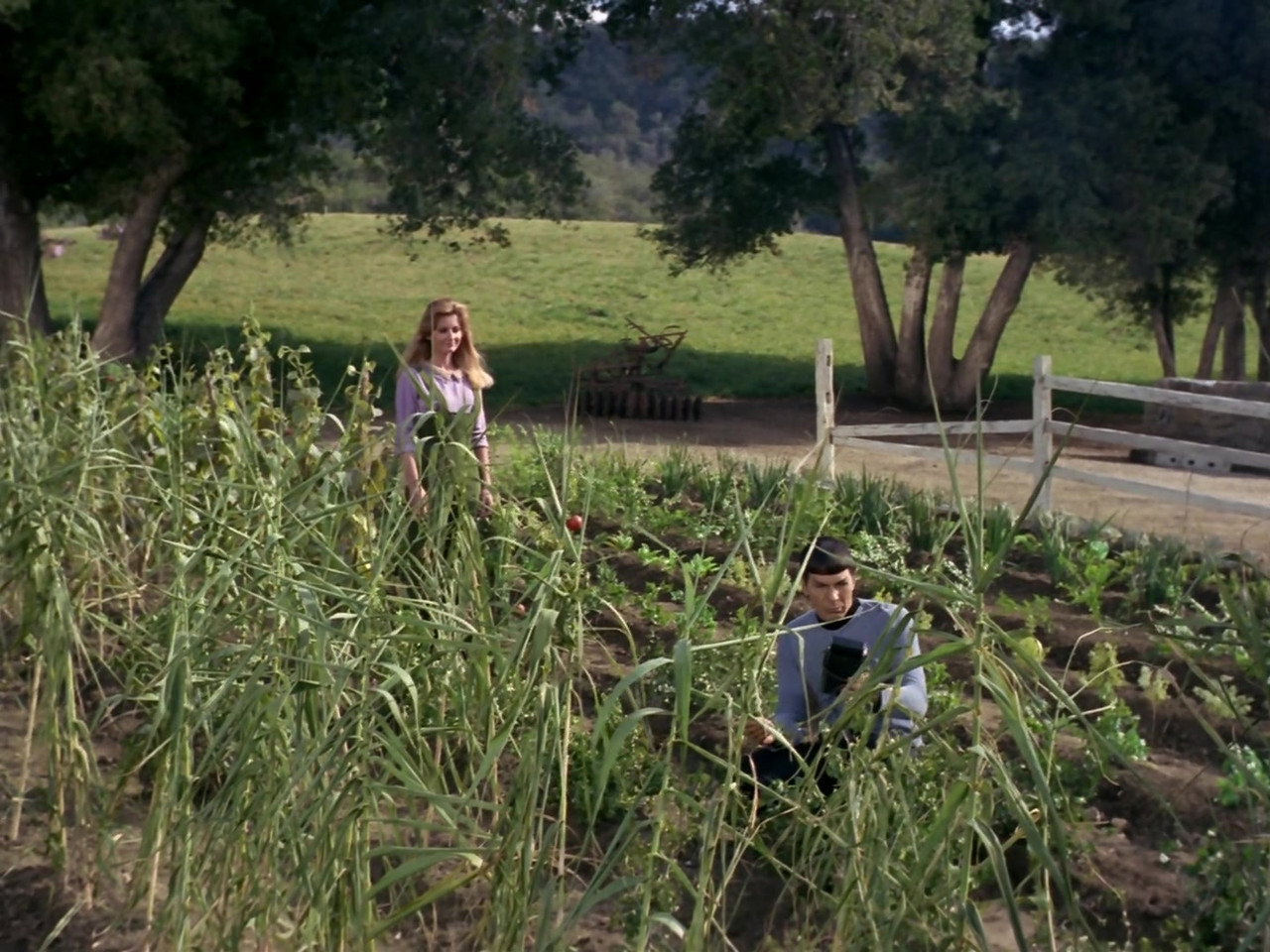
Leila leads Spock to a field of strange plants. They release a cloud of spores, and for the first time Spock tells her he loves her.
Mutiny by contentmentSpoiler · tap to reveal
The spores reach the ship. The crew drifts down to the planet, Uhura cuts communications, and Kirk is left with an empty bridge.
The cureSpoiler · tap to reveal
Kirk works out that strong emotion kills the spores, and sets out to make his best friend very angry.
Why it still matters
This is the one where Spock is happy. He falls in love, he laughs, he plays, all in one hour. Leonard Nimoy had spent most of a season showing what Spock held back, and D. C. Fontana's script lets him show what happens when he lets go. Director Ralph Senensky later called it a very good outing for Nimoy, and said his own favourite line is the last one Spock says.
The set-up is a mystery. The colonists on Omicron Ceti III should have been killed by the planet's Berthold rays years ago, yet they're in perfect health and suspiciously calm. Leila Kalomi, a botanist there, knew Spock on Earth six years earlier and loved him, though he couldn't return it, and the episode lets that history count.
The episode takes happiness seriously. The paradise on offer works, and Kirk has to argue against it anyway.
Paradise, cancelled
The spores live in symbiosis with their hosts. They give perfect health, protection from the Berthold rays and a deep, uncomplicated peace. Kirk is exposed too, and is about to beam down, when the thought of leaving his ship makes him furious. The spores fade. Violent emotion destroys them, and Kirk realises he has a cure, if an ugly one.
He lures Spock aboard and insults him until Spock loses his temper and nearly brains him with a stool. Spock is free. They broadcast an irritating subsonic signal through the colonists' and crew's communicators, the planet erupts in brawls, and everyone comes back to themselves. Leila, seeing Spock unreachable again, is heartbroken, and that frees her as well. As the Enterprise leaves, Kirk asks Spock about his time there. Spock says he has little to say, except that for the first time in his life, he was happy.
Behind the scenes
- Jerry Sohl wrote the first draft, called "The Way of the Spores," with Sulu as the man in love. D. C. Fontana rewrote it around Spock, and Sohl, unhappy with the changes, took the pseudonym Nathan Butler.
- The title borrows from Rupert Brooke's poem "Tiare Tahiti" and F. Scott Fitzgerald's 1920 novel This Side of Paradise.
- Ralph Senensky had three days booked at the Disney ranch. On the third, Jill Ireland was feared to have measles, and by the time she was cleared, the ranch had been taken by another film company. The rest of the location work moved to Bronson Canyon, near the studio.
- Senensky moved one field scene fifty yards on the day because he had spotted, as he put it, "a very inviting limb."
- It was Frank Overton's last performance. He died on April 24, 1967, less than two months after the episode aired.
- The shot of the empty Enterprise bridge came back 25 years later, as the background for Scotty's holodeck recreation of his old ship in The Next Generation's "Relics."
The thread
An old story about travellers who find a place too pleasant to leave, told with Spock as the one who doesn't want to go home.
Came before
Shares DNA with
Left its mark on
DNA strand
Be Careful What You Wish For
Everyone on Omicron Ceti III got what people wish for: health, peace and an end to worry. The episode is honest that it's a real gift, which is why Spock's last line hurts. The catch is that nobody there wants anything any more, and a ship full of people who want nothing goes nowhere.
Every great sci-fi story is built from a handful of strands like this one. Each strand page explains how it works and traces it across shows, books and films.
If this one stayed with you
Where to go next, and why.
Watch · The Twilight Zone
"A Stop at Willoughby"
A worn-out man glimpses a gentle little town from a train window, and the episode takes his longing as seriously as this one takes Spock's.
Watch · Film
Invasion of the Body Snatchers (1956)
Plants from space and a town gone peaceful in all the wrong ways, played for dread where this episode plays it for sadness.
Read · Novel
Brave New World — Aldous Huxley
If you finished the episode unsure whether Kirk was right, Huxley's world of engineered contentment will keep that argument going.
Read · Poem
The Odyssey, Book IX — Homer
The Lotus-eaters take up only a few lines, and they're the original version of a crew that stops wanting to sail home.