More from the episode

The story in 5 beats
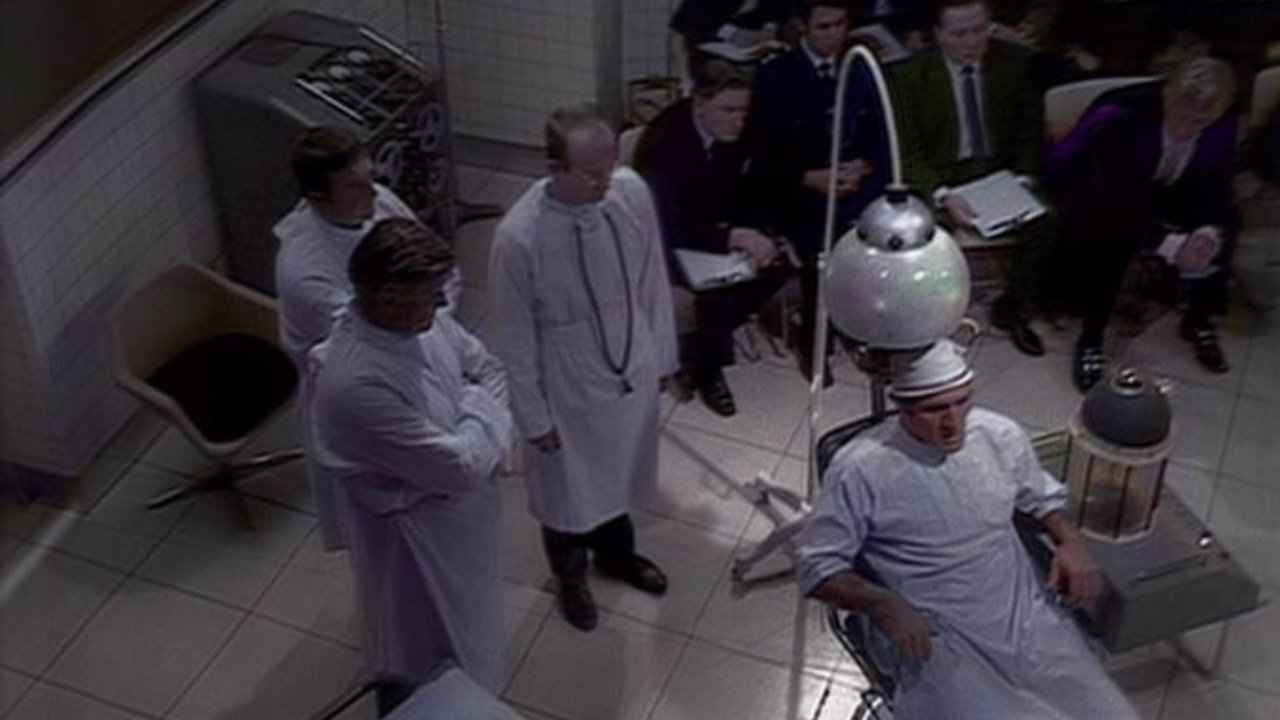
- The Keller Process
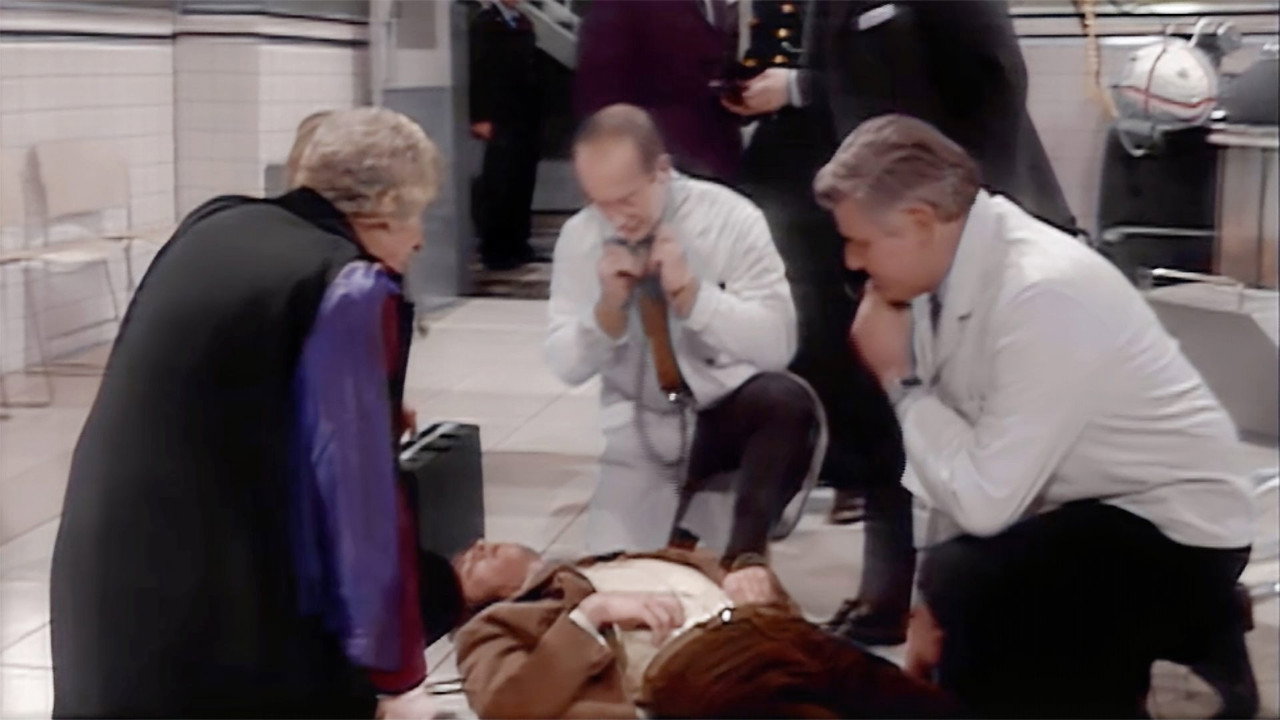
The Doctor and Jo watch a demonstration at Stangmoor Prison. A hardened criminal, Barnham, comes out of the machine childlike. Then a man dies.
- The peace conference
UNIT runs security for the first World Peace Conference, where the Chinese delegation's Captain Chin Lee is quietly making things worse.
- Your worst fear
Each death near the machine looks like the victim's own phobia come true. When the Doctor gets too close, it shows him fire.
- Riot
Prisoners led by Harry Mailer seize Stangmoor, and someone with bigger plans takes an interest in their new army.
ThunderboltSpoiler · tap to reveal
A stolen nerve-gas missile, a deal over a stolen part, and a machine that has grown too strong for anyone to hold.
Why it still matters
Strip away the UNIT jeeps and this is a story about a cure for crime. The Keller Machine draws the violent impulses out of a convicted man and leaves him gentle and childlike, and the prison treats that as progress until people near the machine start dying of their own worst fears. Don Houghton, in his second and final Doctor Who script after Inferno, sets that beside a nerve-gas missile, a prison riot and a peace conference where the Chinese and American delegations are already at odds. Critics have pointed out that the Master's plan doesn't quite hang together; David J. Howe and Stephen James Walker still called the serial an "undoubted success" for the style and panache of its direction.
It is also one of the toughest Pertwee stories. Mark Braxton, giving it four stars in Radio Times, noted the high body count, and Katy Manning has named it her favourite of her three years as Jo. Roger Delgado's Master is back after Terror of the Autons, and Delgado gets more to do this time, including a scene that shows what even he is afraid of.
For years you could only see it in black and white. The BBC had wiped the colour tapes, and the 1998 video used the black-and-white film recordings, with four and a half minutes of colour from part six, rescued from an off-air NTSC Betamax tape, as an extra. For the 2013 DVD, parts two to six were brought back to colour from chroma dots hidden in the film. Part one had none, so Stuart Humphryes hand-coloured about 7,000 key frames, matching the other episodes, and software filled in the frames between.
A parasite in the box
Emile Keller, the absent inventor, is the Master. His machine holds an alien mind parasite, and it is getting too strong even for a Time Lord to control. The Master uses Chin Lee and the machine against the peace conference, arms Mailer's rioters with gas grenades, and turns them into a private army to hijack a UNIT convoy carrying the Thunderbolt, which he means to fire at the conference. When he sets the machine on the Doctor, the Doctor sees his old enemies; when it turns on the Master, he sees the Doctor laughing at him.
The Brigadier retakes the prison with a Trojan-horse assault. The Doctor works out that Barnham, with no evil left in him, is immune to the parasite, and uses him to carry the machine to the airfield where the Master is waiting to trade the missile for his dematerialisation circuit. The parasite floors the Master, the Doctor sets off the missile's self-destruct, and missile and machine go up together. The Master gets away with his circuit, killing Barnham on the way, and rings the Doctor to gloat that he is free and the Doctor isn't.
Challenge the DNA
Was the Keller Machine ever a good idea?
Or skip ahead to our reading
No, and the story shows why. Even before you learn who's behind it, a device that edits minds in a prison is an accident waiting to happen. The serial's real point is how keen the authorities were to try it.
Behind the scenes
- Working titles included The Pandora Machine, Man Hours and The Pandora Box, after the myth of the box that held all the evil in the world.
- The Stangmoor Prison exteriors were filmed in and around Dover Castle in Kent, and the peace conference exteriors in Cornwall Gardens, Kensington. A hangar at the former RAF Swingate stood in for the Master's hiding place.
- The Thunderbolt missile was a real but non-operational Bloodhound missile on loan from the RAF.
- The serial went well over budget, mostly because of the helicopter in part six. Barry Letts rated director Timothy Combe highly but did not ask him back.
- When the Doctor speaks Hokkien with a Chinese delegate, the translation appears in subtitles, the first time Doctor Who used them.
- The Keller Machine's attack on the Doctor shows still pictures of his old enemies over his face, including a Dalek, a Cyberman, a Zarbi and a Silurian.
- Michael Sheard, here Dr. Summers, played a different part in five other Doctor Who stories, from The Ark to Remembrance of the Daleks. William Marlowe, the riot leader Mailer, came back in Revenge of the Cybermen.
The thread
A machine that cures evil, a missile nobody should own, and a prison as a place to experiment.
Came before
Shares DNA with
DNA strand
Technology Outpaces Ethics
Stangmoor's governor and scientists see a machine that makes violent men gentle and ask only whether it works. Nobody asks where the evil goes once it's out, and the story is built on that question.
Every great sci-fi story is built from a handful of strands like this one. Each strand page explains how it works and traces it across shows, books and films.
If this one stayed with you
Where to go next, and why.
Watch · Star Trek
"Dagger of the Mind"
Five years earlier, Kirk visits a showpiece prison with a mind-changing machine. Watch the two together for how differently each show handles the same worry.
Watch · Doctor Who
"Terror of the Autons"
The Master's first story, and the one that sets up the business between him and the Doctor that this story picks up.
Watch · Doctor Who
"Inferno"
Don Houghton's other Doctor Who, and the reason fire is the first thing the Keller Machine shows the Doctor.
Read · Novel
A Clockwork Orange by Anthony Burgess
The classic novel about curing a violent young man by taking away his choice, and whether that leaves him any better.
Your next episode
Three directions to go from here, all on Sci-Fi DNA.

More of this feeling
The Man Trap
Star Trek
Another creature that preys on people from the inside.

Same question, different answer
White Bear
Black Mirror
Is it ever right to punish someone by rewriting their mind?
Something completely different
Terror of the Autons
Doctor Who
The Master's first story, with daffodils and a killer doll.