More from the episode
The story in 5 beats
- Project Inferno
Professor Stahlman's team is drilling through the Earth's crust for a new energy source. UNIT guards the site, and the Doctor borrows its power for his TARDIS console.
- Green ooze
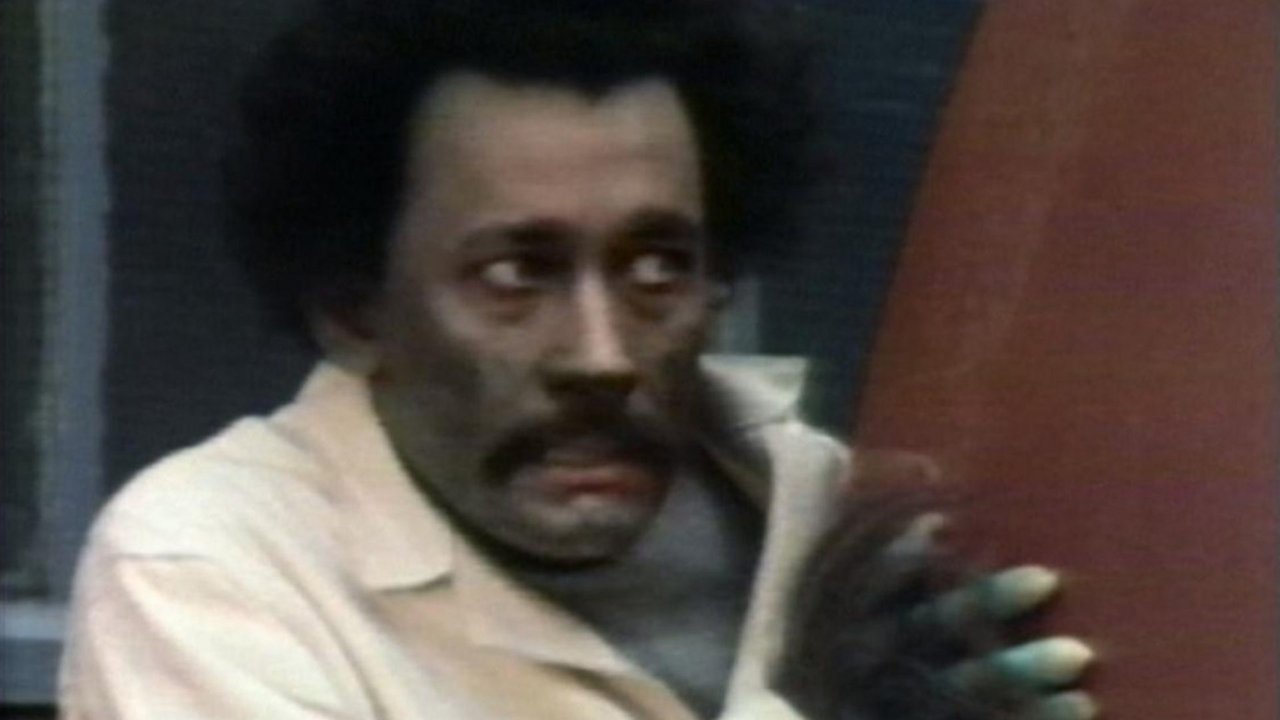
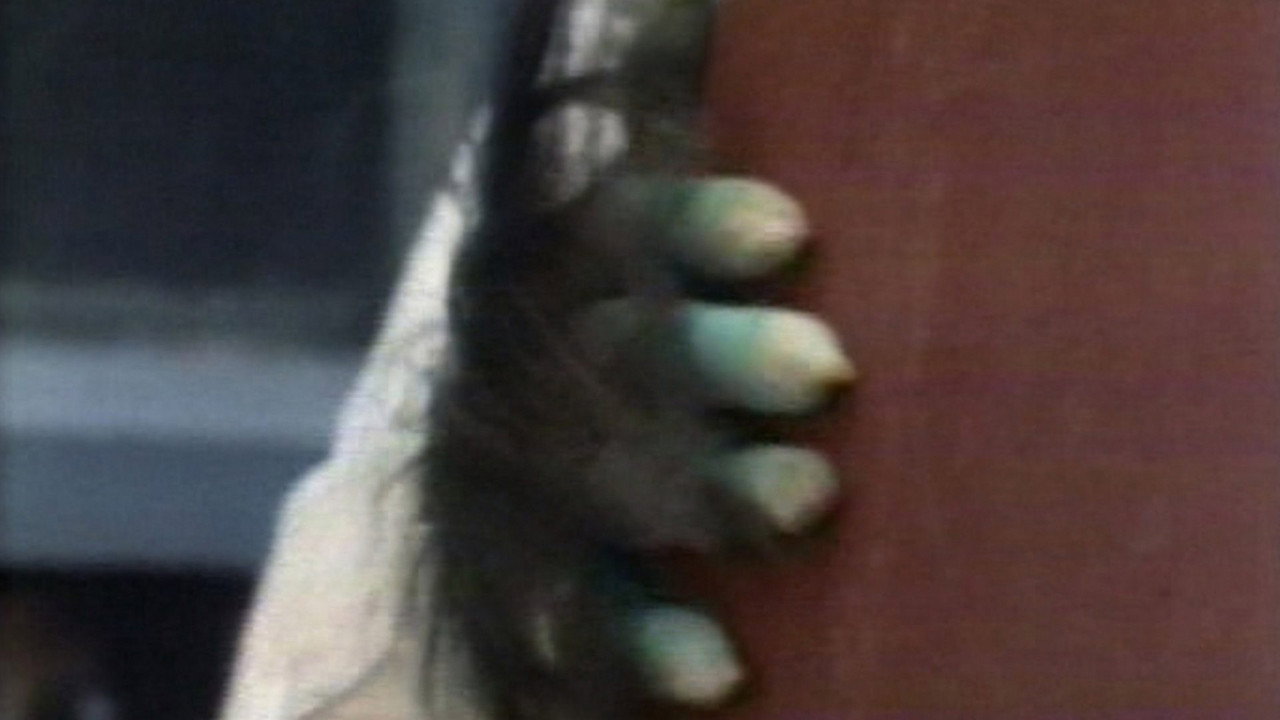
A green liquid seeps from the drill head. Anyone who touches it turns into a snarling creature that craves heat.
- Sideways
An experiment with the console throws the Doctor into a parallel Britain, a fascist republic where the same drill is hours ahead of his own.
Penetration zeroSpoiler · tap to reveal
The drill breaks through. The ground shakes, the heat climbs, and the Doctor has to convince people who think he's a spy that their world is ending.
One world left to saveSpoiler · tap to reveal
With help from unlikely counterparts, the Doctor races to get home before the same thing happens there.
Why it still matters
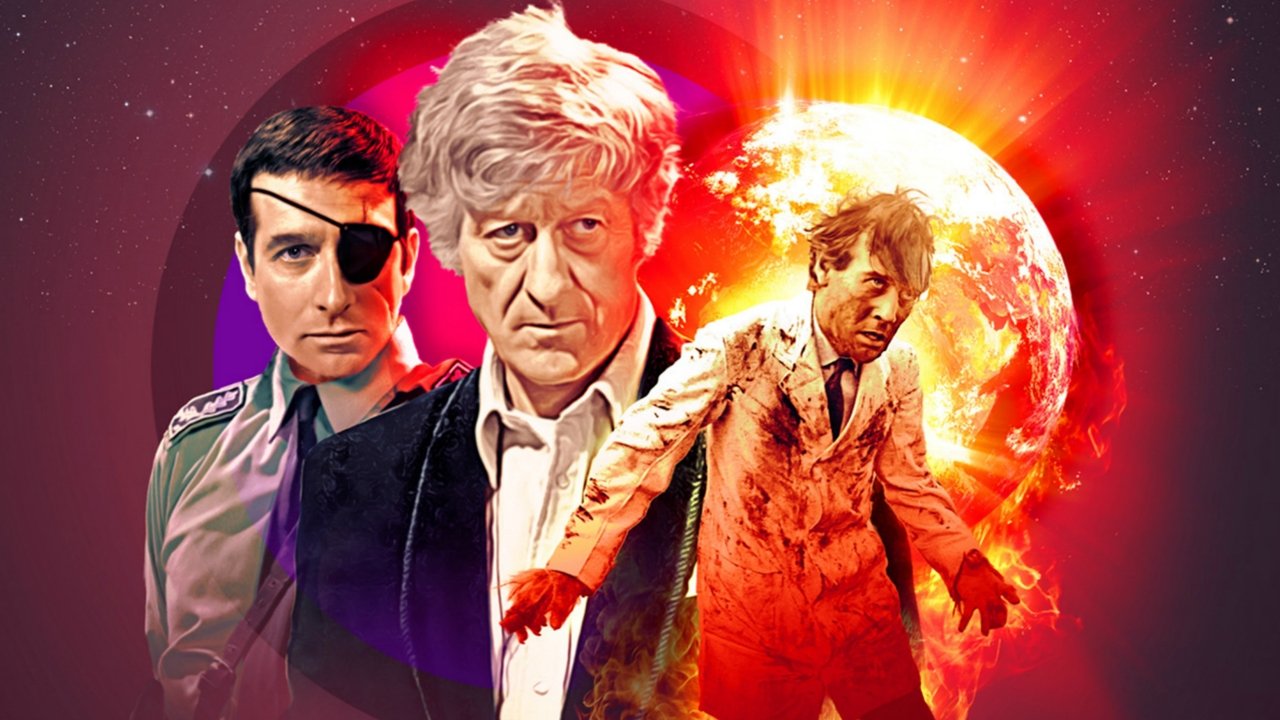
Inferno sends the Doctor into a parallel world, and it does it at the end of Jon Pertwee's first season, when the show had grounded him on Earth working for UNIT. Don Houghton's story had been planned at four episodes; the parallel world let the same actors and sets fill seven, and gave a time traveller stuck on Earth somewhere new to go without leaving the country: the same drilling site, the same faces, a much worse government.
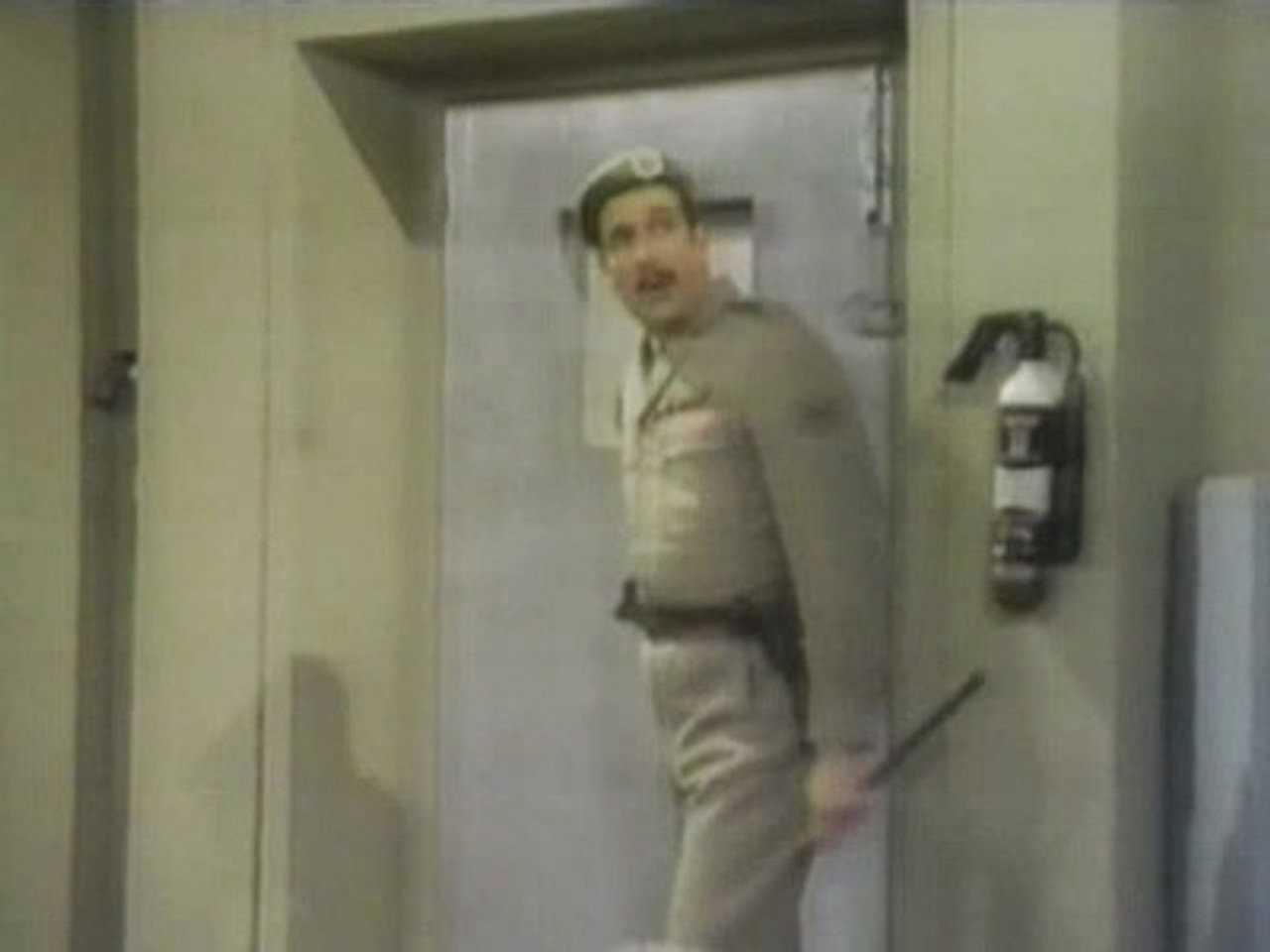
The trick of the parallel world is that the regular cast get to play their own opposites. Nicholas Courtney's kindly, stiff Brigadier becomes Brigade Leader Lethbridge-Stewart, the eyepatched commandant of a fascist republic, and Liz Shaw becomes Section Leader Shaw. The Doctor is the only person who is the same in both places, and the story uses that to make him the one man nobody believes.
A 2009 Doctor Who Magazine poll named it the finest story of the Pertwee years. Pertwee spends most of seven weeks shouting at men who won't stop a machine, and he means every word.
Watching a world end
The parallel world can't be saved. Once its drill has broken through, the Doctor can only get back to his own Earth and warn it. Section Leader Shaw decides the truth matters more than her orders and shoots the Brigade Leader when he tries to stop the Doctor, and the last of that world's people help power up the console as the lava closes in. It's a remarkable thing for a teatime show in 1970: the hero loses, and a whole Earth burns while he goes.
Back home, the Doctor and Greg Sutton get the drill shut down with seconds to spare. Then the story lets the air out with a joke: the Doctor sets off in the TARDIS console after a row with the Brigadier, doesn't get far, and has to come back and ask for help. After what we've just seen, the comedy is a kindness, and it shows how close the two worlds were to being the same one. It was also Caroline John's last story as Liz Shaw.
Challenge the DNA
Did the Doctor abandon the parallel world?
Or skip ahead to our reading
No, and the people of that world see it first. Section Leader Shaw makes the choice for him by deciding the truth matters more than her orders. Their Earth can't be saved, so they spend their last hour saving ours. It's a lot to ask of a teatime audience in 1970, and it works.
Behind the scenes
- Douglas Camfield had a minor heart attack during production, and producer Barry Letts directed the studio scenes for episodes 5 to 7. Camfield kept the sole director's credit, since BBC rules then barred Letts from being credited for more than one job.
- The exteriors were filmed on location at Kingsnorth, on the Hoo peninsula in Kent, now an industrial estate.
- Sheila Dunn, who plays Petra Williams and her parallel double, was married to Camfield. He also cast her in "The Daleks' Master Plan" and "The Invasion".
- Derek Newark, who plays the drilling expert Greg Sutton, had played Za in the very first serial, "An Unearthly Child". Christopher Benjamin, here as Sir Keith Gold, went on to play Henry Gordon Jago in "The Talons of Weng-Chiang".
- Terrance Dicks wrote the Target novelisation, published in 1984. Caroline John later read it for an unabridged audiobook.
The thread
Parallel worlds, fascist doubles and a drill nobody will switch off.
Came before
Shares DNA with
Later down the same road
DNA strand
Alternate Selves
The parallel world works because the faces are the ones we trust. Seeing the Brigadier as a secret policeman and Liz as an officer of the state makes the point quietly: the same people, under a different government, can turn into something else.
Every great sci-fi story is built from a handful of strands like this one. Each strand page explains how it works and traces it across shows, books and films.
If this one stayed with you
Where to go next, and why.
Watch · Star Trek
"Mirror, Mirror"
The other great 1960s trip to a world of cruel doubles. Watch the two side by side for the eyepatch and the goatee.
Watch · TNG S7
"Parallels"
Worf drifts between realities the way the Doctor does here, and has the same trouble making anyone listen.
Watch · Doctor Who
"Rise of the Cybermen"
The revived show goes to a parallel Britain of its own. If the Brigade Leader was your favourite part, this is the one to try next.
Read · Novel
The Man in the High Castle — Philip K. Dick
A whole novel set in the kind of country the Doctor stumbles into, told from the inside.
Read · Novelisation
Doctor Who: Inferno — Terrance Dicks
The 1984 book of the story, by the man who was script editor while it was made. Caroline John reads the audiobook.
Your next episode
Three directions to go from here, all on Sci-Fi DNA.
More of this feeling
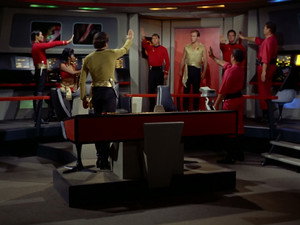
Mirror, Mirror
Star Trek
The other great parallel-universe story of its era: familiar faces, a harder regime, and a hero trying to get home.
Same question, different answer
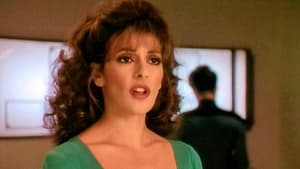
Parallels
Star Trek: The Next Generation
What would you do with proof that other versions of your world exist? Worf finds out one reality at a time.

Something completely different
Qpid
Star Trek: The Next Generation
Trade the heat and the sirens for Picard stuck in Sherwood Forest as Robin Hood. Pure fun.