More from the episode

The story in 5 beats
- Luddites in Killingworth
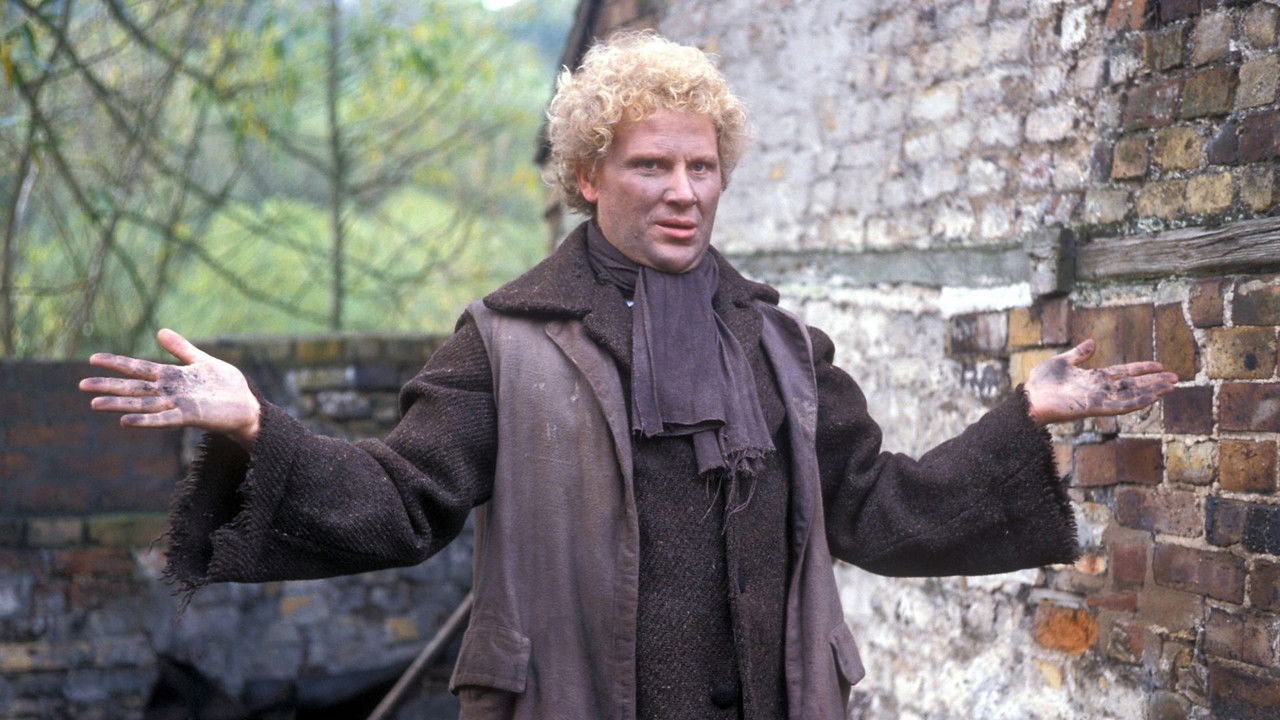
The Doctor and Peri arrive in a 19th-century mining town where gangs of miners are attacking people and wrecking the new machines.
- Two renegades
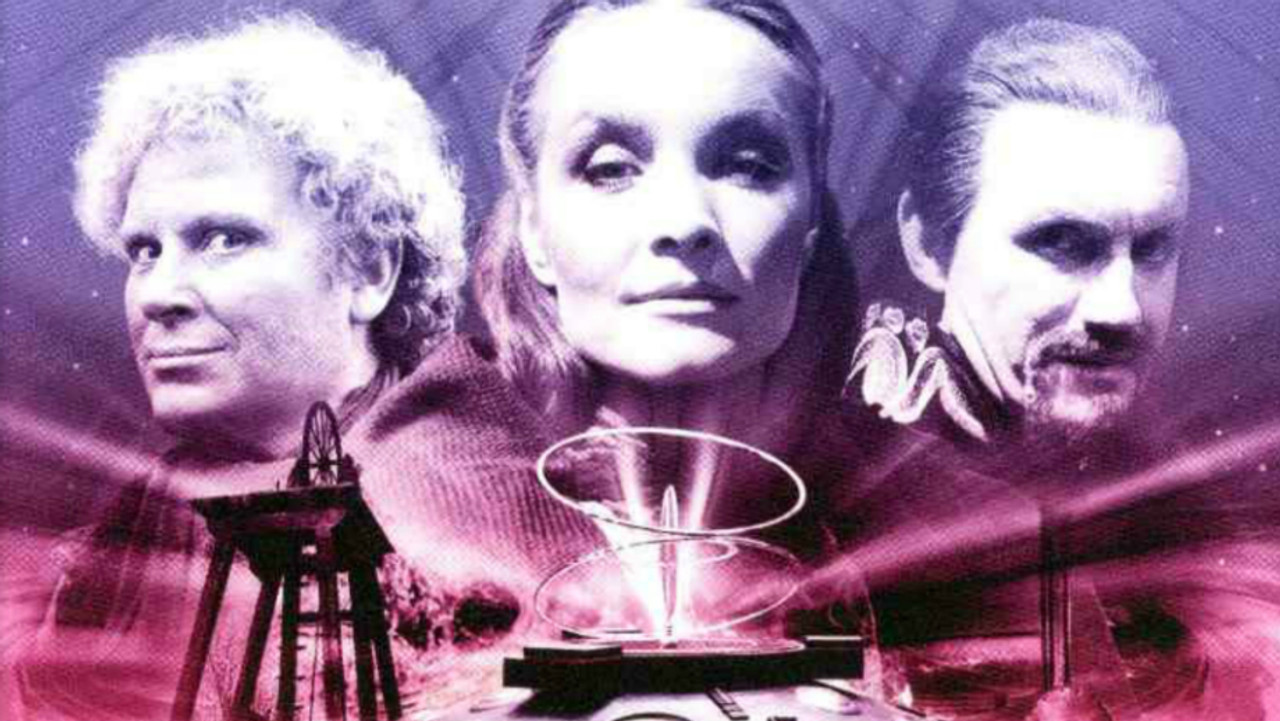
Behind the trouble the Doctor finds two other Time Lords: the Rani, and his old enemy the Master, working together and none too happily.
- A planet that can't sleep
The Rani's experiments have left the people she rules on Miasimia Goria unable to sleep, and she is harvesting a chemical from human brains to put it right.
Into Redfern DellSpoiler · tap to reveal
Peri goes looking for herbs to make the miners a sleeping draught, and her search takes her into Redfern Dell, where the Rani has laid mines.
The Rani's TARDISSpoiler · tap to reveal
The Doctor gets inside the Rani's ship, and her own collection of specimens turns against her.
Why it still matters
This is where the Rani comes from. Producer John Nathan-Turner wanted a new Time Lord villain to sit alongside the Master, and the writers, the husband-and-wife team Pip and Jane Baker, suggested making that villain a woman and named her Rani, meaning "queen." They based her outlook on a neurochemist friend who saw people as collections of chemicals. So the Rani has no interest in ruling the universe. She is a scientist with no conscience, and to her a whole village is raw material for research. Kate O'Mara said in 2013 that the part had been written for her, and she named this as her favourite of her Doctor Who stories.
It's also a rare trip to real history for the 1980s show. Lord Ravensworth and the engineer George Stephenson, who built his first locomotive at Killingworth Colliery in 1814, appear as characters, the first time since The Gunfighters in 1966 that the series put named historical people on screen. The Master's plan is to borrow the best brains of the Industrial Revolution and speed Earth up for his own use, while the Rani only wants something from inside the miners' heads.
Its reputation has always been mixed, and the reviews are a good guide to why. Mark Braxton of Radio Times called the dialogue "a mixture of wonderful and woeful" but praised the location work and the Rani's TARDIS, "quite the best piece of design in the show for an age." The authors of The Discontinuity Guide thought it "altogether rather more impressive than its reputation."
Something in the jars
Sneaking into the Rani's TARDIS, the Doctor finds a control room lined with jars of preserved dinosaur embryos, and overhears her admit to planting mines in Redfern Dell, where Peri is gathering herbs for a sleeping draught for the miners. He then takes both villains prisoner with the Master's own Tissue Compression Eliminator. When they escape in the Rani's ship, they find he has sabotaged its navigation and velocity regulator.
The TARDIS spins out of control, a jar breaks, and a Tyrannosaurus rex embryo starts growing fast, while the Master and the Rani are pinned to the wall by the speed of their flight. The Doctor and Peri hand the stolen brain fluid to Lord Ravensworth and George Stephenson to give back to the miners, and leave the two schemers sharing a runaway ship with a growing dinosaur.
Challenge the DNA
Is the Rani a better villain than the Master?
Or skip ahead to our reading
She's a different kind of villain, and that's her strength. She cares about her experiments, not about beating the Doctor. The Master is there to scheme, and the two make a good double act.
Behind the scenes
- The story was shot on location at Blists Hill Victorian Town and the Coalport China Museum, both run by the Ironbridge Gorge Museum Trust.
- Kate O'Mara and Colin Baker had already played business rivals, Jane Maxwell and Paul Merroney, in the BBC drama The Brothers from 1975 to 1976.
- In her 2003 autobiography Vamp Until Ready, O'Mara wrote that crew members who didn't recognise her in the Rani's old-woman disguise treated her quite differently from when she was in full costume and her "most glamorous make-up."
- Nathan-Turner soon planned more for the character. In late 1984 he engaged Robert Holmes for a story, later called Yellow Fever and How to Cure It, to feature the Rani with the Master and the Autons, to be shot in Singapore. It was commissioned in February 1985, weeks before the BBC announced the show's long break, and was never made.
- The Rani did come back, in Time and the Rani (1987) and the charity special Dimensions in Time (1993). In 2012 Steven Moffat said he wouldn't revive her because "no one knows who the Rani is."
- Mark Campbell's Doctor Who: The Complete Guide called it "excitingly directed by newcomer Sarah Hellings" but "a meandering story" with "one too many pantomime villains."
The thread
Time Lords tampering with Earth's history, and a scientist who never asks whether she should.
Came before
Shares DNA with
Left its mark on
DNA strand
Technology Outpaces Ethics
The Rani isn't cruel for the fun of it, which makes her worse. She needs a chemical, the miners have it, and that settles the matter. Her own planet's sleeplessness is the result of one experiment, and her cure is another.
Every great sci-fi story is built from a handful of strands like this one. Each strand page explains how it works and traces it across shows, books and films.
If this one stayed with you
Where to go next, and why.
Watch · Doctor Who
"The Time Meddler"
Twenty years earlier, a meddler loose at a real turning point in English history, played with plenty of jokes.
Watch · Doctor Who
"Genesis of the Daleks"
The other great amoral scientist of the classic series, and a much darker look at research without limits.
Watch · Doctor Who
"The Gunfighters"
The previous time the show built a story around real people, here Doc Holliday and the Earps instead of George Stephenson.
Read · Biography
The Life of George Stephenson — Samuel Smiles
The Victorian biography of the real engineer at the centre of the Master's plans, Killingworth years included.
Your next episode
Three directions to go from here, all on Sci-Fi DNA.
More of this feeling
The Time Meddler
Doctor Who
Another renegade from the Doctor's own people, poking at Earth's history.
Same question, different answer
The Devil in the Dark
Star Trek
Miners deep underground, and something in the tunnels with them.
Something completely different
The Five Doctors
Doctor Who
Every Doctor so far, in one adventure.