
More from the episode
The story in 5 beats
- Fired on over the Moon
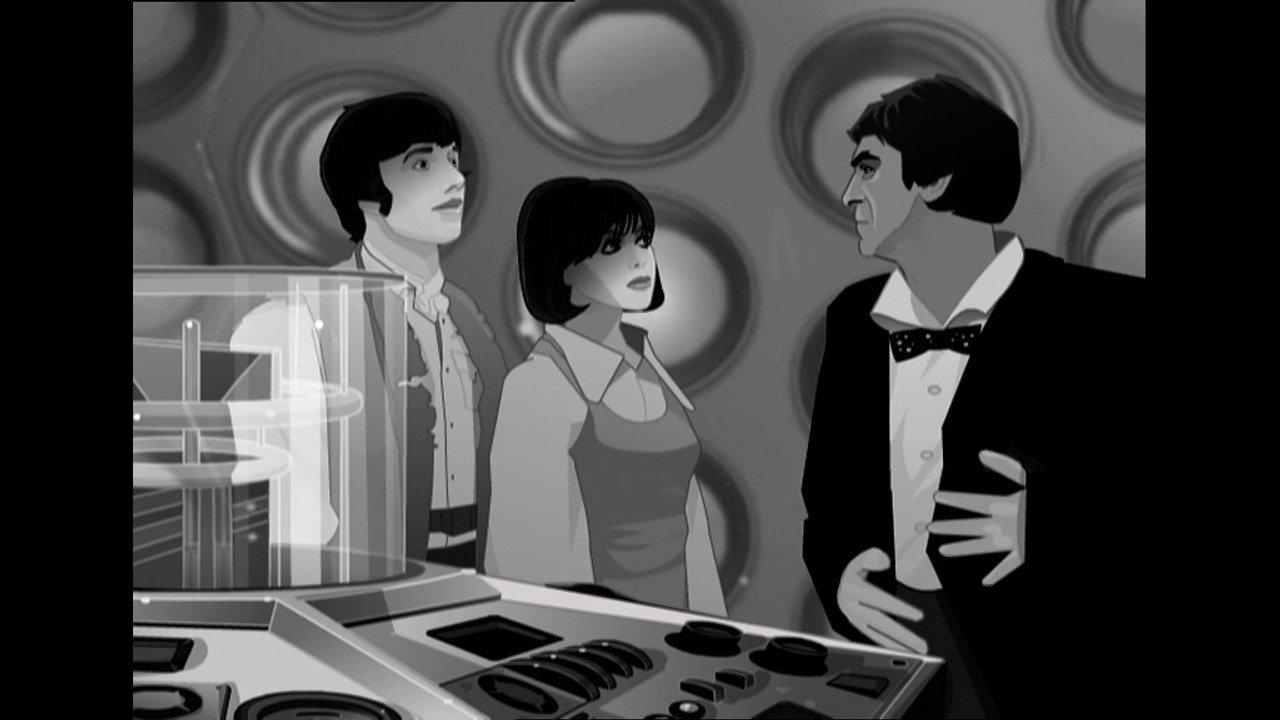
A rocket fires at the TARDIS near the Moon. It lands damaged in the English countryside, and the Doctor, Jamie and Zoe head to London to find Professor Travers.
- A different professor
Travers has let his house to Professor Watkins and his niece Isobel. Watkins has gone missing while working for a company called International Electromatics.
- The Brigadier and UNIT
IE's head, Tobias Vaughn, is all charm. The Doctor meets an old friend, now Brigadier Lethbridge-Stewart, head of a task force called UNIT.
Vaughn's alliesSpoiler · tap to reveal
Vaughn is working with the Cybermen. IE equipment around the world will carry a signal that knocks the world out, and the Cybermen march out of the sewers past St Paul's.
The world fights backSpoiler · tap to reveal
The Cybermen turn on Vaughn, who helps the Doctor shut down their beacon and is killed. Rockets, one of them Russian, destroy the bomb and the ship sending the signal.
Why it still matters
This is where Doctor Who's 1970s begin, a year early. The Invasion brings back Colonel Lethbridge-Stewart from The Web of Fear, promotes him to Brigadier and puts him in charge of UNIT, a military task force for strange happenings. Derrick Sherwin and producer Peter Bryant wanted an action story set on Earth, and they meant it as a model for the next season, which could then be made on a lower budget. Script editor Terrance Dicks later said he was there at UNIT's "birth", with Sherwin and Bryant testing the idea here first.
It plays like a spy thriller with a sci-fi engine. The scripts took Nigel Kneale's Quatermass serials as a model, especially Quatermass II. Kit Pedler devised the story and Sherwin wrote all eight episodes, and Douglas Camfield, who had directed The Web of Fear, was brought back to give it the same atmosphere. For its first half the menace stays out of sight.
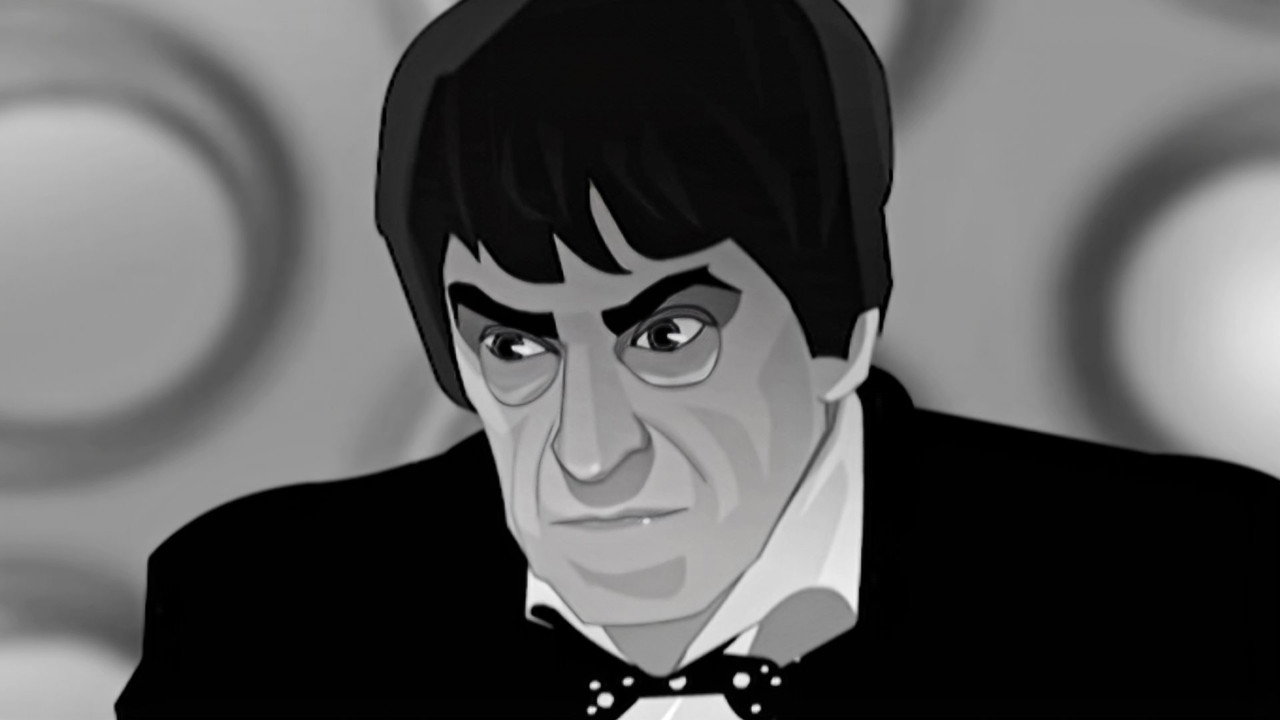
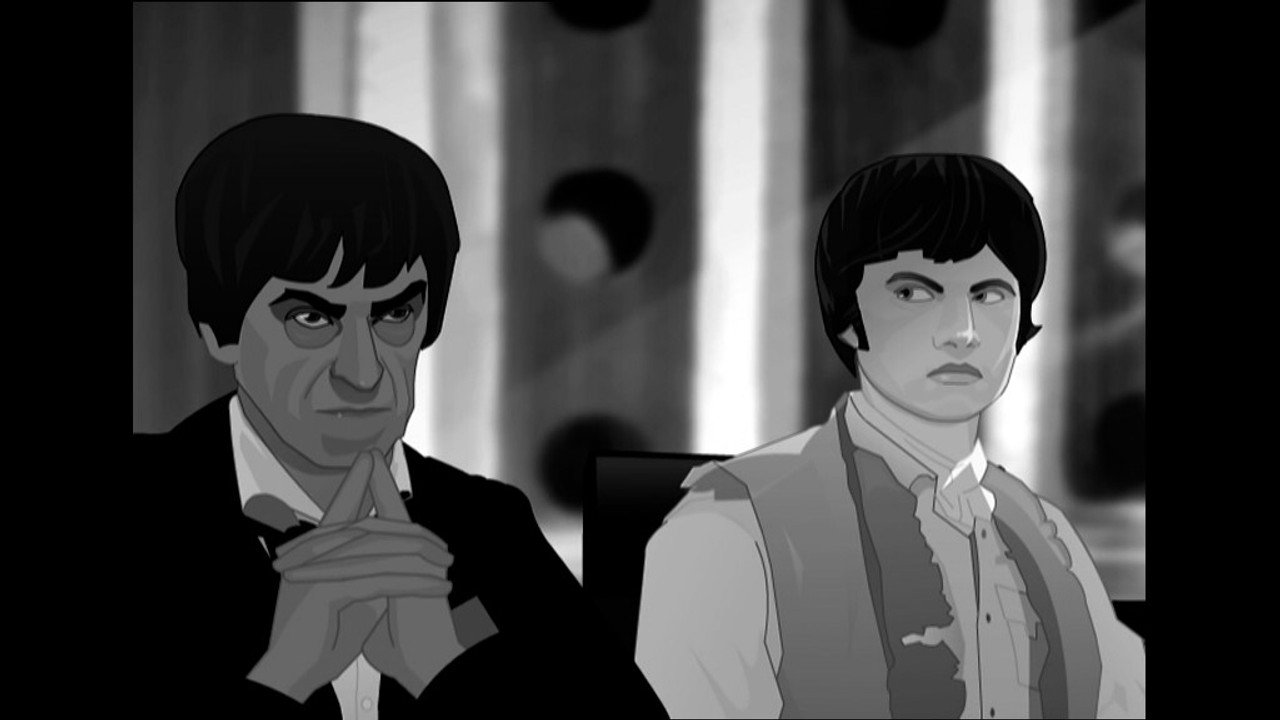
The best thing in it is Kevin Stoney as Tobias Vaughn, the managing director of International Electromatics, who makes corporate charm look like a threat. Critics single out his performance again and again. At eight parts it's long, and critics still argue over whether the slow build is a strength or padding. Two of those parts are lost from the BBC archive, and the 2006 animated versions of them were the first official animation of missing Doctor Who episodes.
The Cybermen on the steps
Vaughn's hidden partners are the Cybermen. International Electromatics has put its circuits into equipment all over the world so that a hypnotic signal can paralyse everyone at once, leaving the planet open to a Cyber fleet. The production renamed the serial during the summer to keep their return a surprise, but the Radio Times gave it away anyway. Costume designer Bobi Bartlett redesigned the Cybermen to look tougher and more military, and the shot of them filing down the steps in front of St Paul's Cathedral was filmed early on a Sunday morning to avoid commuters. Crowds gathered and held things up regardless.
Vaughn plans to turn on his allies, the Cybermen beat him to it, and he ends up helping the Doctor find their beacon before he's killed in an ambush. British artillery destroys the Cyber fleet and a Russian rocket takes out the ship sending the signal, an ending a Morning Star review liked for showing countries working together. Later stories kept coming back to this one: "Attack of the Cybermen" (1985) put the Cybermen in London's sewers again, "Rise of the Cybermen" (2006) reused the name International Electromatics and its businessman-and-Cybermen alliance, and "Dark Water" (2014) recreated the walk past St Paul's.
Challenge the DNA
Was Vaughn a villain or a man in over his head?
Or skip ahead to our reading
A villain who learns too late what he's dealt with. He thought he was using the Cybermen, and the story's best turn is watching him realise they were using him. His change of heart doesn't erase the damage, but it gives the ending some weight.
Behind the scenes
- Kit Pedler's outline was bought in May 1968. Bryant thought it would only fill four episodes, so Derrick Sherwin, who was leaving as script editor, expanded it to eight, and Terrance Dicks took over as script editor.
- Mervyn Haisman and Henry Lincoln, who created Lethbridge-Stewart for The Web of Fear, agreed to his return and were paid £5 an episode for the use of the character. During production Peter Bryant offered Nicholas Courtney a recurring role, and he took it.
- Isobel Watkins was written as a possible companion for a season set on Earth, and Sally Faulkner was cast through an audition, which was unusual for the show. Kevin Stoney had worked with Camfield before, as Mavic Chen in The Daleks' Master Plan. Camfield cast his wife Sheila Dunn as a phone operator and cameoed as a car driver in Episode 1.
- Australian composer Don Harper wrote the score, his only work for the show, after Camfield chose not to use regular composer Dudley Simpson.
- On a location day at a Guinness factory the crew were given Christmas pudding and drink for lunch, and Patrick Troughton and Frazer Hines kept falling over during the afternoon's filming. For the helicopter scenes, Hines's dresser sewed lead weights into his kilt.
- Wendy Padbury is absent from Episode 3 because she was on holiday. The BBC's Olympic coverage pushed the start of the serial back two weeks. It averaged 6.9 million viewers and cost £25,207, slightly over its budget.
- Episodes 1 and 4 were not kept when the BBC audited its library in 1978, but their soundtracks survive, recorded off air by fans. Cosgrove Hall animated both missing episodes for the 2006 DVD, the first official animation of missing Doctor Who episodes, and the BBC now lists the animated Episode 1 alongside the surviving parts.
The thread
A friendly company, a hidden partner and an army that finally believes the Doctor.
Came before
Shares DNA with
Left its mark on
DNA strand
First Contact & Invaders
The invasion arrives as a product line. Before anyone fires a shot, the invaders' way in is already in people's homes, sold to them by a firm with a friendly boss. It's an alien-invasion story told mostly through boardrooms and factories, with the soldiers arriving late.
Every great sci-fi story is built from a handful of strands like this one. Each strand page explains how it works and traces it across shows, books and films.
If this one stayed with you
Where to go next, and why.
Watch · TV serial
Quatermass II (1955)
Nigel Kneale's BBC serial, which the scripts took as a model. Worth seeing for where this story's conspiracy-in-plain-sight feel comes from.
Watch · Doctor Who
"The Web of Fear" (1968)
Lethbridge-Stewart's first appearance, in London's Underground, with the same director keeping the menace in the dark.
Watch · Doctor Who
"Spearhead from Space" (1970)
Where the UNIT idea tested here becomes the show itself: the Brigadier, his soldiers and a threat in modern England.
Watch · Star Trek S1
"The Return of the Archons"
A society kept placid by something it never questions, and visitors who start asking who's in charge.
Read · Novelisation
Doctor Who: The Invasion — Ian Marter
Marter's 1985 novelisation puts back scenes that were cut or never filmed, including UNIT's raid to rescue Professor Watkins.
Your next episode
Three directions to go from here, all on Sci-Fi DNA.

More of this feeling
The Web of Fear
Doctor Who
The Brigadier's first meeting with the Doctor, deep in the Underground.

Same question, different answer
White Bear
Black Mirror
A world quietly rewired so that people stop resisting.

Something completely different
The Krotons
Doctor Who
From an eight-part invasion epic to a tight four-parter on an alien world.