More from the episode

The story in 5 beats
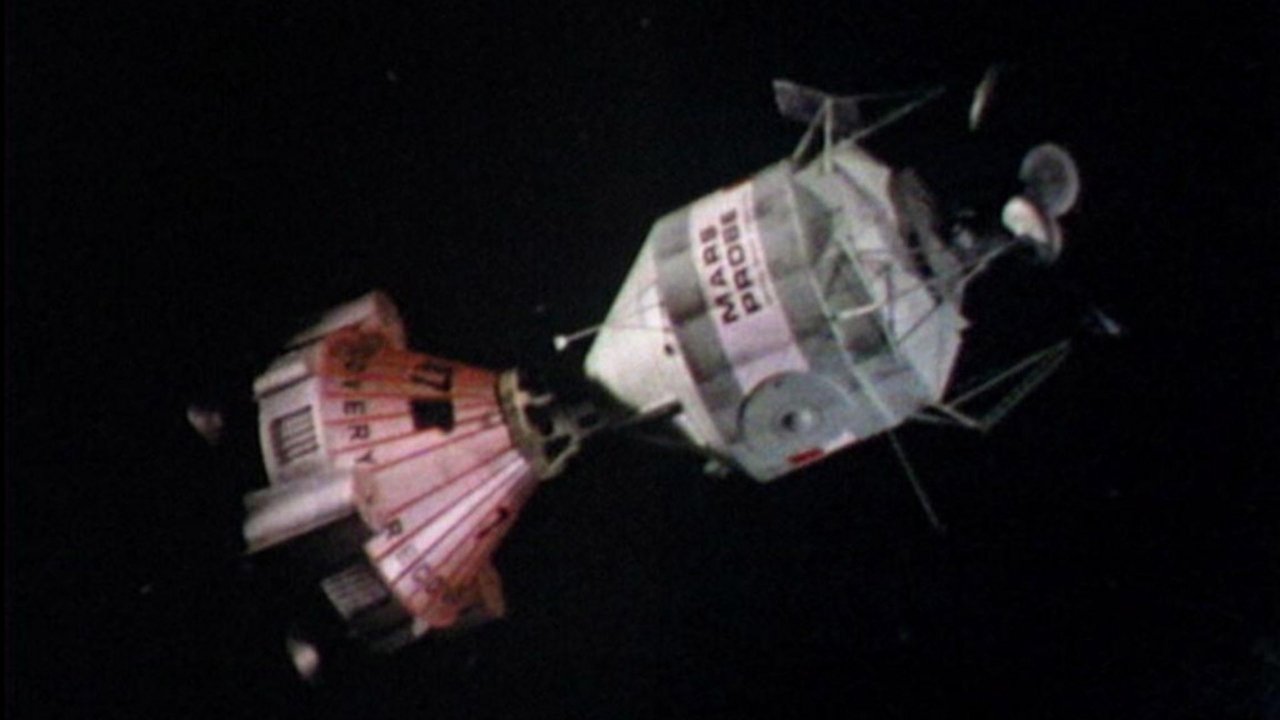
- Mars Probe 7
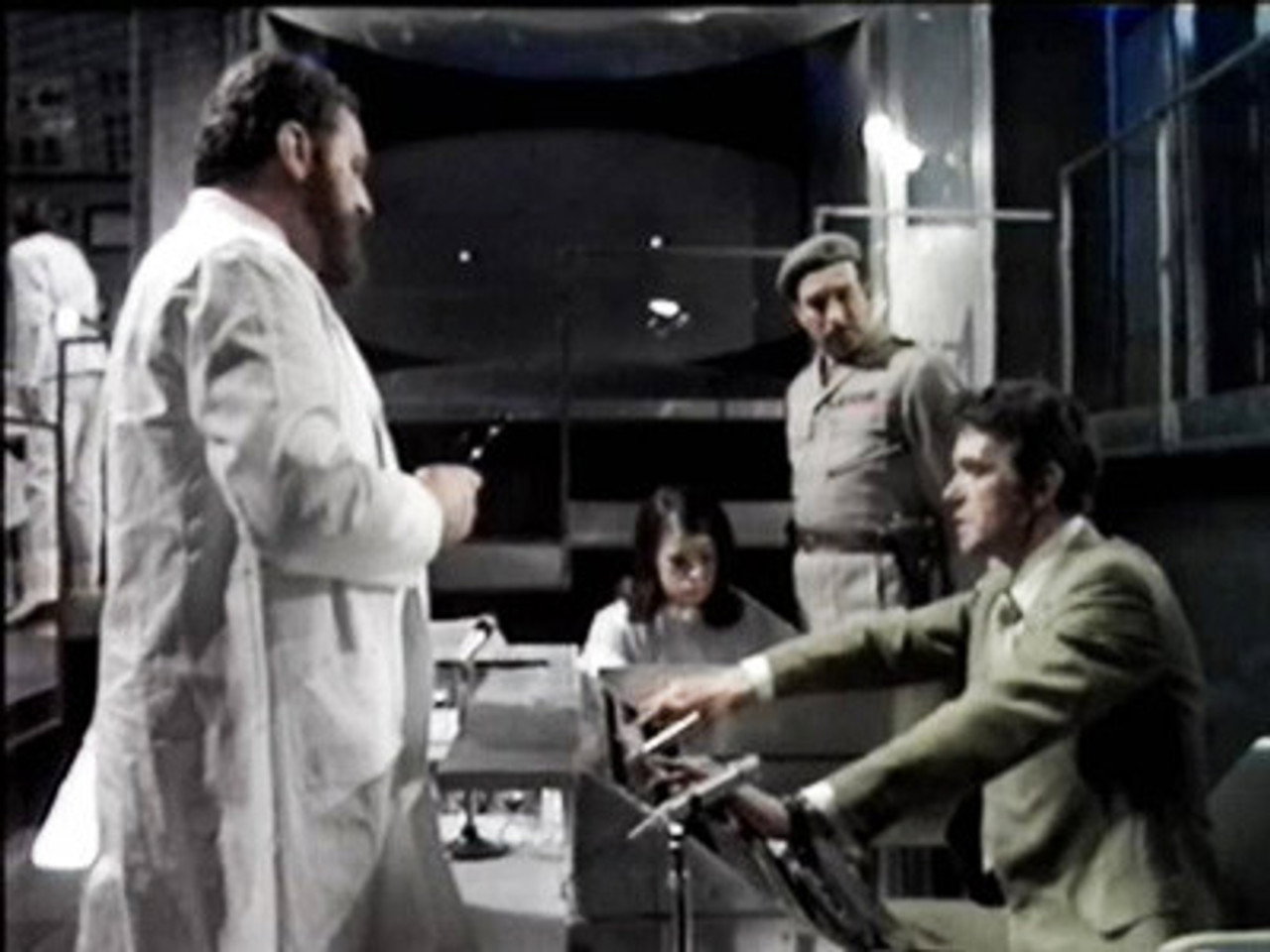
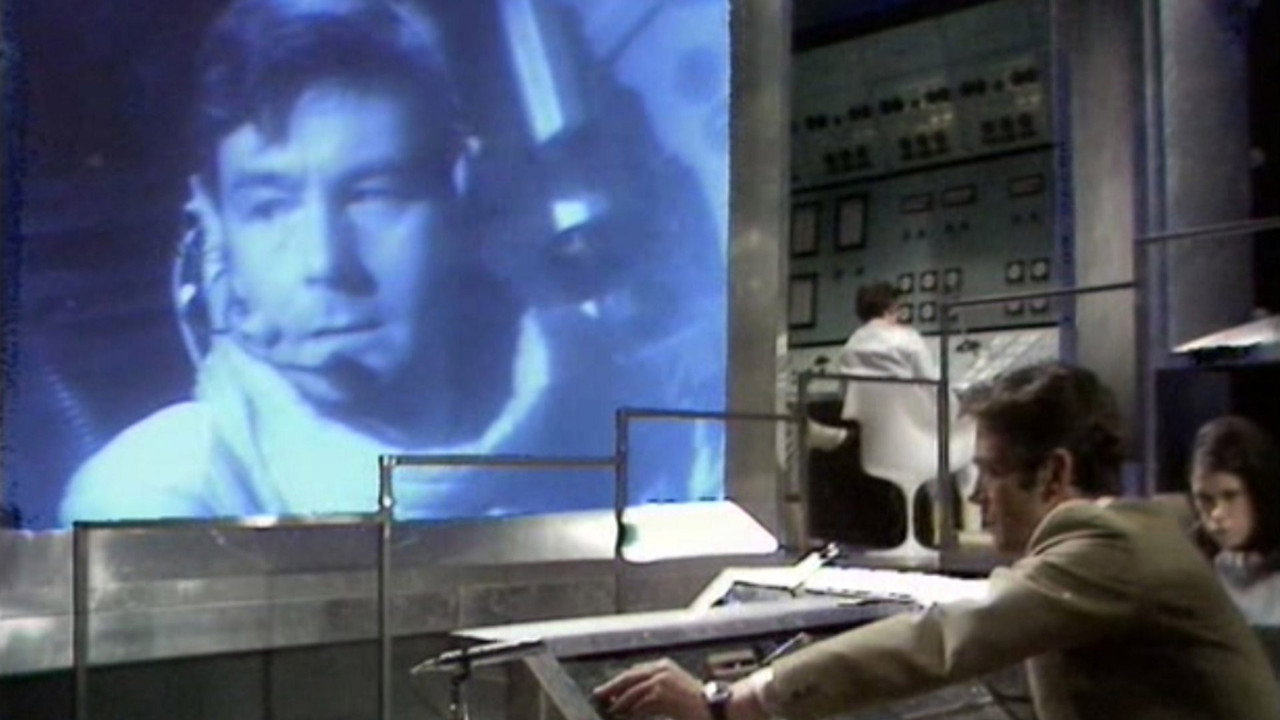
Space Centre controller Ralph Cornish and UNIT try to reach the Mars probe and its two astronauts, silent for eight months. A recovery capsule goes up and comes down again.
- Hijacked on landing
The capsule's occupants are taken in an ambush. General Carrington of the new Space Security Department says they're contaminated with radiation and must be kept away from everyone.
- Not the crew
The Doctor suspects the real astronauts are still up there and the spacesuits hold something else. A ruthless hired man, Reegan, kidnaps Liz to keep the suited figures alive.
The Doctor goes upSpoiler · tap to reveal
The Doctor flies the next rocket himself, survives sabotage, and meets the beings who sent the visitors. They want their ambassadors back, or else.
Who's paying ReeganSpoiler · tap to reveal
Back on Earth, the Doctor learns who has been running the whole conspiracy, and why.
Why it still matters
The Ambassadors of Death is Doctor Who doing a space-race thriller the year after the Moon landing: mission control, a capsule in orbit, men in silver suits, and a government that would rather nobody knew what came back. The cultural historian James Chapman has set it beside The Quatermass Experiment, the 1953 BBC serial about astronauts who come home after contact with something alien, and the family resemblance is easy to see.
It was a hard script to get made. David Whitaker, who has the only writing credit, went through four or five drafts; Trevor Ray finished episode one, and Malcolm Hulke finished two and three and wrote the other four. Terrance Dicks later said he made sure Whitaker was paid in full, and admitted the rush shows. Patrick Mulkern in Radio Times called the result "a bumpy, sometimes thrilling ride", which is fair. It wanders in the middle, and keeps you watching with stunts, a chase that ends with Liz caught on a weir, and cliffhangers Mulkern singled out for praise.
Director Michael Ferguson also changed how the show looked. He suggested breaking the title in two, "The Ambassadors" then "of Death", with a sound sting, and using that sting to lead into the closing credits, a habit Doctor Who kept for later stories.
The man who wanted a war
Reegan's paymaster is General Carrington. He flew on the earlier Mars Probe 6 mission, where the crew met these beings and his partner died from the radiation they give off. Out of guilt and a twisted sense of duty he lured three of them to Earth, used them to kill so that the public would turn against them, and planned to show them on television and call on the world to attack.
UNIT rescues the Doctor and Liz, the Brigadier arrests Carrington at the Space Centre, and the ambassadors are sent home so the human astronauts can be released. Christopher Bahn at The A.V. Club thought Carrington's motive was obvious from the start and held back far too long, until the sixth episode's cliffhanger. Military men rarely come off well in Malcolm Hulke's scripts, and he wrote most of this one.
Challenge the DNA
Is General Carrington a villain?
Or skip ahead to our reading
Both, and that's what makes him more interesting than most. His fear came from something real. What he did with it was monstrous, and the story lets him believe in his duty right up to the end.
Behind the scenes
- David Whitaker drafted only the first three episodes. Trevor Ray, the assistant script editor, finished episode one, and Malcolm Hulke finished episodes two and three and wrote the remaining four. Whitaker kept the sole on-screen credit; the 2012 DVD sleeve credits all three.
- Michael Ferguson suggested the split title with its sound sting, and that the sting lead into the closing credits, which was kept for later stories. Brian Hodgson of the BBC Radiophonic Workshop added the sting to the theme recording.
- Location filming in January and February 1970 used Blue Circle Cement in Kent, Marlow Lock in Buckinghamshire, Southall Gas Works and sites around Aldershot. The Northfleet cement works in Kent stood in for the Space Centre.
- Costume designer Christine Rawlins based the spacesuits on NASA's, with helmets reused from the film Moon Zero Two. The suits turned up again in "Colony in Space" and "Planet of the Daleks". The aliens' faces were blue make-up layered with tissue and latex, applied just before the actors went on set because it was so uncomfortable.
- Roy Scammell doubled for Caroline John when Liz is chased in Bessie and caught on the weir. Her husband, Geoffrey Beevers, appears briefly as a UNIT radio operator; he later played the Master in "The Keeper of Traken".
- Michael Wisher plays John Wakefield, five years before he became the first actor to play Davros. Peter Halliday, who voiced the Silurians in the previous story, voices the aliens.
- Only episode one survives on its original colour videotape, and it is the earliest Doctor Who episode kept on the show's original videotape at all, in colour or black and white. The other six survived as black-and-white film and poor off-air colour recordings from American television. A 2002 VHS restoration managed colour for just over half the running time; the full-colour version, combining the two sources, came out on DVD in October 2012.
The thread
Astronauts, aliens and a government that keeps secrets.
Came before
Shares DNA with
DNA strand
First Contact & Invaders
Nearly everyone on Earth decides what the visitors are before anyone has asked them, and the government's first instinct is to hide them. The Doctor keeps arguing that they deserve to be treated as guests.
Every great sci-fi story is built from a handful of strands like this one. Each strand page explains how it works and traces it across shows, books and films.
If this one stayed with you
Where to go next, and why.
Watch · TV serial
The Quatermass Experiment
The BBC's original story of a rocket coming home with something alien on board. James Chapman sets this serial beside it.
Watch · The Outer Limits
"The Galaxy Being"
Another first contact that goes wrong because of the people on our side. Shorter, and just as interested in who panics.
Watch · TNG S4
"First Contact"
Told from the other side: a planet about to meet aliens, and the officials who can't agree whether to welcome them.
Read · Book
The Black Archive: The Ambassadors of Death — L. M. Myles
A whole book on this one serial, from Obverse Books' Black Archive series of short studies.
Your next episode
Three directions to go from here, all on Sci-Fi DNA.
More of this feeling
The Galaxy Being
The Outer Limits
Another alien contact that frightened humans turn into a war.
Same question, different answer
Balance of Terror
Star Trek
Who gains when two sides are kept afraid of each other?
Something completely different
Inferno
Doctor Who
A drilling project, a parallel Britain and the Brigadier as you've never seen him.
Sources
- “The Ambassadors of Death,” Wikipedia
- Patrick Mulkern, “Doctor Who: The Ambassadors of Death,” Radio Times
- Christopher Bahn, “Doctor Who (Classic): "The Ambassadors Of Death",” The A.V. Club
- “Doctor Who – The Ambassadors of Death (1970),” Kent Film Office
- Toby Hadoke, “Caroline John obituary,” The Guardian
- “Malcolm Hulke,” Wikipedia