More from the episode
The story in 5 beats
- A vision of murder
Travelling alone, the Doctor sees the President of the Time Lords shot dead, and steers the TARDIS home to Gallifrey to stop it.
- Framed in the Panopticon
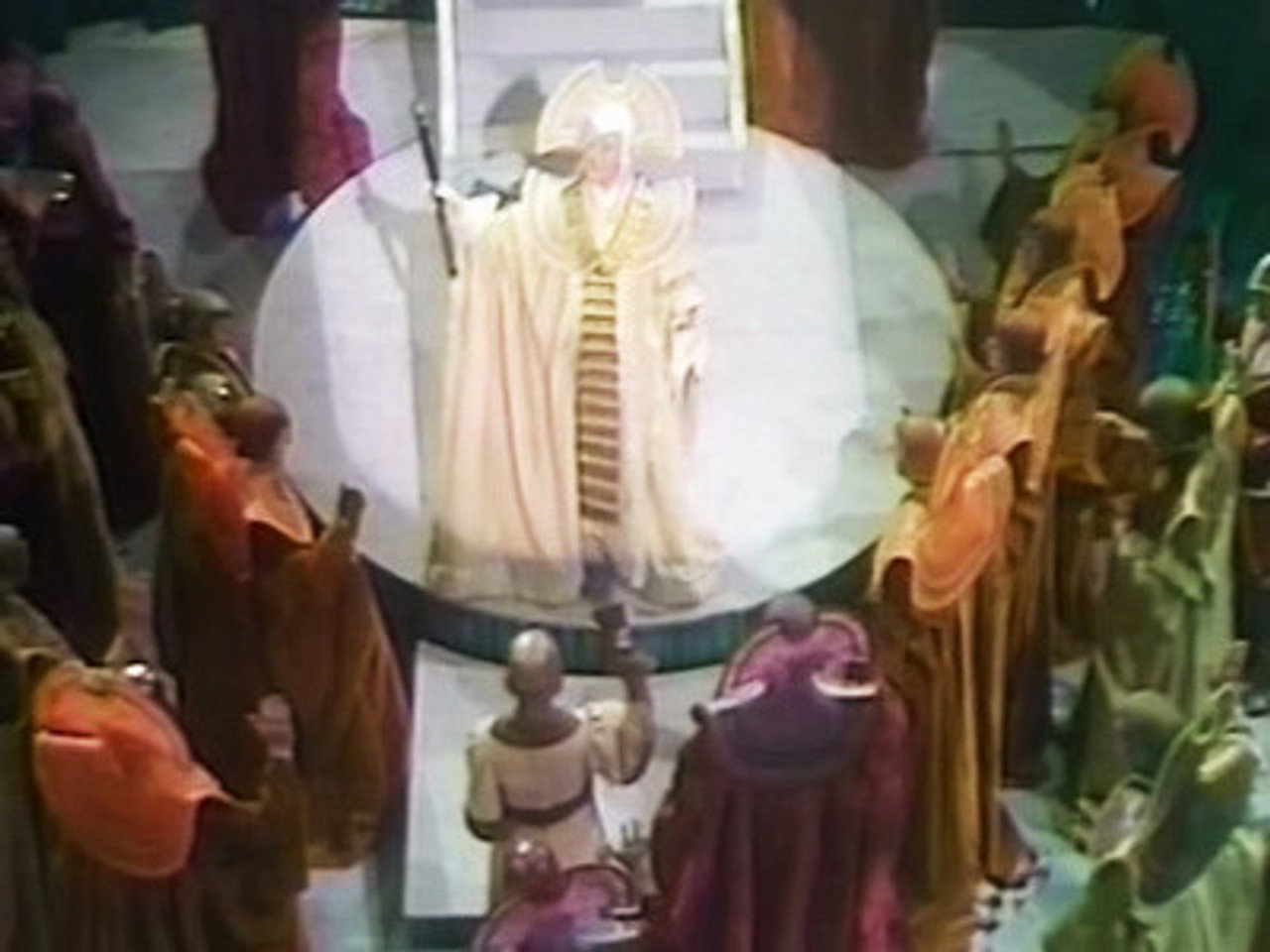
He spots a rifle on a catwalk above the great ceremonial hall and fights his way up to it, just as the shot is fired. Everyone below decides the Doctor is the killer.
- Running for President
Castellan Spandrell believes him enough to let him investigate. To stay free, the Doctor stands for President, since a candidate can't be held during an election.
Inside the MatrixSpoiler · tap to reveal
The Doctor plugs his mind into the Matrix and is hunted through a hostile dream world by the assassin: Chancellor Goth.
The Eye of HarmonySpoiler · tap to reveal
Behind Goth is the Master, near death, who wants the President's Sash and Great Key to tap the power under Gallifrey, whatever it costs the planet.
Why it still matters
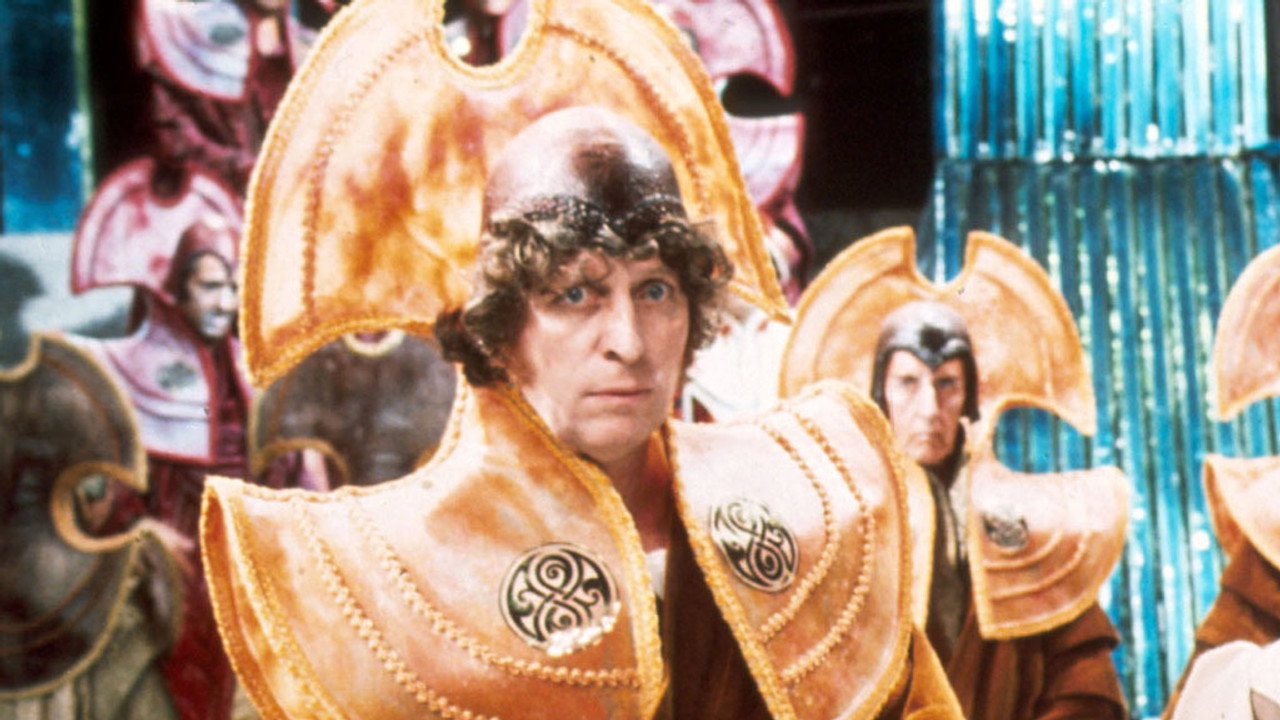
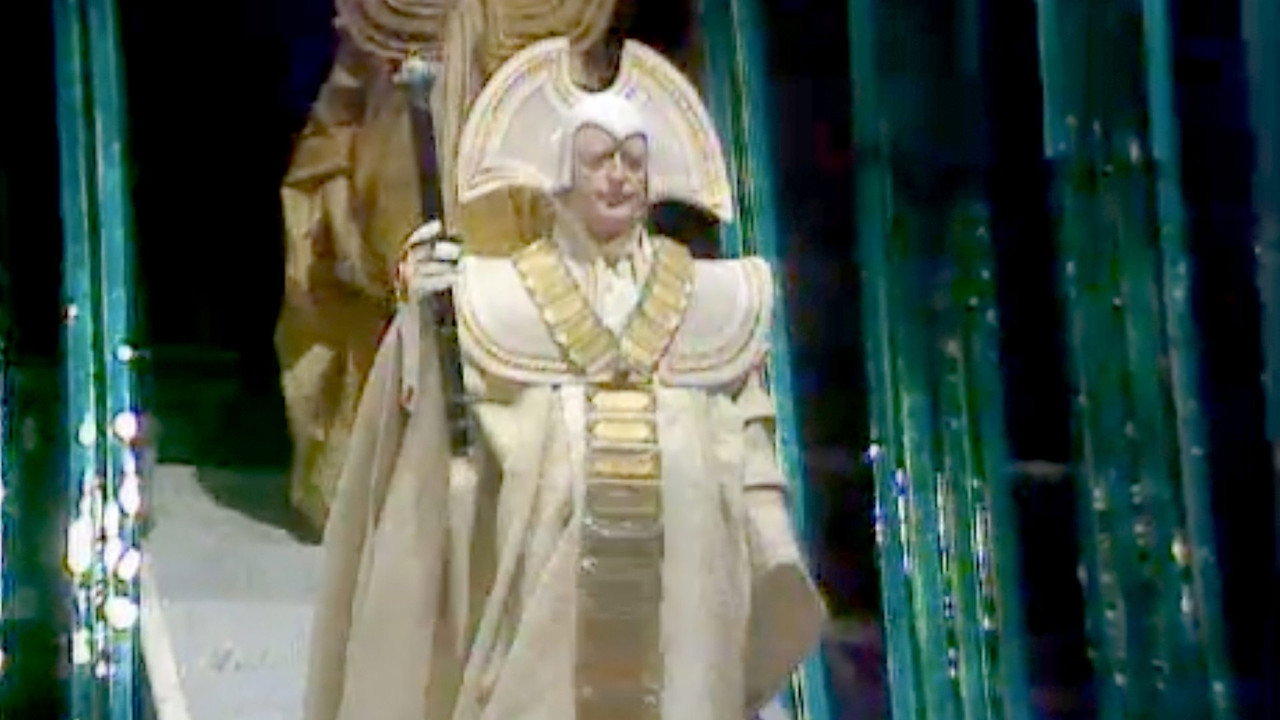
Before this story the Time Lords were remote and godlike, the robed judges who put the Doctor on trial in The War Games. Robert Holmes, who wrote this one and was also the show's script editor, wanted to "correct the picture." His Gallifrey is a capital of ceremonies, officials and cover-ups, and its people owe their power to scientific achievement alone. Much of what later Doctor Who says about the Doctor's home starts here: Rassilon, the Matrix as the store of Time Lord knowledge, and the high collars designer James Acheson gave their robes.
It is also the only story of the original run in which the Doctor travels with no companion, which Tom Baker had asked for. So he spends four weeks working through a frame-up mostly on his own, and in Part Three he wires his mind into the Matrix for a long dream-world sequence. The Discontinuity Guide (1995) called it "a visual and intellectual tour de force of hallucinatory images."
Not everyone was pleased in 1976. Some viewers felt it contradicted what the show had said about the Doctor's people, and Mary Whitehouse often cited the Part Three cliffhanger, with the Doctor's head held under water, as one of the most frightening scenes the programme ever made. The BBC apologised to her and cut the original ending from its master tape. The story's standing has only grown since. The same Discontinuity Guide called it "the definitive text on the Time Lords."
An old enemy at the end of his lives
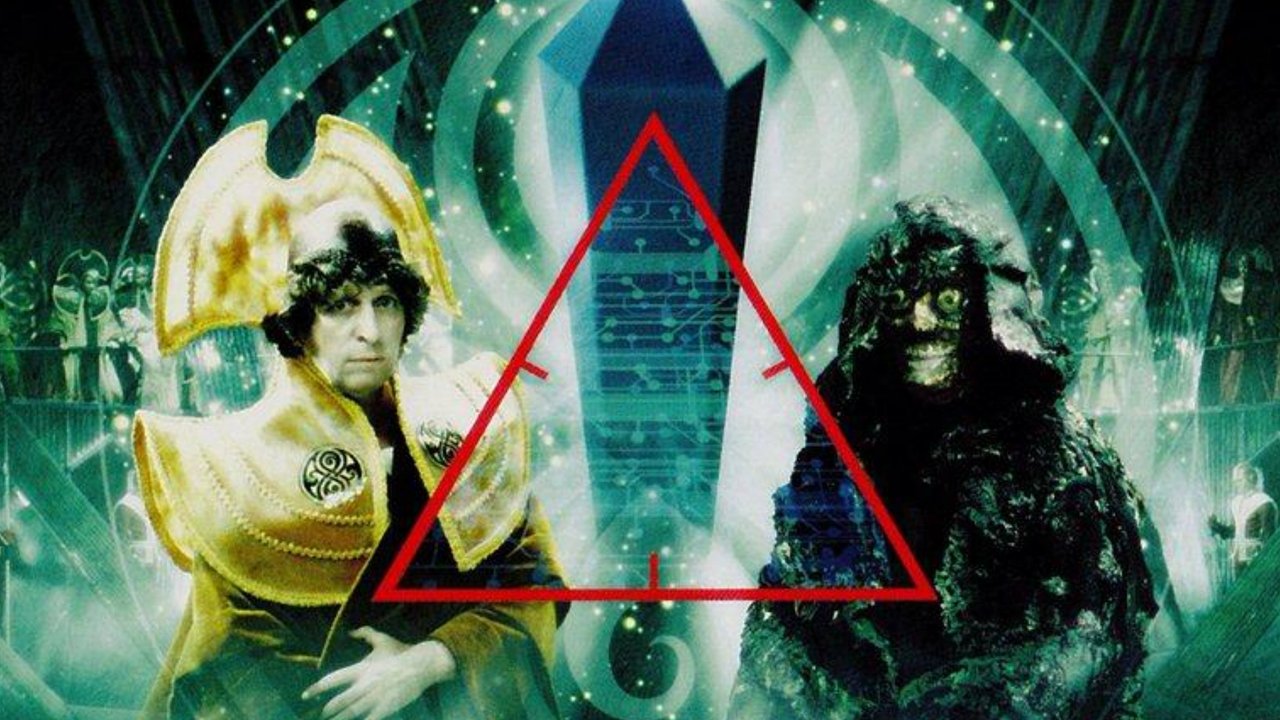
The assassin is Chancellor Goth, and the man behind him is the Master, whom Goth found on the planet Tersurus at the end of his final regeneration, promising him power in return for service. It was the Master who sent the Doctor his vision through the Matrix. When the Doctor beats Goth in the dream world, Goth dies of his burns after warning of the plan, and the Master appears to be dead too, though he has only drugged himself into a deathlike state. Peter Pratt, a former leading man with the D'Oyly Carte Opera Company, played him under corpse-like make-up, the Master's first appearance since Roger Delgado's death in 1973. Patrick Mulkern of Radio Times later called "the Master's putrid skull and split bangers for fingers" "the most revolting images presented on teatime TV."
The plan rests on a piece of Time Lord history only the archives remember. The Sash and the Great Key of Rassilon are the controls for the Eye of Harmony, the nucleus of a black hole that powers Gallifrey, and the Master means to use it to win a new cycle of regenerations, even if the planet is destroyed. The two fight in the cracking Panopticon until the Master falls into a chasm, and the Doctor seals the Eye again. He warns that his enemy may not be dead. As the Doctor's TARDIS leaves, the Master's slips away too.
Challenge the DNA
Did The Deadly Assassin ruin the Time Lords or improve them?
Or skip ahead to our reading
Improved, and the show kept the change for good reason. The Time Lords here are vain, petty and politically compromised, which makes them a far richer setting. Holmes took away their dignity and gave them a society.
Behind the scenes
- Tom Baker told producer Philip Hinchcliffe he wanted to do a story without a companion. It remains the only story of the original run in which the Doctor travels alone.
- Holmes had little patience for godlike Time Lords and wanted to make them more human. Here he introduced Rassilon, who takes over much of the role of founding legend that Omega had held, and the Matrix as the Time Lords' store of knowledge.
- Designer James Acheson created the Time Lords' high ceremonial collars, which the show kept for later Gallifrey stories. A symbol first seen in Revenge of the Cybermen (1975) was used again and became known as the Seal of Rassilon.
- Bernard Horsfall, who plays Chancellor Goth, had played a Time Lord in The War Games, Gulliver in The Mind Robber and Taron in Planet of the Daleks, all for the same director, David Maloney.
- The four parts drew 11.8, 12.1, 13.0 and 11.8 million viewers, so Part Three, the one with the controversial cliffhanger, was the most watched.
- After Mary Whitehouse complained, the BBC's Director-General, Sir Charles Curran, apologised, and the master tape of Part Three was edited to remove the original ending. The cut version went out in the August 1977 repeat, and Hinchcliffe's successor, Graham Williams, was told to lighten the tone and reduce the violence.
- Both ends of the story turn up on cliffhanger lists: io9's Charlie Jane Anders picked Part One's, and Den of Geek included Part Three's freeze frame in its ten classic cliffhangers.
The thread
Gallifrey up close, a frame-up, and the first long trip inside the Time Lords' own machine.
Came before
Shares DNA with
 ClipOfficial featurette · Netflix · 1:09
Left its mark on
DNA strand
The State Knows Best
Holmes's Gallifrey is a government more interested in a tidy verdict than a true one. "We must adjust the truth" is the line The Discontinuity Guide picked out, and the Doctor's best weapon is a loophole in Gallifrey's own election rules.
Every great sci-fi story is built from a handful of strands like this one. Each strand page explains how it works and traces it across shows, books and films.
If this one stayed with you
Where to go next, and why.
Watch · Doctor Who
"The War Games"
The Time Lords as they were before Holmes got to them: distant, robed and all-powerful. Watching it first makes his Gallifrey feel like a rude awakening.
Watch · Doctor Who
"The Invasion of Time"
The show's next trip to Gallifrey, made because the producer wanted to see more of the world built here.
Watch · Black Mirror
"Playtest"
Another hero who connects his mind to a machine and finds out how much it can do to him from the inside.
Read · Novel
The Manchurian Candidate — Richard Condon
Tat Wood sees the film and the book behind this story. Condon's novel has the assassination plot, the conspiracy and a soldier brainwashed into a weapon.
Read · Novelisation
Doctor Who and the Deadly Assassin — Terrance Dicks
Target's novelisation, published in October 1977, for anyone who wants Holmes's Gallifrey on the page.
Your next episode
Three directions to go from here, all on Sci-Fi DNA.

More of this feeling
The Drumhead
Star Trek: The Next Generation
A hero accused of a crime, and a system more interested in a verdict than the truth.

Same question, different answer
The War Games
Doctor Who
The Time Lords' first appearance, before this story pulled their world apart.

Something completely different
The Face of Evil
Doctor Who
From Gallifrey's corridors to a jungle and a tribe with a god.