More from the episode
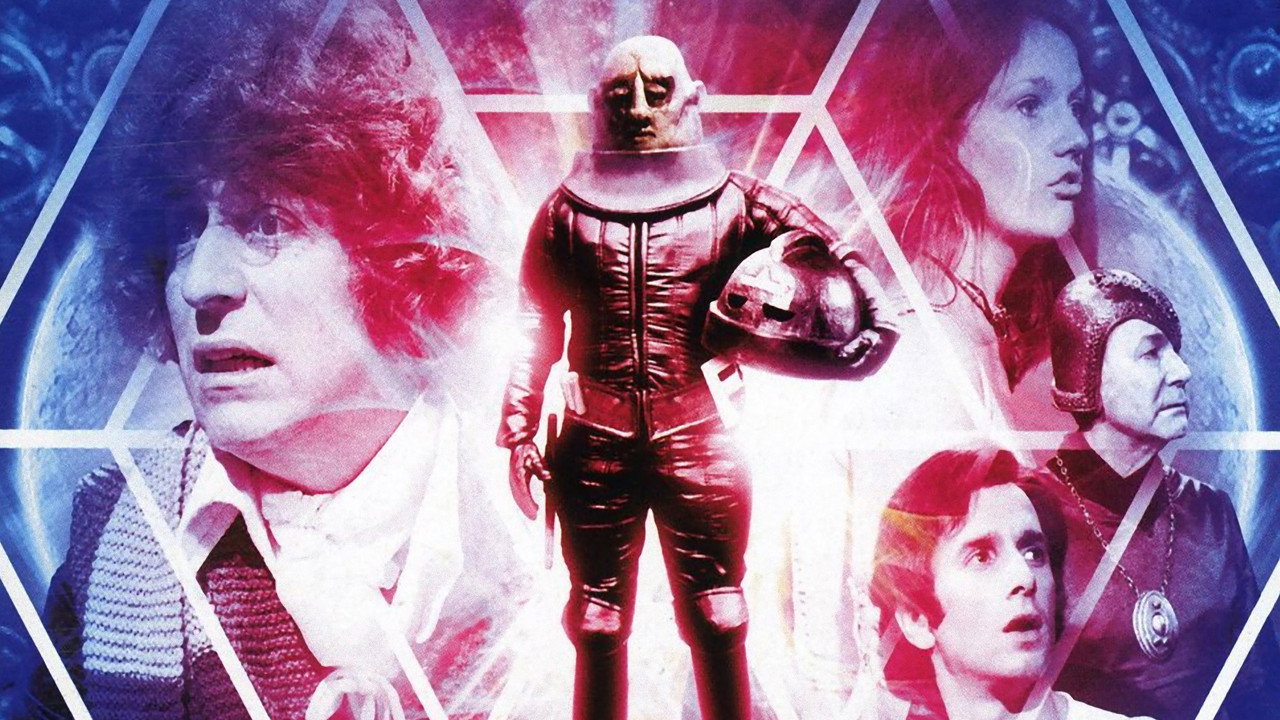
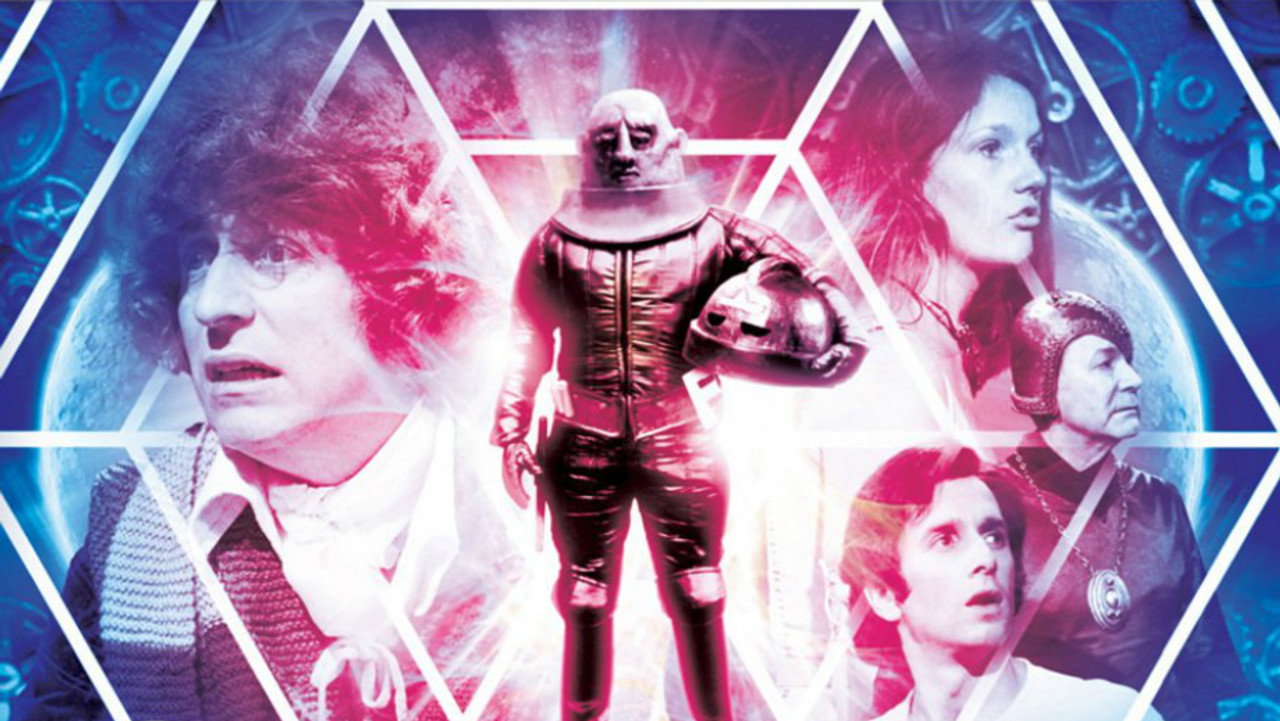
The story in 5 beats
- A secret meeting
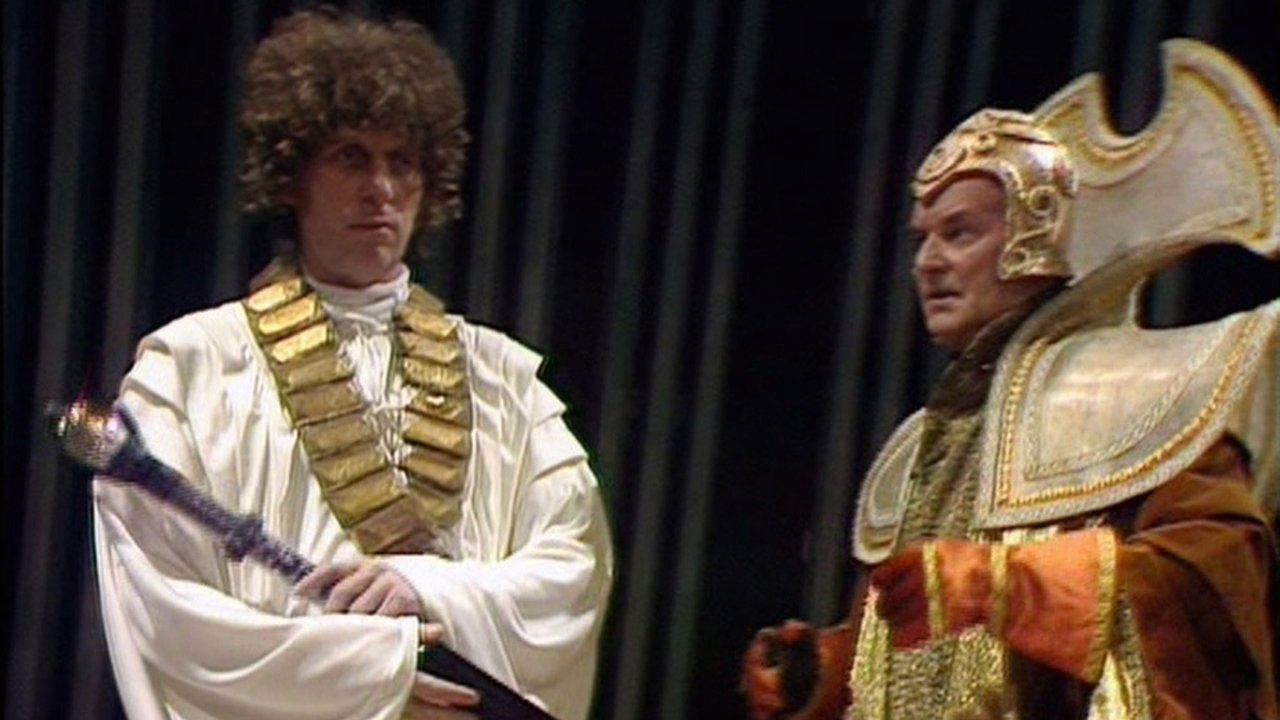
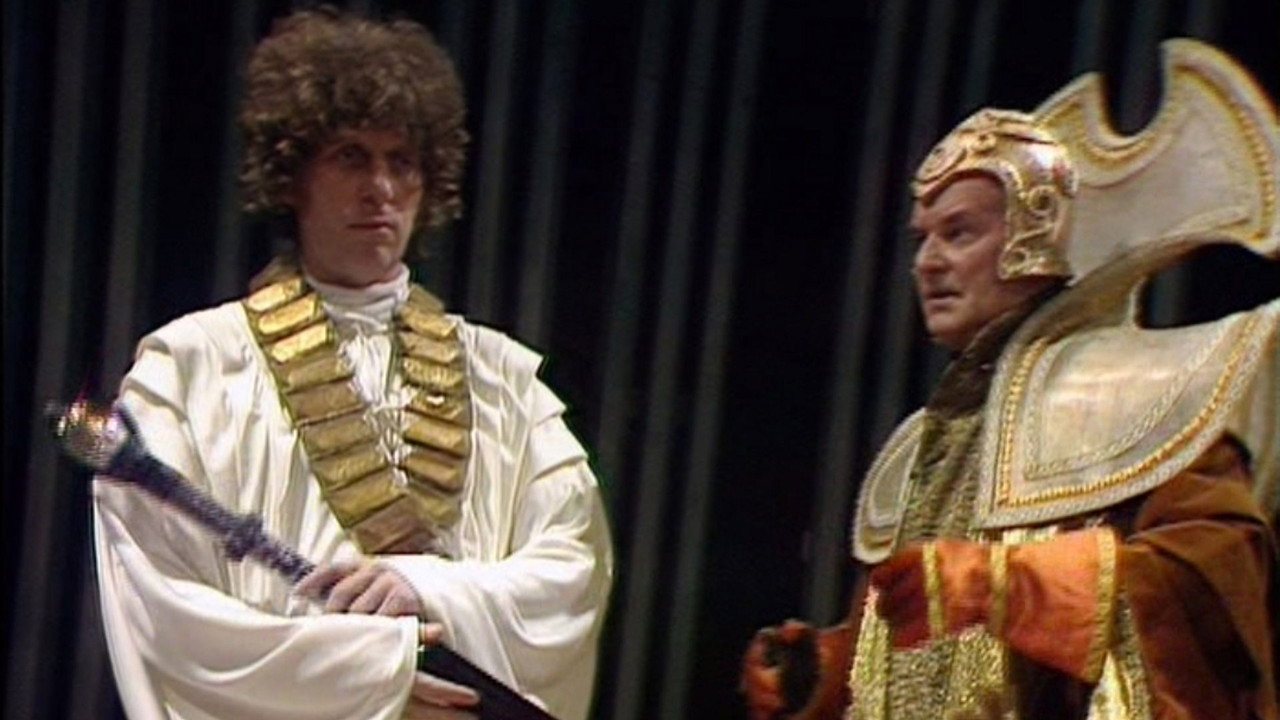
To Leela's and K9's confusion, the Doctor meets aliens in secret, then heads for Gallifrey and claims the vacant presidency as his legal right.
- The crown bites back
At his induction the Crown of Rassilon seems to reject him. Leela tries to help and is banished from the Citadel for it.
- Outside the walls
Leela and the exiled Time Lady Rodan cross the wastelands and meet Nesbin's outsiders, Gallifreyans who gave up on the Time Lords.
The real invadersSpoiler · tap to reveal
The Doctor's welcome to the Vardans was a trick to find their home. Once they're gone, a Sontaran squad marches into the Citadel.
Two stay behindSpoiler · tap to reveal
The Doctor builds a weapon that erases its target from time. Leela stays with Andred, and K9 stays with her.
Why it still matters
This is the season finale that nearly didn't happen. The planned last story, David Weir's Killers of the Dark, with a race of cat people tied to Gallifrey, was judged impossible to make on the budget and dropped two weeks before filming. Producer Graham Williams and script editor Anthony Read wrote a replacement themselves in about two weeks, with four days for rewrites, and put it out under the house pseudonym "David Agnew." A year later the same name would cover City of Death.
What they wrote is a second look at Gallifrey after The Deadly Assassin. Williams wanted more of that world, and reusing its costumes and sets kept costs down. This time the story goes outside the Citadel and finds Gallifreyans who have turned their backs on Time Lord ways, living rough in the wastelands. Borusa comes back promoted to Chancellor, and Milton Johns plays the Castellan, Kelner, as a man who will bow to whoever holds the door.
Then there's Tom Baker, playing a Doctor who seems to have gone wrong. Charlie Jane Anders at io9 put the end of part two among the show's greatest cliffhangers. The reviews have always been mixed: The Discontinuity Guide said it "stands up reasonably well," Howe and Walker called it "something of a mess," and DVD Talk's John Sinnott enjoyed it as "goofy fun."
Two invasions and a goodbye
The Doctor was never working for the Vardans. They can read thoughts, but not through lead, so he lines his suite with it and plays the traitor until he can trace their home planet; K9 then locks them away. The writer Matthew Sweet has compared his feigned madness to Hamlet's. But the Vardans were only a key. The moment they open a hole in Gallifrey's defences, Commander Stor (Derek Deadman) and his Sontarans walk through it, and Kelner switches sides again. The Doctor gets the Great Key of Rassilon from Borusa, builds the Demat Gun and wipes the invaders out, then wakes with no memory of it, which Borusa calls the wisdom of Rassilon.
Then the goodbyes. Leela tells the Doctor she is staying on Gallifrey with Andred, and K9 stays to look after her. It was Louise Jameson's last story after nine serials. According to Doctor Who Magazine, Williams offered to rewrite the ending so Leela could stay in the series, but she was already committed to a stage Merchant of Venice. Radio Times's Mark Braxton criticised how suddenly she leaves. The Doctor walks into the TARDIS and pulls out a crate marked "K9 MII."
Challenge the DNA
Was the Doctor's pretend betrayal convincing?
Or skip ahead to our reading
For a while, and that's the fun. Tom Baker plays the tyrant just well enough that you doubt him. The reveal that it was all a trick to trace the Vardans is satisfying because the story let you worry.
Behind the scenes
- "David Agnew" was the BBC's name for scripts written in house. Here it hides producer Graham Williams and script editor Anthony Read. The name turned up again a year later on City of Death, covering Douglas Adams, Williams and David Fisher.
- It replaced David Weir's Killers of the Dark, which had Asian influences and a race of cat people linked to Gallifrey. It was found impossible to make on the budget and scrapped two weeks before filming. The new script was written in about two weeks, with four days of rewrites.
- An industrial strike, settled before production, left the BBC's regular studios given over to the Christmas specials, so the studio sets were built at St Anne's Hospital in Redhill. Williams was offered the chance to skip the story and carry the money into the next season, and turned it down because inflation would eat into it.
- Location filming took place at British Oxygen in Hammersmith and Beachfields quarry in Redhill, Surrey.
- Williams wanted more of the Gallifrey seen in The Deadly Assassin, and reusing that story's costumes and sets kept it affordable. Borusa returns, promoted.
- Milton Johns (Kelner) had played Benik in The Enemy of the World and Guy Crayford in The Android Invasion.
- The six parts drew between 9.5 and 11.4 million viewers. Terrance Dicks's novelisation followed from Target Books in February 1980, and the 2008 DVD added optional new CGI effects.
The thread
Gallifrey revisited, a hero who might be a traitor, and an institution that gives in to whoever arrives with guns.
Came before
Shares DNA with
DNA strand
First Contact & Invaders
The invasion works because the Time Lords are so easy to invade. Their Castellan bows to whoever turns up with guns, and the Doctor's own people can't tell whether their new President is saving them or selling them out.
Every great sci-fi story is built from a handful of strands like this one. Each strand page explains how it works and traces it across shows, books and films.
If this one stayed with you
Where to go next, and why.
Watch · Doctor Who
"The Deadly Assassin"
The Gallifrey story this one follows on from, with the same Citadel, the same robes and Borusa in a smaller role.
Watch · Doctor Who
"City of Death"
The next time "David Agnew" got a writing credit, this time covering Douglas Adams, Graham Williams and David Fisher.
Watch · TNG S1
"Conspiracy"
Another proud institution with something wrong at the top, and a hero who doesn't know whom to trust.
Read · Novelisation
Doctor Who and the Invasion of Time — Terrance Dicks
Dicks's Target novelisation from 1980, a chance to meet the Vardans without the budget showing.
Your next episode
Three directions to go from here, all on Sci-Fi DNA.

More of this feeling
The Deadly Assassin
Doctor Who
The Doctor's last trip home, and the story that changed how we see the Time Lords.

Same question, different answer
The Drumhead
Star Trek: The Next Generation
When the people in charge seem to have lost their minds.

Something completely different
The Robots of Death
Doctor Who
A tight four-part murder mystery aboard a sandminer.