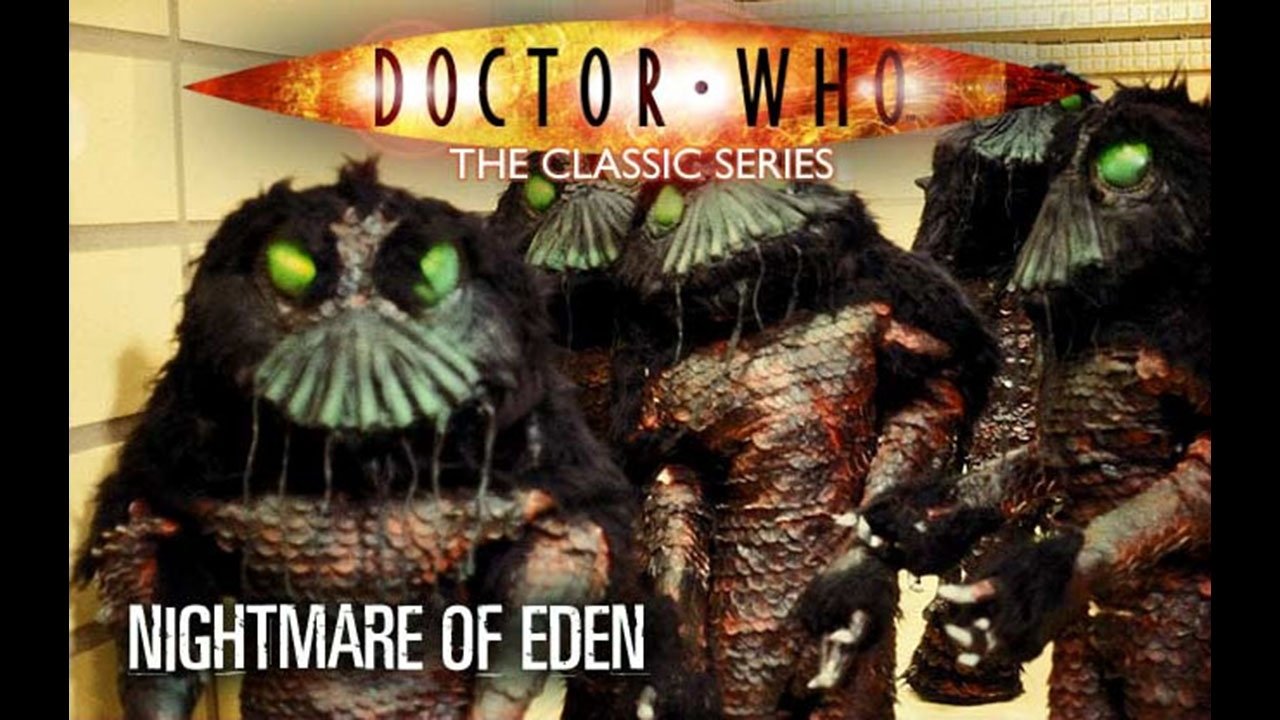
More from the episode
The story in 5 beats
- Two ships, one space
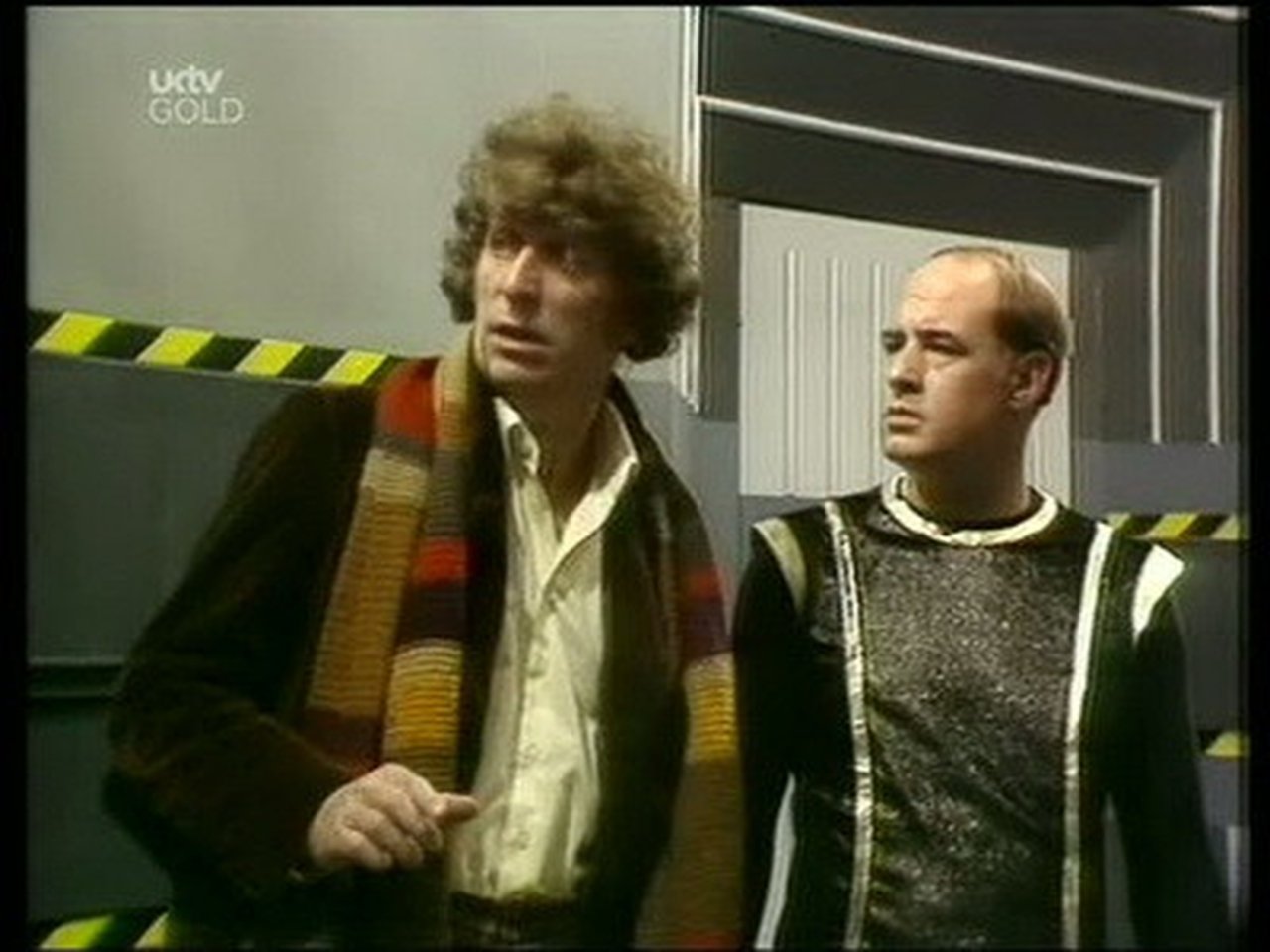
The liner Empress drops out of hyperspace at the same co-ordinates as the cargo ship Hecate, and the two are fused together. The Doctor offers to pull them apart.
- A zoo on a crystal
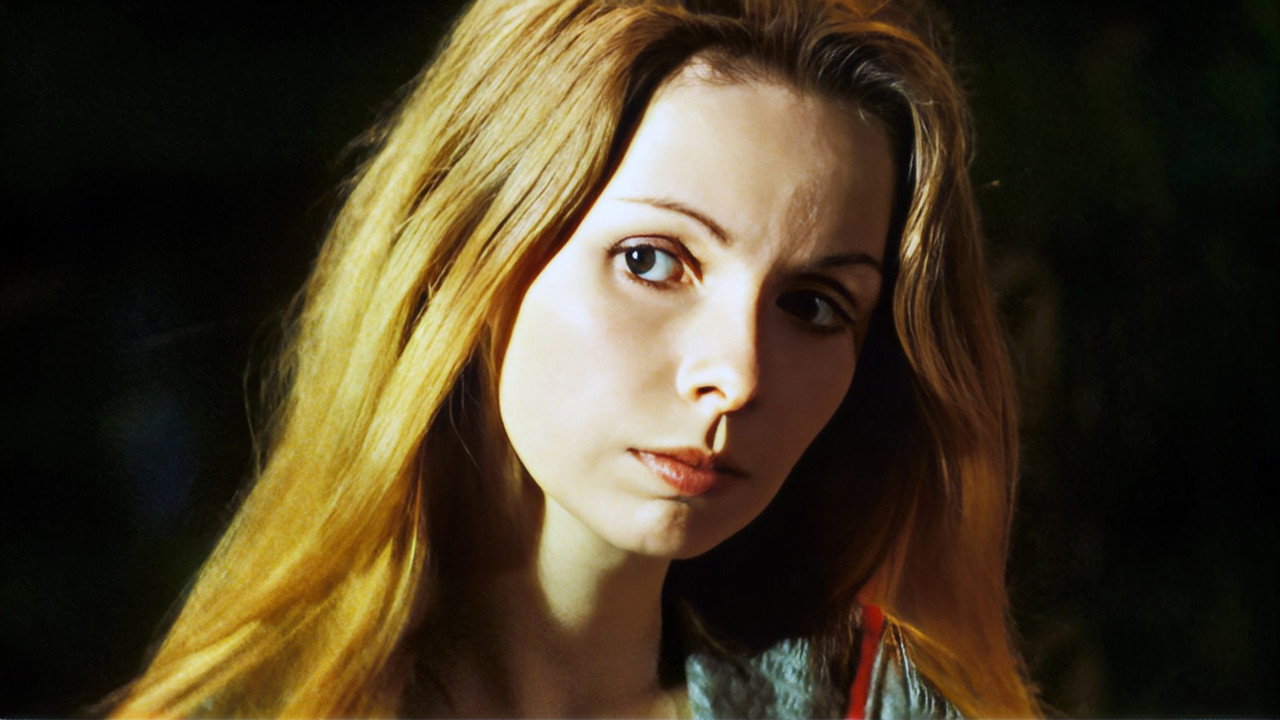
Aboard are the zoologist Tryst and his assistant Della, whose CET machine stores portions of planets on crystals. Their last stop, Eden, cost them a member of the expedition.
- Claws in the corridors
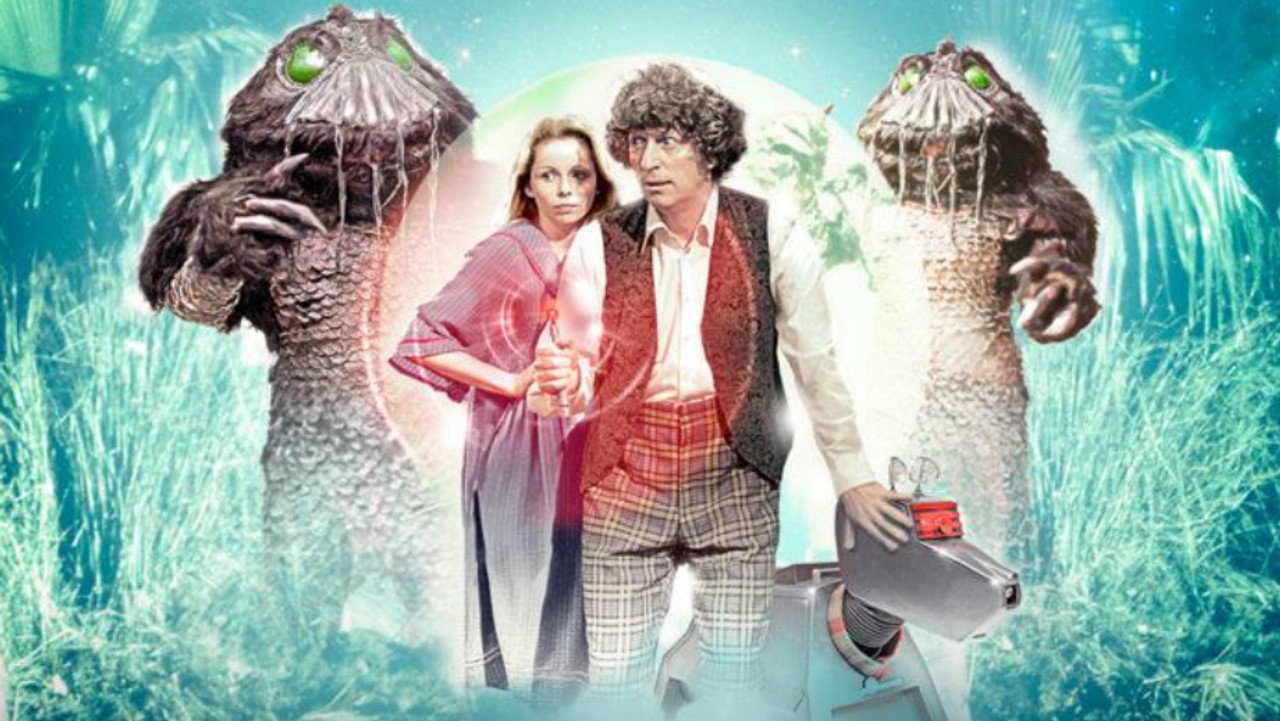
Clawed Mandrels from Eden are loose on the ship, and the Doctor is on the trail of a vraxoin supply that somehow involves them.
Where the drug comes fromSpoiler · tap to reveal
The Doctor burns a Mandrel and it breaks down into raw vraxoin. The creatures are the drug.
Caught in the projectionSpoiler · tap to reveal
The Doctor finds who is running the trade on each ship and turns the CET machine against them.
Why it still matters
This is Doctor Who's drug-smuggling story. Set on the interstellar liner Empress, it follows a ring trying to move a deadly drug called vraxoin past the authorities, and it plays the subject straighter than its monsters might suggest. It was Bob Baker's last script for the show and the only one he wrote alone. With Dave Martin, as the pair the production team nicknamed the Bristol Boys, he had already given the series K9 and Omega.
Critics have argued for years about the gap between the idea and what reached the screen. In Radio Times, Mark Braxton called it "something of a flawed diamond" and "a sobering, sideways take on Paradise Lost," while judging the shaggy Mandrels "the least frightening monster the show ever produced." Cultbox's Malcolm Stewart found it "facetiously performed" but granted that it has "real science and genuine imagination at its heart."
The making of it was rough. Alan Bromly, who had directed The Time Warrior in 1973, clashed with Tom Baker over his ad-libs and left partway through, and producer Graham Williams finished the job without a credit. Viewers stuck with it anyway: 8.7 million for part one, 9.6 million for parts two and three.
The zoologist's sideline
Tryst, the scientist who collects whole ecosystems on crystals, is the smugglers' man aboard the Empress. His partner is Dymond, captain of the Hecate, and the Doctor finds the evidence while caught aboard Dymond's ship as the two are parted. The Mandrels were the cargo all along: when one dies, its body breaks down into vraxoin, so a projection of Eden full of them is a drug shipment hiding in plain sight.
The two plan to use a laser to move the Eden projection across to the Hecate. The Doctor drives the Mandrels back into the projection, lets the transfer go ahead, then switches on the CET and traps Tryst and Dymond inside a projection of their own, ready for the customs officers to walk in and arrest them. With the ships separated, the Doctor and Romana slip quietly back to the TARDIS.
Challenge the DNA
Is the drug plot too serious for a light Doctor Who story?
Or skip ahead to our reading
No. The comedy and the drug-smuggling plot pull against each other, but the serial's message about the damage done by the trade is clear. It's a story trying to be fun and responsible at once, which is harder than it looks.
Behind the scenes
- Bob Baker wrote it without his usual partner, Dave Martin. It was his last Doctor Who story; the two of them had earlier created K9 for The Invisible Enemy and Omega for The Three Doctors.
- Alan Bromly found the effects-heavy scripts daunting and reworked his recording plan set by set. He fell out with Tom Baker over the actor's ad-libs, and after a heated row, with Graham Williams mediating, he left the production. Williams directed the rest, but Bromly kept the sole credit on all four parts. He never directed for the show again and retired in 1983.
- Douglas Adams was the script editor and Dudley Simpson wrote the music. David Brierley voiced K9, a part he played only in 1979 and 1980.
- The four parts drew 8.7, 9.6, 9.6 and 9.4 million viewers.
- Terrance Dicks's novelisation came out from Target Books in August 1980. The serial reached VHS in January 1999, DVD on April 2, 2012, and Blu-ray in the Season 17 box set on December 13, 2021.
The thread
Captive worlds in a box, two ships stuck together, and a deadly drug somewhere aboard.
Came before
Shares DNA with
DNA strand
Trapped With Strangers
Two ships welded together, a crew and passengers nobody quite trusts, and monsters in the corridors. The Doctor has to work out who aboard is lying before he can get anyone home.
Every great sci-fi story is built from a handful of strands like this one. Each strand page explains how it works and traces it across shows, books and films.
If this one stayed with you
Where to go next, and why.
Watch · Doctor Who
"The Robots of Death"
Two seasons earlier, the Fourth Doctor arrives on another big vessel where the crew suspect each other and something is picking them off.
Watch · Doctor Who
"Carnival of Monsters"
Robert Holmes's take on a machine full of captive creatures, played for comedy and satire six years earlier.
Watch · Doctor Who
"The Invisible Enemy"
Bob Baker and Dave Martin together, and the story where K9 first joins the Doctor.
Read · Poem
Paradise Lost — John Milton
The Eden story at full length, for anyone who wants to see what the serial is playing with.
Read · Novelisation
Doctor Who and the Nightmare of Eden — Terrance Dicks
The Target book from 1980, where the Mandrels look exactly as frightening as your imagination makes them.
Your next episode
Three directions to go from here, all on Sci-Fi DNA.

More of this feeling
The Robots of Death
Doctor Who
Another murder mystery aboard a big machine full of suspects.

Same question, different answer
USS Callister
Black Mirror
Living things trapped in a collection that someone else controls.
Something completely different
The Horns of Nimon
Doctor Who
A Greek myth retold in space, with a minotaur.