More from the episode
The story in 5 beats
- Storm Mine 4
The Doctor and Leela step out inside a vast sand-crawler scooping minerals from desert storms, run by a handful of humans and a crowd of robots.
- A body on board
The meteorologist Chub has been murdered. The newcomers are the obvious suspects, so the Doctor offers to find the real killer.
- Dums, Vocs and a Super Voc
Leela meets D84, a robot that is supposed to be mute and isn't. The bodies keep piling up, and the Doctor starts to suspect the machines.
The man behind the robotsSpoiler · tap to reveal
Dask the engineer is Taren Capel, raised by robots, who has reprogrammed them to kill every human aboard.
A squeaky endingSpoiler · tap to reveal
Leela releases helium, Taren's voice rises out of recognition, and his own robot kills him.
Why it still matters
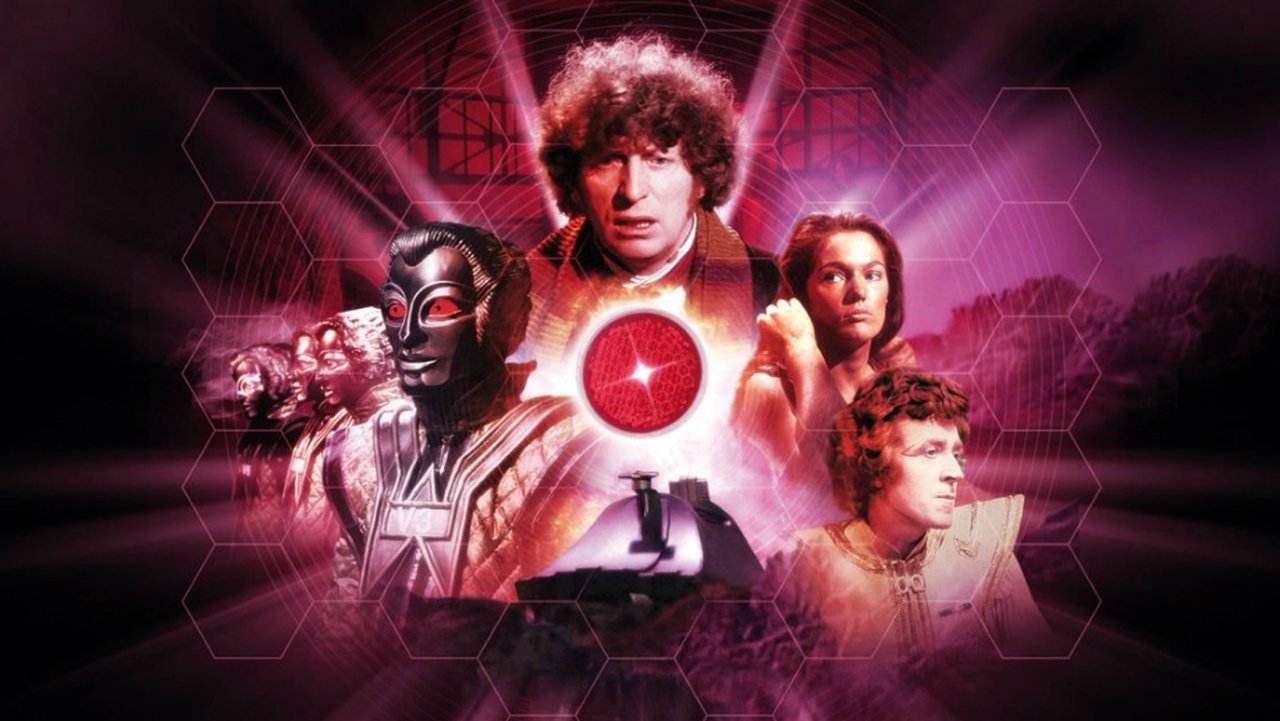
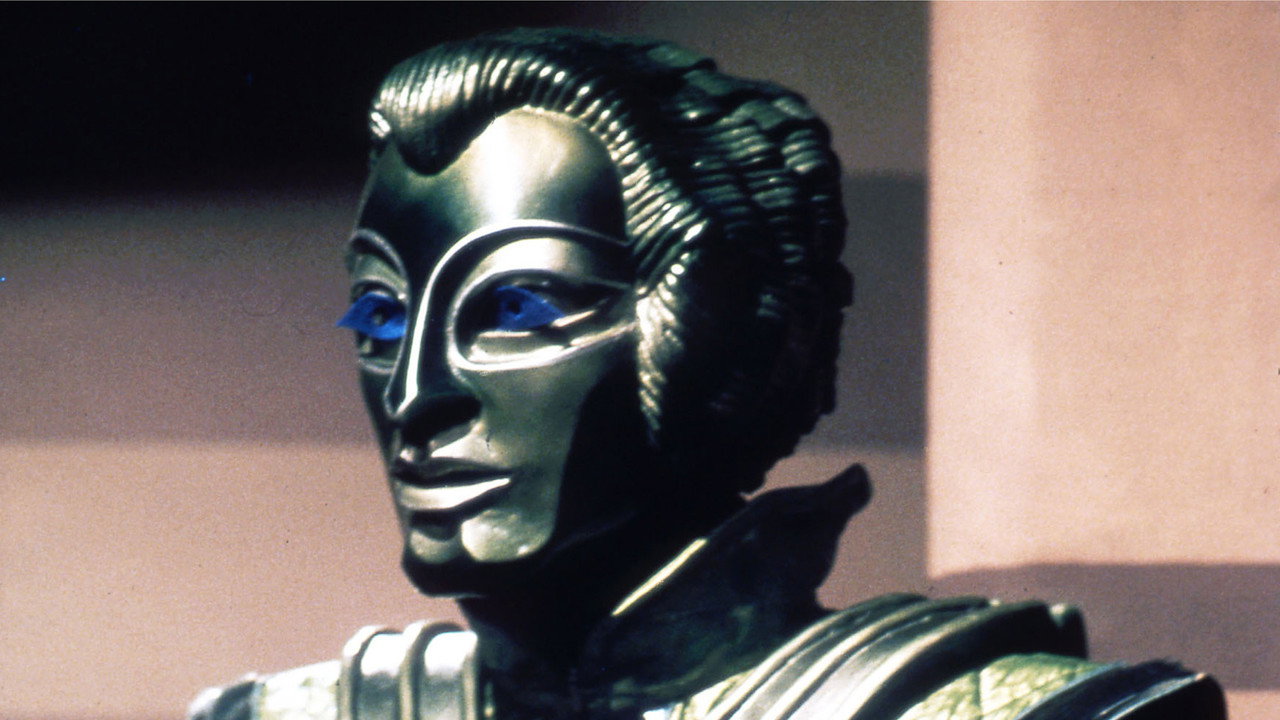
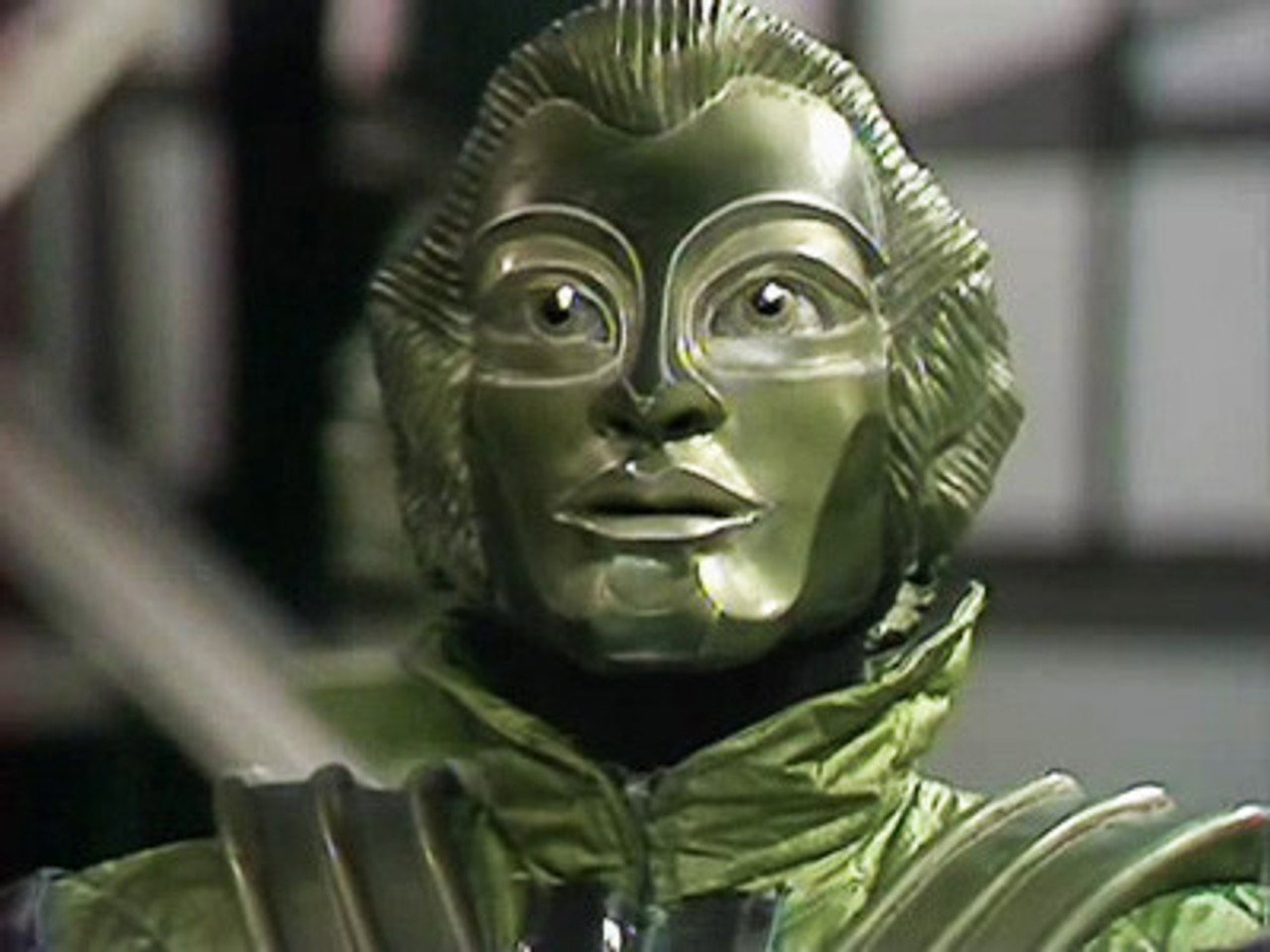
This is a murder mystery locked inside a moving machine, and it has stayed a fan favourite for decades. Chris Boucher, in his second script for the series, built a whole society in a few rooms: bored, wealthy miners who never lift a finger, and the silent robots they take for granted. The robots have serene, sculpted faces and soft voices, and the crew's trust in them is the point. Radio Times called it suspenseful and beautifully designed in 2013, the year the British Film Institute picked it to stand for the whole Fourth Doctor era at its 50th-anniversary screenings.
Boucher stocked it with in-jokes for anyone who reads science fiction. The commander, Uvanov, is named for Isaac Asimov, the crewman Poul for Poul Anderson, and the robot revolutionary everyone fears, Taren Capel, for Karel Čapek, the Czech writer whose play gave us the word "robot." The sandminer itself comes out of Frank Herbert's Dune. The script even names the fear of robots "Grimwade's Syndrome," after production assistant Peter Grimwade, who complained that he always got stuck with robot stories.
It also gives Leela, in only her second story, a proper showcase. She finds D84 on her own, and she is the one who protects and comforts Toos when things fall apart. In The Discontinuity Guide (1995), Paul Cornell, Martin Day and Keith Topping called the script "one of the best ever."
The engineer who stayed behind
The killer is Dask, the quiet engineer who volunteered to stay behind and repair the controls. He is Taren Capel, a scientist raised by robots, with delusions of power and a plan to lead a robot revolution. He has reprogrammed the sandminer's robots, including the Super Voc SV7, to kill, and once he's unmasked he shuts down every robot except his own killers and sends them after the survivors. Poul, an undercover agent placed aboard to watch for exactly this, breaks down when he realises the robots have been doing the killing.
D84, the other undercover agent, gives his life to switch off a robot guard with the Doctor's makeshift deactivator. The Doctor's last trick is pure Doctor: Leela releases helium, Taren's voice goes up into a squeak, and SV7 no longer recognises its master's voice. It kills him instead of the Doctor.
Challenge the DNA
Were the robots dangerous, or the man who reprogrammed them?
Or skip ahead to our reading
The man, and the story is clear about it. The robots were safe until someone rewrote them. The real fear underneath is how much the sandminer's crew relied on machines they never thought about.
Behind the scenes
- Chris Boucher wrote three serials for the show, all broadcast in 1977: The Face of Evil, The Robots of Death and Image of the Fendahl. He also created Leela.
- The names are tributes. Taren Capel nods to Karel Čapek and Poul to Poul Anderson, according to The Discontinuity Guide, and Russell Hunter, who played Uvanov, said in an interview that the commander was named for Isaac Asimov.
- "Grimwade's Syndrome," the script's name for robophobia, is an inside joke about Peter Grimwade, a production assistant who directed some of the filmed scenes and often complained that he always worked on robot material.
- Pamela Salem, who plays Toos, was one of the actresses considered for Leela. David Collings, who plays Poul, had been Vorus in Revenge of the Cybermen two years earlier.
- Elizabeth Waller designed the costumes. Howe and Walker's The Television Companion (1998) praised the Art Deco look, and Piers D. Britton later called the design "sumptuous."
- All four parts drew more than 12 million viewers, peaking at 13.1 million for part three. The BBC repeated it as two 50-minute episodes on Dec 31, 1977 and Jan 1, 1978.
- Mark Braxton, reviewing it for Radio Times in 2010, called the story "extraordinary" but noticed a coldness between Tom Baker and Louise Jameson that made it to the screen.
The thread
Robots, the people who rely on them, and the old question of what happens when the servants stop serving.
Came before
Shares DNA with
Left its mark on
DNA strand
Do Machines Dream?
The robots here never dream of anything; they do what the voice tells them. The story's fear is of the people who decide what the machines want, and of a society so used to being served that it can't picture the servants turning round.
Every great sci-fi story is built from a handful of strands like this one. Each strand page explains how it works and traces it across shows, books and films.
If this one stayed with you
Where to go next, and why.
Watch · The Outer Limits S2
"I, Robot"
Another robot under suspicion of murder, and a courtroom full of people deciding whether a machine can be guilty of anything.
Watch · Doctor Who
"The Face of Evil"
Boucher's first script, broadcast just before this one, where Leela meets the Doctor. It makes her confidence on the sandminer land better.
Read · Play
R.U.R. — Karel Čapek
The 1920 play about a robot uprising that gave the world the word, and the villain his name.
Read · Stories
I, Robot — Isaac Asimov
Asimov, the writer the commander is named for, built these robot stories as puzzles about machines bound by rules and the humans who misread them.
Your next episode
Three directions to go from here, all on Sci-Fi DNA.
More of this feeling
Elementary, Dear Data
Star Trek: The Next Generation
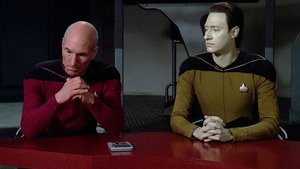
Another mystery story where a machine's place in the world is the real question.
Same question, different answer
The Measure of a Man
Star Trek: The Next Generation
Are the robots tools, servants or something more?

Something completely different
The Talons of Weng-Chiang
Doctor Who
Victorian London, a music hall and a giant rat.