More from the episode
The story in 5 beats
- The dome on Deva Loka
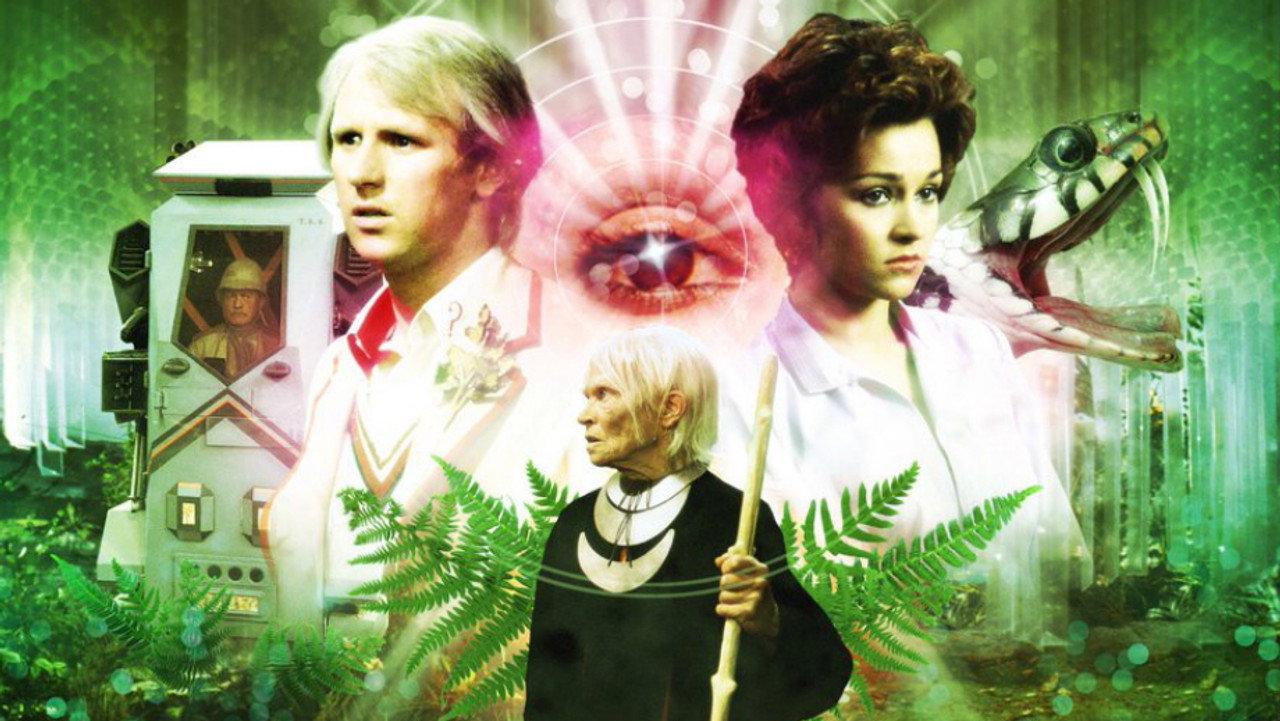
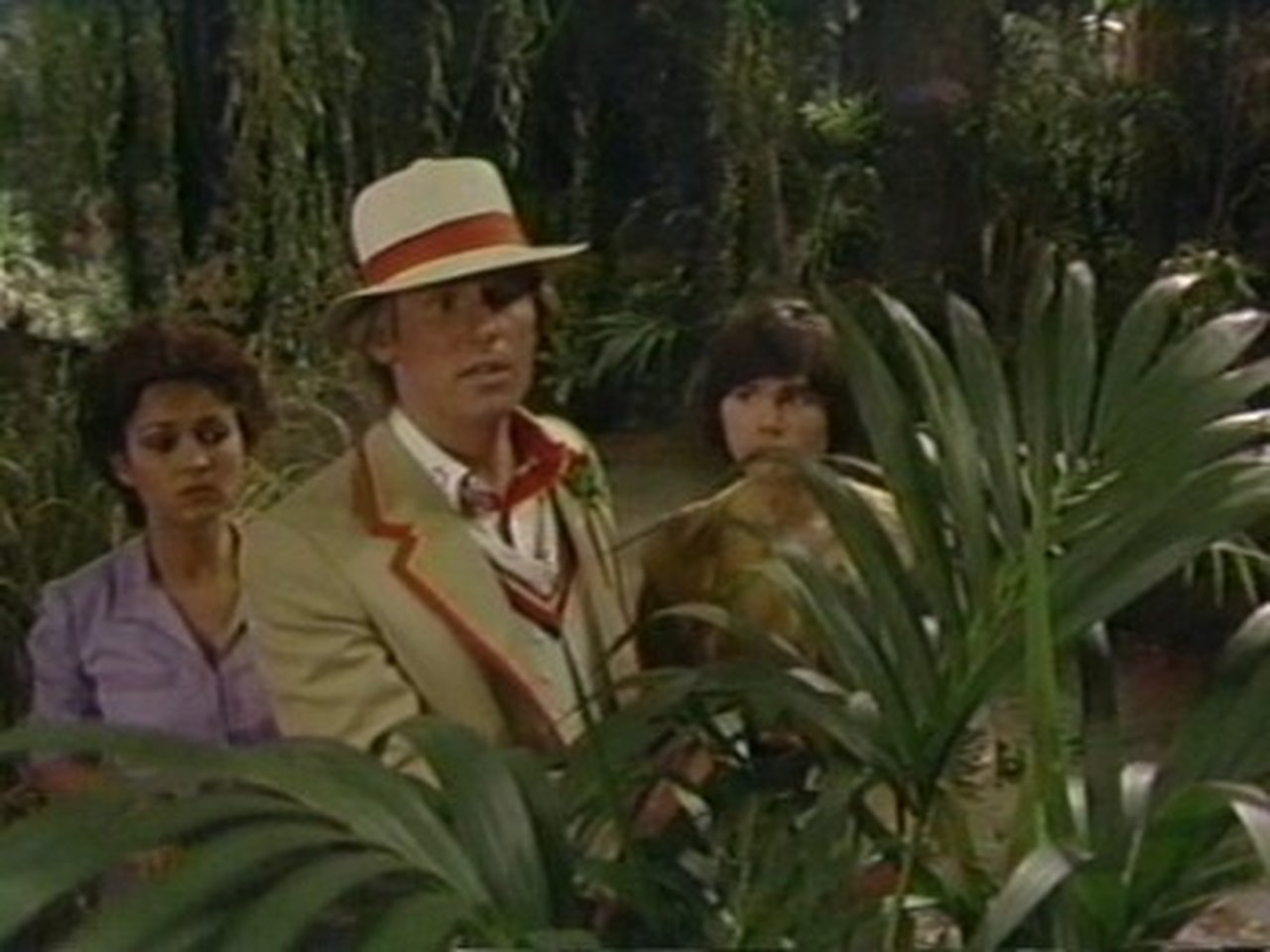
Members of an Earth survey team have been disappearing. The three left are holding two Kinda prisoner, and the Doctor and Adric walk straight into their mess.
- Hindle in charge
When Sanders goes into the jungle, his deputy Hindle takes over, tied to the two Kinda hostages by a telepathic link, and starts planning to burn the forest.
- Tegan's dream
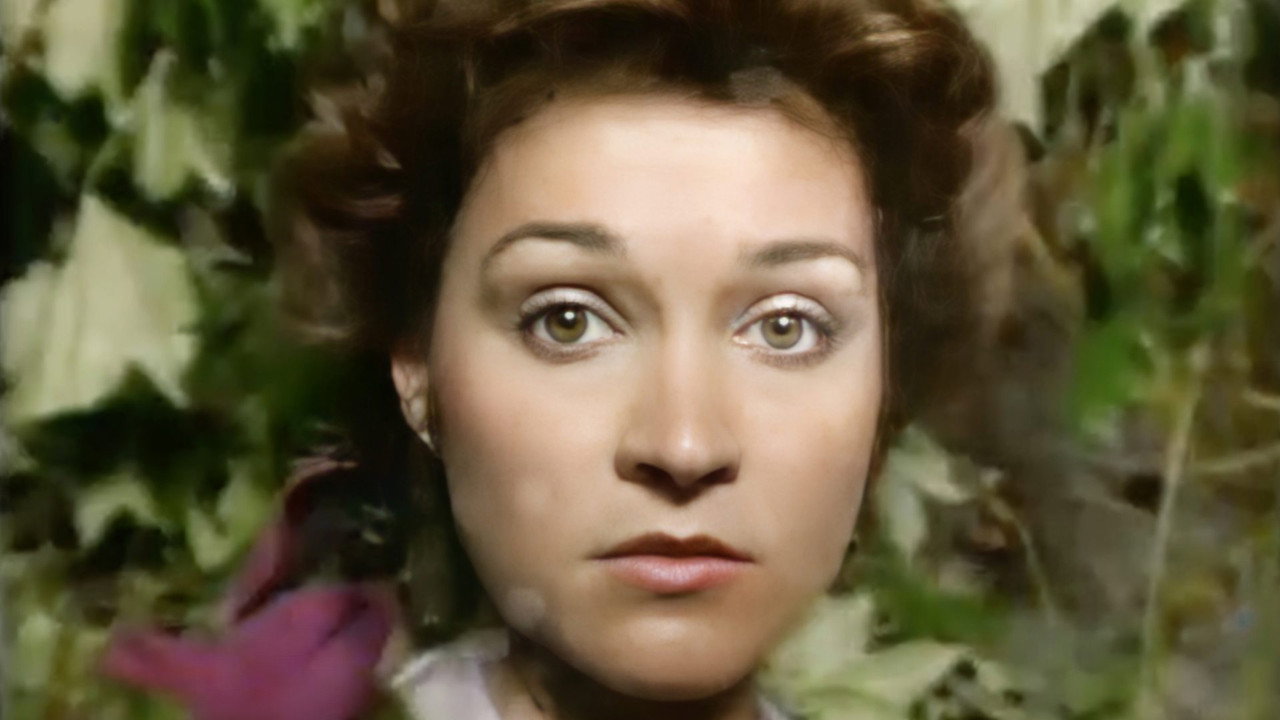
Tegan stays behind near the TARDIS, falls asleep under some wind chimes, and drifts into a dream.
The Mara wakesSpoiler · tap to reveal
Panna, an elder of the Kinda, tells the Doctor what is behind the chaos on Deva Loka: the Mara, an evil being of the subconscious that longs for a body.
A circle of mirrorsSpoiler · tap to reveal
With the jungle about to burn, the Doctor finds the one thing the Mara cannot face.
Why it still matters
Kinda is the Doctor Who story that reads like a set text, and in 1983 it became one. John Tulloch and Manuel Alvarado's Doctor Who: The Unfolding Text, the first major scholarly work on the series, examined it closely: its Buddhist and Christian symbols, its borrowings from Carl Jung, and its likeness to Ursula K. Le Guin's The Word for World Is Forest. Christopher Bailey was studying Buddhism when he wrote it, and that reading shaped much of the script.
Its monster came from the same place. Bailey named the Mara after the demon who tempted the Buddha and first imagined it with no physical form at all. The script went through three script editors, and the last rewrite turned it into a creature the audience could see. Critics have tended to prefer the stranger, quieter material; The A.V. Club's Christopher Bahn said the serial's strength was 'the way it behaves like an experimental stage-theater piece,' with Tegan's dream sequences the highlight.
The guest cast is unusually strong. Richard Todd, the star of The Dam Busters, plays the survey leader Sanders, Nerys Hughes plays the scientist Todd, and Simon Rouse plays Hindle, the deputy coming apart under the strain. The Discontinuity Guide called it 'one of the best Doctor Who stories ever' and praised Rouse's 'direct and unsilly performance.' The effects have had fewer fans, the giant snake above all.
The snake in the garden
Tegan is the Mara's way in. It possesses her while she sleeps, then leaves her for Aris, a young Kinda, and through him stirs up his normally peaceful people against the colonists. Sanders, meanwhile, has opened the Box of Jhana and come back calm and contented, and when Hindle is tricked into opening it too, the visions inside restore his balance. Shattering the mirror that held them frees the two Kinda prisoners.
Hindle has laid explosives to burn the jungle, and the Doctor stops them. He traps the Mara in a circle of mirrors: it is so evil it cannot bear its own reflection, and it is driven back to the Dark Places of the Inside, appearing at last as a giant snake. That snake was a plastic prop strung from the ceiling on wires and not ready until the day it was recorded; John Nathan-Turner wished he could have toned down its colour and made it 'look less like a pantomime snake.' Critics have read the snake, the woman who lets it in and the apples as the Garden of Eden, and Bailey said his Mara drifted toward the Christian Devil as development went on.
Challenge the DNA
Is Kinda the best story of the Davison era?
Or skip ahead to our reading
It's the most ambitious, and some people find it hard going. Bailey wrote a story about the mind and temptation, and the show rarely tried anything so odd. It's worth watching even if you come away puzzled.
Behind the scenes
- Christopher Bailey was studying Buddhism when he wrote Kinda, and took the Mara's name from the demon who tempted the Buddha. He first thought of the Mara as having no physical form, taking a different shape depending on whom it used; the script went through three script editors, and the last rewrite made it a monster the audience could see.
- Bailey told Tulloch and Alvarado that his Mara slowly became more of a villain during development, closer to the Christian Devil than to the Buddhist idea he started with.
- The giant Mara was a large plastic snake built by the Stephen Greenfield Association, hung on wires from the studio ceiling and operated by Stephen Calcutt. It wasn't ready until the day of recording, too late to change. Earlier shots used a small plastic snake and colour separation overlay to make it seem to grow.
- The working title was The Kinda.
- Nyssa barely appears. The script was largely developed when the Doctor was meant to have only two companions, so she spends the story resting in the TARDIS and is seen only in parts one and four.
- The DVD, released in March 2011 in the Mara Tales box with its sequel Snakedance, offers an option to replace the Mara's final appearance with a computer-generated version.
- The second part drew 9.4 million viewers. A repeat on four consecutive evenings in August 1983 drew between 3.9 and 5 million.
- In 2012 the Radio Times's Patrick Mulkern called it 'an imperfect gem' and praised its 'unusually adult psychodrama'; SFX's Ian Berriman picked out its adult tone and strong female roles.
The thread
Temptation, colonists on someone else's paradise, and an enemy that lives in your sleep.
Came before
Shares DNA with
Left its mark on
DNA strand
Dreams & Nightmares
The danger in Kinda comes in through sleep. Tegan dozes off under the wind chimes, and the story follows her into a dream that matters as much as anything happening in the dome. Few Doctor Who stories give their dream scenes this much weight.
Every great sci-fi story is built from a handful of strands like this one. Each strand page explains how it works and traces it across shows, books and films.
If this one stayed with you
Where to go next, and why.
Watch · Star Trek S2
"The Apple"
Fifteen years earlier, Star Trek also visited an Eden with a stone god in it and asked what outsiders owe the people living there.
Watch · TNG S4
"Night Terrors"
A crew losing its grip and a recurring dream at the centre of it, for anyone who liked Tegan's scenes best.
Watch · Twilight Zone S2
"Shadow Play"
A man insists he is trapped in a nightmare, and the story takes him seriously. A good partner for Kinda's dream world.
Read · Novel
The Word for World Is Forest by Ursula K. Le Guin
The Hugo-winning story of colonists and a forest people that scholars set beside Kinda in 1983.
Your next episode
Three directions to go from here, all on Sci-Fi DNA.
More of this feeling
Nightmare at 20,000 Feet
The Twilight Zone
Someone nobody believes, and a horror only they can see.

Same question, different answer
This Side of Paradise
Star Trek
A peaceful people, colonists and what each side doesn't understand.
Something completely different
The Leisure Hive
Doctor Who
Back a season to a holiday planet and some hard science.