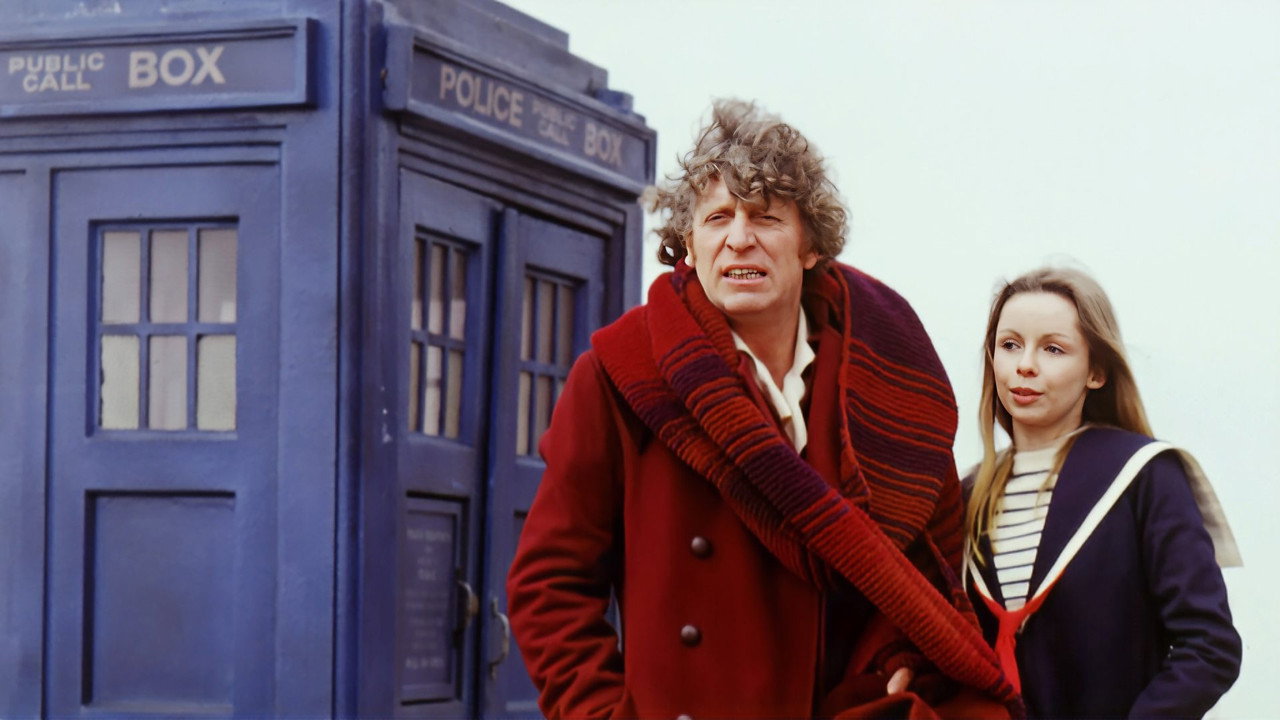
More from the episode
The story in 5 beats
- Brighton, out of season
The Doctor, Romana and K9 sit on a cold, windy Brighton beach. K9 runs after a ball into the sea and is out of action for the rest of the story.
- The Hive
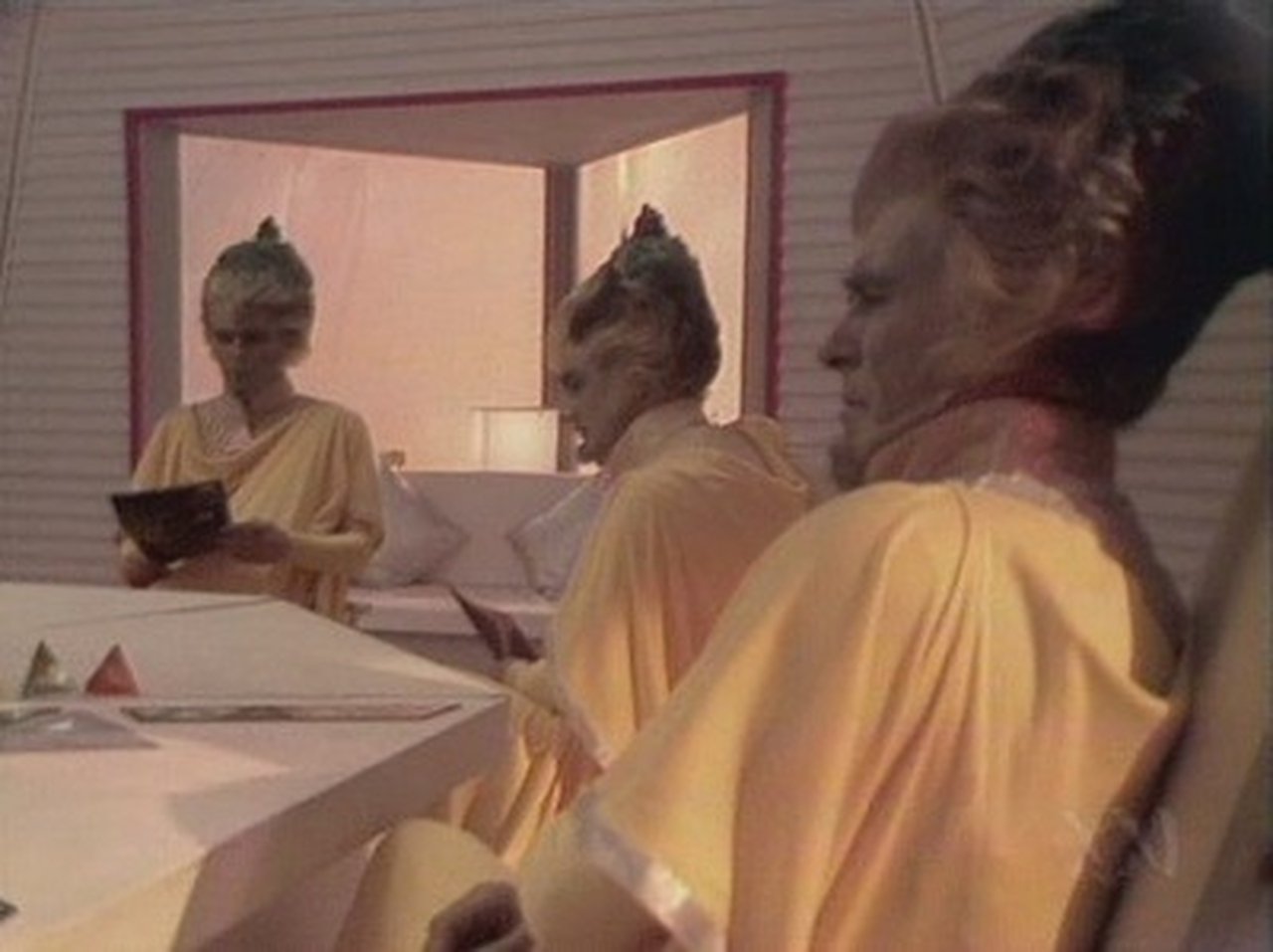
On Argolis the Argolins, survivors of a war with the Foamasi, run a holiday complex that is facing bankruptcy. An agent from Earth, Brock, wants to buy the planet.
- A death in the generator
The Hive's big attraction, the Tachyon Recreation Generator, kills a tourist during a demonstration, and someone has sabotaged it.
Five hundred years olderSpoiler · tap to reveal
The Doctor steps into the generator to test a rejuvenation experiment. It goes wrong, and he comes out an old man with a long white beard.
Pangol's planSpoiler · tap to reveal
Pangol, the only young Argolin in the Hive, reveals where he came from and what he wants the generator to make: an army.
Why it still matters
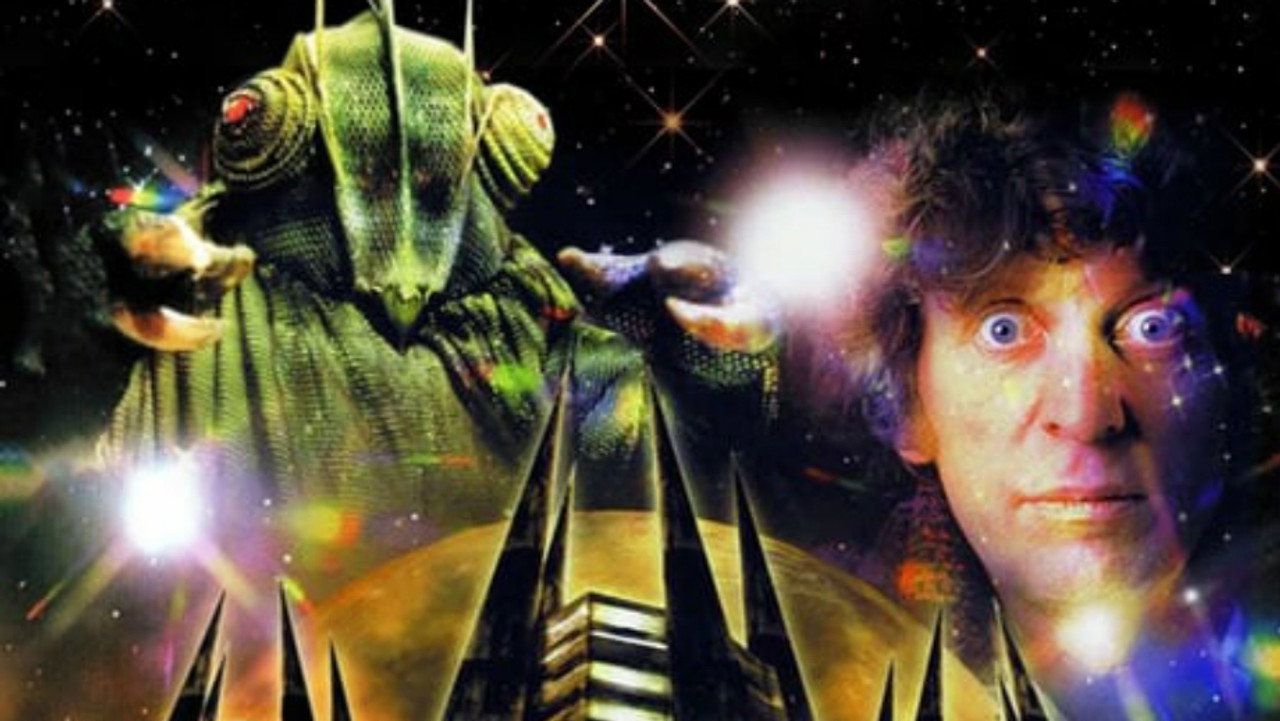
This is where John Nathan-Turner's nine years as producer begin, and you can tell before the first scene. Sid Sutton's titles swap the old time tunnel for a field of stars that gathers into Tom Baker's face, under a new neon-tube logo, and Peter Howell of the BBC Radiophonic Workshop recast Ron Grainer's theme for synthesizers. Delia Derbyshire's 1963 arrangement had served, with small changes, ever since. Both lasted until The Trial of a Time Lord in 1986, right through Peter Davison's time as the Doctor.
The new team wanted the show to calm down. Script editor Christopher H. Bidmead had felt Doctor Who had drifted from its science roots and become "very silly," and he only signed on when he found Nathan-Turner and executive producer Barry Letts agreed. David Fisher's script had started life before Bidmead arrived, but it suits the new mood: tachyons, cloning and a rejuvenation machine. K9, the robot dog, is out of action within minutes after chasing a ball into the sea.
Under the new paint there's a sad, odd little story. The Argolins lost a war and now sell holidays on their ruined world, an ageing people running a leisure centre. Adrienne Corri, of A Clockwork Orange, plays their chairman Mena, and a young David Haig is her furious son Pangol. The audience was smaller than the show was used to: 5.9 million for part one, down to 4.5 million by the last.
Back to the cradle
The generator ages the Doctor by about five hundred years. Brock and his lawyer Klout turn out to be Foamasi in disguise, working for the West Lodge, a criminal group trying to get the planet for itself; real Foamasi agents arrive to take them for trial. Pangol, meanwhile, is the one success of a cloning experiment in the generator, and he hates the Foamasi enough to want a war with an army of copies of himself.
The Doctor has wired the TARDIS's Randomiser into the generator. When Pangol makes his army, every copy is an image of the Doctor. Pangol goes back in, the machine is set to rejuvenate and can't be stopped, and Mena walks out young again carrying her son as a baby, played by Alys, daughter of production manager Anji Smith. The Doctor leaves the Randomiser behind, though Romana warns him the Black Guardian could now track them down. She's right, though the Guardian waits until Mawdryn Undead in 1983 to make his move.
Challenge the DNA
Did the West Lodge's plot make sense?
Or skip ahead to our reading
It makes sense if you think like a gangster, and the story plays it that way. The real point is the Argolins themselves: an ageing people trying to sell peace as a holiday. It's a sad idea under a stylish production.
Behind the scenes
- This was the first story John Nathan-Turner produced. He had spent the previous three years as the show's production unit manager and took over around the beginning of November 1979; Head of Serials Graeme McDonald, mindful of his inexperience, made former producer Barry Letts executive producer. Nathan-Turner also won two extra episodes, so the season ran to seven four-part stories.
- Nathan-Turner thought Bernard Lodge's time-tunnel titles looked like a view through a vacuum-cleaner tube and commissioned Sid Sutton to replace them. Sutton's starfield and neon-tube logo stayed until the end of The Trial of a Time Lord.
- Peter Howell arranged the new theme on analogue synthesizers and also wrote the story's incidental music. It replaced the Derbyshire arrangement used since 1963, and Nathan-Turner stopped using Dudley Simpson, who had scored most of the 1970s stories.
- Costume designer June Hudson redid the Doctor's outfit in matching dark burgundy, with purple shades in the scarf and question marks on the shirt lapels, a trademark for the next few years.
- A new, lighter fibreglass TARDIS prop replaced the one used since The Masque of Mandragora in 1976, and looked more like a real police box. John Leeson came back as the voice of K9 after sitting out the previous season.
- Filming ran badly over budget, according to Howe and Walker's Doctor Who: The Television Companion. Laurence Payne, who plays the Argolin Morix, had been Johnny Ringo in The Gunfighters in 1966.
The thread
A resort built on the ruins of a war, a machine that edits living things, and a show changing its clothes.
Came before
Shares DNA with
DNA strand
Technology Outpaces Ethics
The Argolins have a machine that can copy, age and remake living things, and they use it as a fairground ride. Everyone who wants it for something bigger, a cure or a weapon, finds out it does exactly what it's set to do.
Every great sci-fi story is built from a handful of strands like this one. Each strand page explains how it works and traces it across shows, books and films.
If this one stayed with you
Where to go next, and why.
Watch · Star Trek S2
"The Deadly Years"
The other side of the Doctor's trip through the generator: Kirk and his officers growing old fast, with a ship to run.
Watch · Star Trek S1
"Shore Leave"
Another holiday planet that turns out to be machinery dressed up as fun.
Watch · Doctor Who
"Horror of Fang Rock"
The Doctor's earlier attempt to reach the opening of the Brighton Pavilion, in a foggy lighthouse story from 1977.
Read · Novelisation
Doctor Who and the Leisure Hive — David Fisher
Fisher novelised his own script for Target Books in 1982, so you get the story as its writer saw it.
Your next episode
Three directions to go from here, all on Sci-Fi DNA.
More of this feeling
Shore Leave
Star Trek
Another holiday planet where the fun goes wrong.

Same question, different answer
The Inner Light
Star Trek: The Next Generation
What would you do with years you never expected to live?
Something completely different
Meglos
Doctor Who
A cactus with ambitions and a planet split between science and faith.