
More from the episode

The story in 5 beats
- Guilty
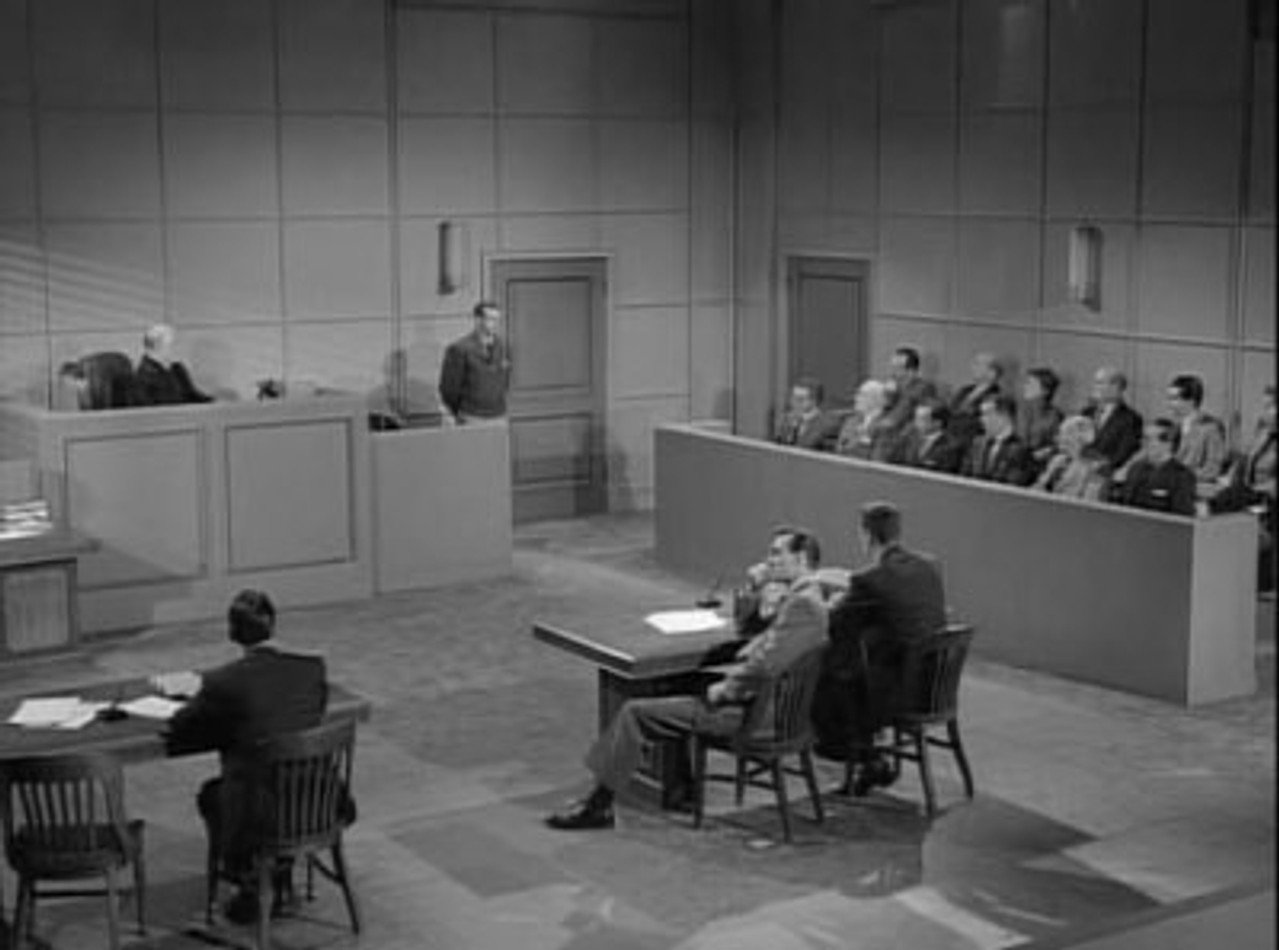
Adam Grant is sentenced to die. He breaks down in court, insisting he won't die again and that it's all a dream.
- Death row
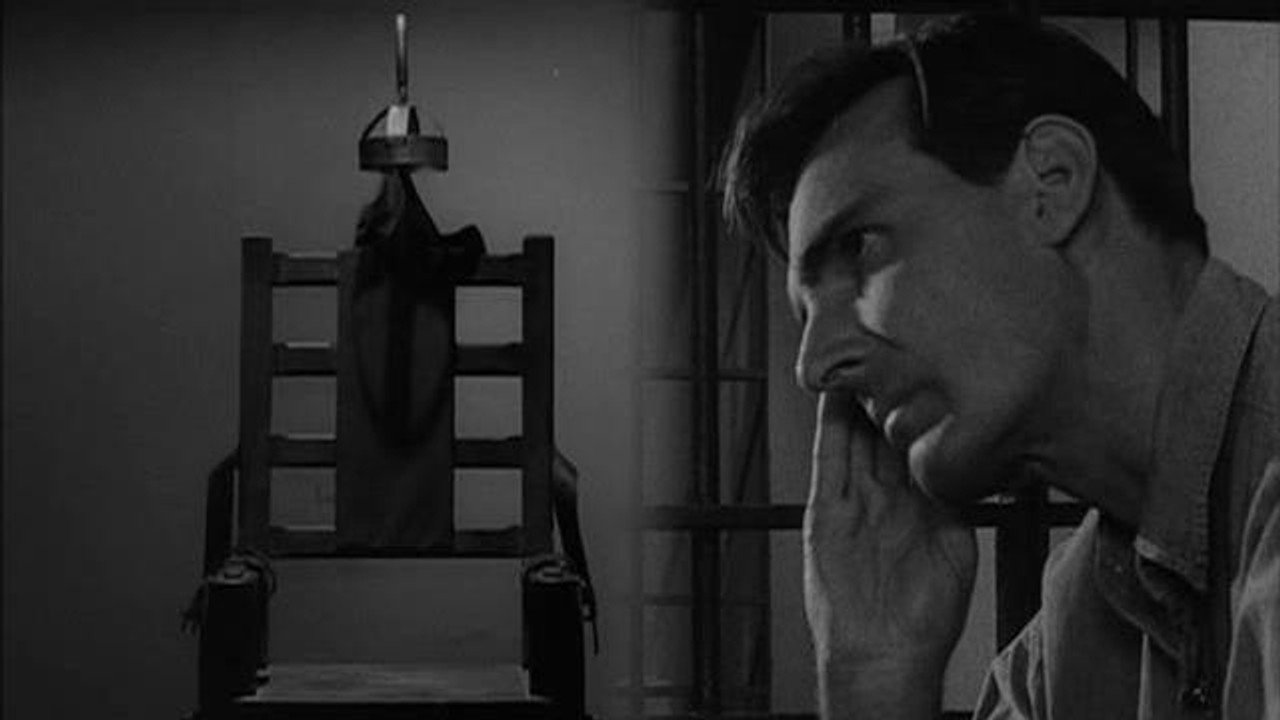
Grant describes dying in the electric chair to the man in the next cell, as if he's done it before.
- The roast
The DA's wife has steaks in the oven. Grant says it'll be something else, and when Ritchie checks, it's a roast.
The phone callSpoiler · tap to reveal
As the clock runs down to midnight, Ritchie finally calls the governor for a stay of execution.
AgainSpoiler · tap to reveal
The stay comes seconds too late. Then Grant is back in a courtroom, hearing a verdict.
Why it still matters
Adam Grant has just been sentenced to death for murder, and he won't stop telling everyone they're figments of his dream. District attorney Henry Ritchie thinks he's a lunatic. Newspaper editor Paul Carson isn't so sure, and as midnight gets closer he keeps chipping away at Ritchie's certainty. Grant seems to know what people are about to say before they say it.
Charles Beaumont turned a slight four-page story into one of the show's most unsettling half hours. The A.V. Club gave it an A, calling it a story that should have been almost unbearably absurd and works anyway, and much of that is down to Dennis Weaver, sweating and pleading as a man who has been through this too many times. John Brahm's direction leans on hard shadows and a world that looks a little too flat, which is deliberate.
The same nightmare, recast
Grant is right. Carson convinces Ritchie that the prisoner is either telling the truth or insane, and either way shouldn't die tonight. The governor grants a stay, and the message reaches the prison seconds after the switch is thrown. Grant dies, and the whole world disappears with him.
Then the dream starts again. Grant is back in court being sentenced, with the same faces shuffled: Jiggs, his neighbor on death row, is now the judge and Carson is the jury foreman. Earlier, Grant noticed that the priest who visits him was a real priest who died when he was a boy, so these people are pieces of his own life, recast every night. Serling's closing narration asks the viewer whether they're flesh and blood or part of someone else's feverish nightmare.
The A.V. Club found the ending devastating in a quiet way. Grant never gets out by being believed: Ritchie does believe him in the end, and it makes no difference at all.
Behind the scenes
- Beaumont adapted his own short story "Träumerei," first published in Infinity Science Fiction in February 1956. The story is mostly a conversation between the DA and the journalist, told from the DA's side. The episode puts the prisoner at the center, and some passages went into the teleplay unchanged.
- John Brahm, a German-born director of Fox thrillers like The Lodger (1944) and Hangover Square (1945), directed, shooting the courtroom and jail scenes on the MGM back lot.
- Dennis Weaver was best known as Chester on Gunsmoke. Ten years later he starred in Steven Spielberg's Duel, from a Richard Matheson story.
- Wright King, who plays Carson, went on to play Dr. Galen in Planet of the Apes (1968). Harry Townes, the DA, had already been in the season 1 episode "The Four of Us Are Dying."
- The 1980s revival remade it in 1986 with Peter Coyote as Adam Grant, from an updated version of Beaumont's script.
- The Twilight Zone Radio Dramas adapted it with Ernie Hudson as Grant.
The thread
Dreams that won't let the dreamer go, and the people trapped inside them.
Came before
Shares DNA with
Remade and revisited
DNA strand
Dreams & Nightmares
Most dream stories end when the dreamer wakes. This one has no waking, only the same nightmare dealt again with the cards shuffled. Beaumont makes the dream world thin on purpose (a trial and an execution on the same day), then asks whether ours would hold up any better under questioning.
Every great sci-fi story is built from a handful of strands like this one. Each strand page explains how it works and traces it across shows, books and films.
If this one stayed with you
Where to go next, and why.
Watch · Twilight Zone
"Perchance to Dream"
Another Beaumont script, and another man convinced his dream can kill him. Worth watching as a pair.
Watch · TNG S5
"Cause and Effect"
If the restart at the end got under your skin, this stretches the same feeling across a whole episode, with the crew slowly catching on.
Watch · Film
Groundhog Day (1993)
The comic version: one man, one day, again and again, and far kinder to its hero.
Read · Short stories
Perchance to Dream by Charles Beaumont
The 2015 Penguin Classics collection of Beaumont's stories, including "Träumerei," so you can see exactly what he added for television.
Sources
- “Shadow Play (The Twilight Zone, 1959),” Wikipedia
- Zack Handlen, “The Twilight Zone: "The Silence"/"Shadow Play",” The A.V. Club
- “Shadow Play,” The Twilight Zone Vortex
- “"Shadow Play" – The Twilight Zone S02E26 Retro Review,” TVmaze
- Peter Martin, “Exploring The Twilight Zone, Episode #62: "Shadow Play",” ScreenAnarchy, 2011