What Serling brings to the story
Serling was already one of American television's most praised writers before The Twilight Zone. Live dramas like Patterns (1955) and Requiem for a Heavyweight (1956) made his name. They also taught him how much a sponsor could take out of a script. When he tried to write about the murder of Emmett Till, the setting was moved to New England and the victim changed to a foreigner. On another play, CBS made him move the story back a century and remove the interracial elements before it would air.
The Twilight Zone was his answer. He argued that sponsors and censors would object less to science fiction and fantasy than to realistic drama, so he could write about racism, war, paranoia and conformity as long as there was a Martian, a mirror or a stopped clock in the frame. He wrote 92 of the show's 156 episodes and was its narrator and host.
What he gave the genre is the moral twist: a short story that ends by turning around and pointing at the audience. He was also a combat veteran of the Pacific war, and the war shows up in his scripts again and again, in lonely men waiting for an ending that won't come.
Start here
The Monsters Are Due on Maple Street
The Twilight Zone · S1 E22
Serling at his angriest and most direct, half an hour that still plays like this week's news.
The Twilight Zone · S1 E8
The most famous of his twist endings, and an easy first episode for anyone new to the show.
The Twilight Zone · S2 E1
The veteran's episode. Quieter, and closer to the man than most.
Selected work

Where Is Everybody? 1959 · Writer
The first episode: a man alone in an empty town, and the loneliness Serling kept coming back to.

Time Enough at Last 1959 · Writer (from Lynn Venable's story)
Burgess Meredith, a bank vault and a pile of books. One of the best-known endings in television.
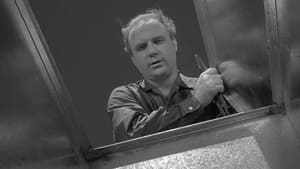
The Lonely 1959 · Writer
A prisoner on an asteroid is given a companion built to look like a woman.

The Monsters Are Due on Maple Street 1960 · Writer
The clearest example of Serling using aliens to talk about his own country's fear.

Eye of the Beholder 1960 · Writer
A woman under bandages waits to learn whether surgery has made her normal.
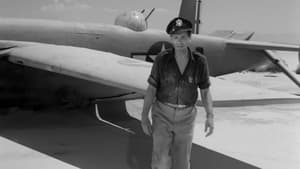
King Nine Will Not Return 1960 · Writer
A pilot alone in the desert with a crashed bomber. Serling's war, from the inside.
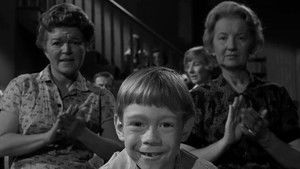
It's a Good Life 1961 · Writer (from Jerome Bixby's story)
A small town ruled by a six-year-old with unlimited power.
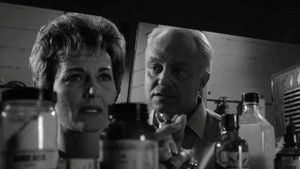
The Shelter 1961 · Writer
A suburban party, an air-raid warning and one family's bomb shelter.
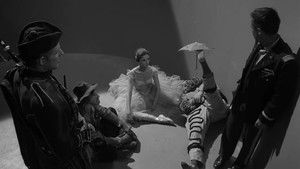
Five Characters in Search of an Exit 1961 · Writer (from Marvin Petal's story)
Five strangers with no names in a round room with no ceiling.
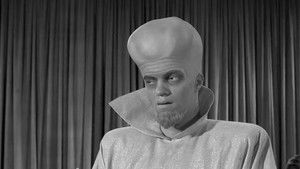
To Serve Man 1962 · Writer (from Damon Knight's story)
Visitors arrive offering to end hunger and war. A translator gets to work on their book.
Planet of the Apes (1968) 1968 · Co-writer
Written with Michael Wilson, four years after The Twilight Zone ended.
The record
Labels show how solid each item is: On the record · Their own account · Reported · Legend
- On the recordBorn December 25, 1924, in Syracuse, New York; died June 28, 1975, in Rochester, New York, aged 50.[1]
- On the recordEnlisted in the U.S. Army in 1943, the morning after he graduated from high school. He served as a paratrooper in the 11th Airborne Division, fought on Leyte and Luzon in the Philippines, and was wounded. His decorations include the Purple Heart and the Bronze Star.[1]
- On the recordNominated for nine Primetime Emmy Awards and won six.[1]
- On the recordThe Twilight Zone premiered on CBS on October 2, 1959, and ran for five seasons. Serling wrote 92 of its 156 episodes.[1]
- Their own accountTen days before the premiere he told Mike Wallace on air that a writer who tried to dramatise any current social controversy was in deep trouble.[2]
- Their own accountIn the same interview he said the new show was designed so that sponsors would have little to complain about.[3]
- On the recordCo-wrote the screenplay for Planet of the Apes (1968) with Michael Wilson, and created and largely wrote Night Gallery (1970–1973).[1]
- On the recordTaught at Ithaca College from the late 1960s until his death.[1]
- ReportedHe reportedly smoked three to four packs of cigarettes a day. He died after a series of heart attacks in 1975, the last during open-heart surgery.[1]
Part of: Planet of the Apes · The Twilight Zone
Sources
- Rod Serling · Wikipedia · accessed 2026-11-20
- The Twilight Zone Lost An Early Sponsor Who Was Never Able To Understand The Show · TVLine · accessed 2026-11-20
- Ten Days Before The Twilight Zone Premiered, Mike Wallace Asked Rod Serling A Question That Aged Badly · /Film · accessed 2026-11-20
Last reviewed 2026-11-20. Spot an error? Tell us.