
More from the episode
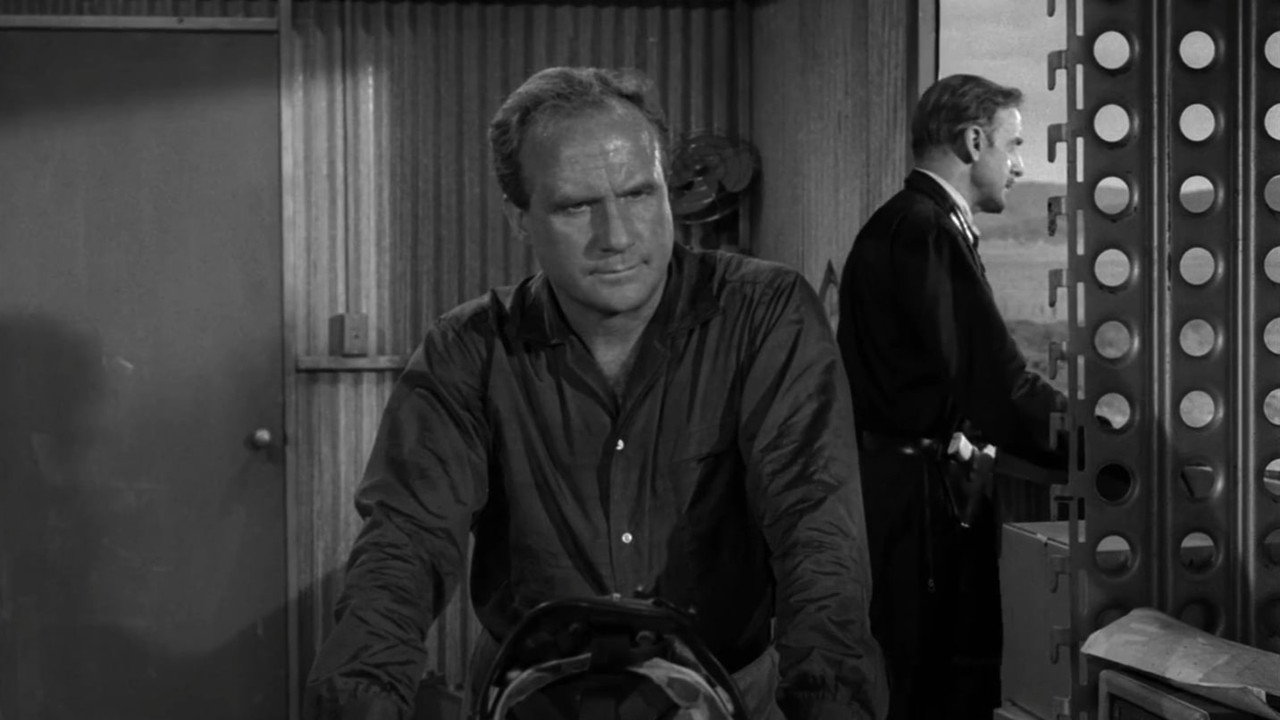
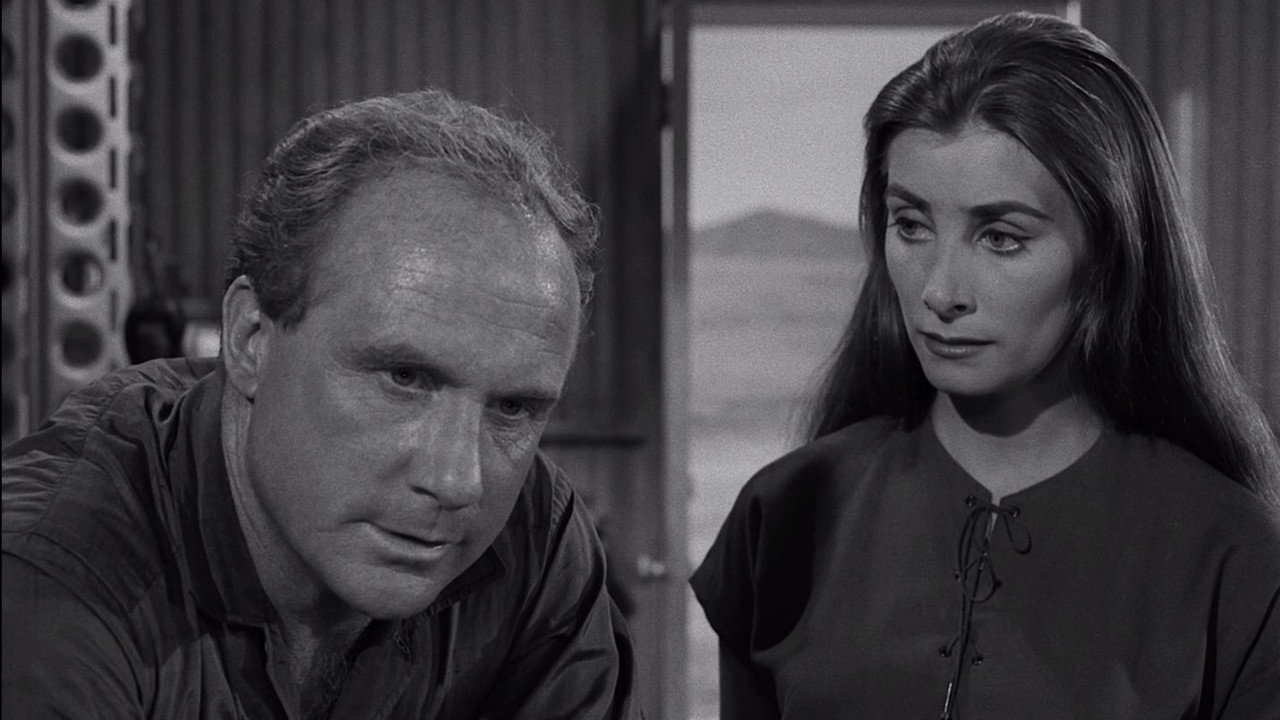
The story in 5 beats
- Year four
Corry is serving fifty years alone on an asteroid. The supply ship stays only minutes.
- The crate
Captain Allenby leaves a crate and tells Corry not to open it until the ship is gone.
- Alicia
Inside is a robot who looks and talks like a woman. Corry wants nothing to do with her, until she cries.
The pardonSpoiler · tap to reveal
The ship comes back with news: Corry is free. There's room for him and fifteen pounds of luggage.
ObsoleteSpoiler · tap to reveal
Corry won't leave without her. Allenby settles the argument.
Why it still matters
Long before anyone worried about falling for a chatbot, Serling asked what happens when a lonely man is handed a machine that can cry. James Corry has served four years of a fifty-year sentence on a rock nine million miles from Earth. The supply ship stops a few times a year and stays only minutes. Its captain, Allenby, believes Corry killed in self-defense, and he leaves behind a crate Corry isn't to open until the ship has gone.
Jack Warden carries almost the whole half hour, and his slow turn from contempt to tenderness is what makes the ending land. It's quieter than the twist episodes the show is known for. Serling isn't trying to trick you. He asks you to decide what Alicia is, and then someone else decides for you.
What Allenby shows him
Corry has been pardoned after a review of old murder cases, but the ship can only wait twenty minutes and take fifteen pounds of luggage. Corry insists Alicia is a woman, not a machine, and won't go without her. Allenby draws his gun and shoots her in the face. What's left is wires and circuits, repeating Corry's name. Allenby walks him to the ship and tells him that all he's leaving behind is his loneliness. Corry answers, flatly, that he must remember that.
Serling's closing narration calls Alicia a machine made in Corry's image, kept alive by love, and now obsolete. It's a gentle line and a brutal one, and the episode doesn't say which. Was Allenby being cruel, merciful or just practical? With AI companions on every phone, it's a better argument now than it was in 1959.
The Question Underneath
Can you really love something you know isn't a person?
Corry knows Alicia is a machine and falls for her anyway, because she is the only company he has. The ending is brutal, and the episode won't say if Allenby is cruel or kind. What it does say is that loneliness can make us love whatever is there, and that the love is real even when its object might not be.
The big idea behind it
Can Machines Be Conscious?
Open questionHow it connects (shows the twist)
When the rescue ship has no room for her, the captain shoots Alicia in the face to show Corry the wires. Serling leaves you wondering whether that settled anything.
Challenge the DNA
When Allenby shoots Alicia, is he being cruel or merciful?
Or skip ahead to our reading
We lean merciful, uneasily. Allenby can't take her and won't leave her, so he ends the question for Corry. What stays with us is that nobody asks Alicia.
Behind the scenes
- It was the first regular episode to go into production after the pilot, "Where Is Everybody?", sold the series.
- It was also the first of several episodes filmed on location in Death Valley, later joined by "I Shot an Arrow into the Air," "A Hundred Yards Over the Rim" and "The Rip Van Winkle Caper." The crew wasn't ready for the conditions. People suffered dehydration and heat exhaustion, and director of photography George T. Clemens collapsed and fell from a camera crane.
- Bernard Herrmann wrote the music.
- Ted Knight appears as one of the ship's crew but isn't in the credits.
- Jack Warden was back later the same season in another Serling robot story, "The Mighty Casey."
- A radio version starring Mike Starr came out on CD in 2007, the same year 4 Letter Entertainment put the episode on stage.
The thread
Lonely men and the machines built to keep them company, before Serling and long after.
Came before
Shares DNA with
Left its mark on
DNA strand
Do Machines Dream?
Alicia never gets to say what she is. Corry decides she's a woman, Allenby decides she's a machine, and the gun gets the last word. What lingers is whether the answer was ever theirs to give.
Every great sci-fi story is built from a handful of strands like this one. Each strand page explains how it works and traces it across shows, books and films.
If this one stayed with you
Where to go next, and why.
Watch · Black Mirror
"Be Right Back"
The same question fifty-odd years later: what do you do with a machine that loves you back?
Watch · Film
Ex Machina (2015)
A lonely man, a remote house and a machine that may be playing him. Colder, cleverer, just as sad.
Read · Novel
Klara and the Sun — Kazuo Ishiguro
A companion machine telling her own story. It's the view from Alicia's side of the crate.
Your next episode
Three directions to go from here, all on Sci-Fi DNA.

More of this feeling
Time Enough at Last
The Twilight Zone
Another Serling man alone at the edge of everything, and another ending people never forget.

Same question, different answer
Be Right Back
Black Mirror
Another lonely person handed a machine to fill an empty space, fifty-odd years later.

Something completely different
Spock's Brain
Star Trek
After that ending you've earned something ridiculous. This is the most ridiculous thing we've got.
On the trail Can a machine love you back? (stop 1 of 5).