
More from the episode


The story in 5 beats
- The diner
A man wakes on a dirt road and walks into a diner. Coffee's hot, the jukebox is on, nobody's home.
- Oakwood
The whole town is the same. A phone rings for no one, someone has just shaved in the jail, and a figure in a truck is a mannequin.
- The last man
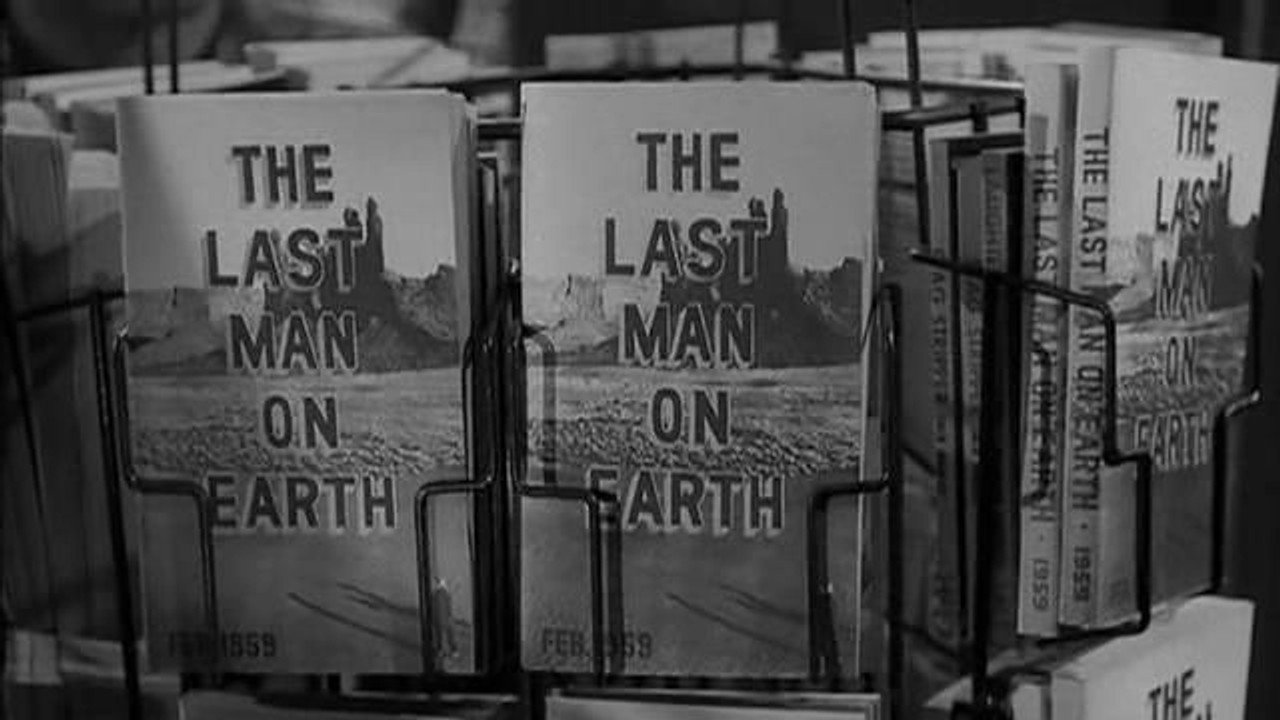
A rack of paperbacks called The Last Man on Earth. He decides he must be dreaming.
The movieSpoiler · tap to reveal
A film starts playing to an empty theater, and he finally panics.
The buttonSpoiler · tap to reveal
He presses a button, begging for help, and the town disappears.
Why it still matters
This is the first episode of The Twilight Zone, and it's almost a one-man show. Earl Holliman wanders into a town called Oakwood where everything has been left mid-moment: coffee on, pies cooling, a phone ringing with no one on the line. He talks to himself, then to a mannequin, then to anyone who might be listening, and the half hour is mostly the slow crack-up of a man trying to stay reasonable.
It wasn't Serling's first choice. His original pilot, "The Happy Place," was about a society that executes people at 60, and CBS turned it down as too dark. So he wrote something smaller, and the result set the template for everything after: an ordinary place, one person, and a question the audience is asking along with him.
Where everybody was
There was no town. Mike Ferris is an Air Force sergeant who has spent days inside an isolation booth, a test of whether a man can stand being alone long enough for a trip to the moon. Oakwood was his mind filling the silence. The officers watching him pull him out and carry him off on a stretcher, and the general in charge observes that when he finally makes the trip, he'll really be alone.
The New York Times liked the idea and called the resolution trite. Serling seems to have half agreed: in his own prose version, Ferris finds a movie ticket in his pocket on the way out, a hint that the town wasn't entirely in his head. Serling's closing narration points at the real subject, the human need for company and the enemy of isolation waiting out among the stars.
The Question Underneath
How long could you stand being completely alone?
Ferris finds a town with everything in it except other people, and slowly comes apart. The explanation grounds the story in a real worry of the space age, but the feeling it captures is older: the need for another voice. The episode, the very first of the series, makes loneliness its first monster.
Challenge the DNA
Does the explanation help or hurt the episode?
Or skip ahead to our reading
It helps, mostly. Serling seems to have had doubts too, which is why his prose version slips a movie ticket into Ferris's pocket.
Behind the scenes
- Serling's first pilot, "The Happy Place," was rejected by CBS executive William Self as too dark. This was its replacement.
- Westbrook Van Voorhis narrated the pilot version and described a "sixth dimension." When he wasn't available later, Serling re-recorded the narration himself and it became the "fifth dimension" of every episode since.
- It was filmed at Universal Studios, using Courthouse Square as Oakwood. Every other episode was made at MGM.
- Earl Holliman remembered a cold December day when the camera turned out to have been faulty all day, so everything shot had to be redone. He went home with a 102-degree fever, came back the next morning and reshot it.
- Holliman was paid $5,000. Serling wrote him hoping he'd return, but he was never asked back.
- Bernard Herrmann wrote the score.
The thread
Empty towns before Serling, and the lonely men he kept coming back to.
Came before
Shares DNA with
Left its mark on
DNA strand
Last Person on Earth
The town isn't empty because the world ended. It's empty because he's alone, and the episode's point is that the second kind of emptiness is enough.
Every great sci-fi story is built from a handful of strands like this one. Each strand page explains how it works and traces it across shows, books and films.
If this one stayed with you
Where to go next, and why.
Watch · The Twilight Zone
"The Lonely"
Serling's next look at isolation: a man actually stranded in space, and the company he's given.
Watch · The Twilight Zone
"Time Enough at Last"
Another empty town, a very different kind of man, and the ending everybody remembers.
Read · Book
Stories from the Twilight Zone — Rod Serling
Serling's own prose versions, including this one with the movie ticket in the pocket.
Your next episode
Three directions to go from here, all on Sci-Fi DNA.

More of this feeling
Time Enough at Last
The Twilight Zone
Another man alone in an empty town, and the ending everyone quotes.

Same question, different answer
The Lonely
The Twilight Zone
Six weeks later, Serling sent a man into isolation for real.

Something completely different
Marooned
Red Dwarf
Isolation played for laughs: two men, one freezing ship, no common ground.